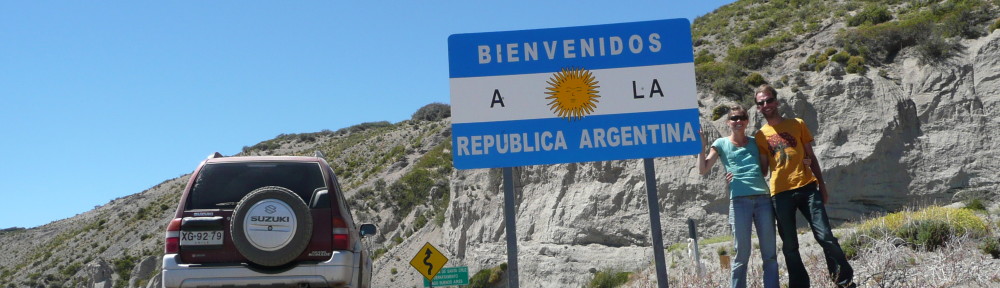
On the 25th of January we crossed the Argentinean border at Chile Chico to Los Antiguos. Quite exciting as we just had to hope all our paperwork was in order. It got scrutinised, especially the Argentinean insurance and we were there for a while. But eventually we got the green light, after we had thrown out all our fruit and vegetables which you are not allowed to take with you. Los Antiguos is an oasis town and was a breath of fresh air after all the gritty Chilean towns. We struggled to find accommodation as it was busy with tourists, but eventually lucked out on a hostel room where we met some travellers who were on the gringo trail which we were crossing paths with.
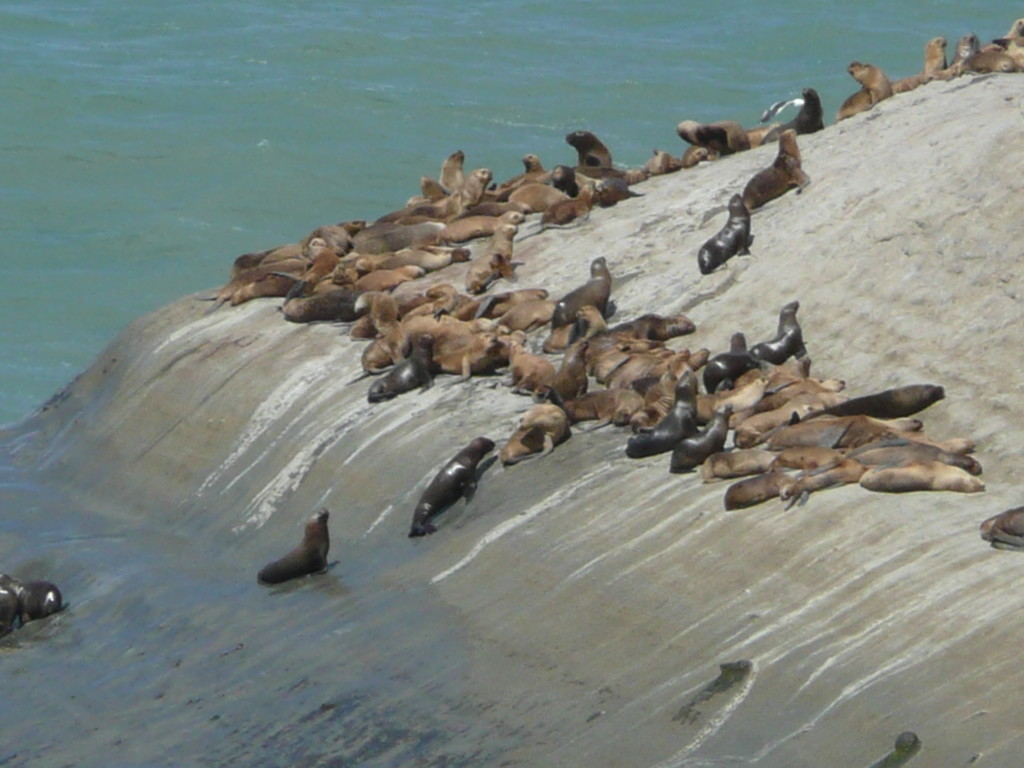
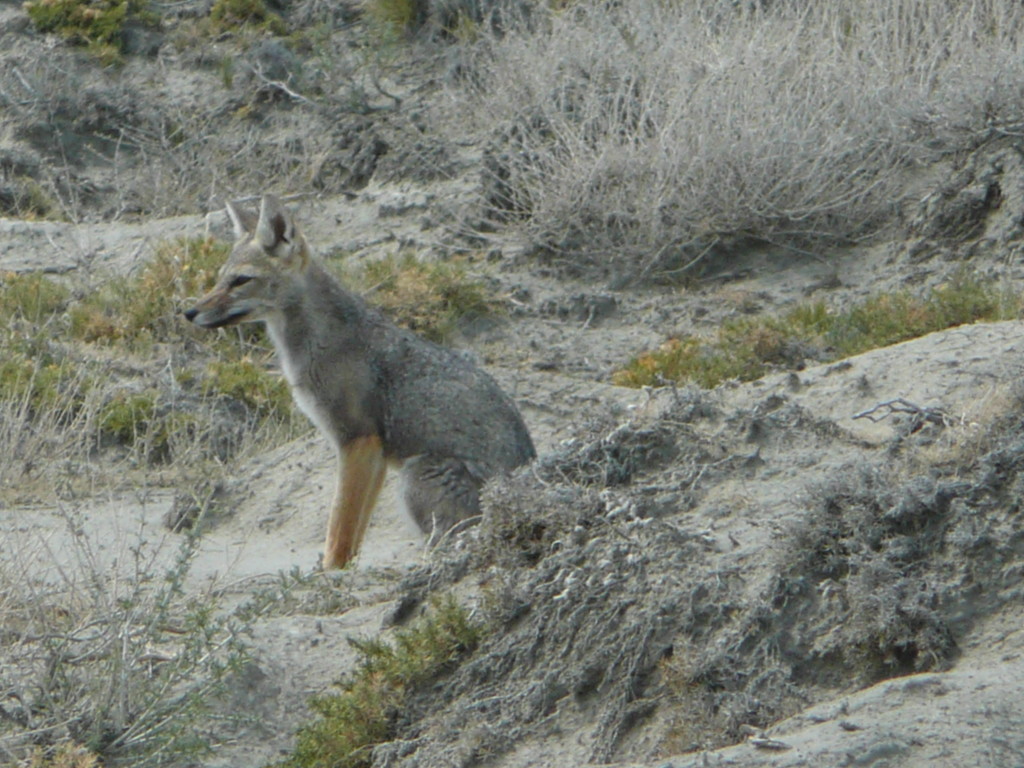
Next day we continued on on what was to become our biggest driving day so far. What we didn’t know was that inland Argentina and all the way south to Punta Arenas (in Chile) is a windswept tundra/moon landscape with very few towns, no trees at all and large distances. We ended up driving 660 km to Puerto San Julian which was the first decent town on our route. The next day we continued to Rio Gallegos via Parque Nacional Monte Lion where we saw sea lions, guanacos (weird deer/llama cross) and a fox from very close range. We were surprised that entrance was for free, including a talk from a ranger, awesome facilities and Spanish and English interpretive signs. In contrast, in Chile being a foreigner you get charged double and are then left to your own trying to decipher the Spanish only signs. Hard not to compare Chile and Argentina, the difference between the people became quite apparent as well after a couple days in Argentina. Argentineans seem to be a lot less shy and much more expressive and happy, which makes them come across a lot friendlier. We met various people who were just happy to chat or people who offered us help when they saw us struggle with something, very nice and it made us enjoy our first taste of Argentina!
A short impression of the type of roads we are driving at the Carretera Austral and towards the Argentinian border, filmed by Julia.
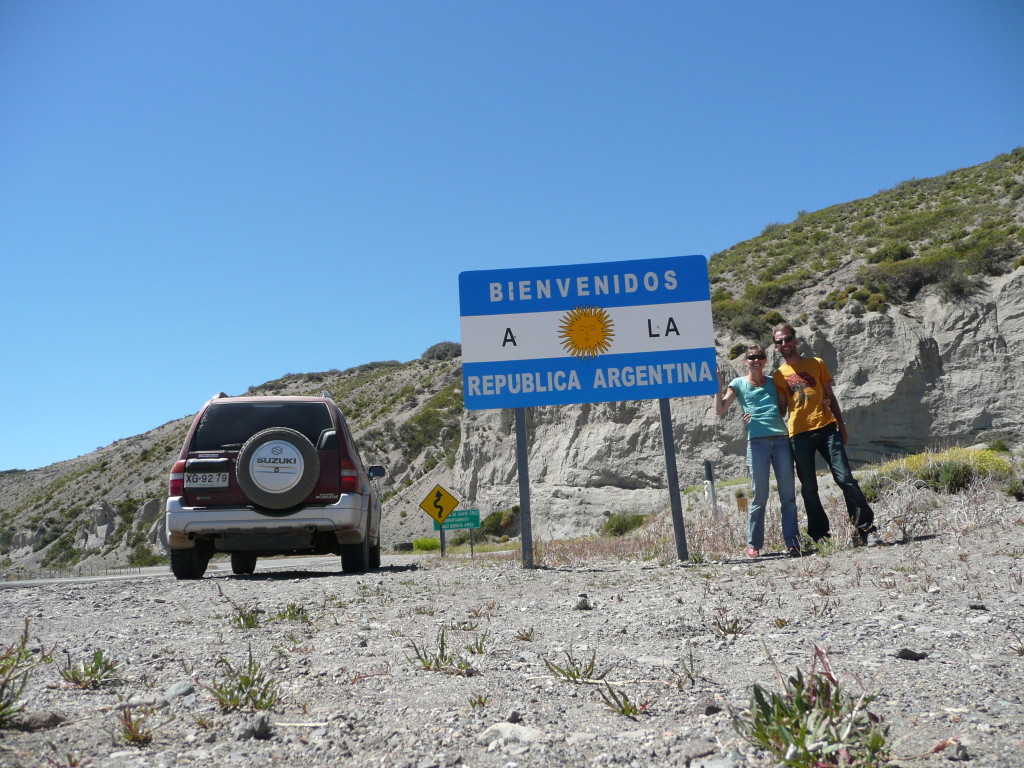
First crossing into Argentina
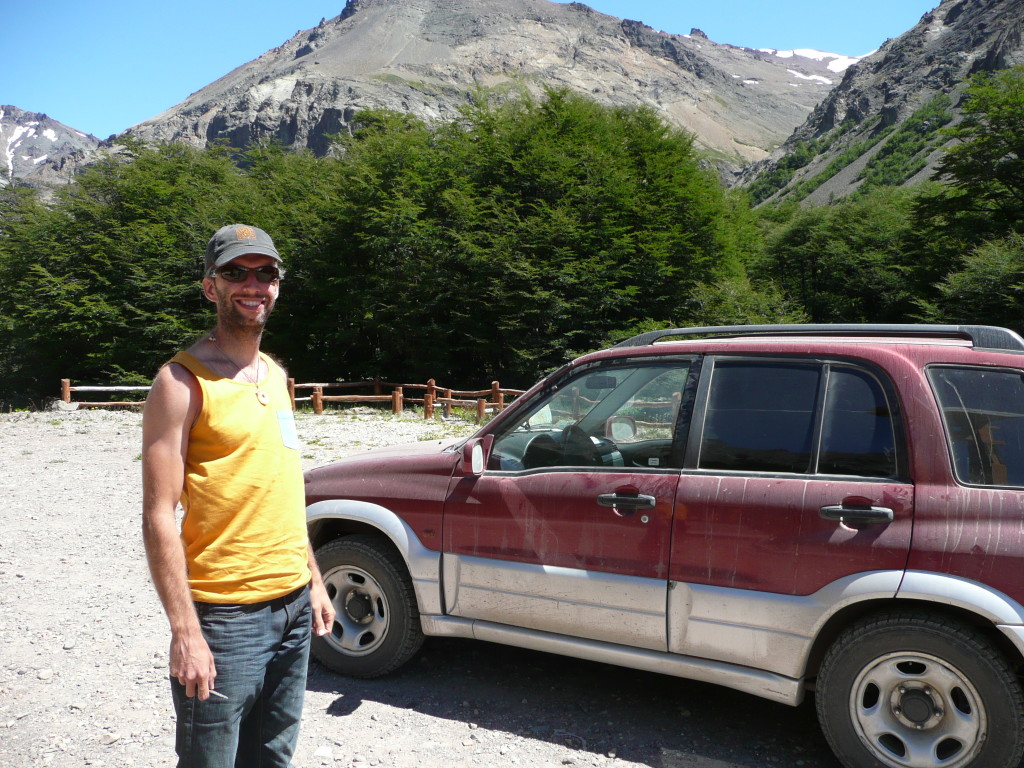
Richard and Car
On our second day in Rio Gallegos, we heard a strange sound coming from the right side of the engine. We asked for some help and got referred to a good mechanic who instantly diagnosed it being the waterpump. He said we had no chance of getting it repaired in Rio Gallegos and we had to go 260km south to Punta Arenas. Investigating it online I saw many possible things that could go wrong in these 260km with a dying waterpump. I asked some advice from various more qualified people around the world and we made the decision to give it a go and try for Punta Arenas in Chile. It was a nervous ride with the pump rattling away, knowing there are no towns in those 260 km and that a break down would result in a very expensive tow. We crossed the border into Chile after 60km and the car was still going, temperature stable. We took it really easy and around lunch time we made it to Punta Arenas, such relief! We checked into a hostel and went straight to a Suzuki mechanic, who agreed the waterpump was on its way out and needed to be replaced. They had a pump in stock and installed it the same afternoon. It was a great place so we asked them some more questions, but they didn’t have time as it was 7pm by then, but they did show us how to disable the alarm, just in case we lose the one working remote, also very useful!
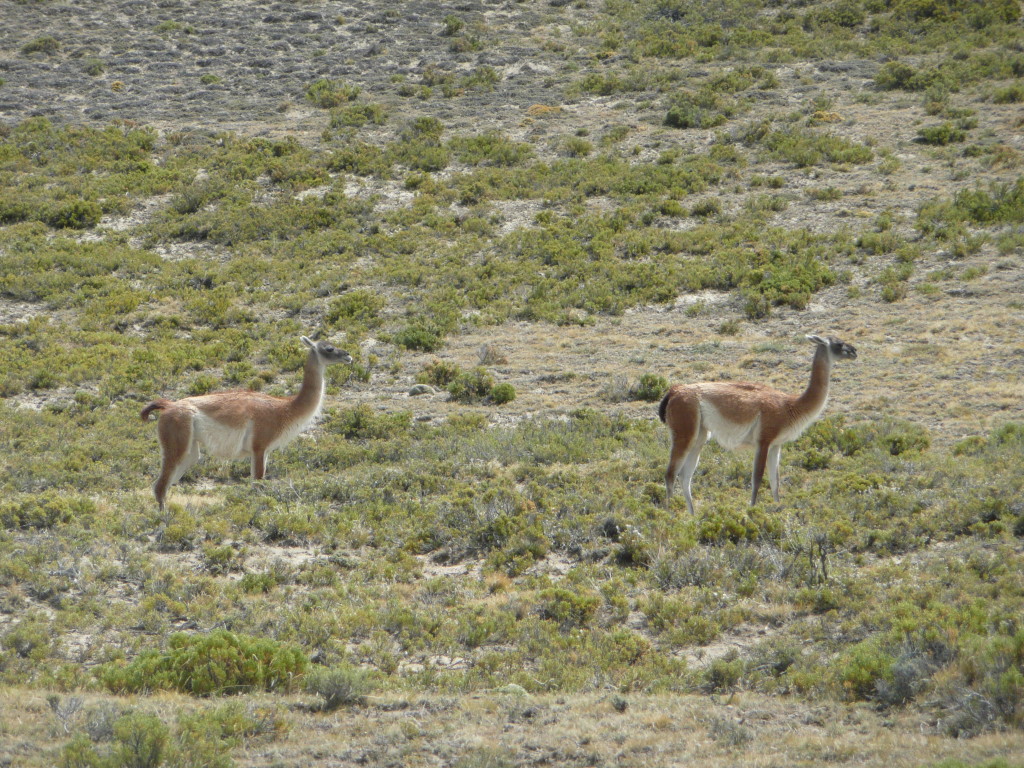
Guanacos
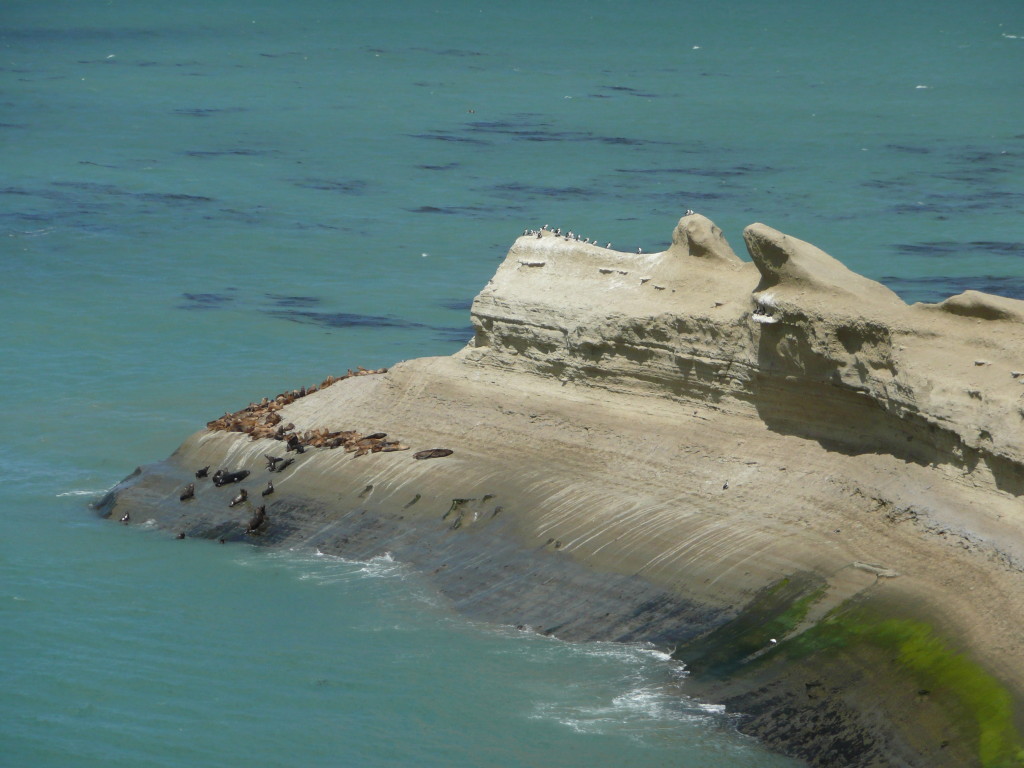
Sea Lion colony
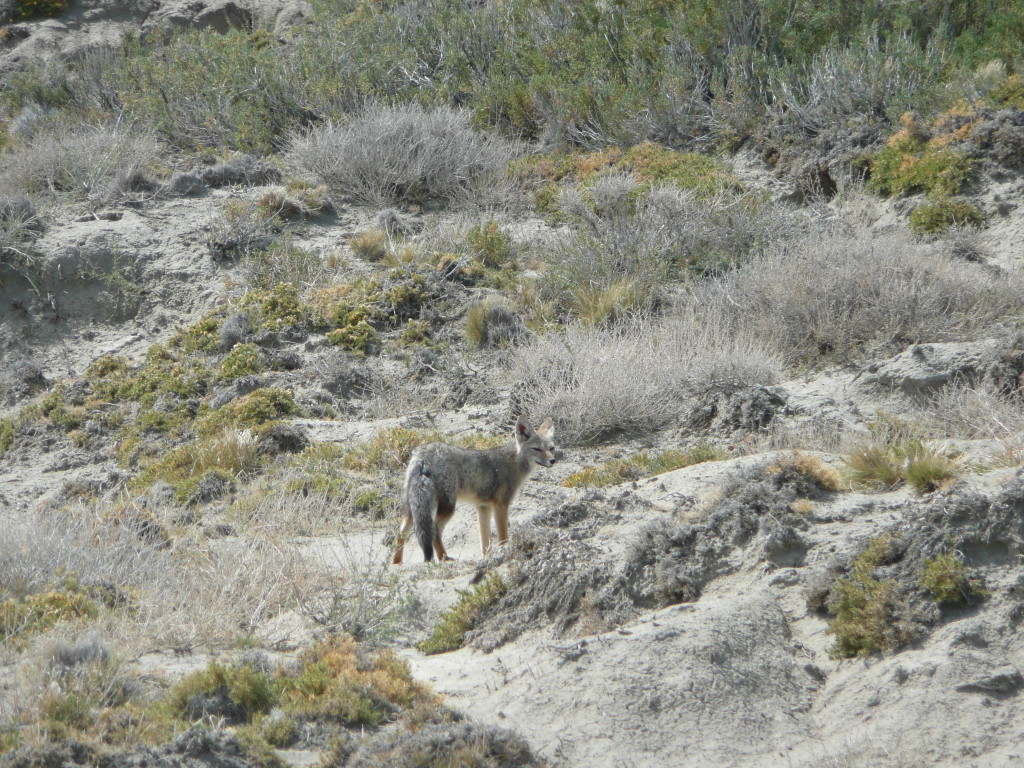
Patagonian Grey Fox
Punta Arenas turned out to be a very nice city, nicest city we have seen in Chile and we stayed another night to see some of the sights. There’s an amazing graveyard, beautiful plaza, nice cafes and restaurants and some historical sites you can visit.
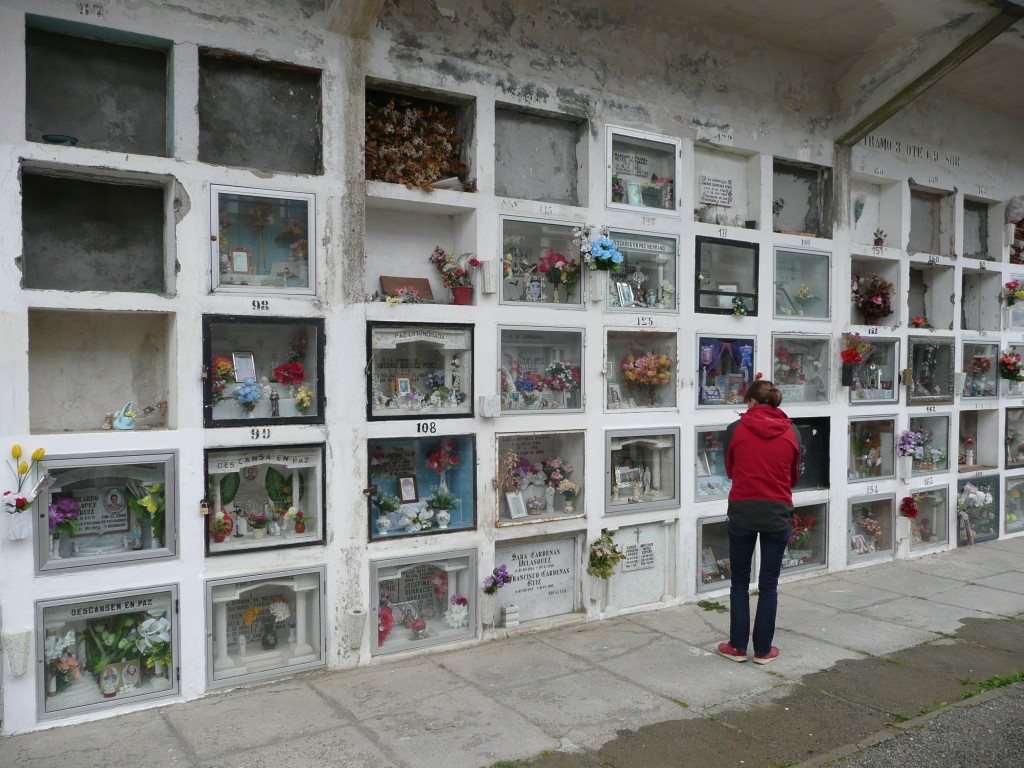
Punta Arenas graveyard, Julia is paying her respects
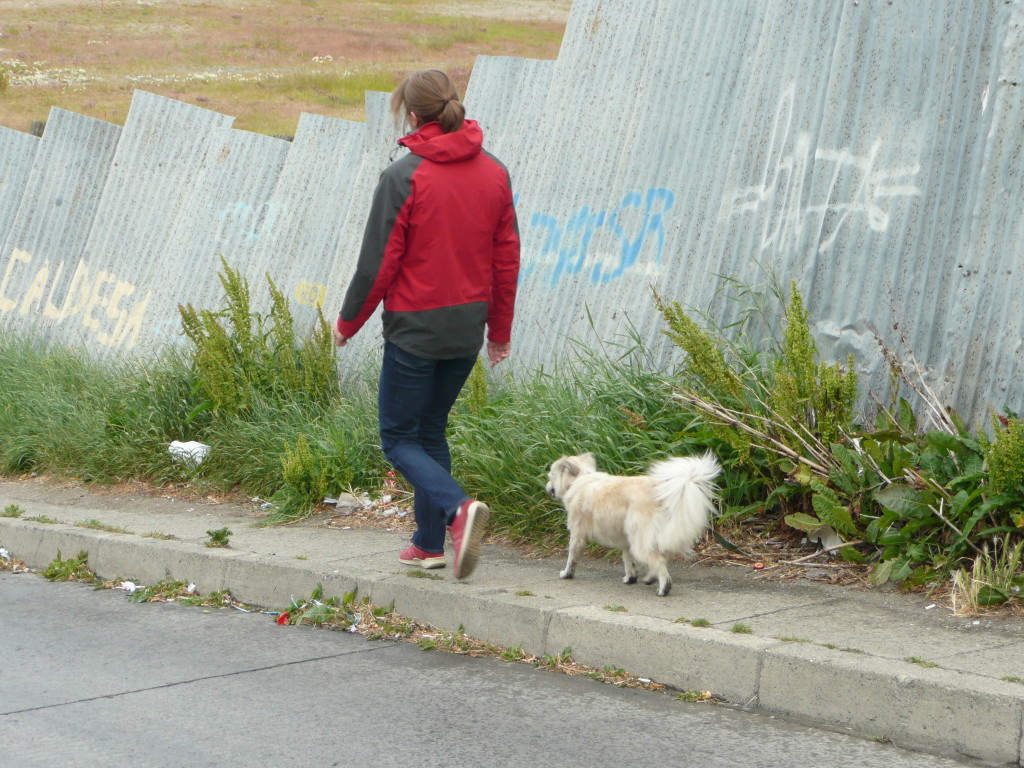
At the graveyard we petted this cute dog, who then decided that she was adopting us as her new parents. We liked her a lot, but can’t keep her. Problem was she followed us, whatever we tried!
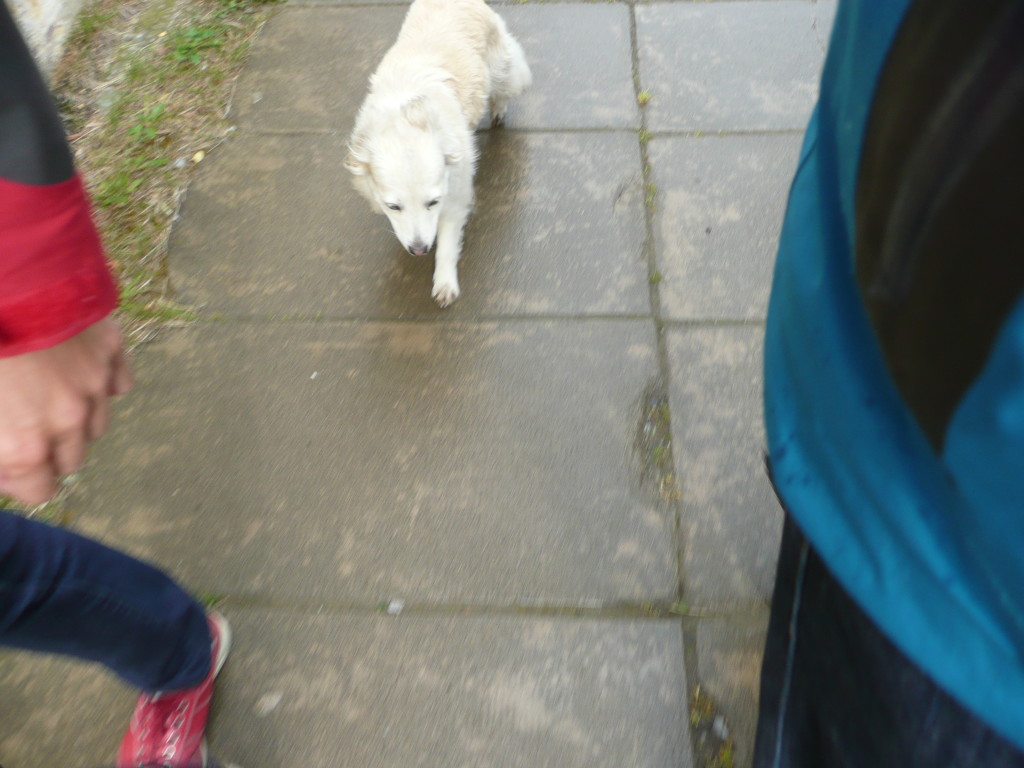
Still following… Eventually we walked back to the car and sat in it until she went away.
On the 31st we left for Ushuaia, most southern city in the world (end of the world as they say) meaning we had to drive back 150 km to take the ferry to the landmass to the south; Tierra del Fuego. We are both not sure how it happened, but we totally took the wrong road and ended up going 100km in the wrong direction. There being no signs and the landscape being the same windswept tundra everywhere we hadn’t noticed. We decided to take a ‘shortcut’ gravel road which ended up taking a long time as well. After 300 km we were finally at the ferry, only to find out that because of the high winds and big waves it wasn’t going, about a hundred cars stranded in the middle of nowhere. We left after a couple hours and drove 30km back to the little town where we had some lunch and rented a very dingy little cabin at a restaurant/hostel that catered for the workers of a nearby oil field. There were about 50 of them staying there and taking their meals and then us.
The next morning we managed to get across on the ferry even though there was still a stiff breeze. It was a long day getting to Ushuaia, but towards the end of the day at least the scenery was improving as the landscape slowly changed from steppe to small trees, to bigger trees, to hills and then snow capped mountains and rivers. Finding accommodation in Ushuaia was difficult. It being the most southern city in the world and being the gateway to Antartica means it draws in three kinds of tourists. There are people who fly or cruise (ship) in and look around or go to Antartica from Ushuaia. And then there are the overlanders (lots on motorbikes) who see Ushuaia as the beginning or the end point for a trip of the Americas, with the other extreme being Prudhoe Bay/Deadhorse in Alaska. Of course we drove to the end of the road and had our photo taken by the sign, our most southern point for this trip!
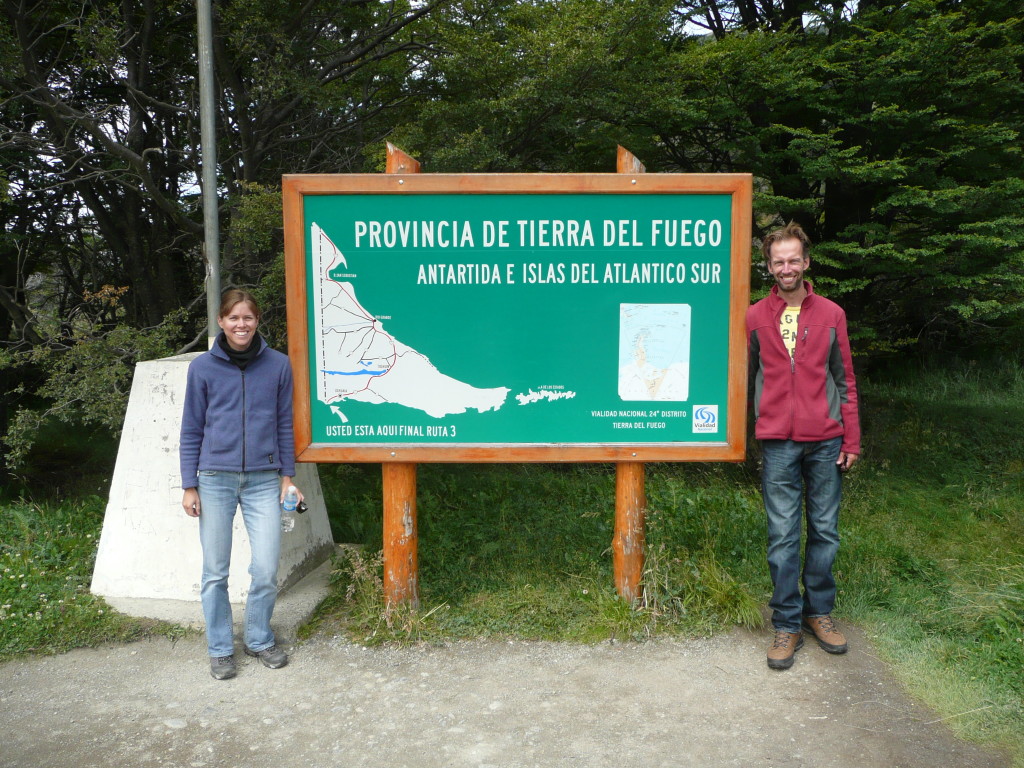
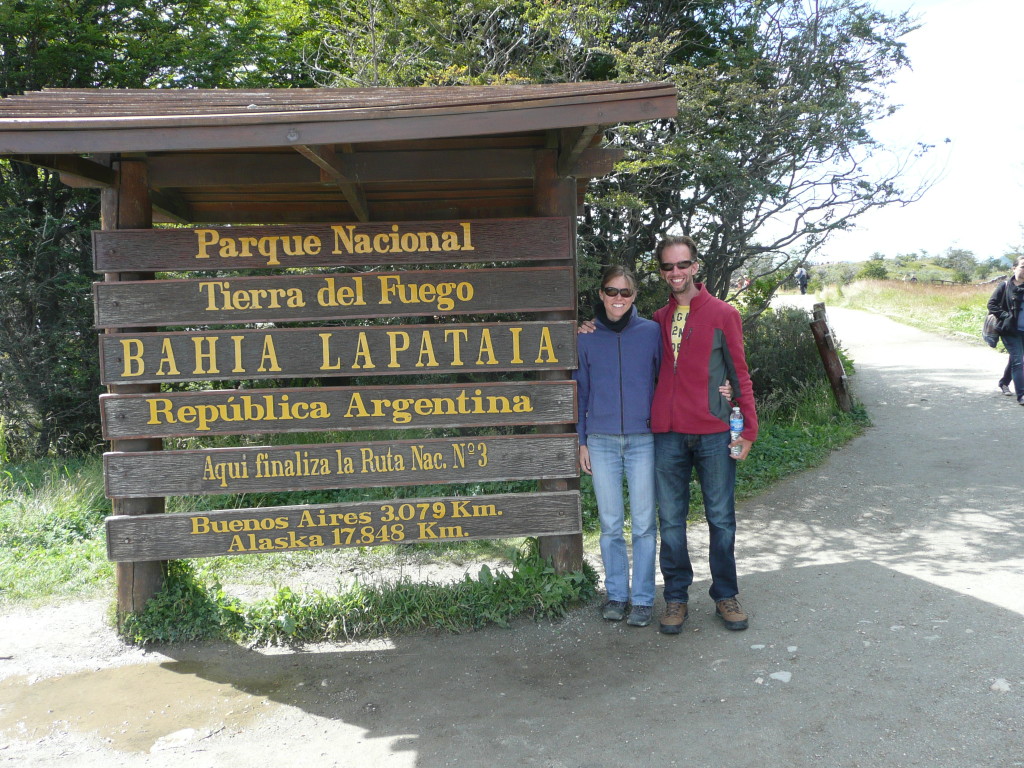
Milestone of our trip, most southern point of South America you can get to by car. End of the road at Lapiata Bay, Ushuaia!
Love that car video – I kept on saying to myself ‘please slow down…it’s not a rally…’ or are you really there for the Dakar Rally?
http://totallycoolpix.com/2013/01/the-2013-dakar-rally-in-100-pictures/
It actually looks a lot faster on the video than it was for some weird reason. But yeah, we are practising for the 2014 edition, Julia is quite the navigator!
Roel Verschueren liked this on Facebook.
Hi there, when I saw the movie of the road it remembers me of the mountainroads in NZ. I don’t like these
roads, you know. Nice story you write it very well. It’s a pitty you couldn’t keep the beautiful dog.Greetings.
Mike Smith liked this on Facebook.
Darcy Mellsop liked this on Facebook.
Ellen Schilders liked this on Facebook.
GG888slot is a total blast! The slot games are awesome and the bonuses are pretty sweet too. Click here gg888slot.
Sam86vip is my go-to for VIP treatment! The user experience is excellent and feels very safe. Definitely worth your time to investigate sam86vip.
Yo, zs777download is legit! Been getting my game on there. Easy to download and straight to the point. Check it out zs777download.
Had some amazing luck today! The site is very responsive and easy to navigate even for beginners. Cheers to phjljl16 for the big win.