After five weeks of studying in Sucre and not really leaving the city, it felt a bit weird to hit the road again, but we were also excited to leave Sucre. On the way out we got stopped by a convoy of large Nissan Patrols driving at very high speed, it was the president, Evo Morales. Other than that it was a smooth drive to Potosi. In Potosi we first filled up on fuel, managed to pay local prices again after bribing the woman with a 10 Boliviano tip. The streets in Potosi were very narrow, barely the width of a car, plus a couple centimetres of footpath. Thanks to Julia’s navigational skills we found our hotel quickly.
We instantly went to La Casa de la Moneda (National Mint), Potosi’s most famous museum. It was built from 1572 onwards and this is where coins were made for Spain and later Bolivia up till the 1950’s. Potosi was the logical choice as Cerro the Potosi, allegedly was made of silver and mining is still ongoing. The museum was amazing, we joined a tour and got shown the whole process. Because Potosi is so high, dry and without insects everything got preserved very well. Some of the wooden machines were made in Spain and because of their size took 14 months to be transported to Bolivia, first by ship to Buenos Aires, then overland with donkeys to Potosi.
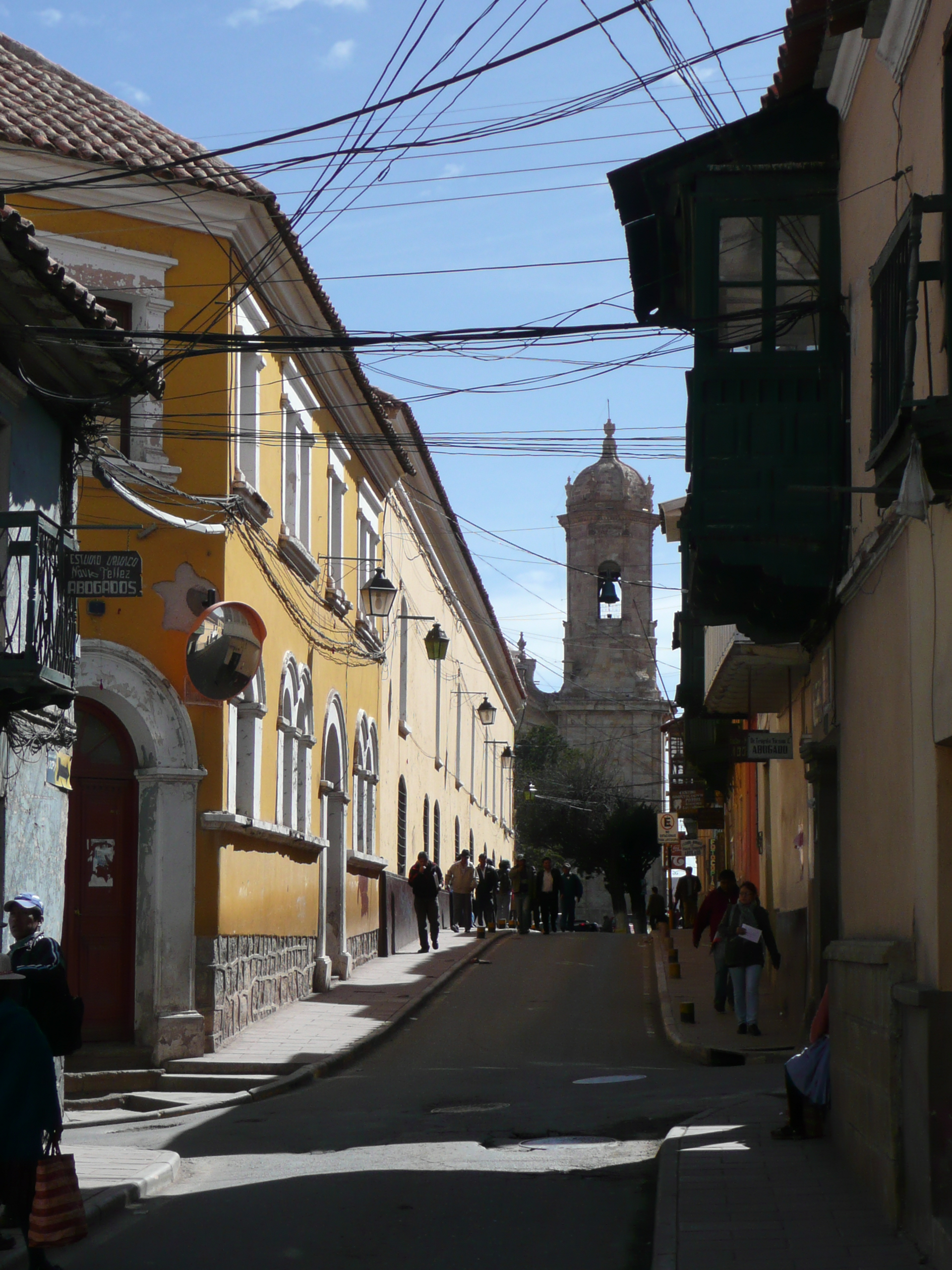
Narrow streets
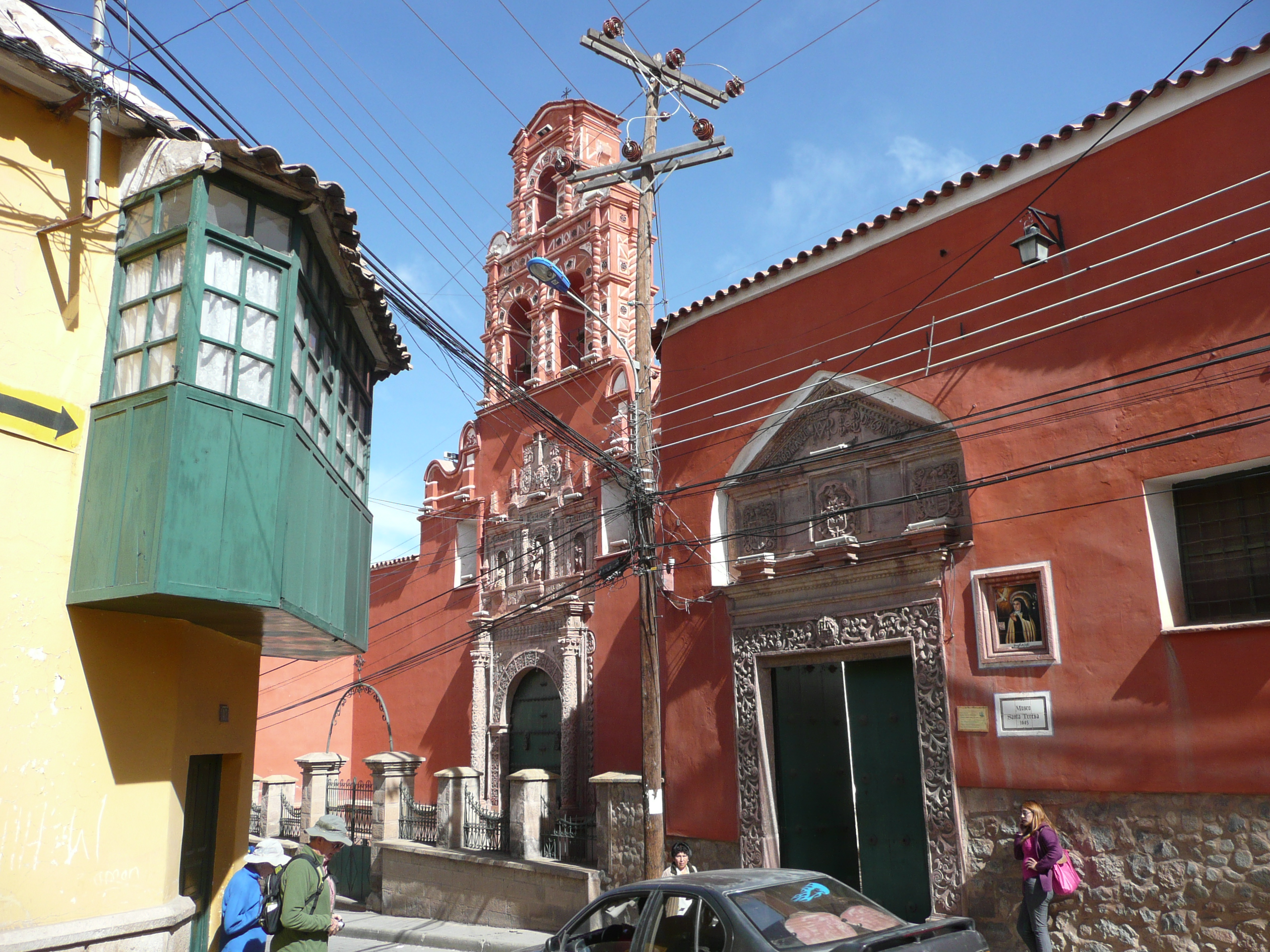
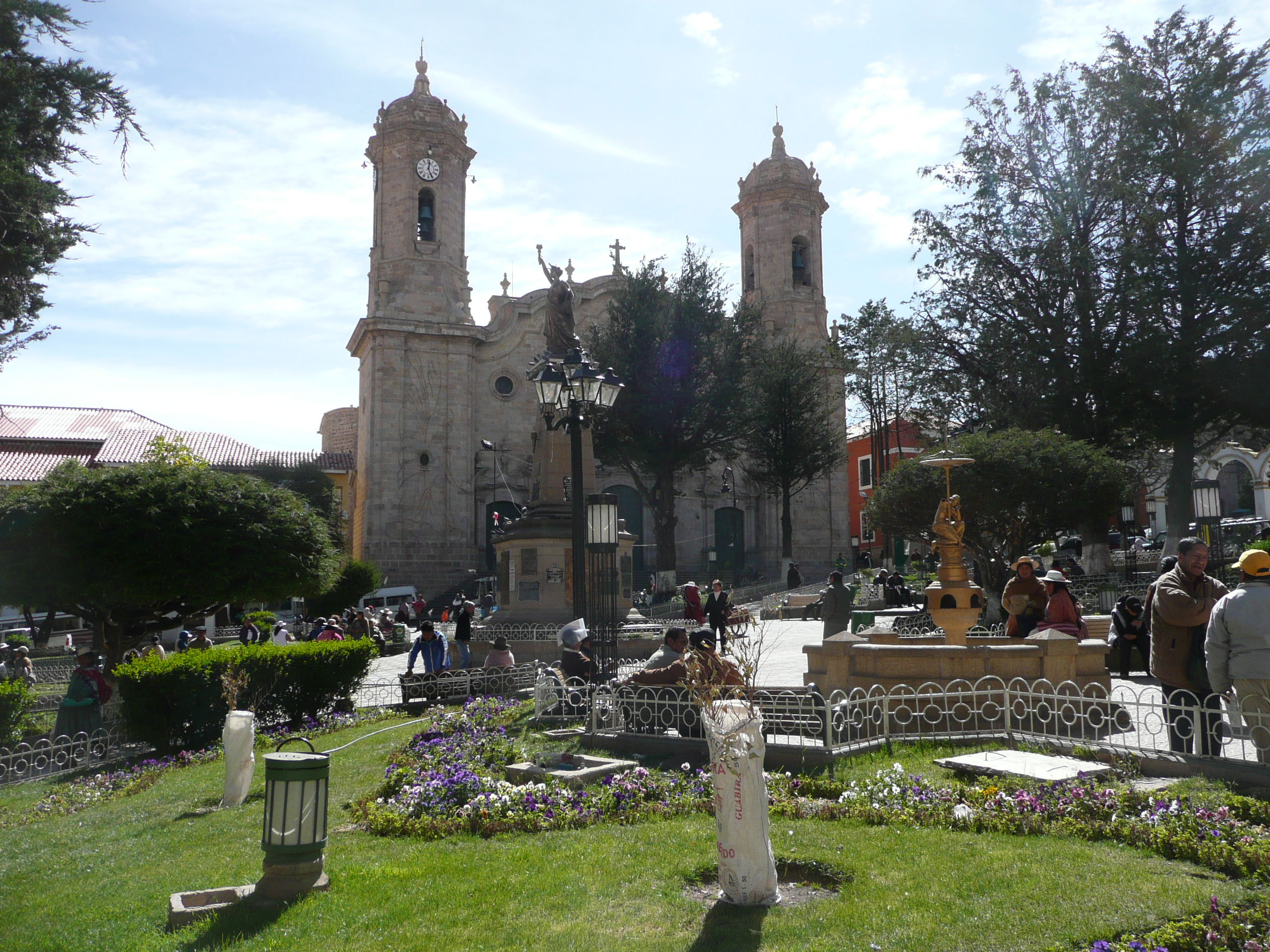
Plaza de Armas, Potosi
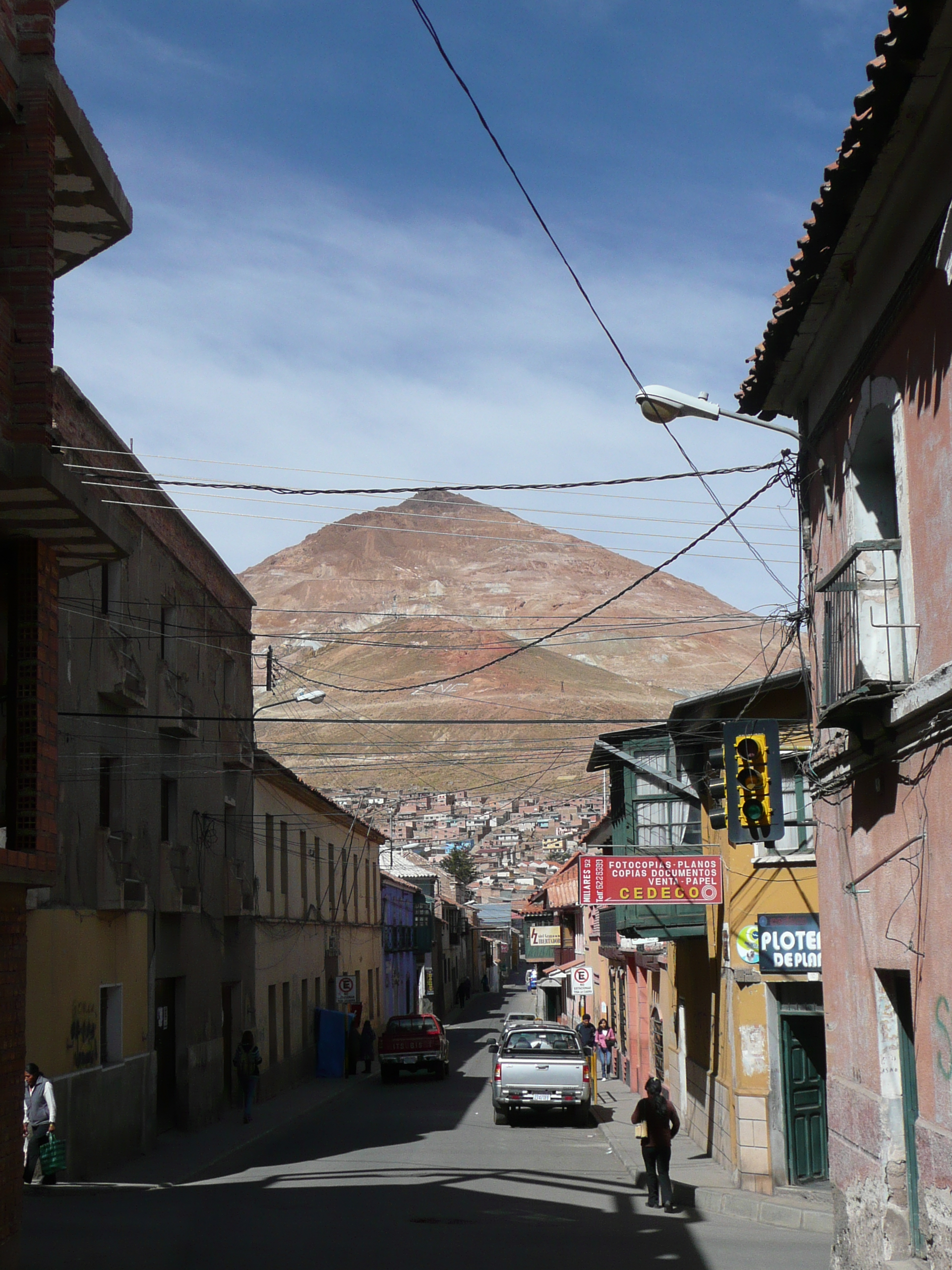
Cerro de Potosi
Potosi became one of the largest cities in the world in the 17th century with 200.000 inhabitants. It is also one of the highest cities in the world at 4090 meters above sealevel. It has quite a sad history as well as many slaves from Africa and the indigenous people died working in the mine (some estimates say up to a million people died). Nowadays Potosi is a Unesco World Heritage site and an absolute stunning colonial city, we walked around in awe looking at the buildings.
The next day we continued on to Oruro, a mandatory stop we’d rather not make, but it is the only sizeable place halfway between Potosi and Lake Titicaca. Just before we got to Oruro we got stuck in a roadblock. We thought that after paralyzing the country for three weeks the protesters had agreed a break of 30 days, but this news must have not reached backward Oruro yet. So we sat it out for a while, until the protesters opened up and let us pass. We reached Oruro just before dark and went back to the same hotel we stayed five weeks before. They had rooms, but the parking lot was full, so we looked for another place. We went to a place around the corner, where a woman opened the door, made a big sigh and asked what we wanted. We asked if she had a room and if she had parking, which she had. We asked if we could see a room, another big sigh and we were told to go upstairs and see for ourselves. We had a look, but were not sure which room would be ours. She came up the stairs and told us we were taking too long and better leave, which we did. It is quite typical, basic manners and service in Bolivia are sometimes hard to find. Quite often you are only greeted with a ‘Si!?’ and if you buy something and pay, very few people will actually say ‘Gracias’ or anything at all, they just turn away after grabbing the money. We did end up finding a hotel with parking a few blocks away. We had a horrible night, it was incredibly noisy all night, except for between about 4am and 6am, the hotel was all concrete, tiles and stairways, great acoustics, especially for the tv which the staff was watching at full volume all night. The sheets hadn’t been cleaned and there was still shit in the toilet. The mattress was so worn and hollow that Julia and I were solidly against each other all night as trying to move to the sides of the mattress was like climbing Rimutaka hill! The next morning we had a quick breakfast and tried to get our change as we had paid the night before, when they didn’t have change (which is never their problem, but always the customers problem!).
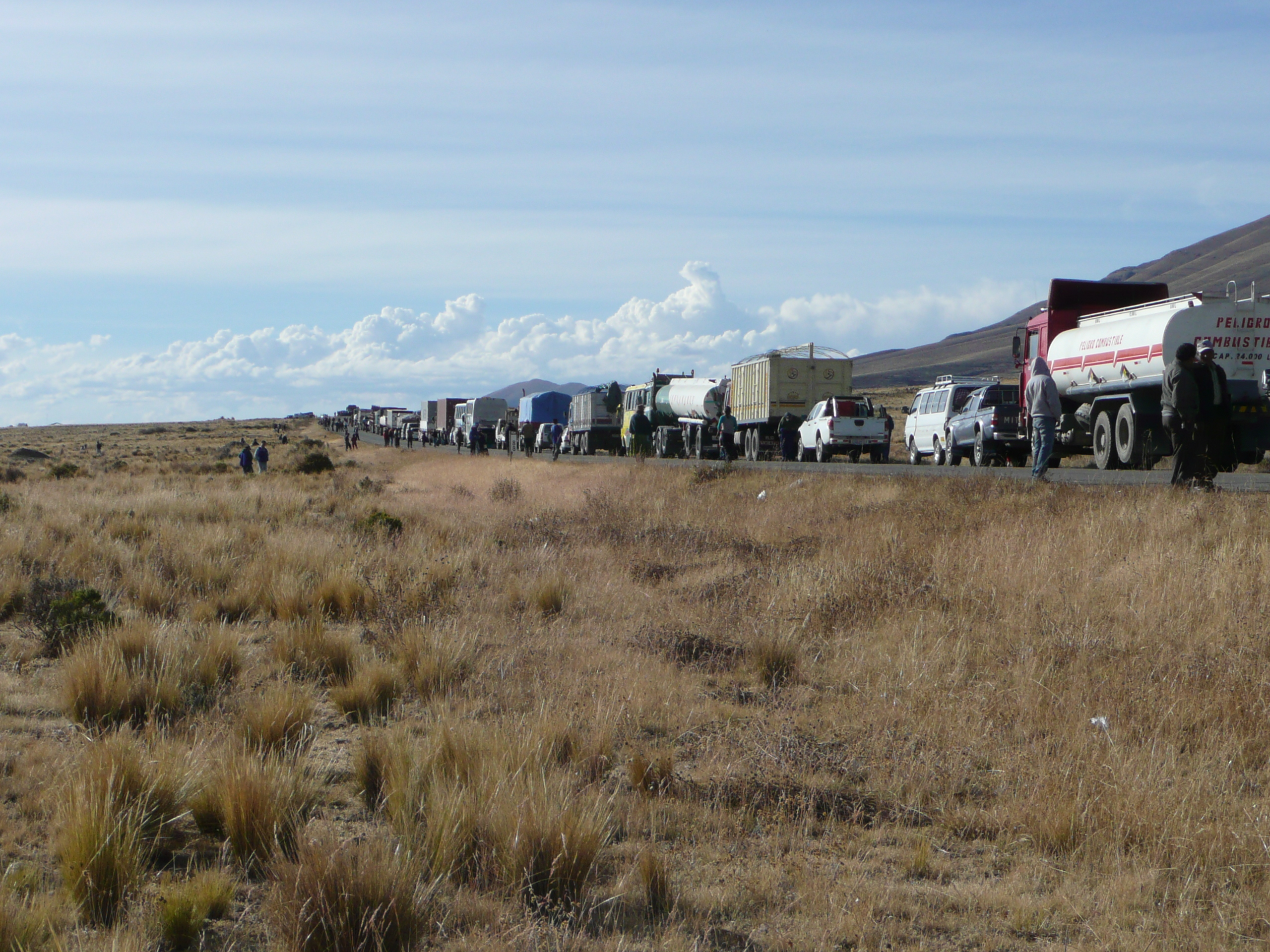
Waiting at roadblock outside Oruro
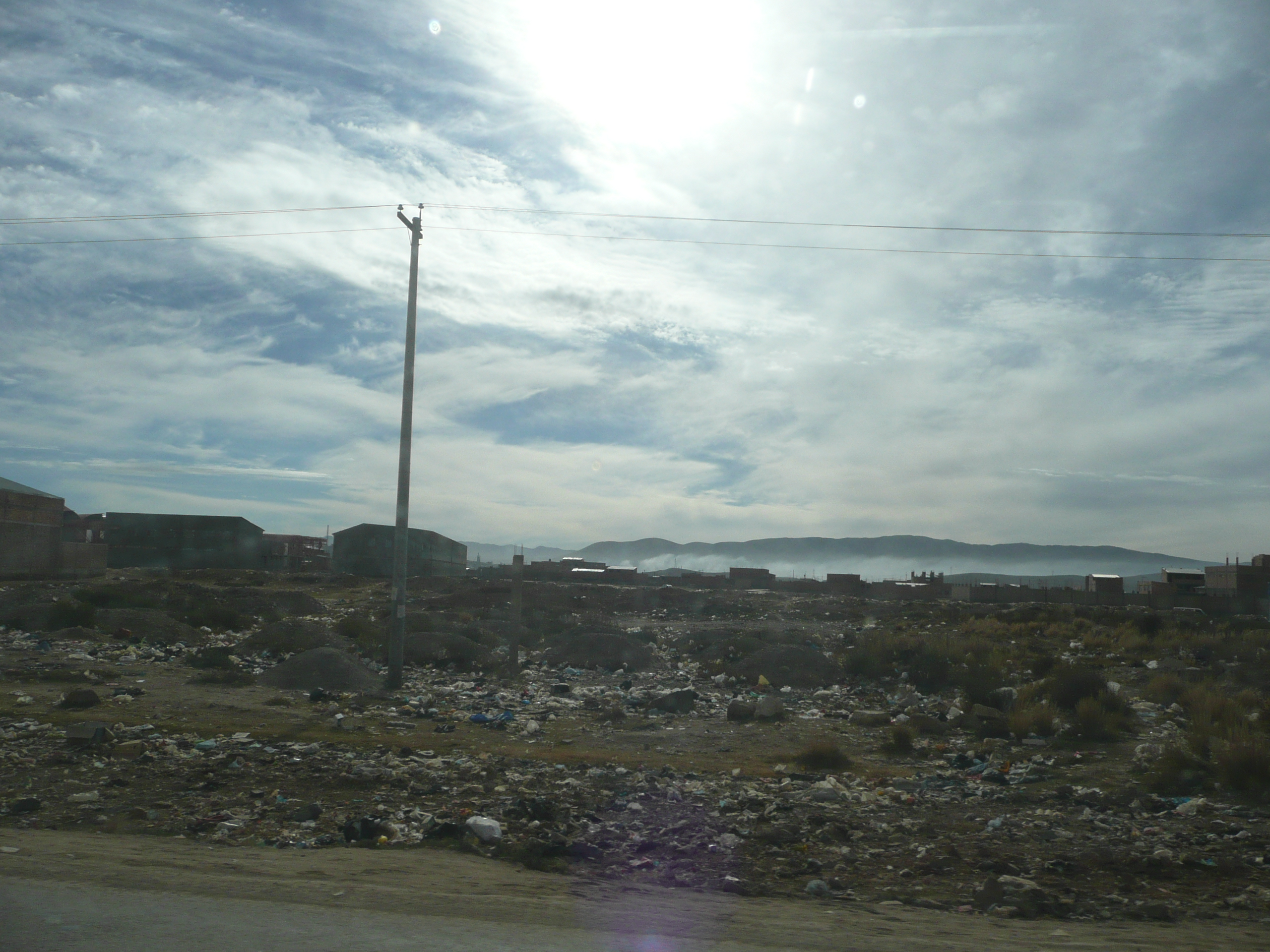
The amount of litter in South America is shocking, people just chuck everything out of the car when they are done. Capital of Litter and Ugliness is Oruro.
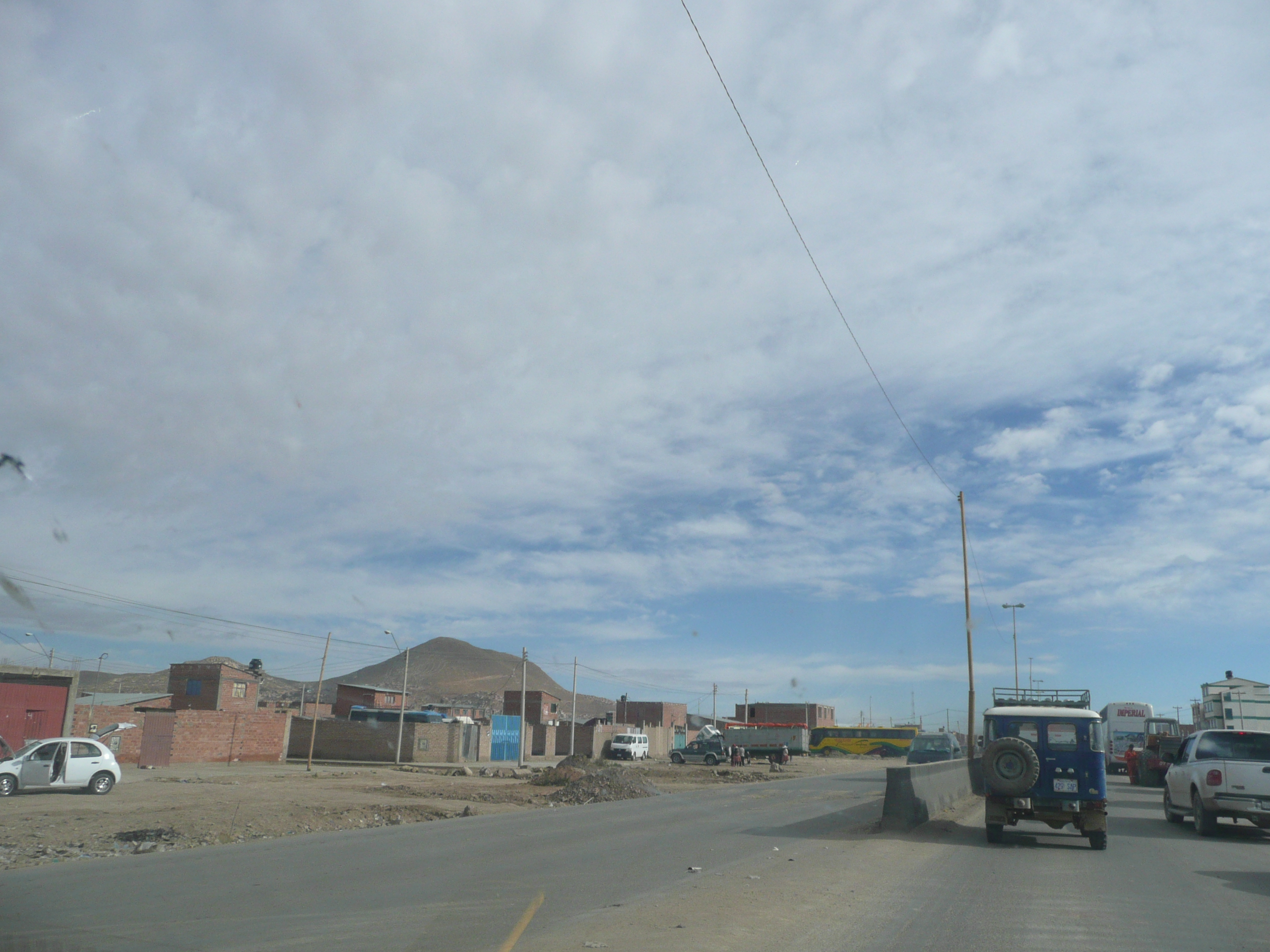
Oruro
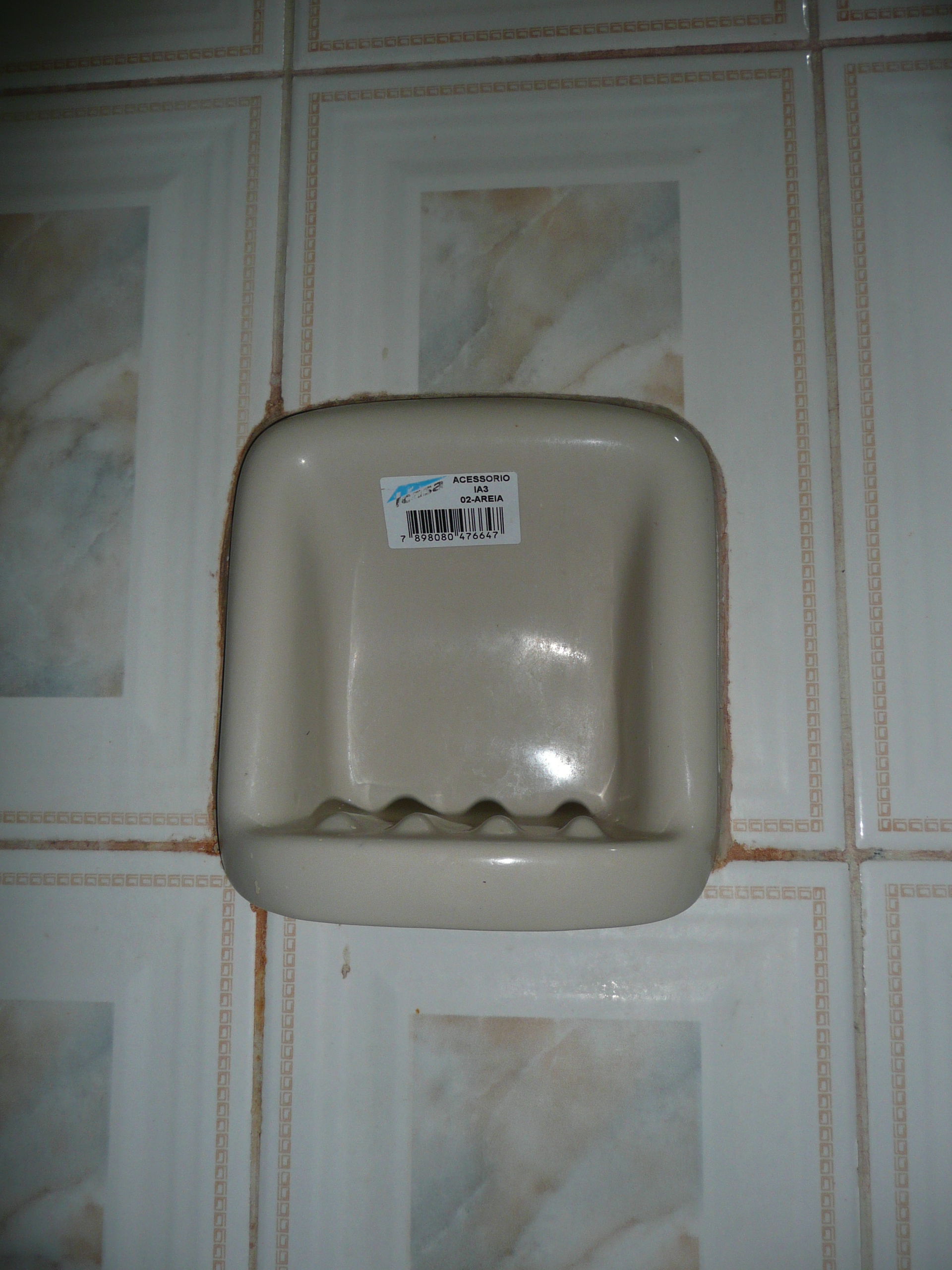
Typical South American thing; don’t take barcodes/tags of building materials, tv’s, beds etc. We’ve seen this in places that must have been around a long time, but they still have wrapping around the shower rail, bed frame, stickers on sinks, toilets and every shower pane. Just thought to share this important fact!
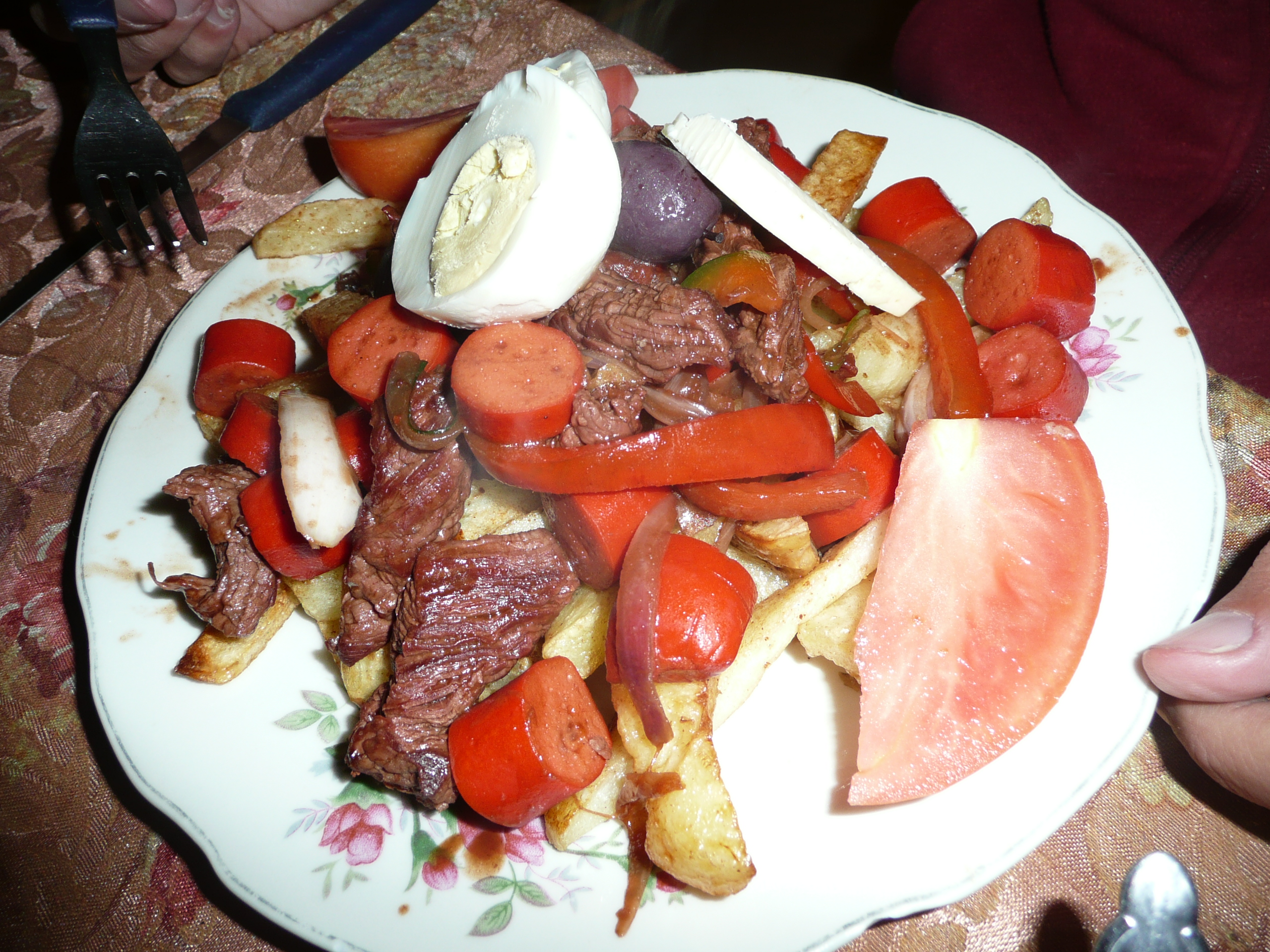
Typical Bolivian meal
We hit the road the next morning and got out of town with reasonable ease. Outside of Oruro we tried to fill up at YPFB, which is always hard as foreign cars pay three times the normal fuel price, if they want to sell it to you at all, but we have a scheme to get the cheap fuel:
Me: Hello, how are you?
Fuel attendant: We don’t have fuel for cars with Chilean licence plates!
Me: But I have a licence from the Bolivian government for fuel at local prices (show him temporary car import paper from the border, no licence at all, but has official looking stamps)
Fuel attendant: Aha…
Me: And I have a tip of 10 Bolivianos for you.
Fuel attendant: How much fuel do you need?
Me: Full
Fuel attendant: *nod*
(note again the lack of any form of politeness)
20 minutes later we got stopped by police with radar gun as apparently we were speeding. We did 98 km/h, just like the car in front of us, but we are gringos of course so get stopped. No idea what the speed limit was, as there are no signs. We dealt with two agents and one officer and for 20 minutes pretended as hard as we could that we had zero knowledge of Spanish, while they tried to explain to us that we had to pay a fine of 200 Bolivianos for exceeding the speed limit (40 NZD, 25 euro). We just smiled and played dumb and offered them some chocolate. They refused initially, but when they realised they were not going to get any money out of us, they eventually accepted the chocolate and asked for some drinks as well, which we of course didn’t understand and we quickly took off.
We then got stopped by another police guy who wanted to see my drivers licence. We only hand over copies (so they can’t keep the originals as leverage for a bribe), but he wasn’t satisfied with that, but of course we didn’t understand. Then he wanted to see if we had a triangle, didn’t understand that either, so he let us go.
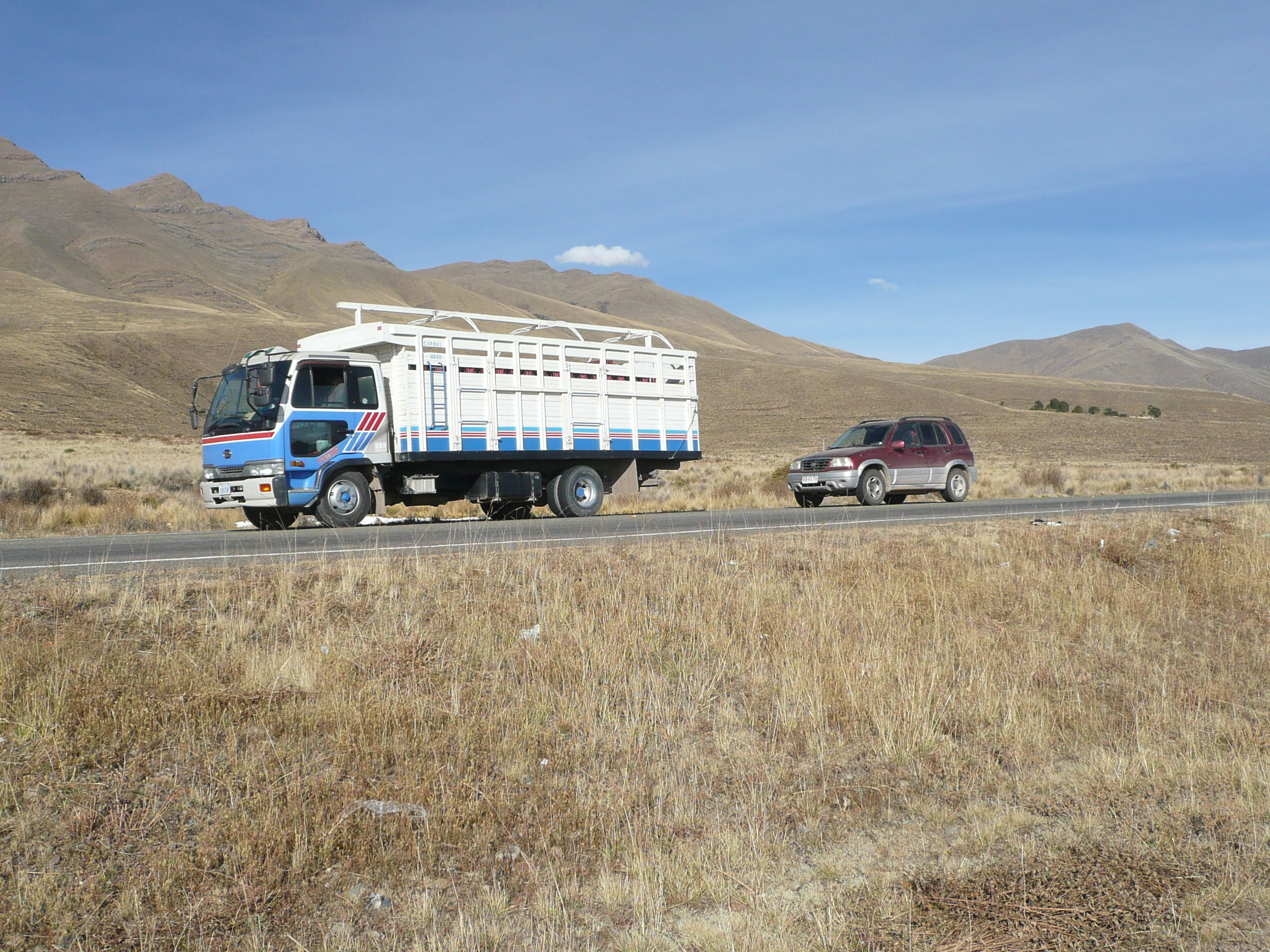
Next was driving through La Paz and El Alto, took more than an hour and was crazy.
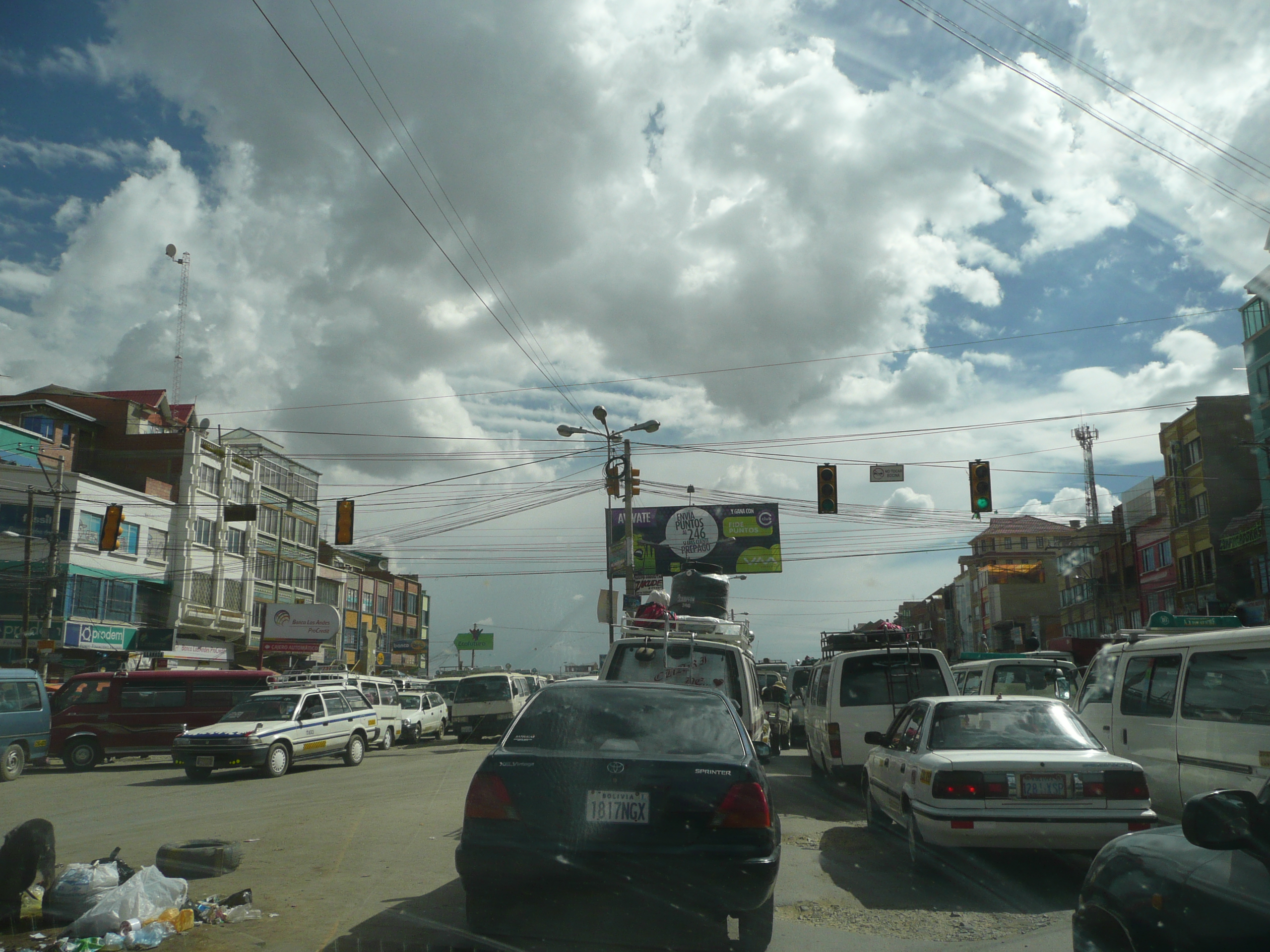
Driving through La Paz/El Alto was crazy and it took a long time to get to the other side
At the ferry we got stopped by the Bolivian Navy (seriously, wtf!? Bolivia is landlocked and only has a lake) who wanted to see all our paperwork, so we hand over all our copies. He wasn’t happy with that, but hey, we don’t understand!! He told us we are not allowed to carry fuel over, luckily we have tinted windows so our jerry can is invisible and as we didn’t understand, we could go on the ‘ferry’.
Then as we thought we had reached Copacabana we reached the last checkpoint of the day. Two police guys going over our copies and trying to make us pay to get into town. I said I needed a receipt. They said then it costs double and showed me a receipt for trucks that need to be ‘sanitised’. I said that I wouldn’t pay as I don’t have a truck. I was getting a bit wound up and said I wasn’t going to pay a cent and walked outside without the papers (just copies) and pretended I had all the time in the world, while blocking the road. They gave up rather quickly and I got the papers back and we finally reached Copacabana after 9 hours (320 km).
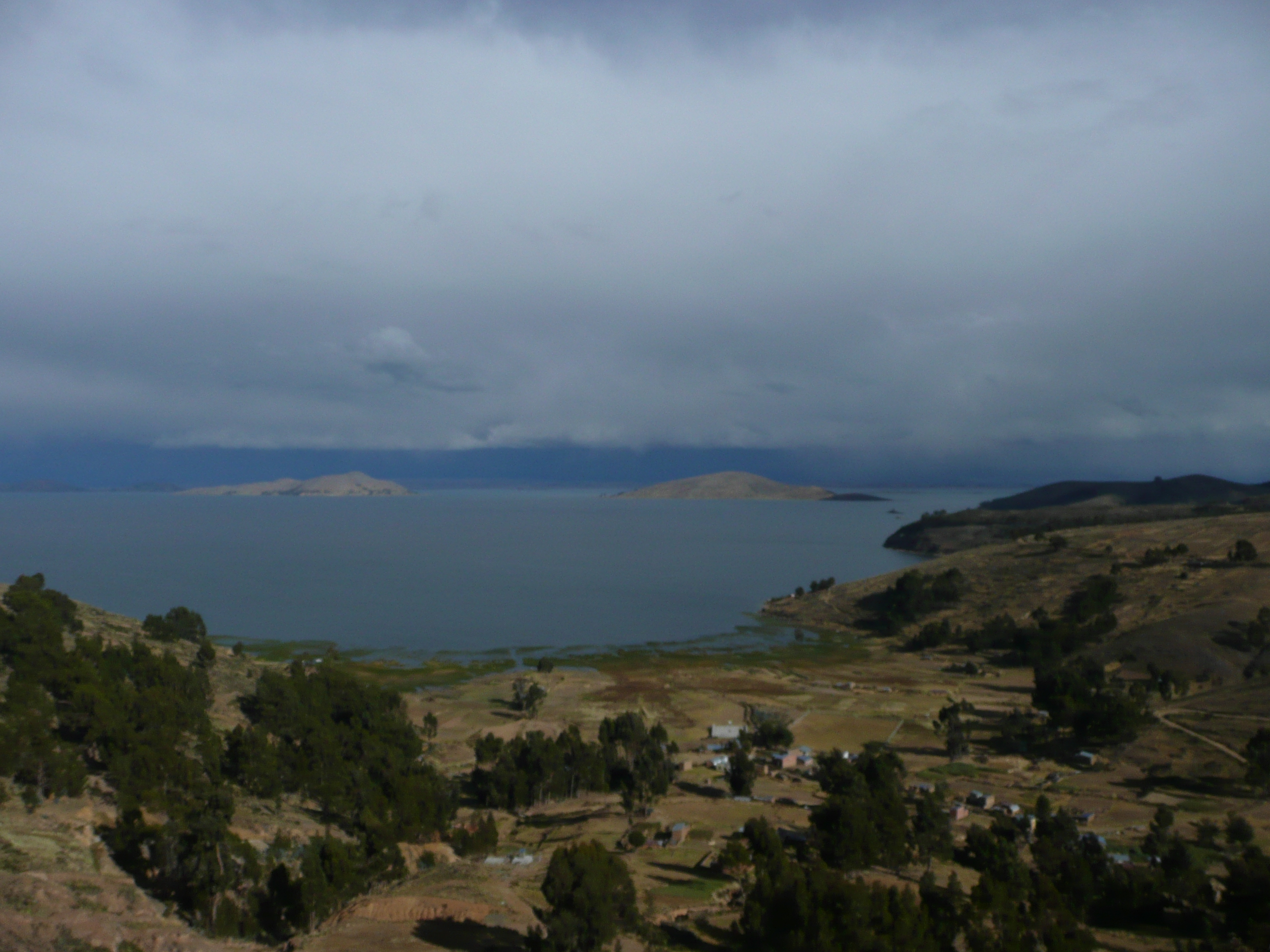
First views of Lake Titicaca
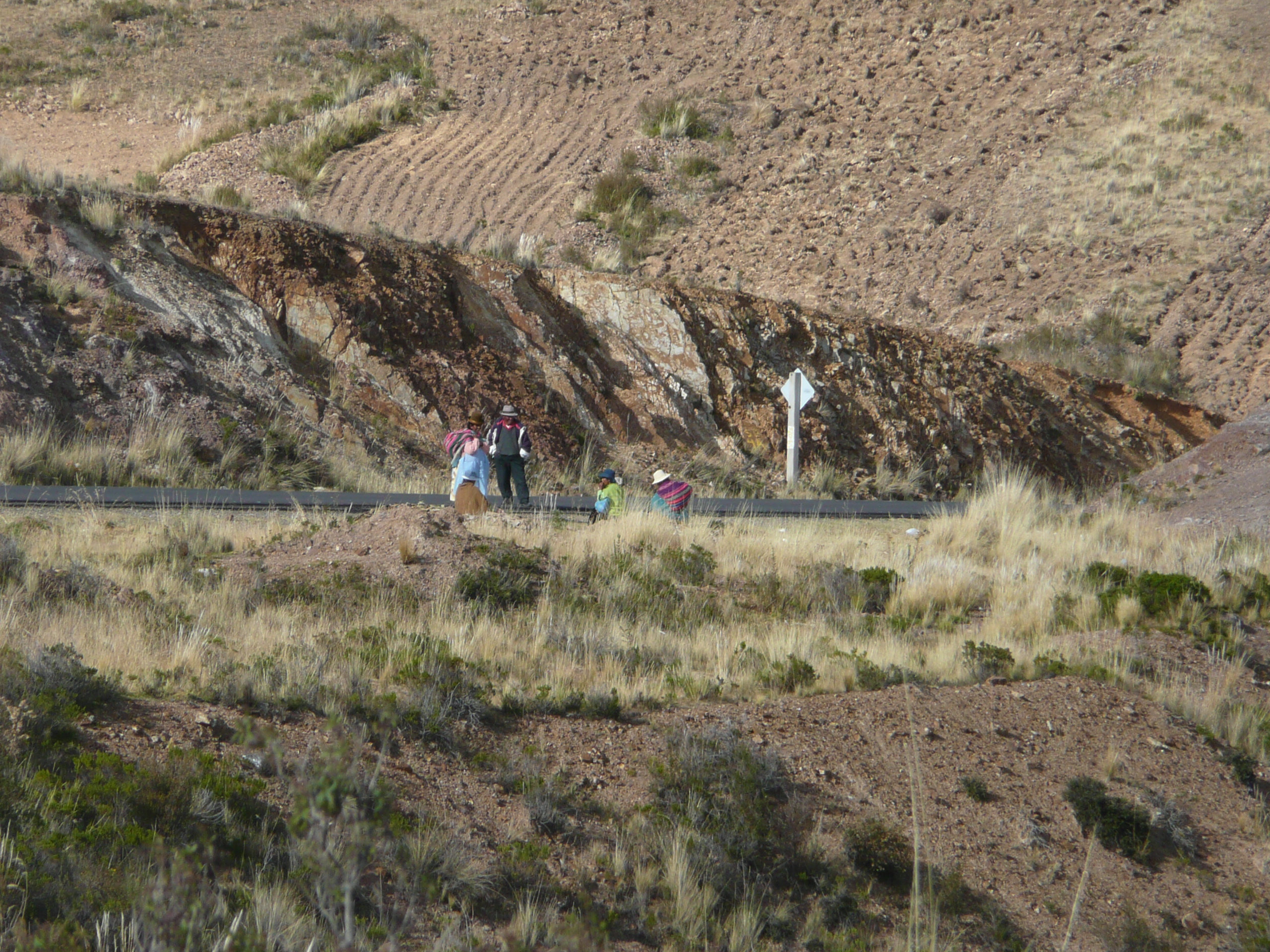
No matter how far away you are from a town, there are always people lounging on the side of the road
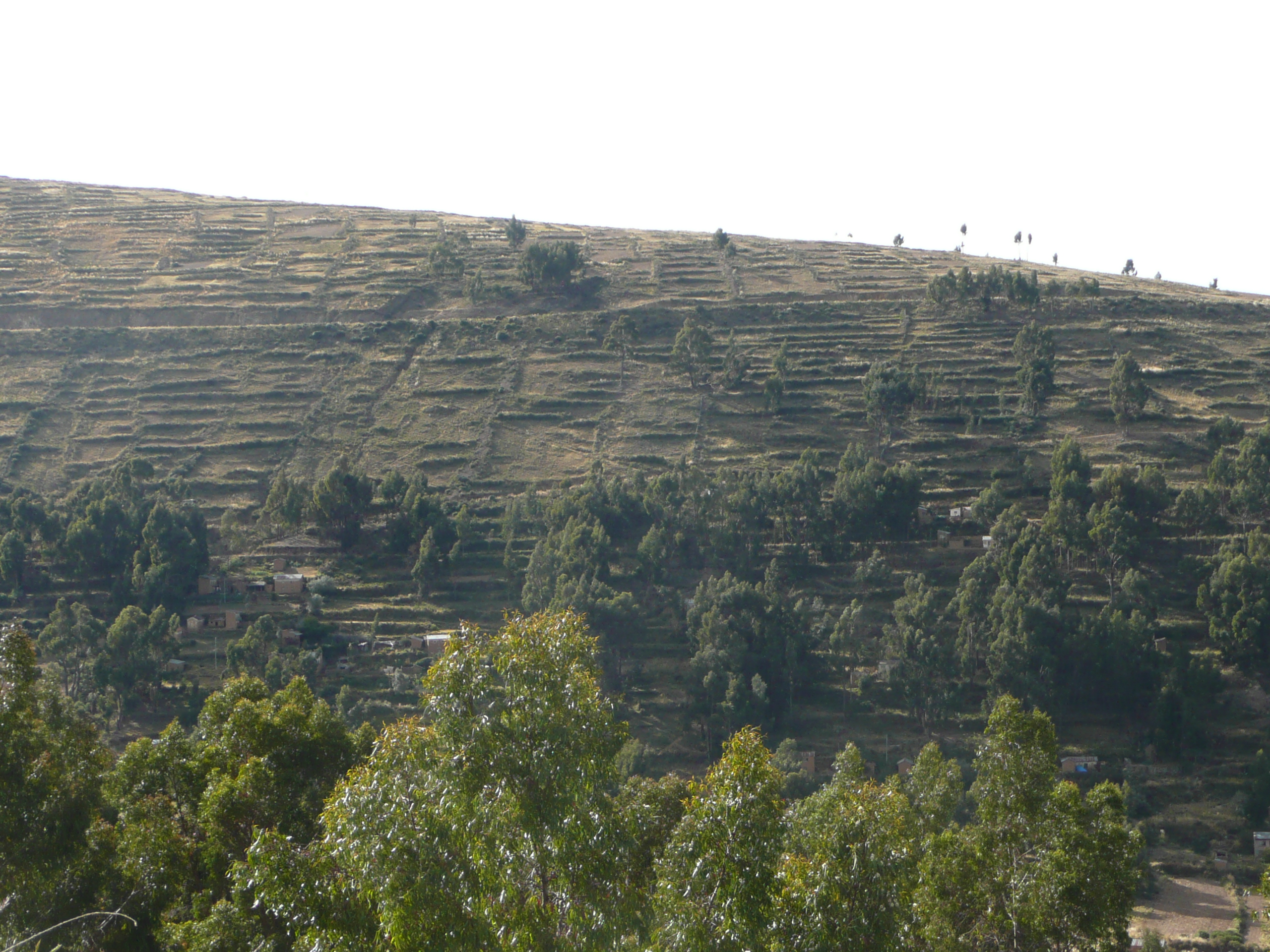
Inca terracing can be seen everywhere
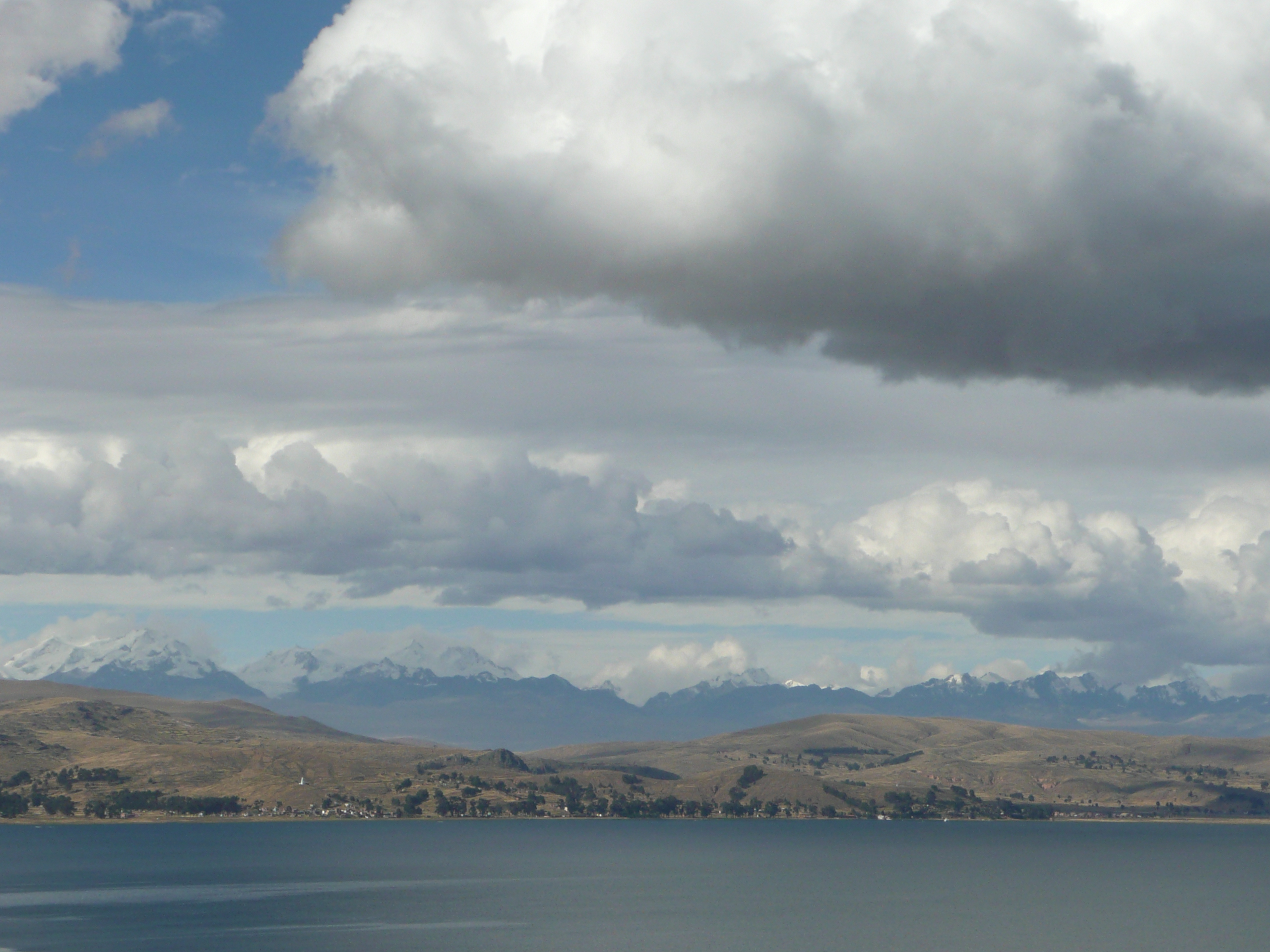
Lake Titicaca with Cordillera Real and its snow capped mountains
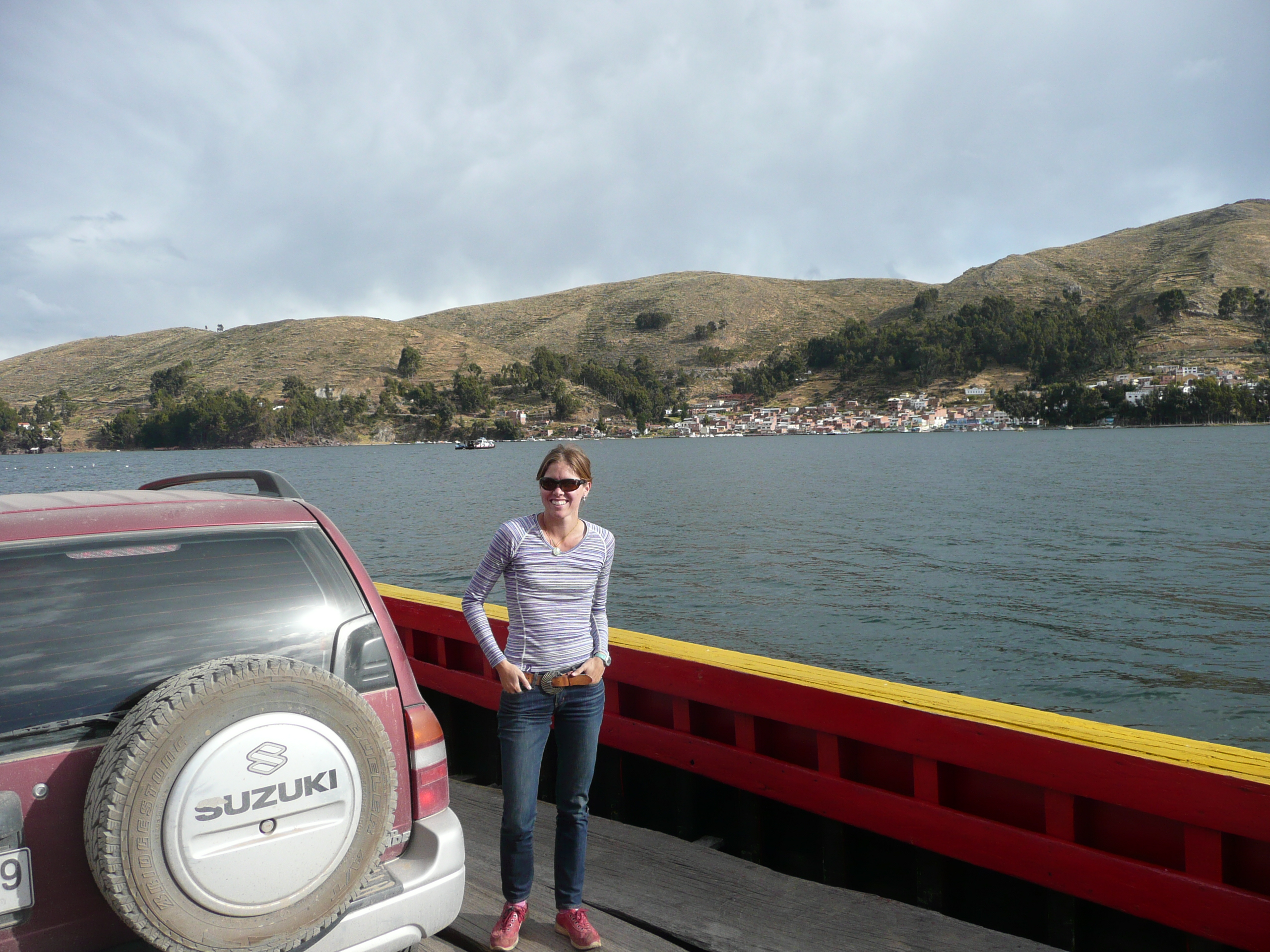
Julia checking which shore is closer in case we’ll end up swimming
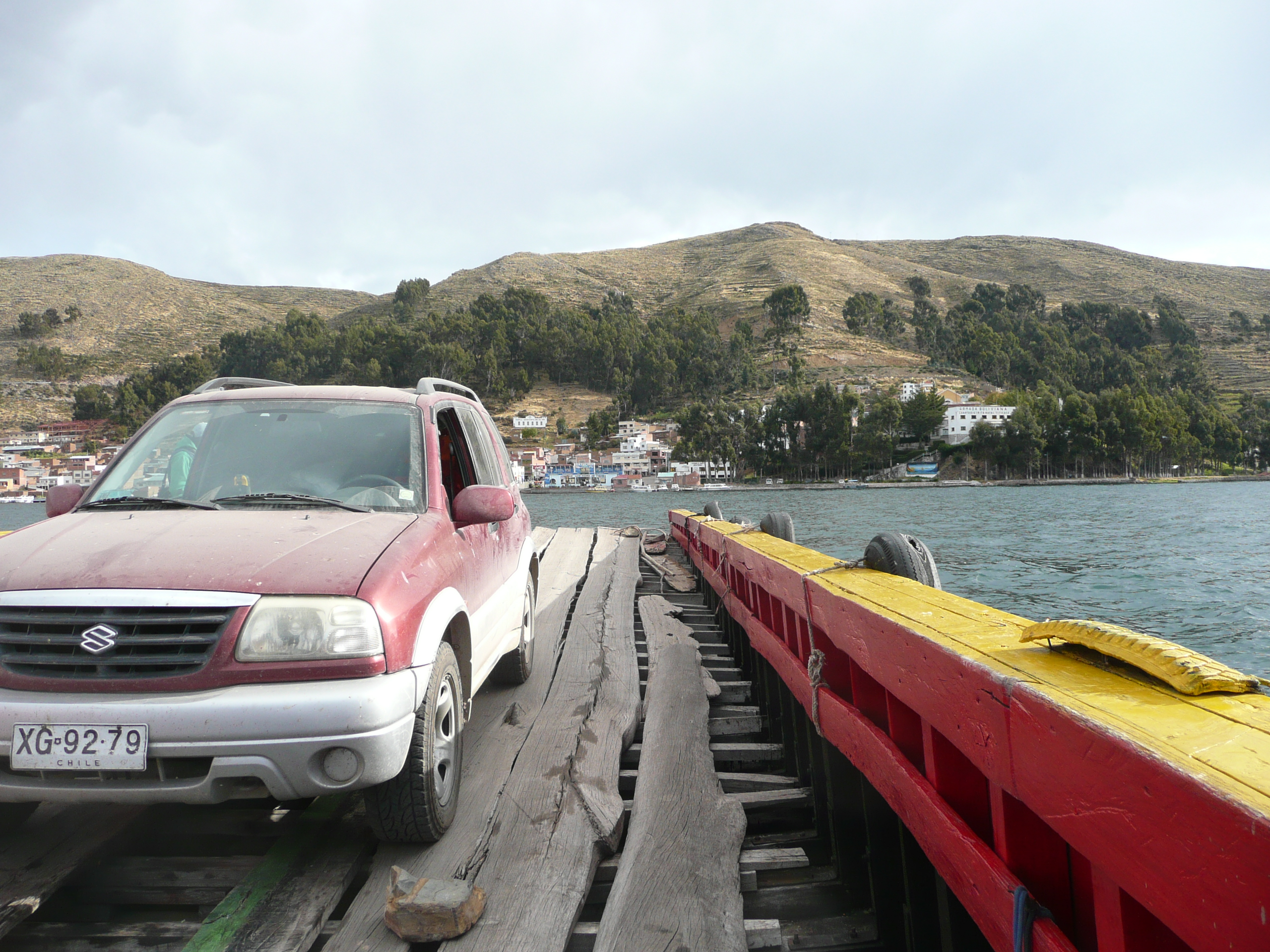
Crossing to the Copacabana side of Lake Titicaca. Not so sure of the structural integrite of this barge, it felt like it was going to fall apart
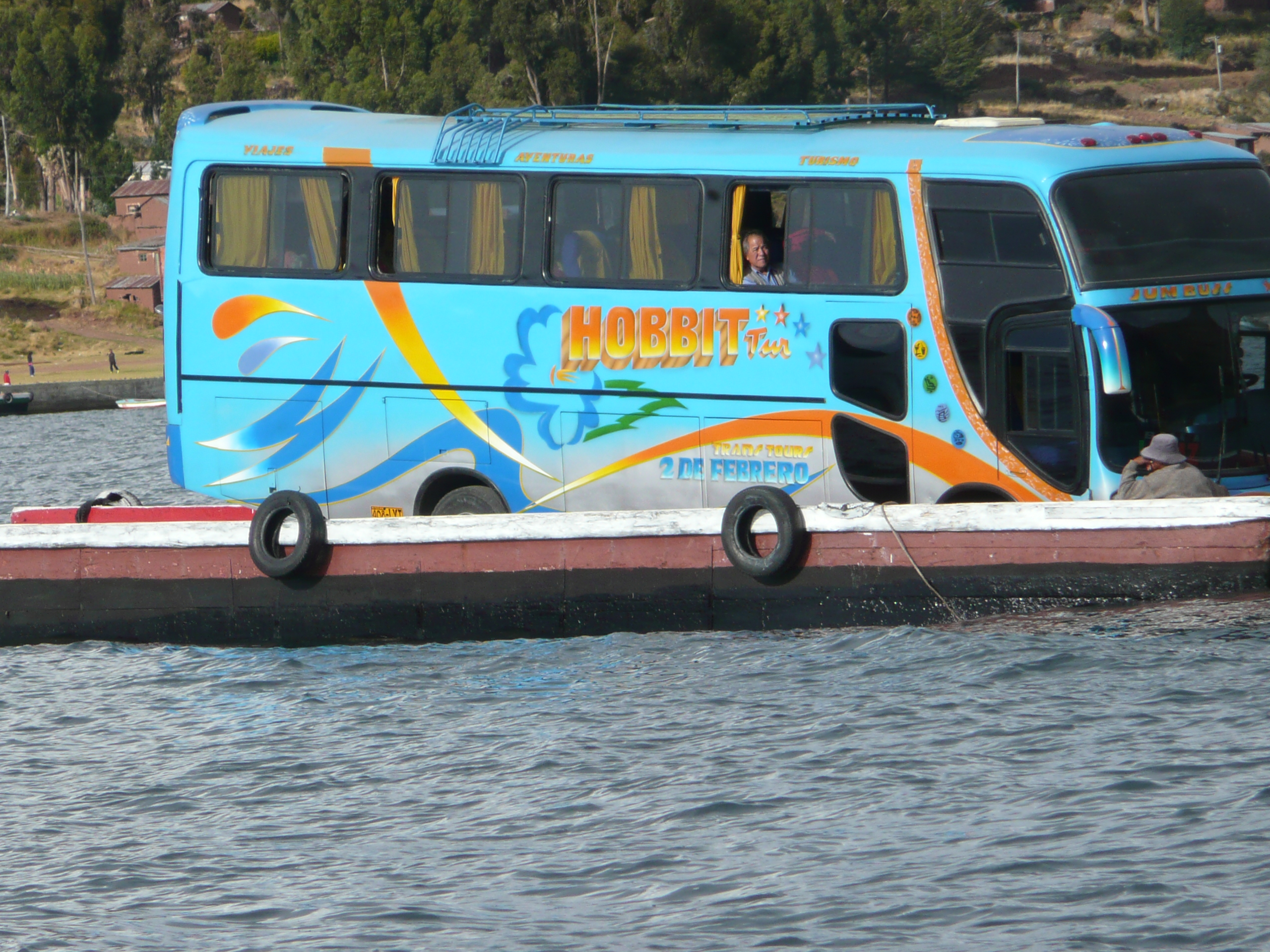
Even in Bolivia they have Hobbits!
In Copacabana the two accommodations we had looked up before that looked really good were booked full, guess we should have made reservations! Not to worry though, as there are plenty of places in such a touristy town. We saw a great place, but thought it would be way too expensive for us as it was a three star hotel. And it was, but when I asked if they had anything cheaper they instantly knocked a lot off the price and when we saw the room we decided to splurge and take it.
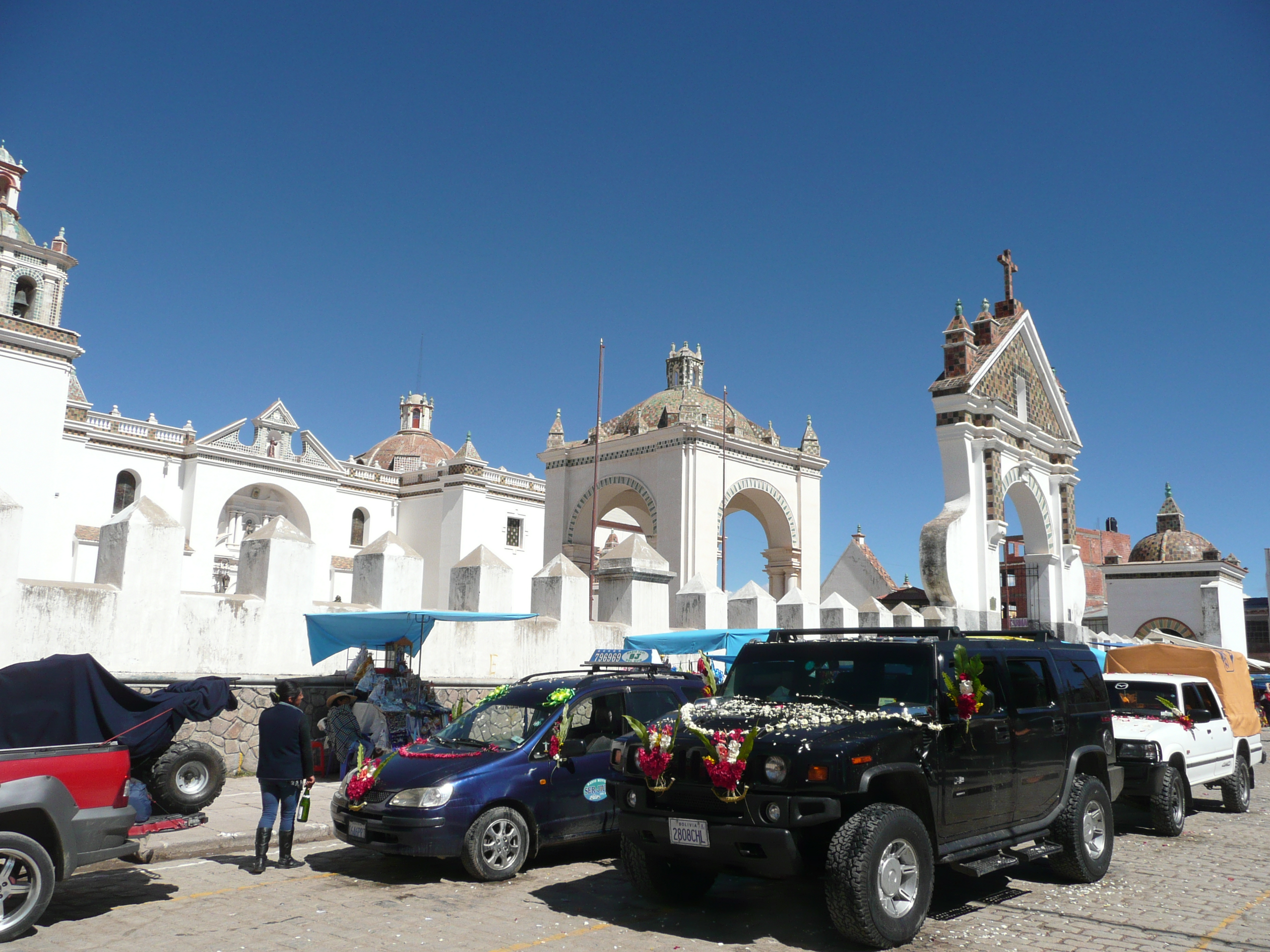
On Saturdays and Sundays you can decorate your car and pay the priest to bless your car, then you spray the car (and engine) with booze and this will protect you on the roads (seeing how people drive they must think that this ceremony means they have become invincible)
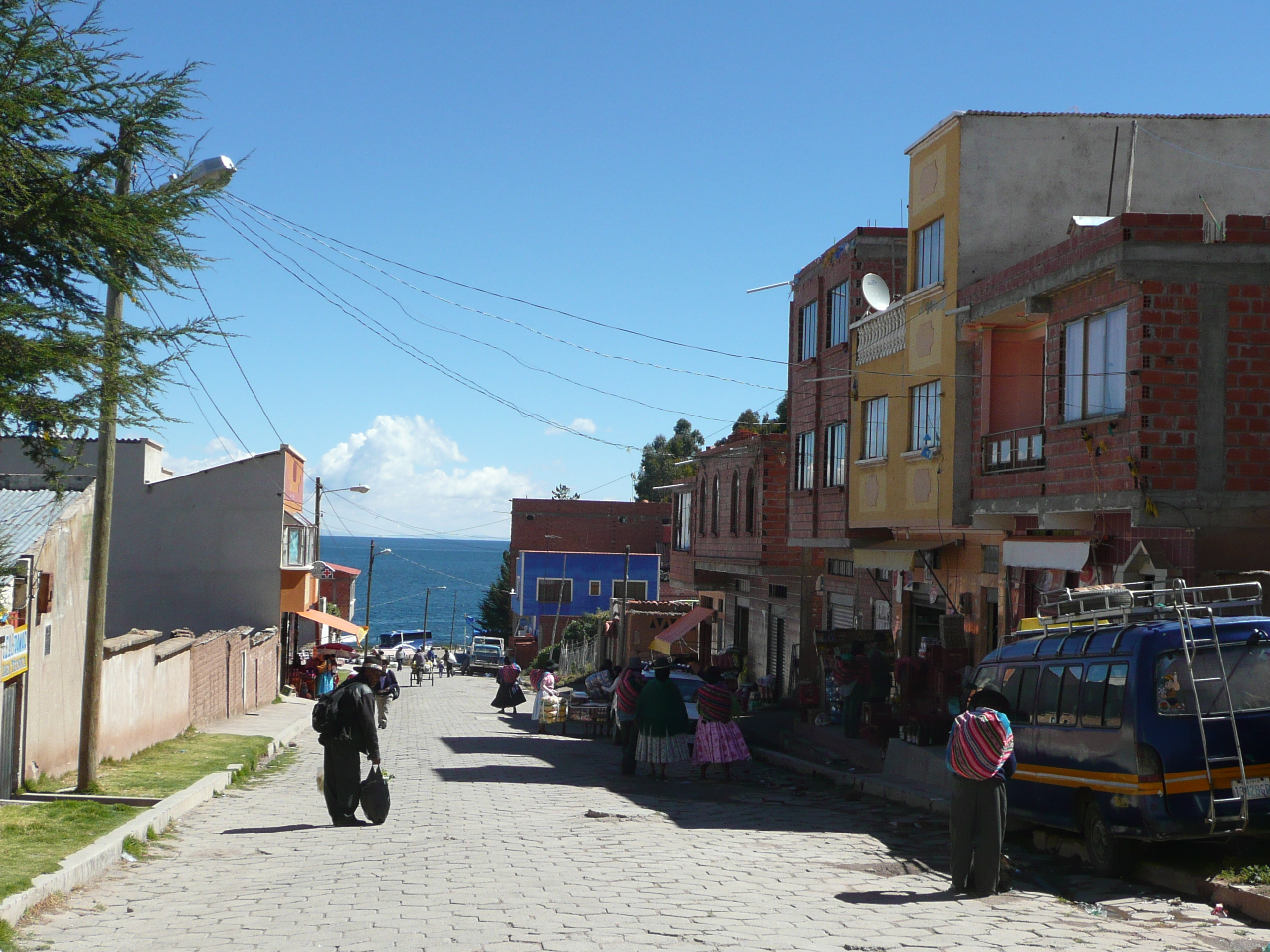
Copacabana
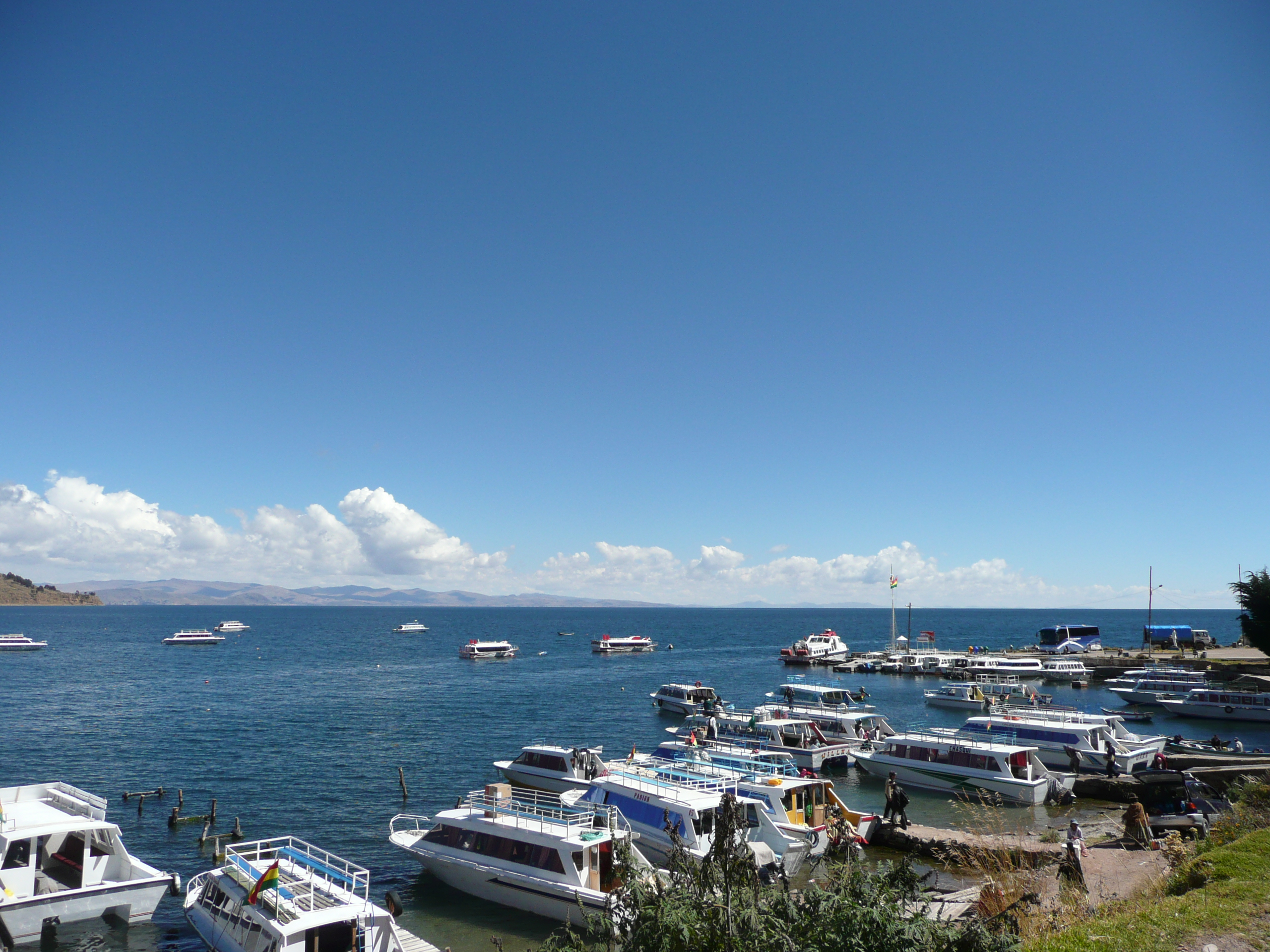
Lots of boats at the ready to transport tourists over the lake
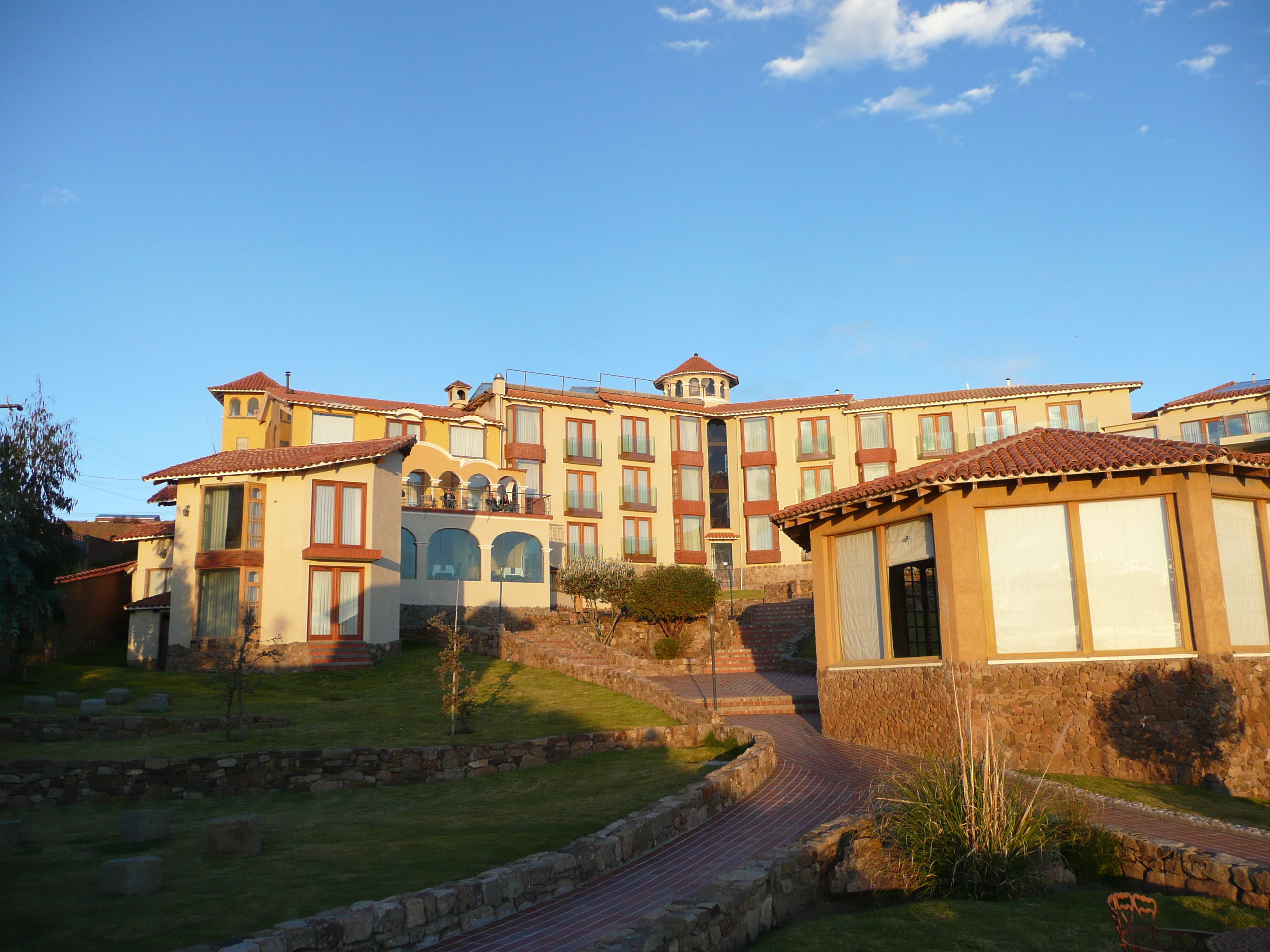
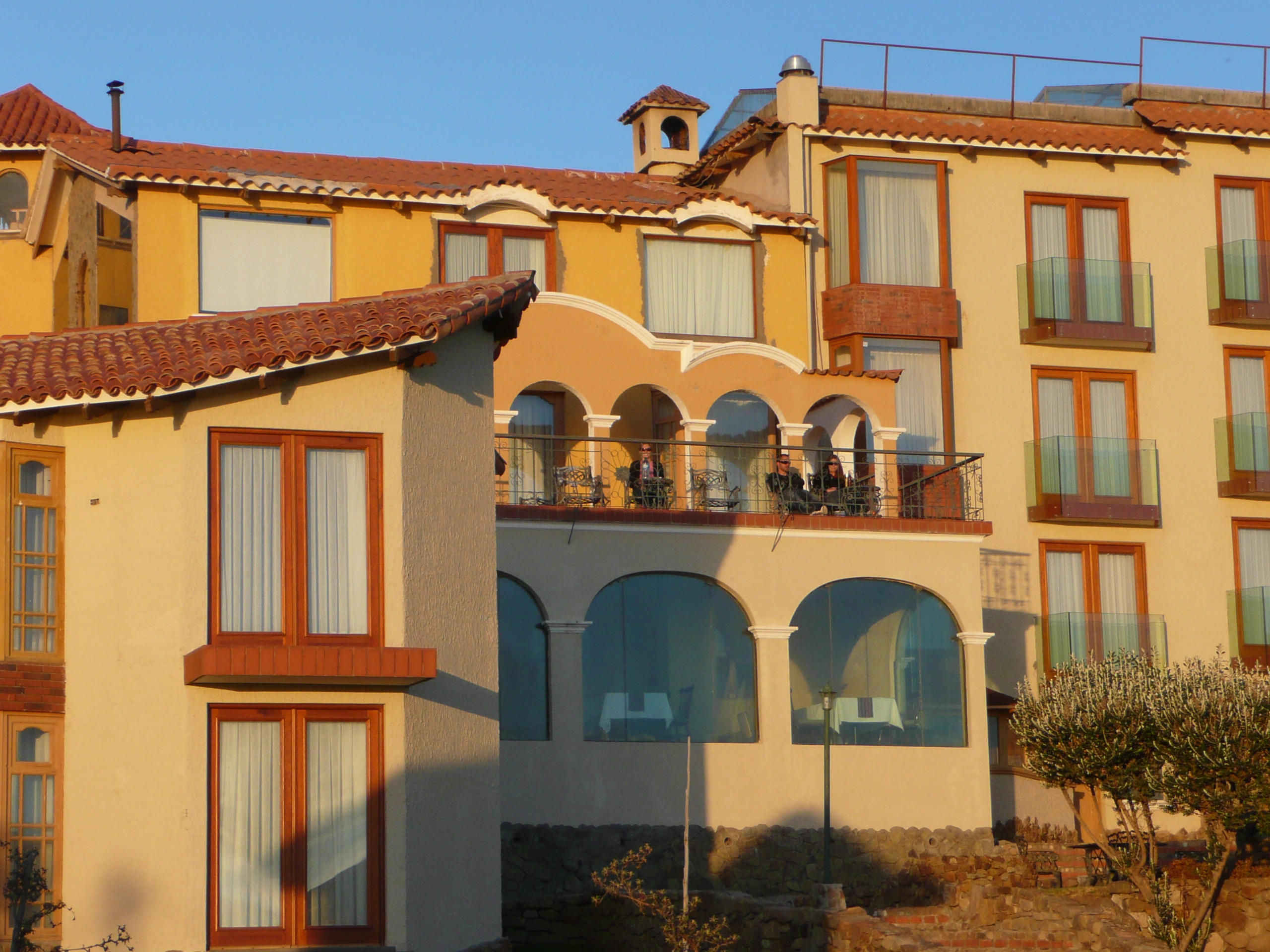
Our luxury accomodation for four nights
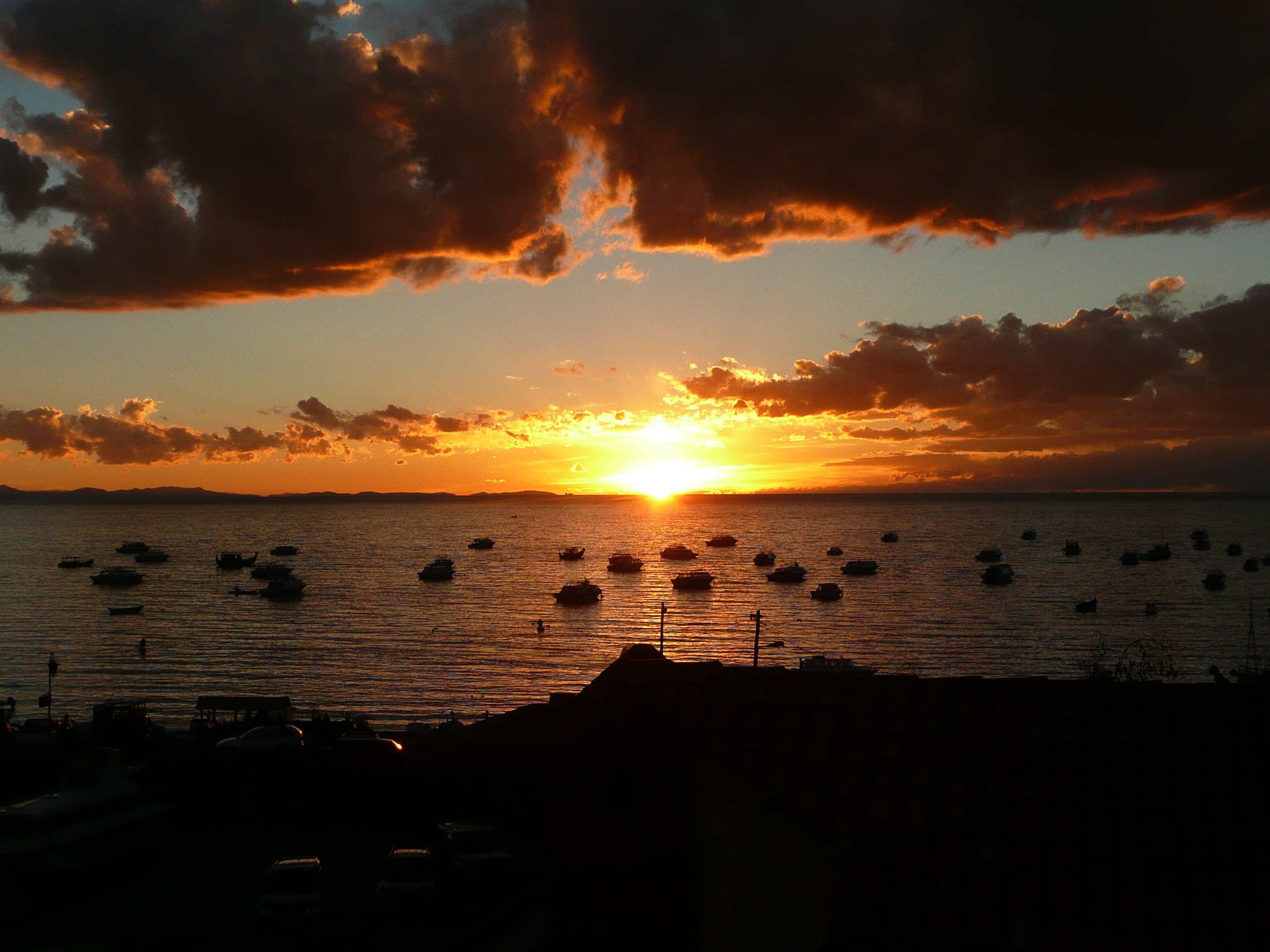
Sunset from the balcony of the hotel, looking out over Lake Titicaca
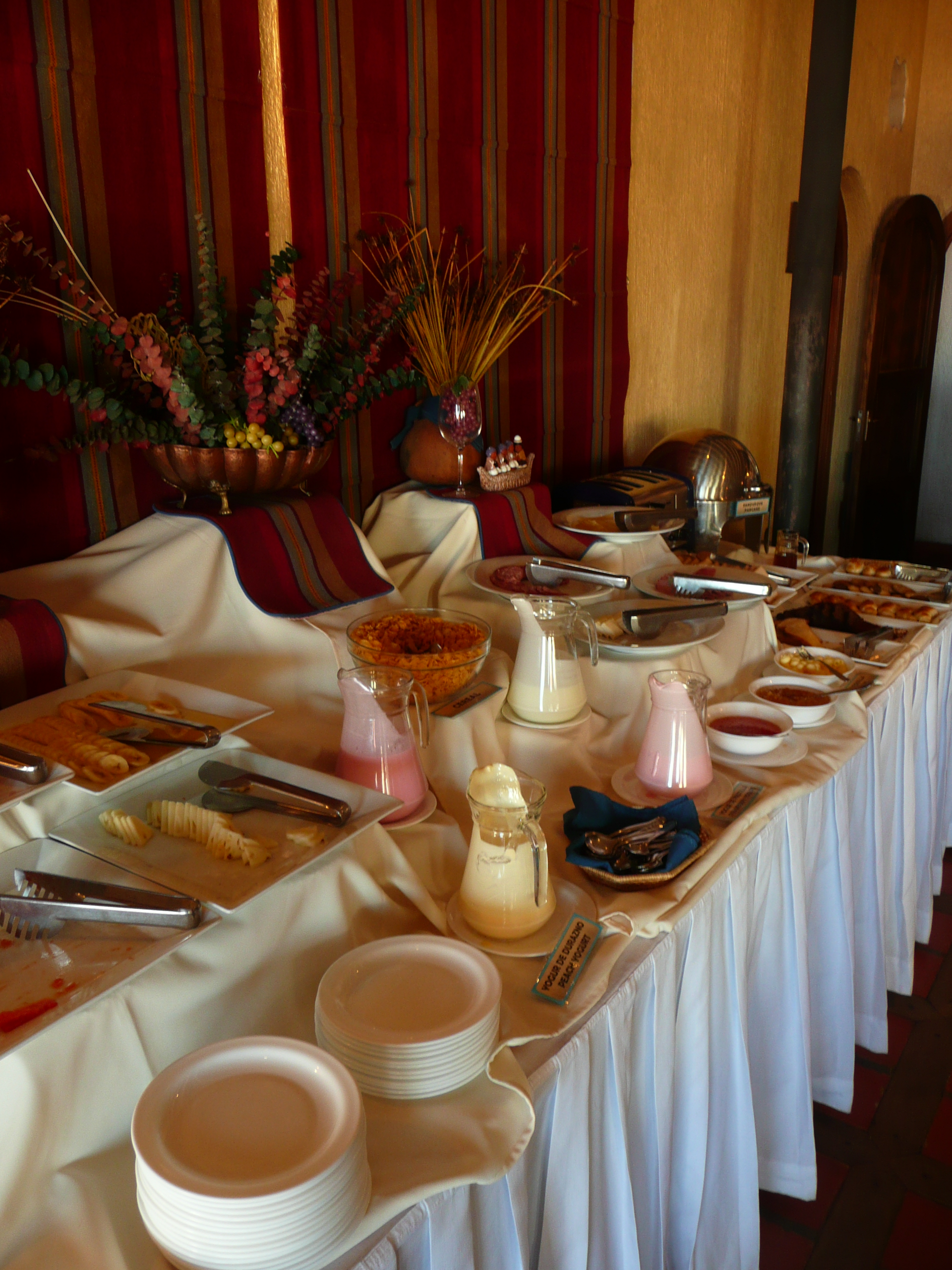
Best breakfast of our trip, we ate a lot!
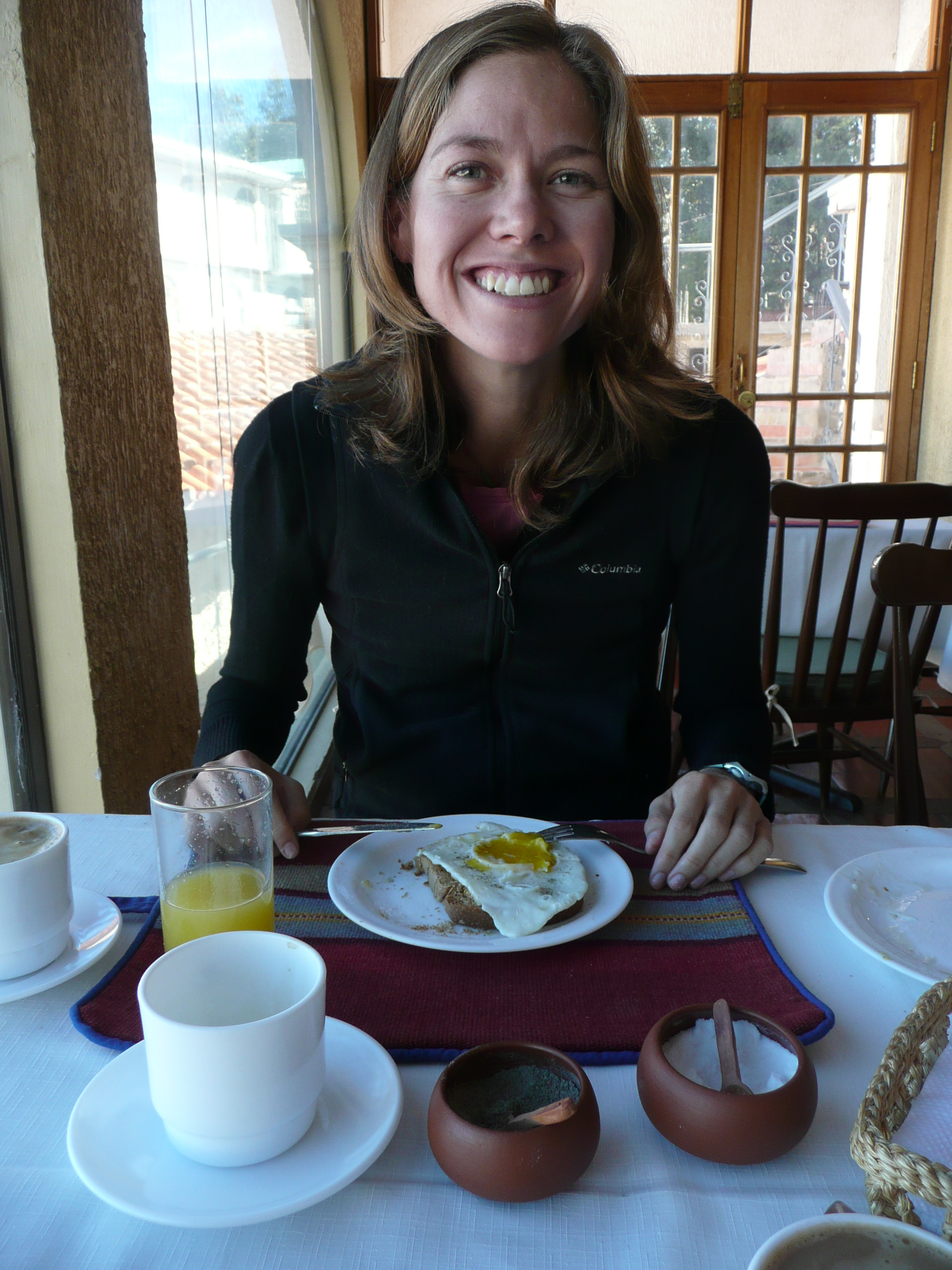
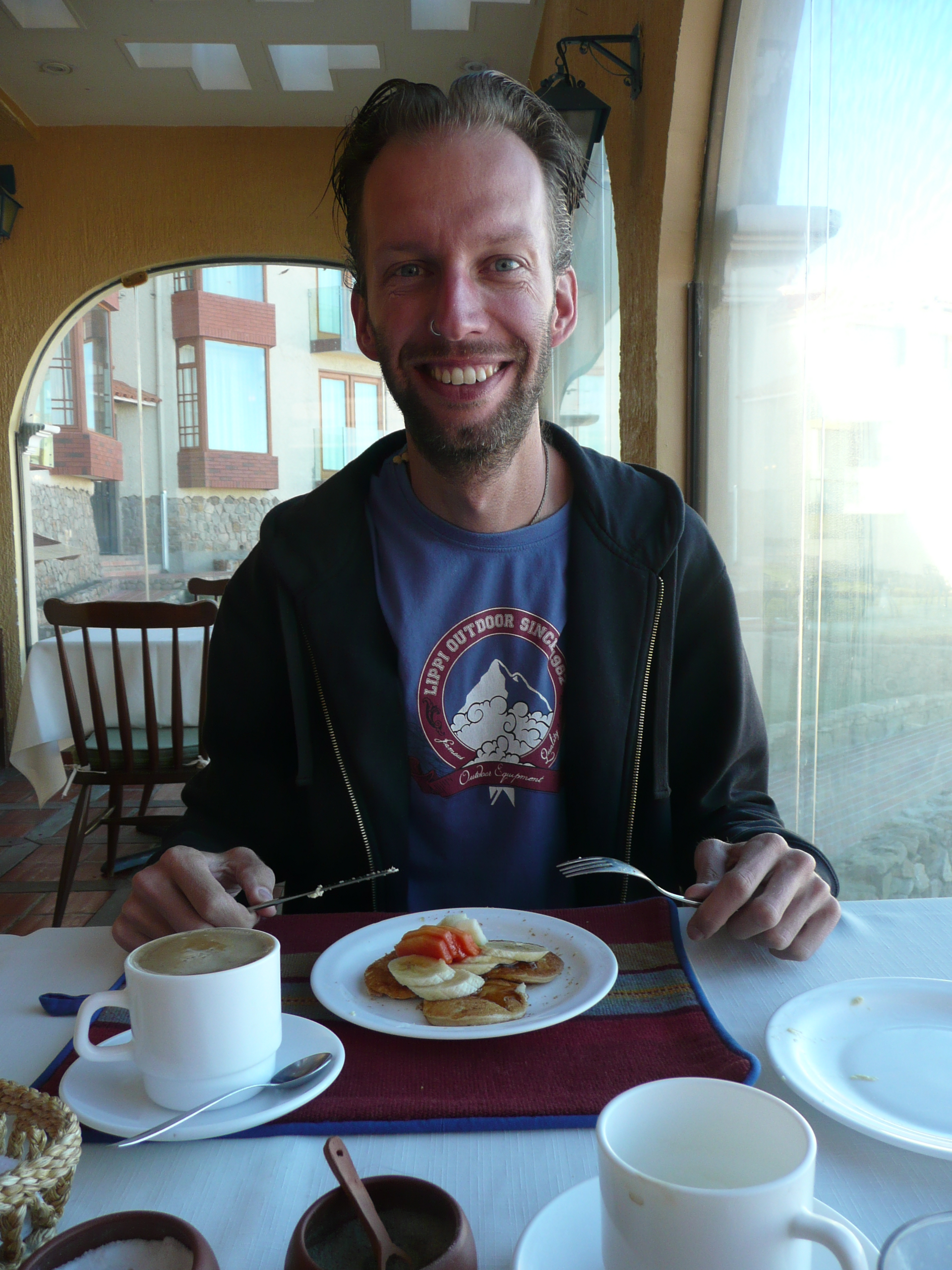
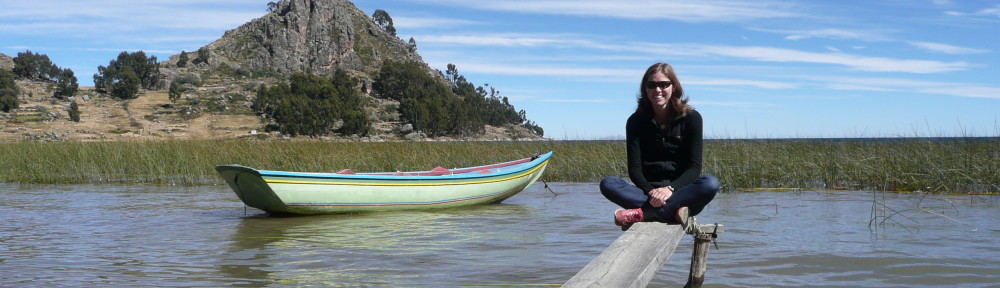
We had a great time in Copacabana, we just hung out, looking out over the lake, eating massive breakfasts, having a drink while watching the sun set in the lake. We didn’t feel like taking one of the early two hour boat rides to Isla del Sol, so instead we drove the 16 km to the end of the peninsula. That appeared the right thing to do as the scenery was amazing, Inca terraces everywhere and great views over the lake from the hill tops. We got at Yampupata, a small village at the top of the peninsula, thinking that we could charter a boat to Isla del Sol from there, but there was no one around so we lingered a bit and after a little while a local came running over and asked if we wanted a boat. A kid came over who wanted to guard our car, knowing that he would disappear as soon as we were out of sight, we agreed anyway, thinking that opportunities for pocket money in such a remote place would be few and far between for him.
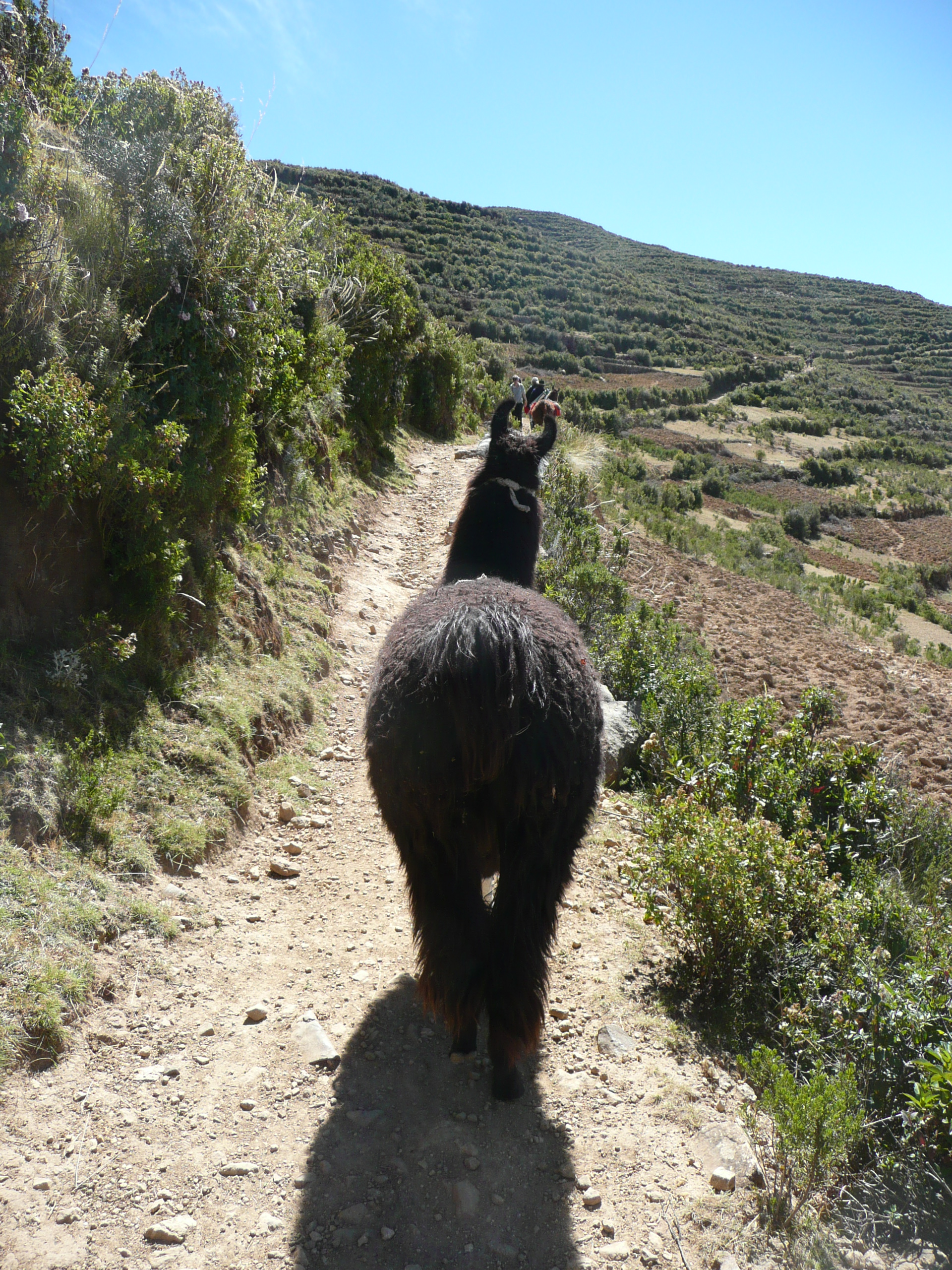
The boat ride to the island took about 25 minutes and we were dropped off at the southern point where one of the Inca ruins is perched against the hill. Some indigenous ladies were selling beautiful fabrics, so we bought some more (we are going to need a shipping container when we leave South America…). We then hiked across a small path further north to the little town of Yumani where we descended following the stream which the Spaniards thought was the Fountain of Youth. It was a very picturesque town with a little harbour at the bottom. Here our captain was waiting for us to bring us back to the mainland, but first we bought some more fabrics of course, got to fill that container! Back at the peninsula we stopped at a floating island for a late lunch. We asked for trout, which was then scooped up from a netted off area in the lake on the side of the floating island, killed and cooked. From lake to table in ten minutes, it was great!
After four nights in Copacabana, having extended our stay twice, we finally left after having had one more amazing buffet breakfast. The border with Peru is only a few kilometres from Copacabana, so we were there early and were happy to learn we were gaining an hour by crossing the border. Surprisingly the Bolivian side of the border was a piece of cake, the Custom officer even spoke English and the police didn’t bother us. Onwards to the Peruvian side of the border. Migration was easy and when done they directed us to Customs. The building was closed, but when the officer saw us roaming around he opened up. He was quite the character and offered us a seat and asked if we could wait ten minutes, because he needed to vacuum as the toner of his laser printer had exploded. So we sat down in the freezing cold office being stared at by the naked woman hanging on the wall. When the toner was cleaned up we were invited into another office, where the officer had an employee who dealt with our paperwork, while we talked about Peruvian food, most specifically how to prepare fat cats and guinea pigs. He was passionate about his food and cooking methods and if I were ever willing to try fat cat, I would know exactly how to go about it. In the meanwhile the other guy was trying to do the paperwork for us, but struggled to get a word in while our Peruvian Jamie Oliver was chatting away. He was very expressive as well and included all sorts of throat slicing, chopping and lip smacking sounds to liven up the cooking class. Julia actually does a pretty good imitation, ask her to do a ‘Peruvian Customs Cooking Class Imitation’ and she’s all go! After 20 minutes he was done typing, only to find out the printer wouldn’t work. I had a go at trying to fix the relic as I was very familiar with this printer as we had the same ones when I was at school! I got it going, but it now only printed pages entirely in black. ‘Not to worry’, they said, ‘We just do it again, but manually, we like manual better anyway as the computer and printer are pieces of shit’. So we talked a bit more about food, sharing our dislike for Bolivian food and we got on like a house on fire. Our officer seemed to have an easy job as the only thing he did in the end was signing the paperwork without looking at it. Needless to say we parted as friends with handshakes (and kisses for Julia) and no money exchanged. We got in the car thinking we did really well, when we saw the police getting up and starting to approach us (here comes trouble!). They were waving for us to stop and blowing their whistles, but as they didn’t seem to have wheels and pursuits were therefore highly unlikely we gunned it into PERU!
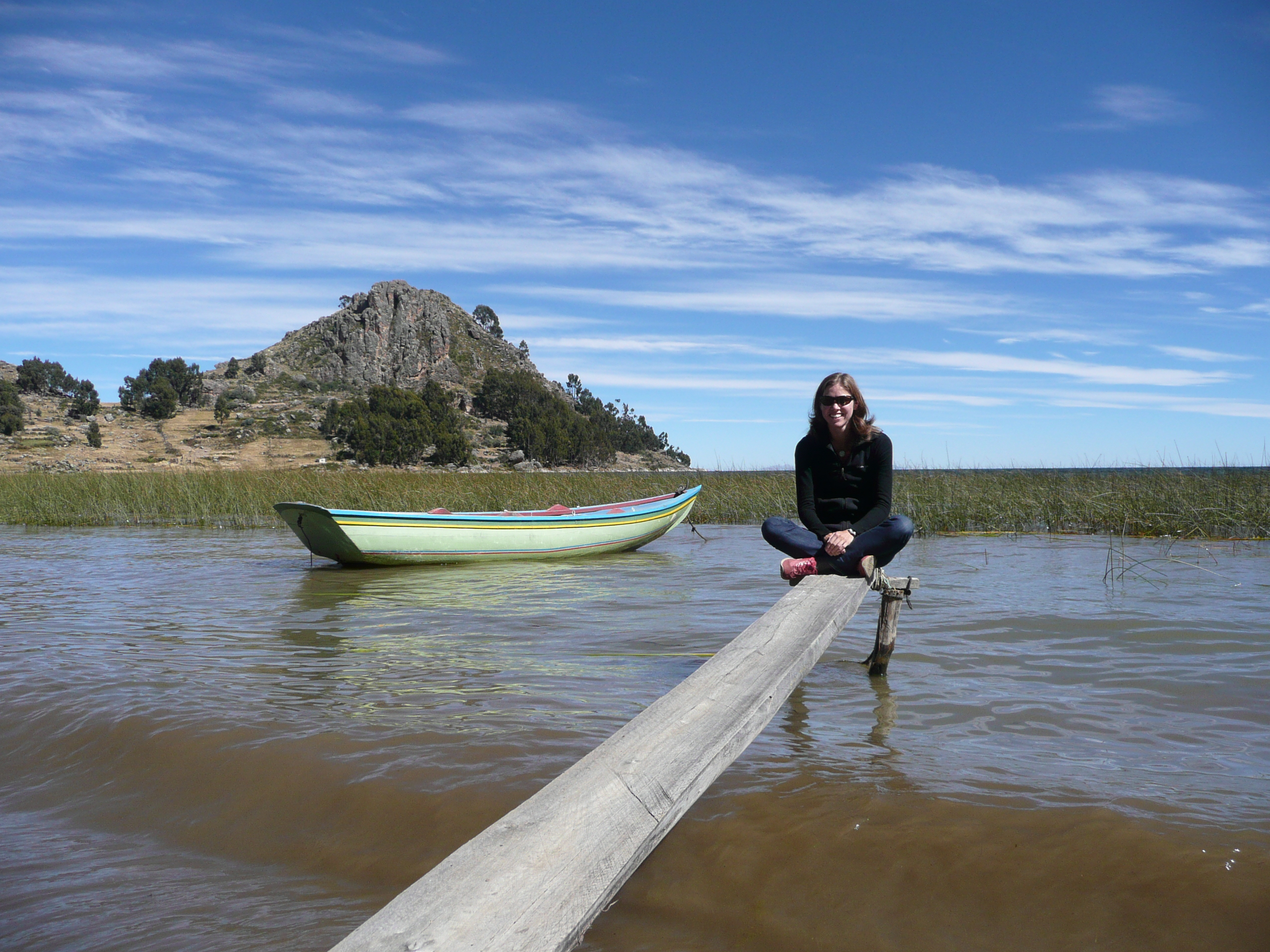
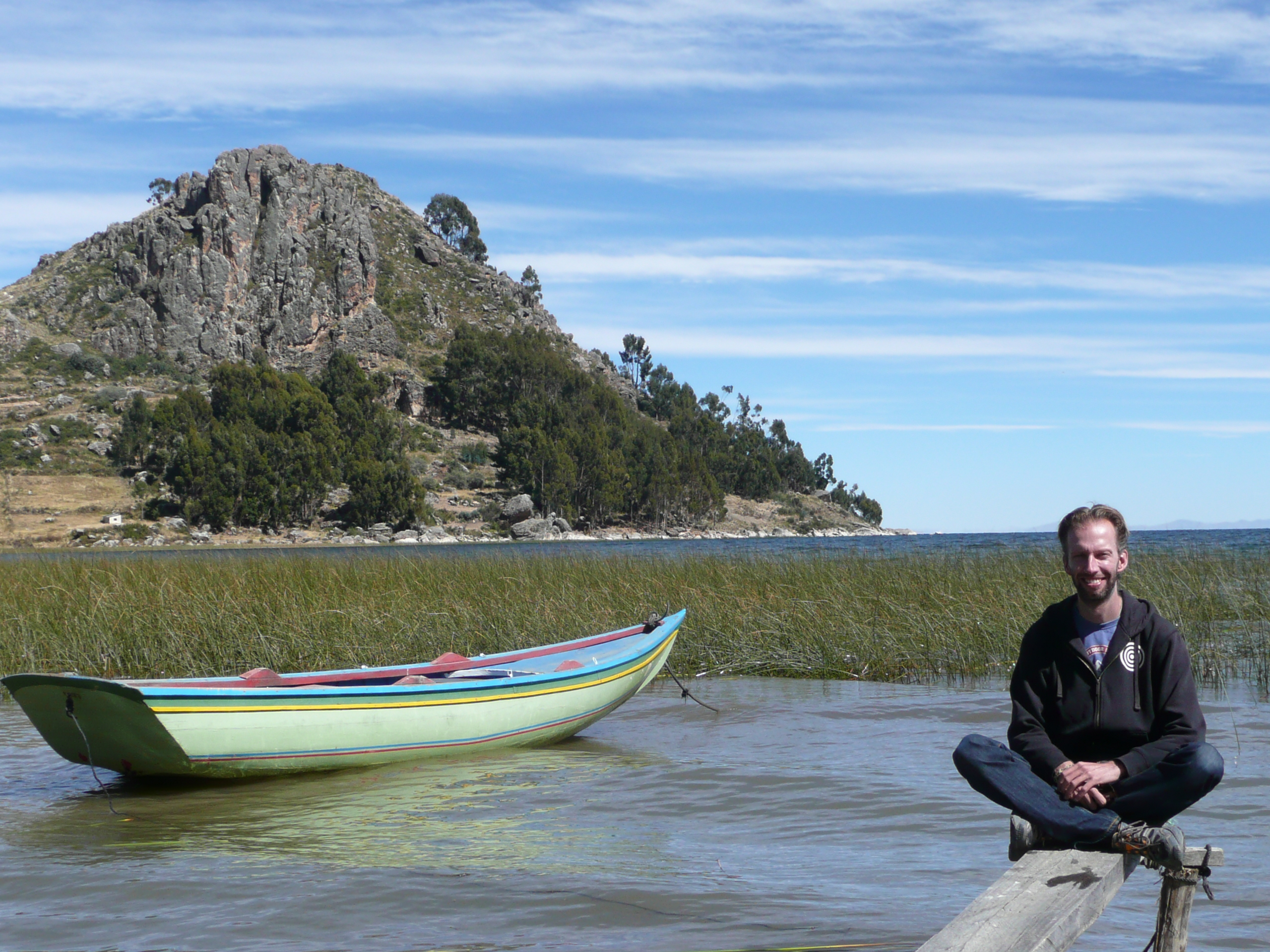
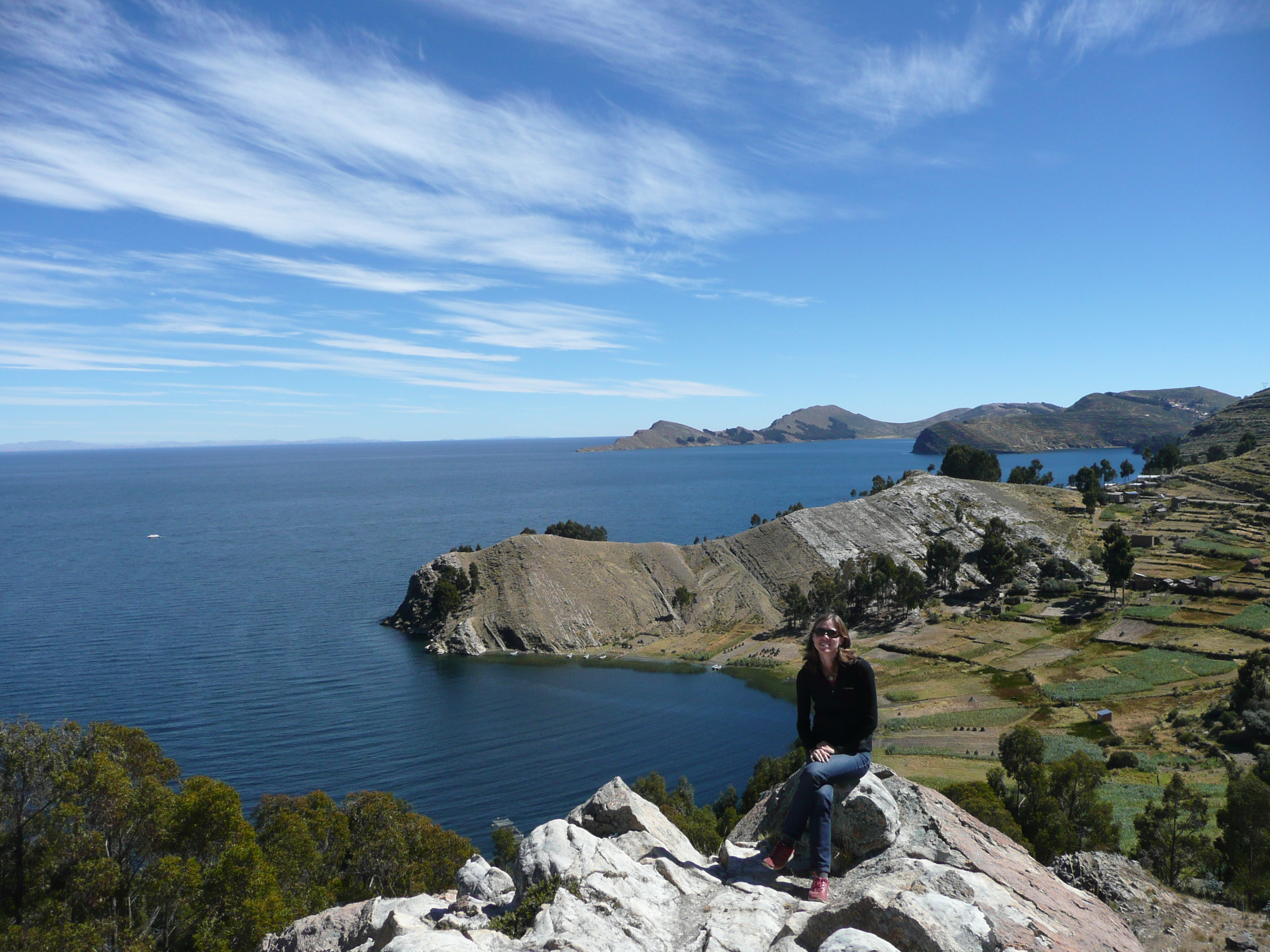
Great views over the lake with in the distance Isla del Sol
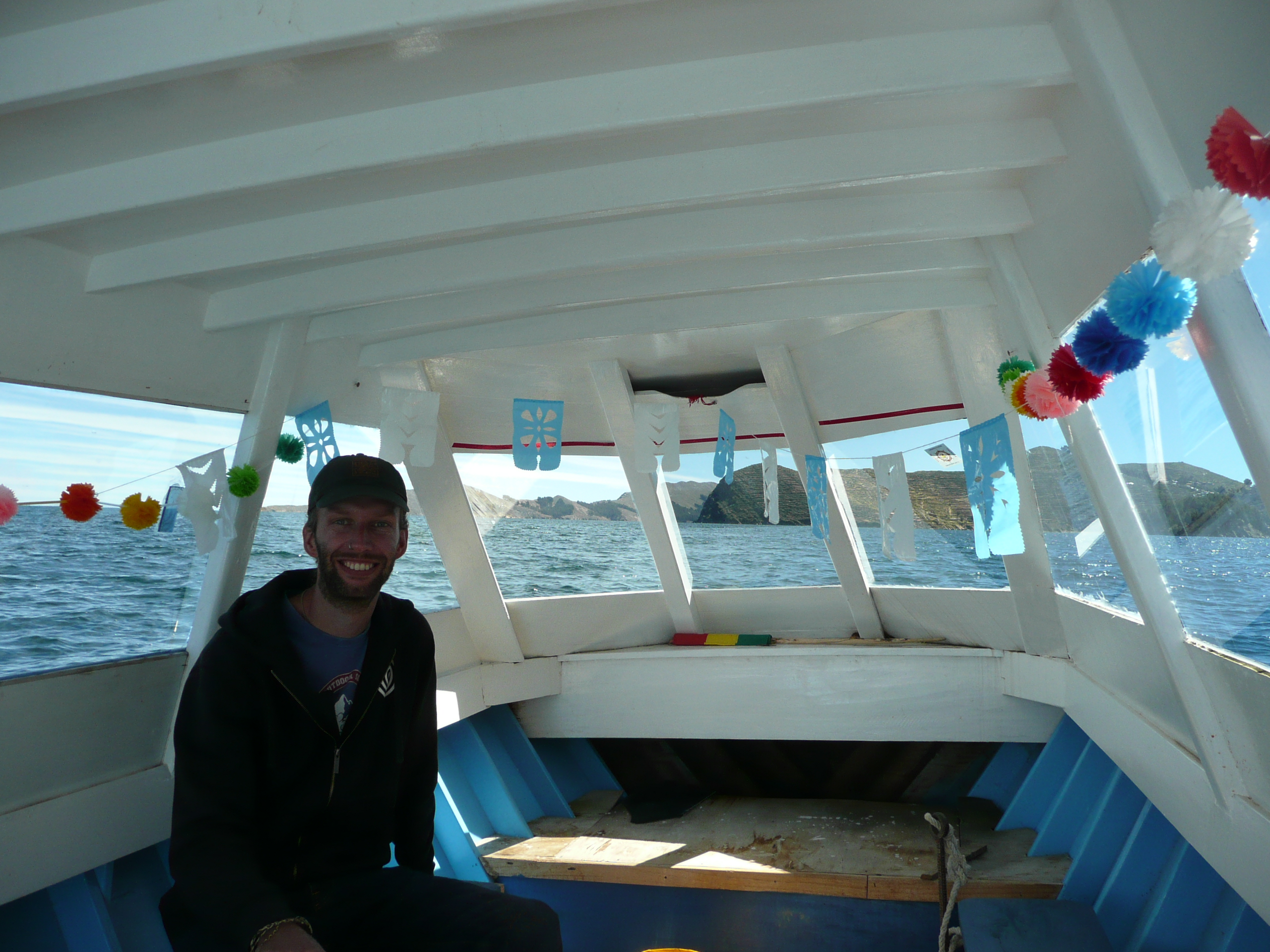
Cruising to Isla del Sol
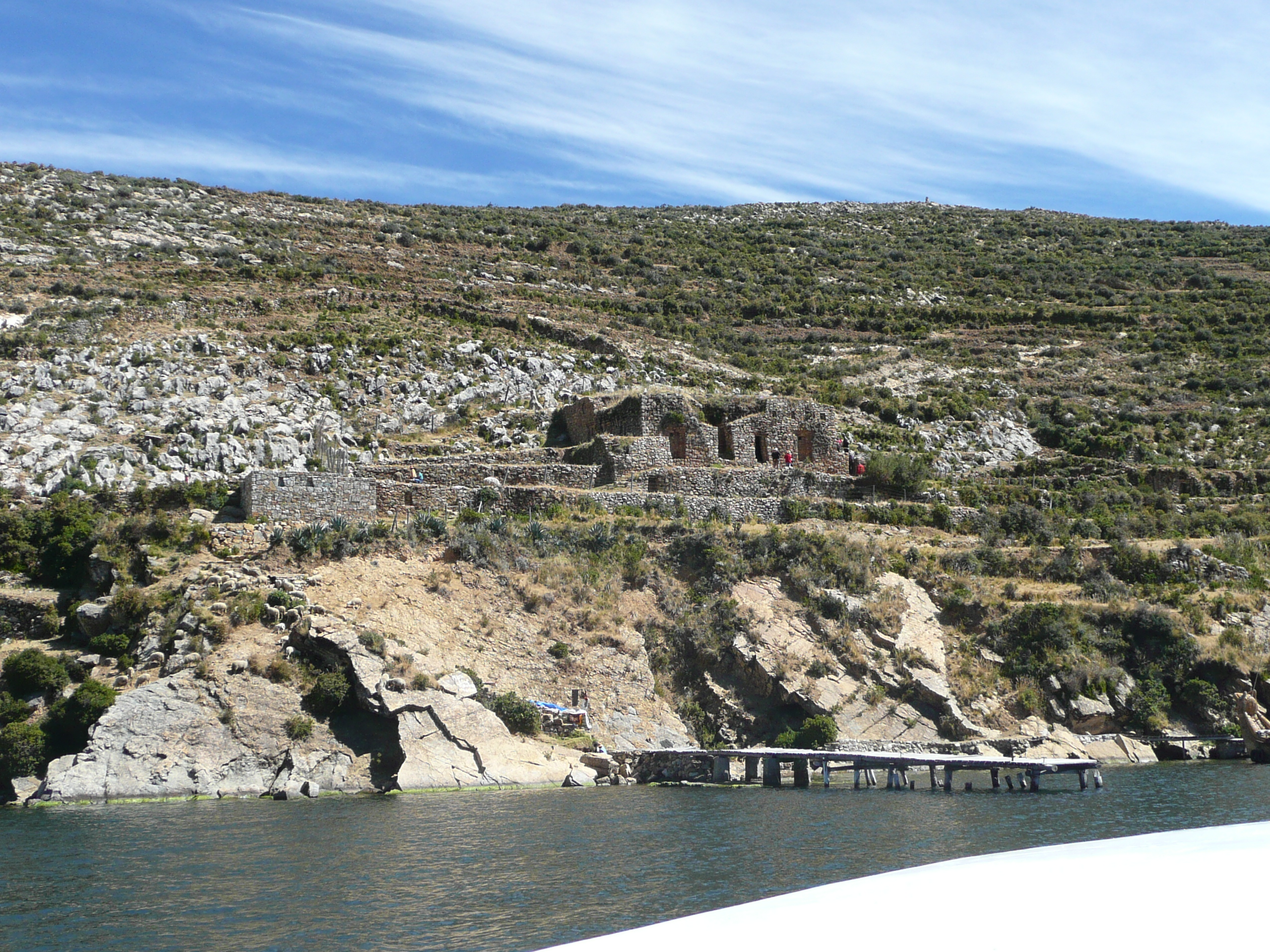
Inca ruin
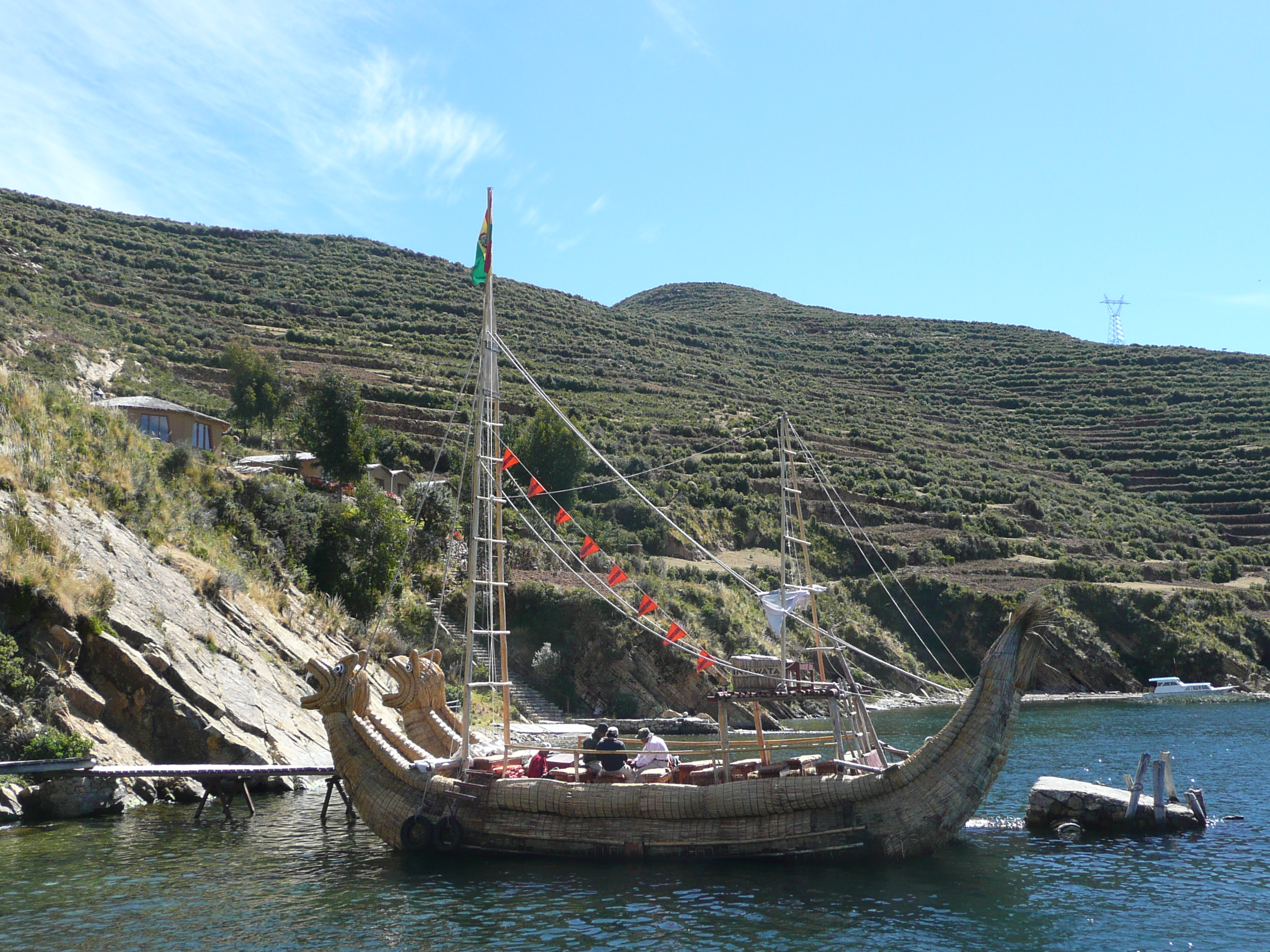
Traditional reed boat
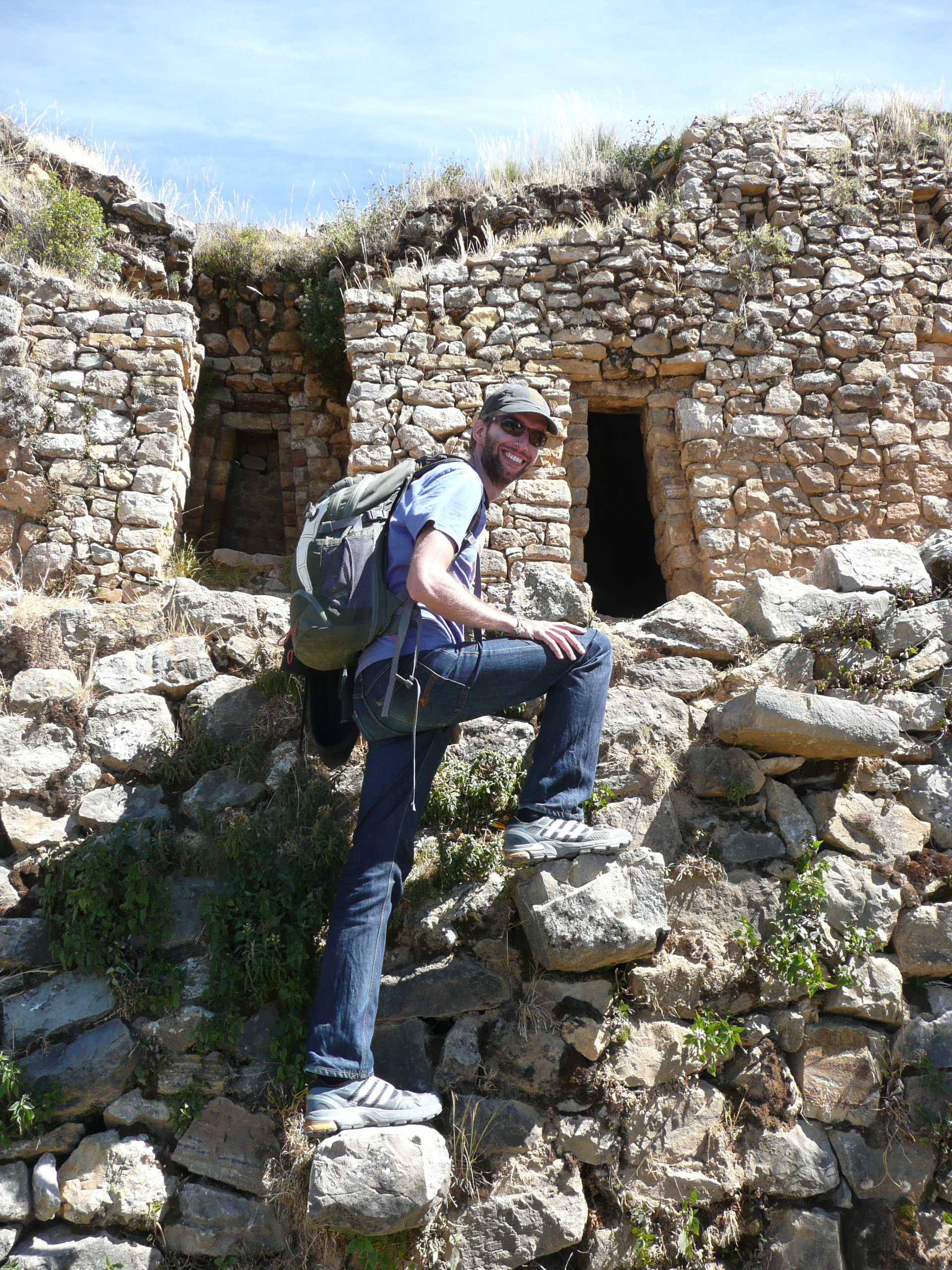
Pretty big steps for me, so must have been quite the challenge for short Inca’s
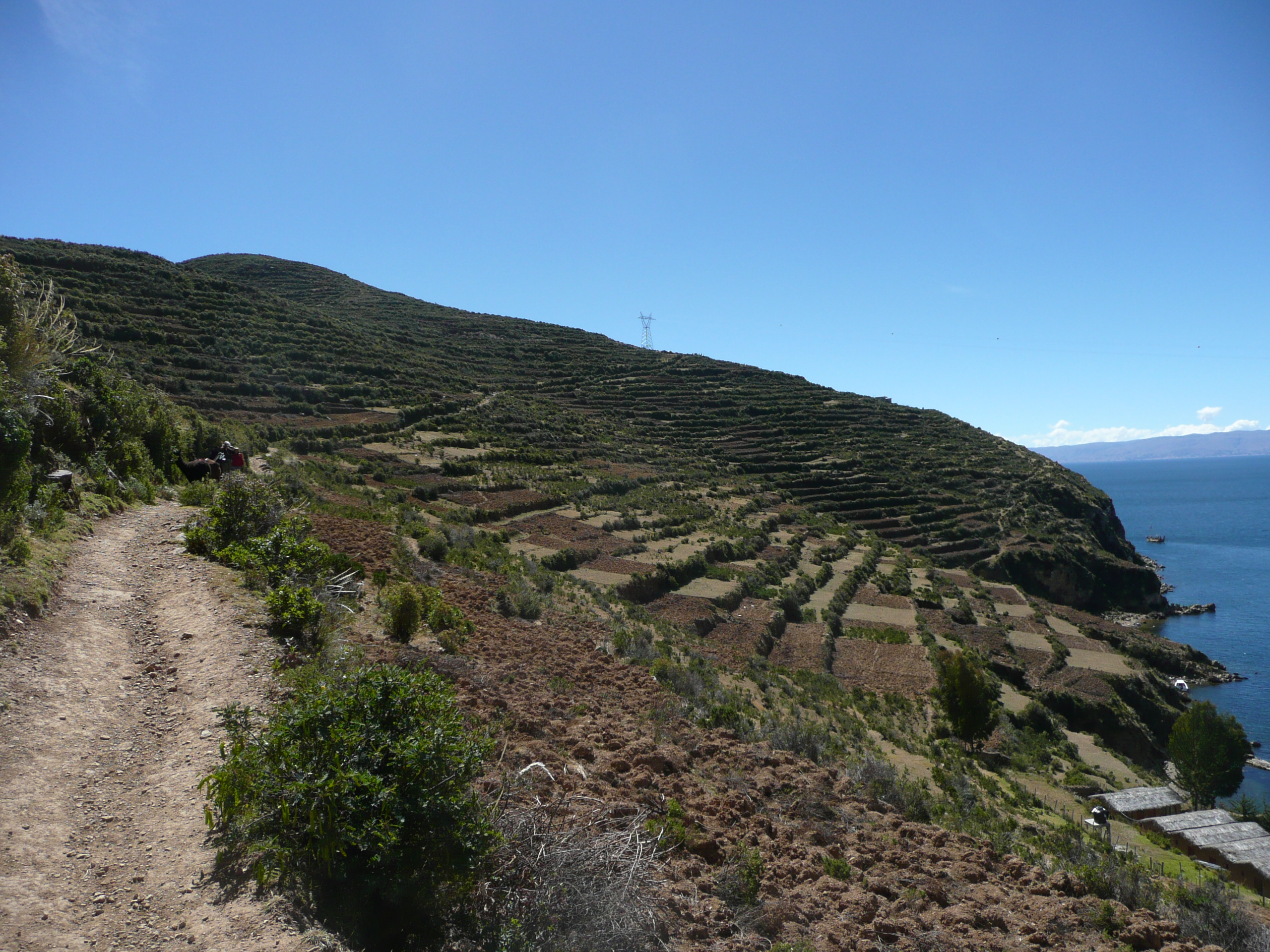
Inca terracing, used for agriculture
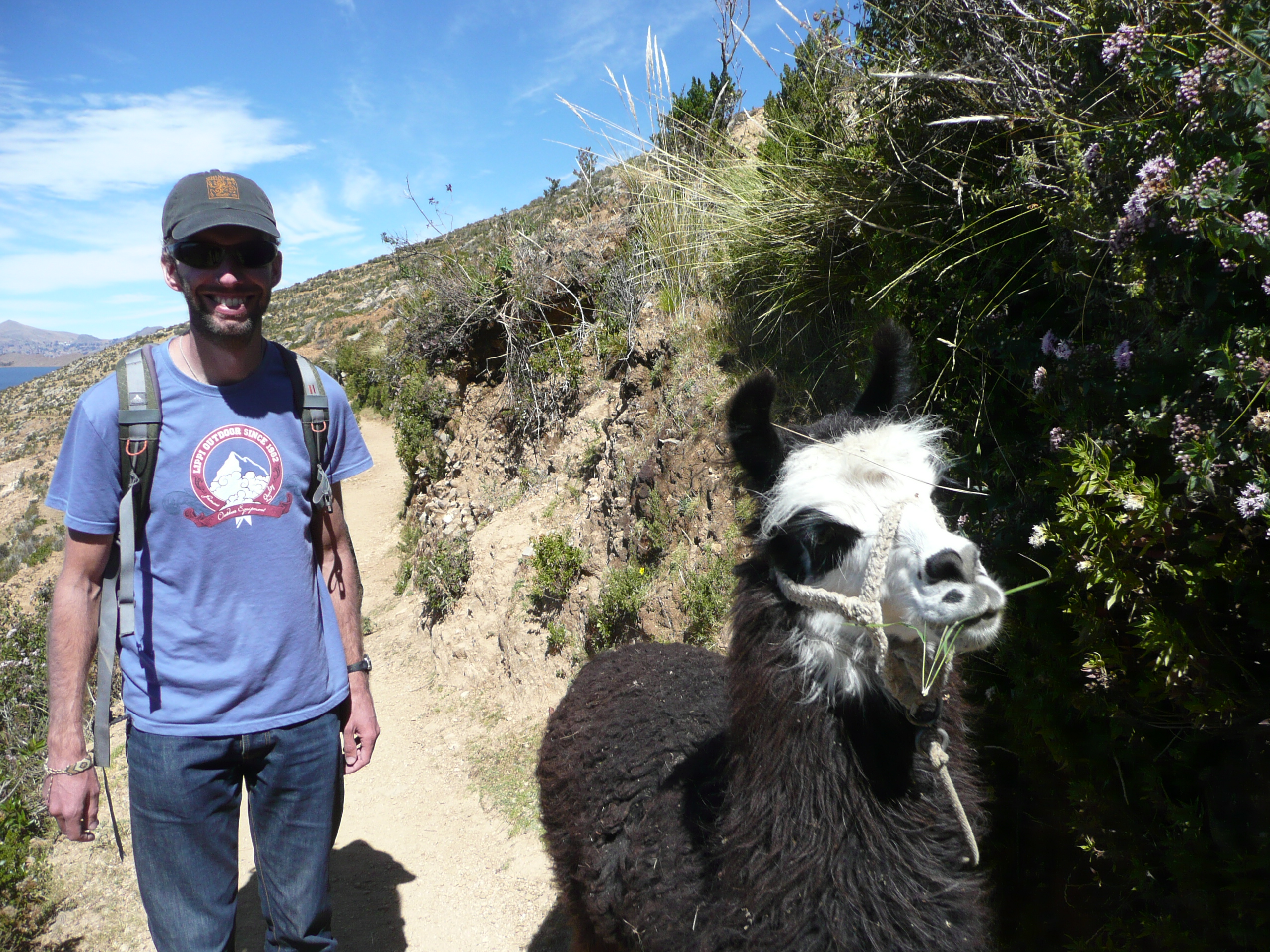
Hiking from Inca ruins to Yumani
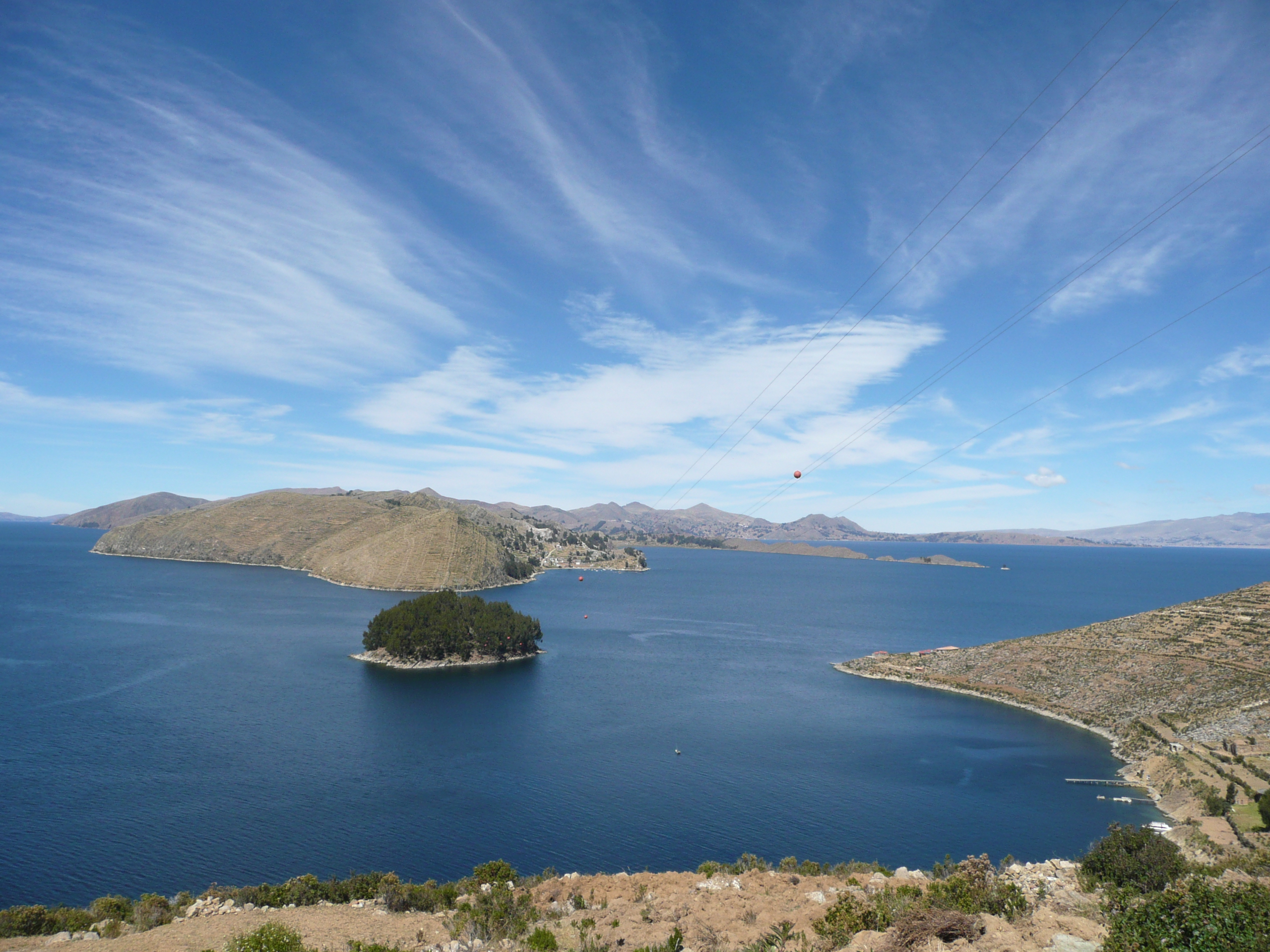
View from Isla del Sol towards Copacabana and peninsula
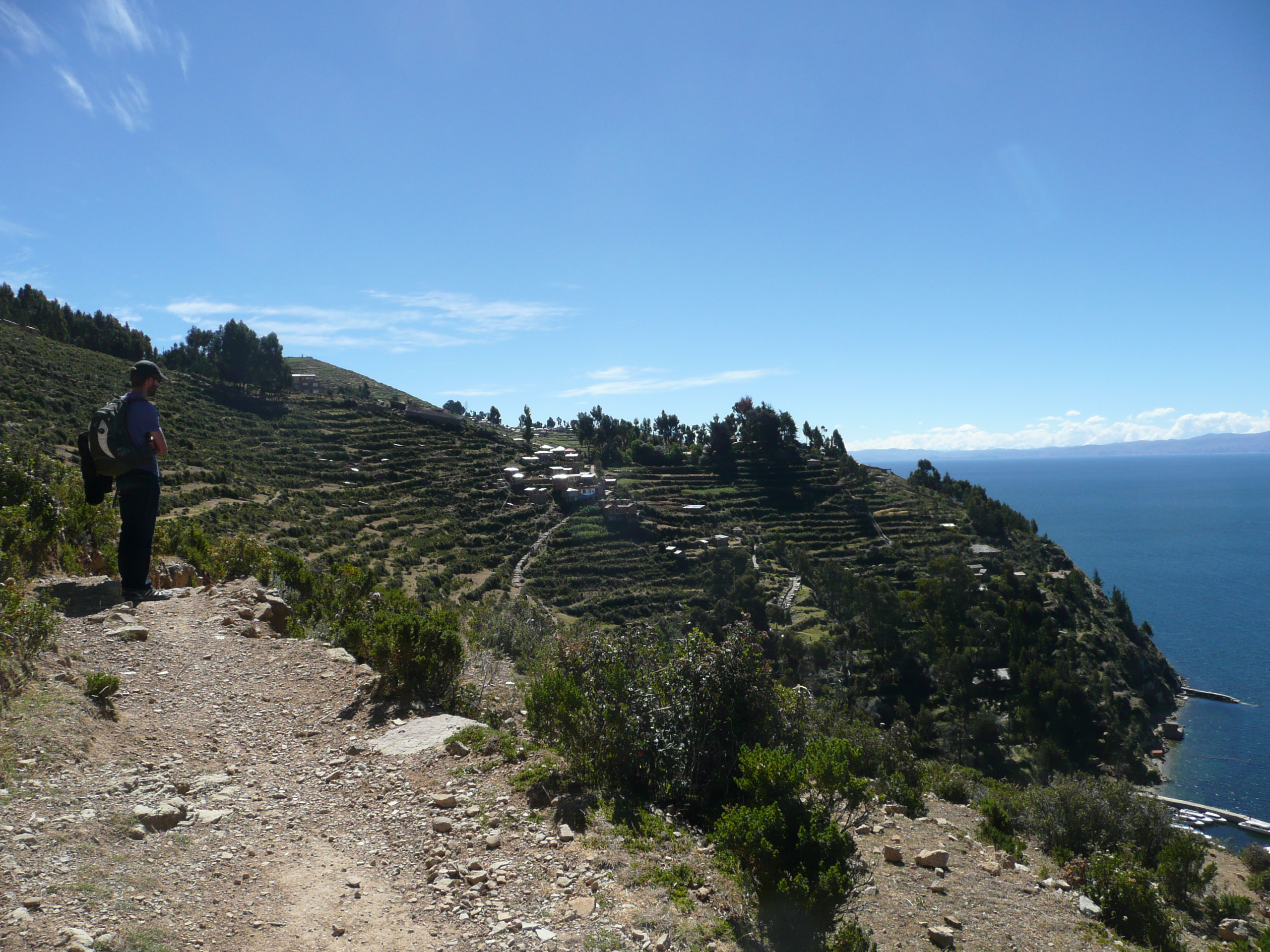
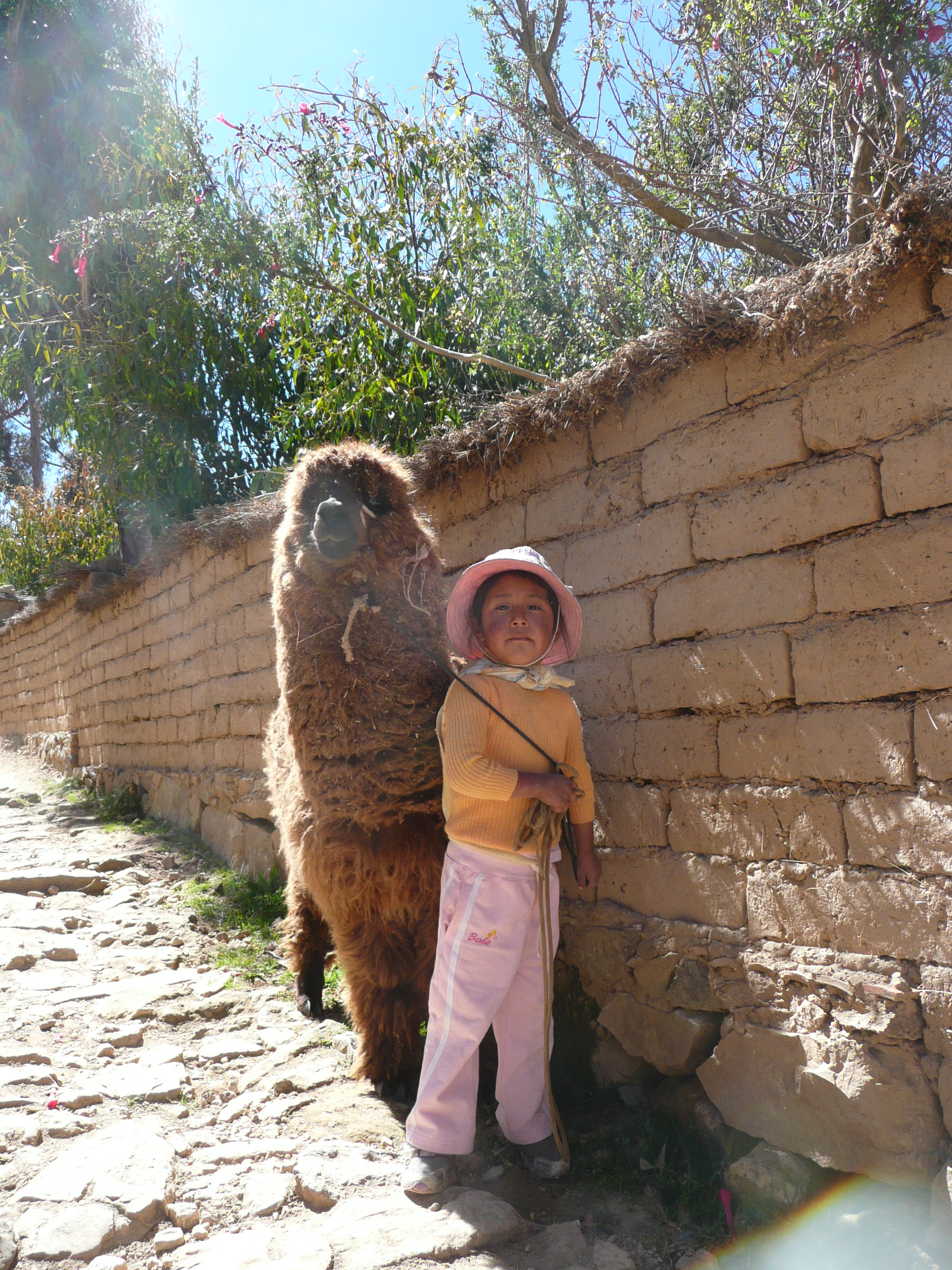
This young girl knew what she was worth and posed like a pro, revenue was instantly invested in chocolate
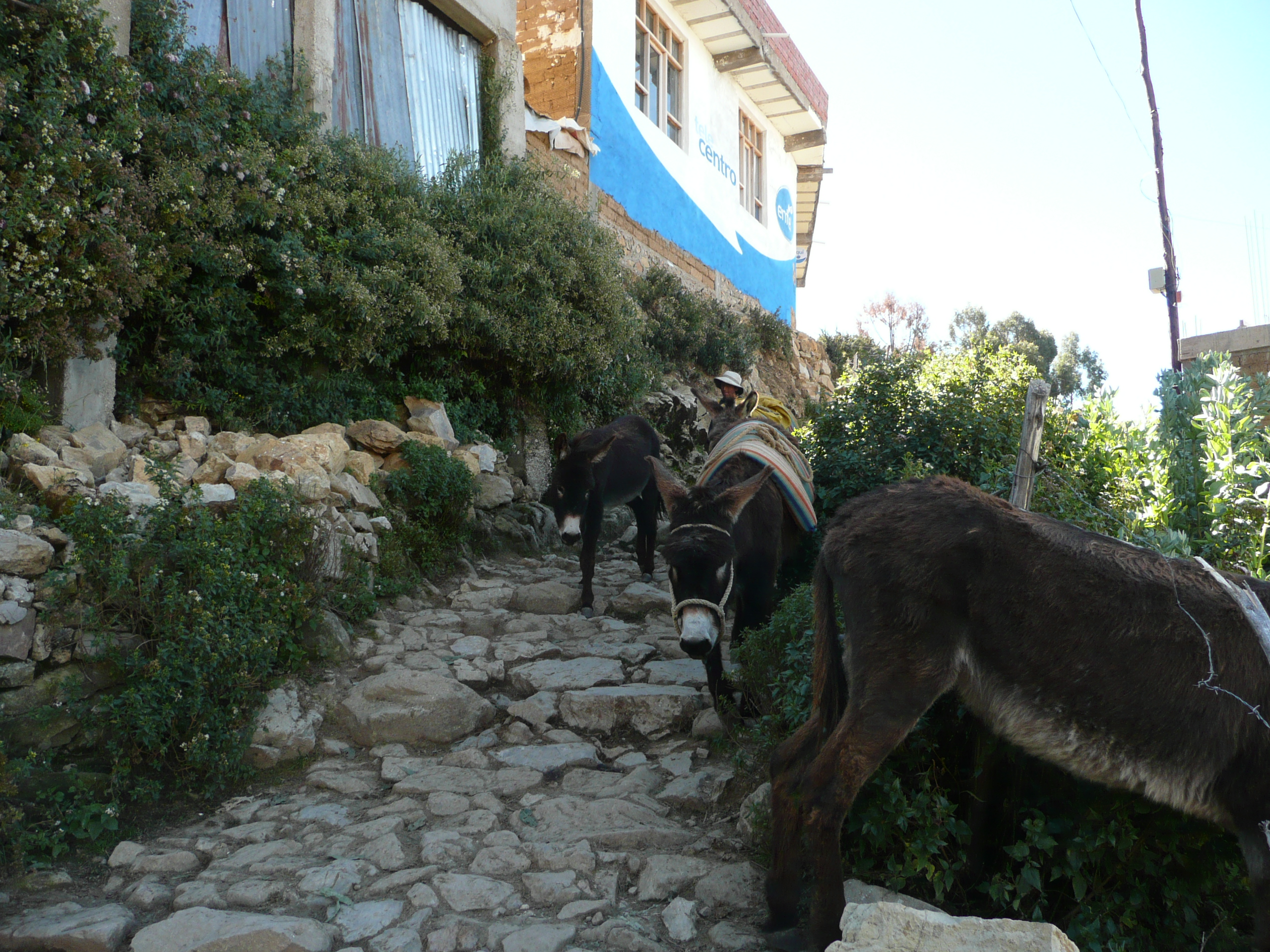
Peak hour traffic on Isla del Sol!
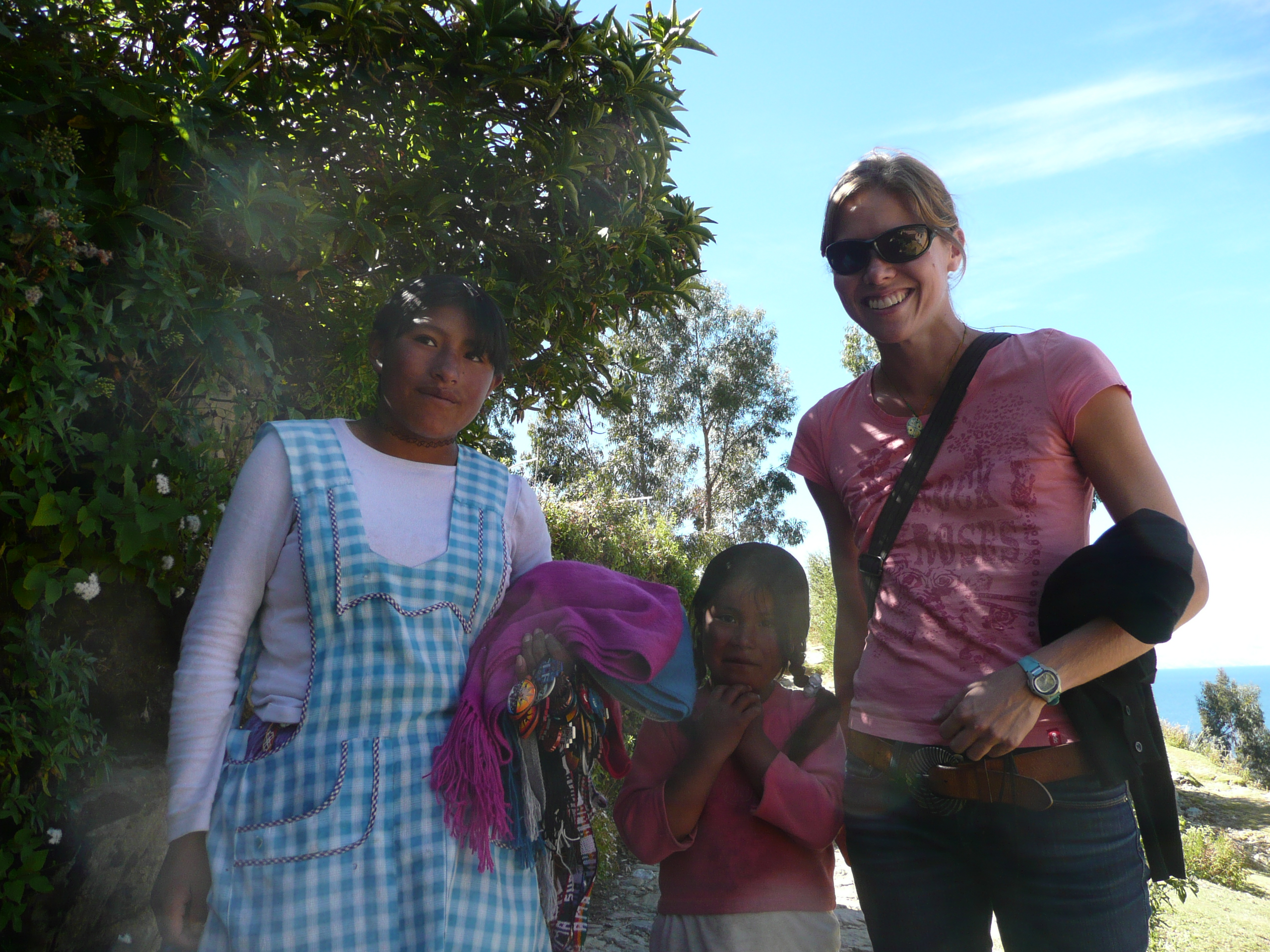
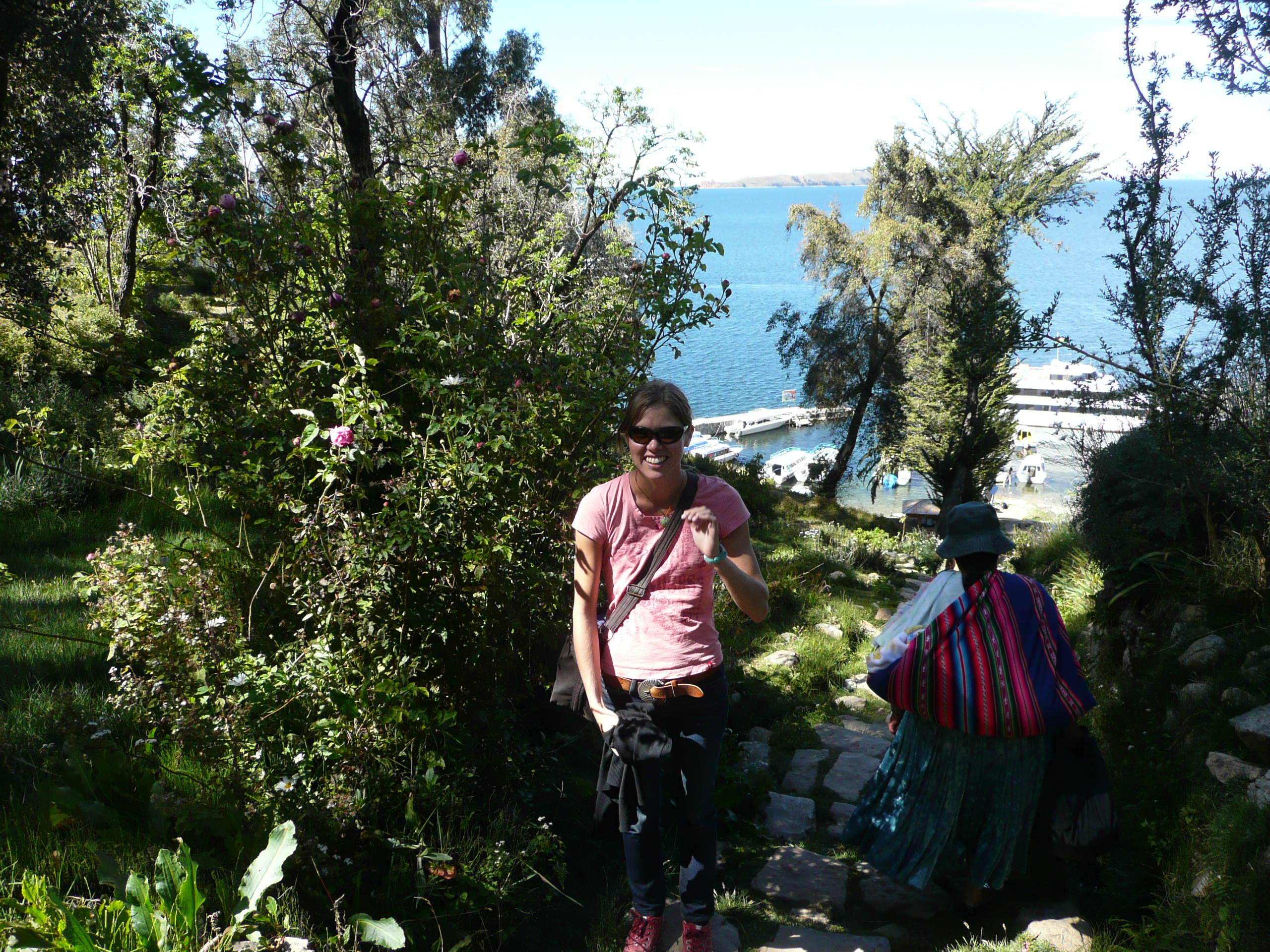
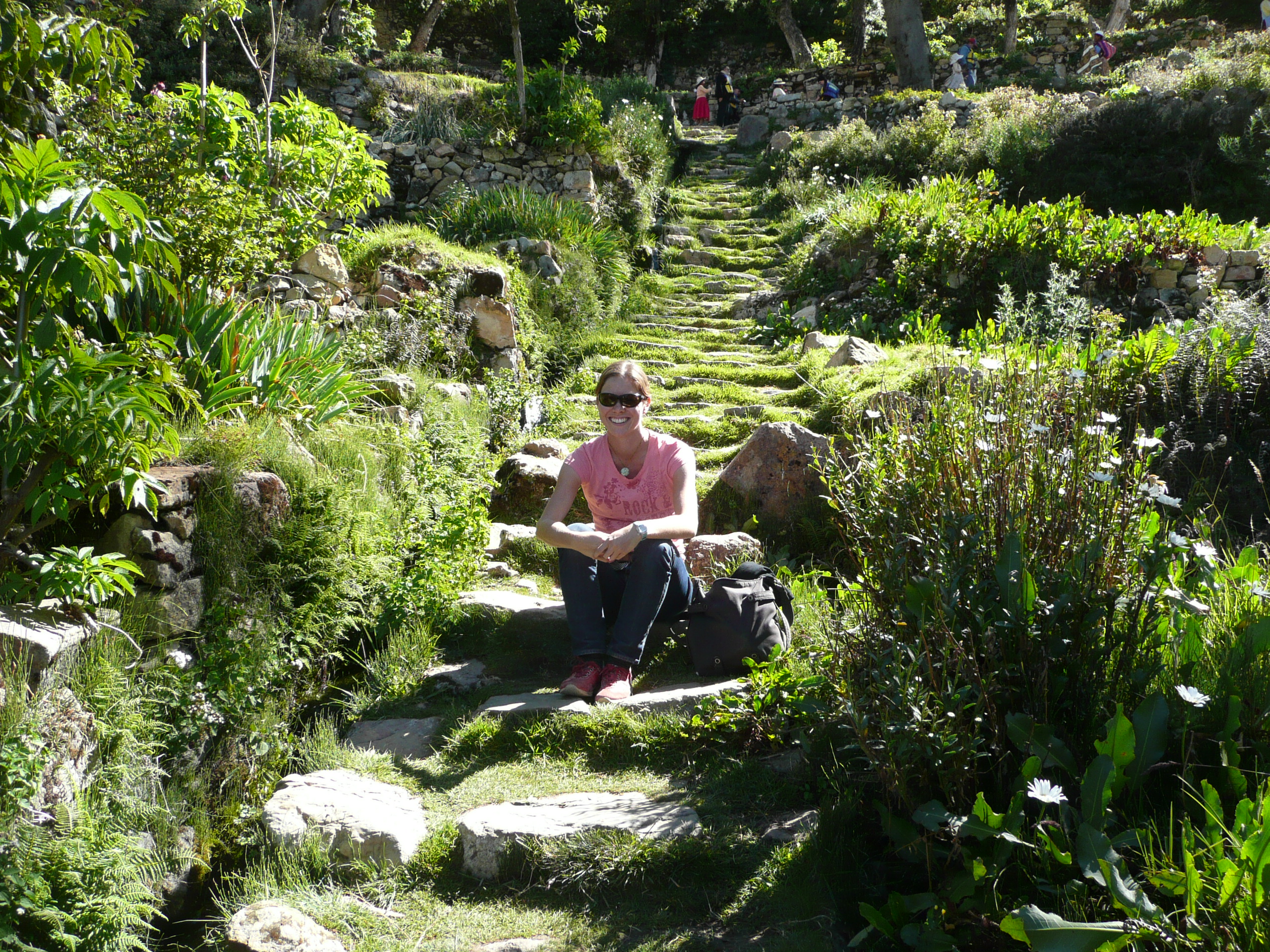
Julia next to a little stream that was thought to be coming from the Fountain of Youth
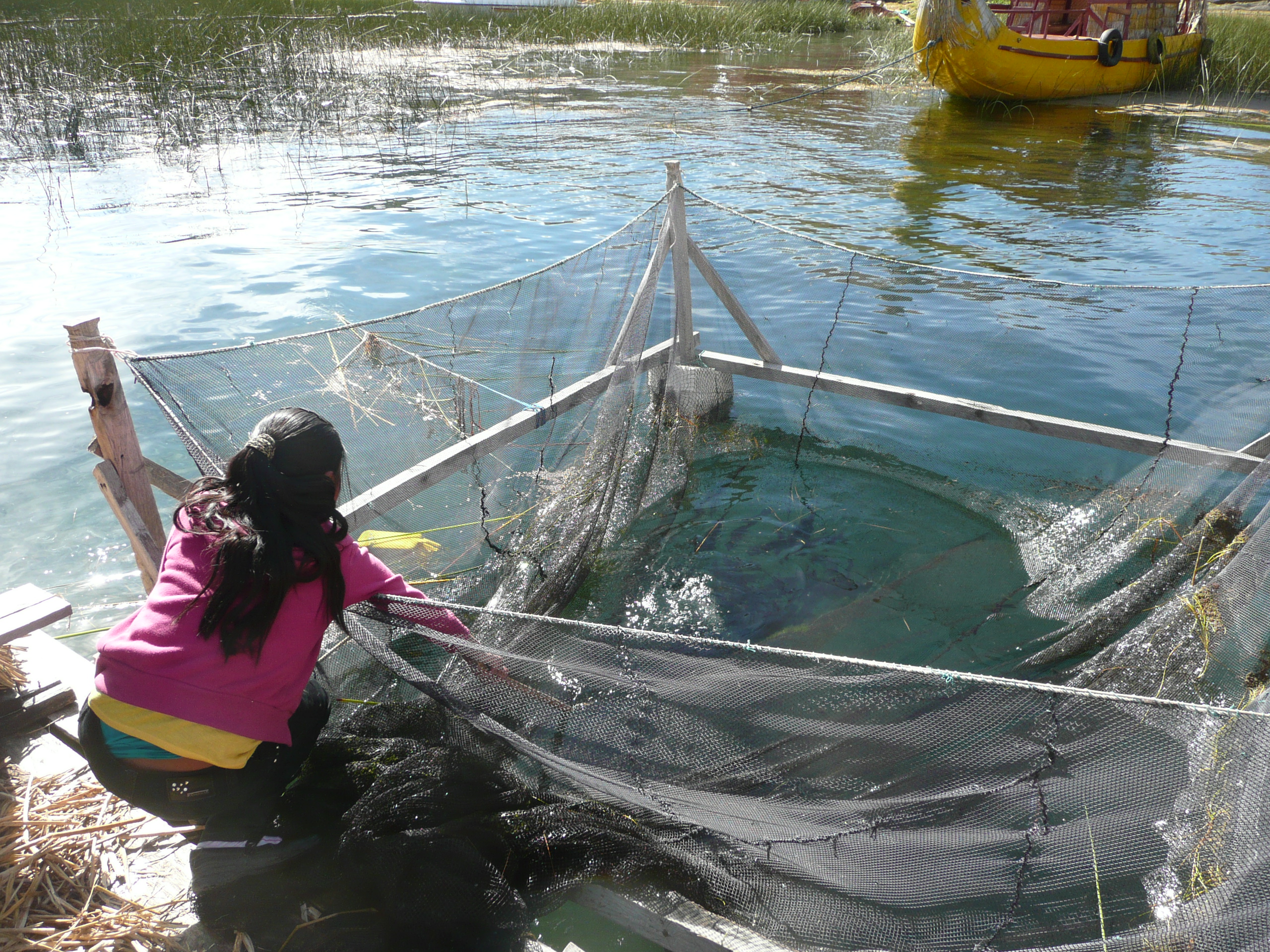
Girl catching our lunch
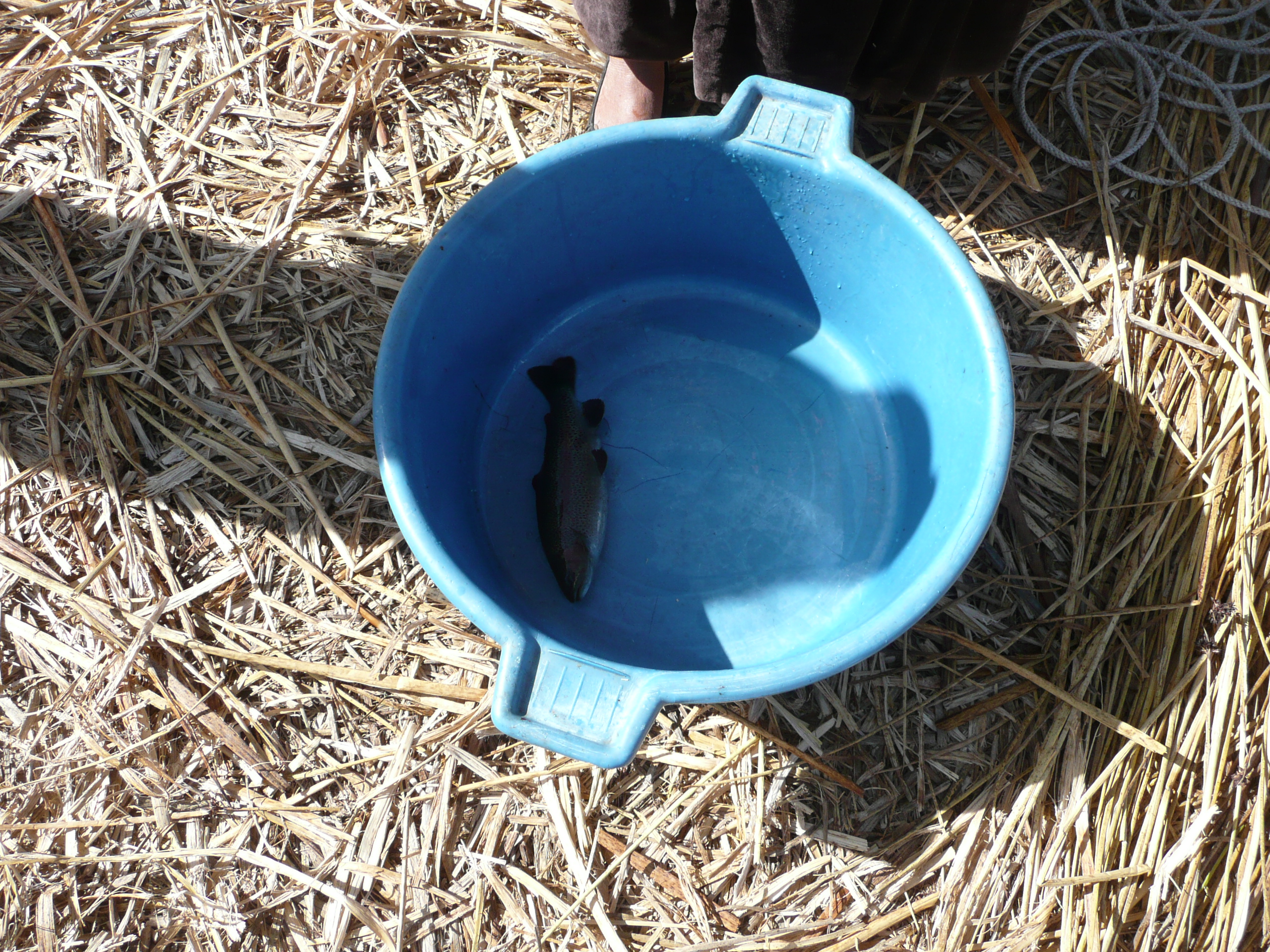
About to get its head chopped…
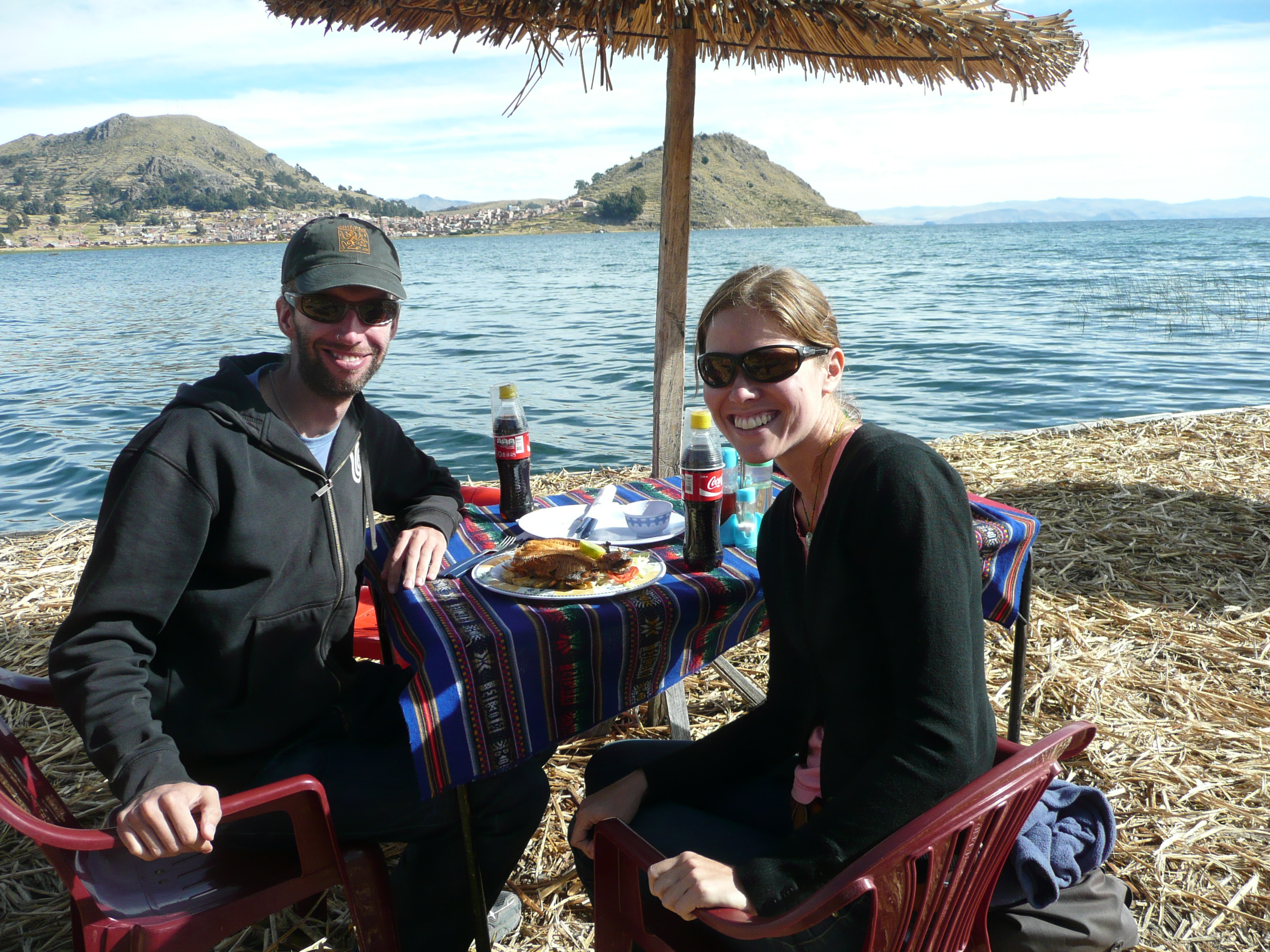
About to indulge on fresh trout
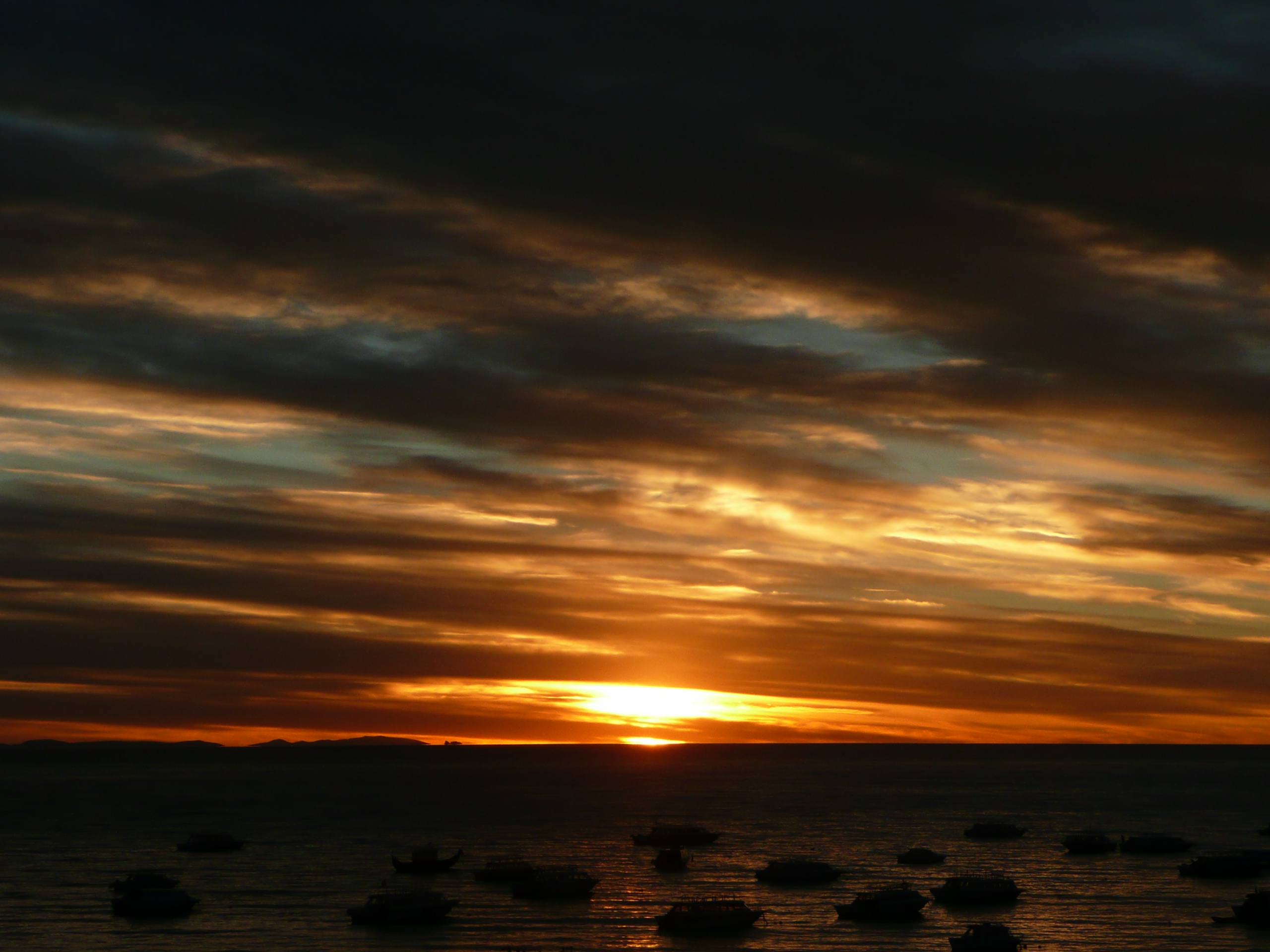
Sunset over Lake Titicaca
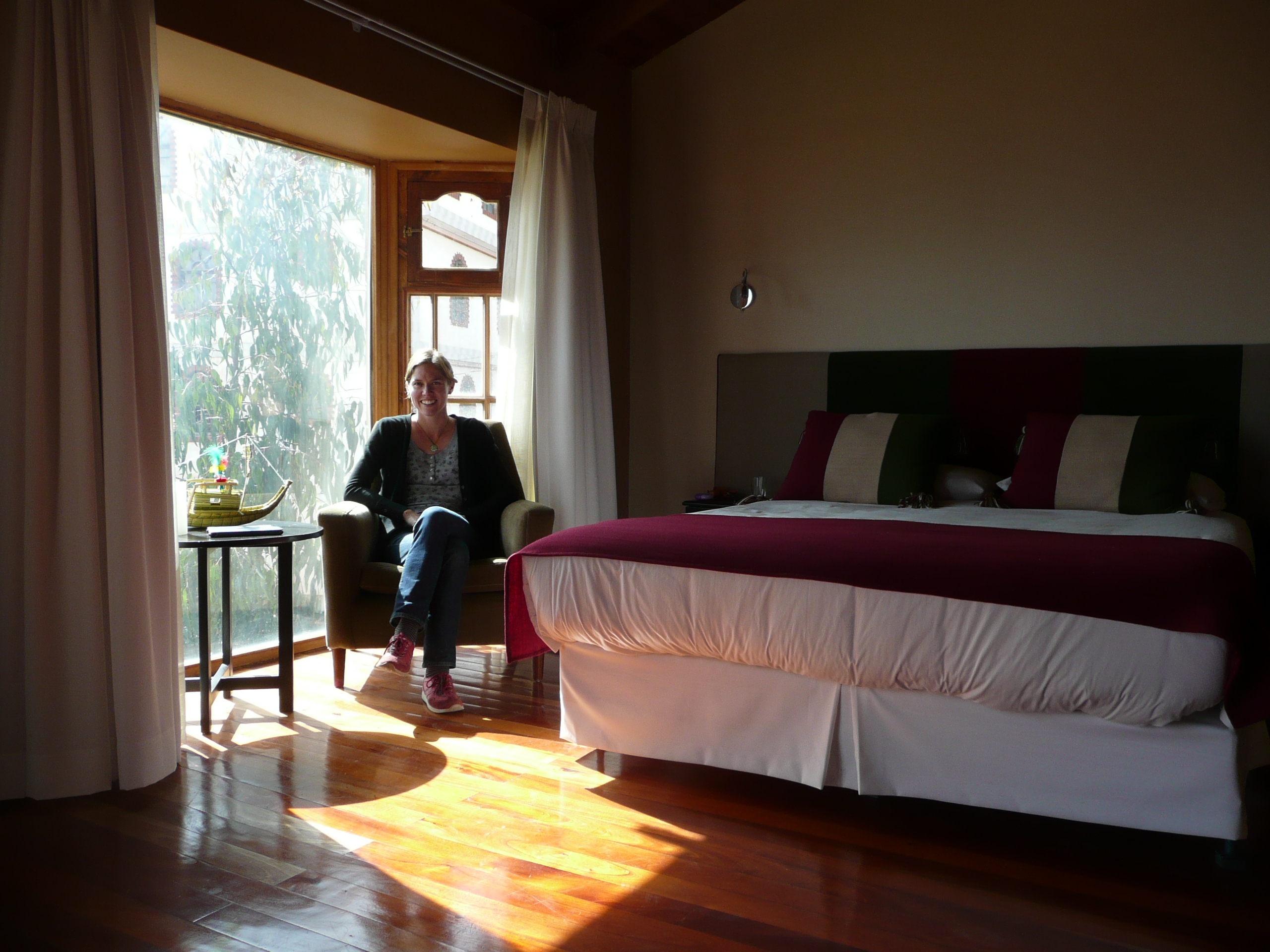
Fancy room in Copacabana
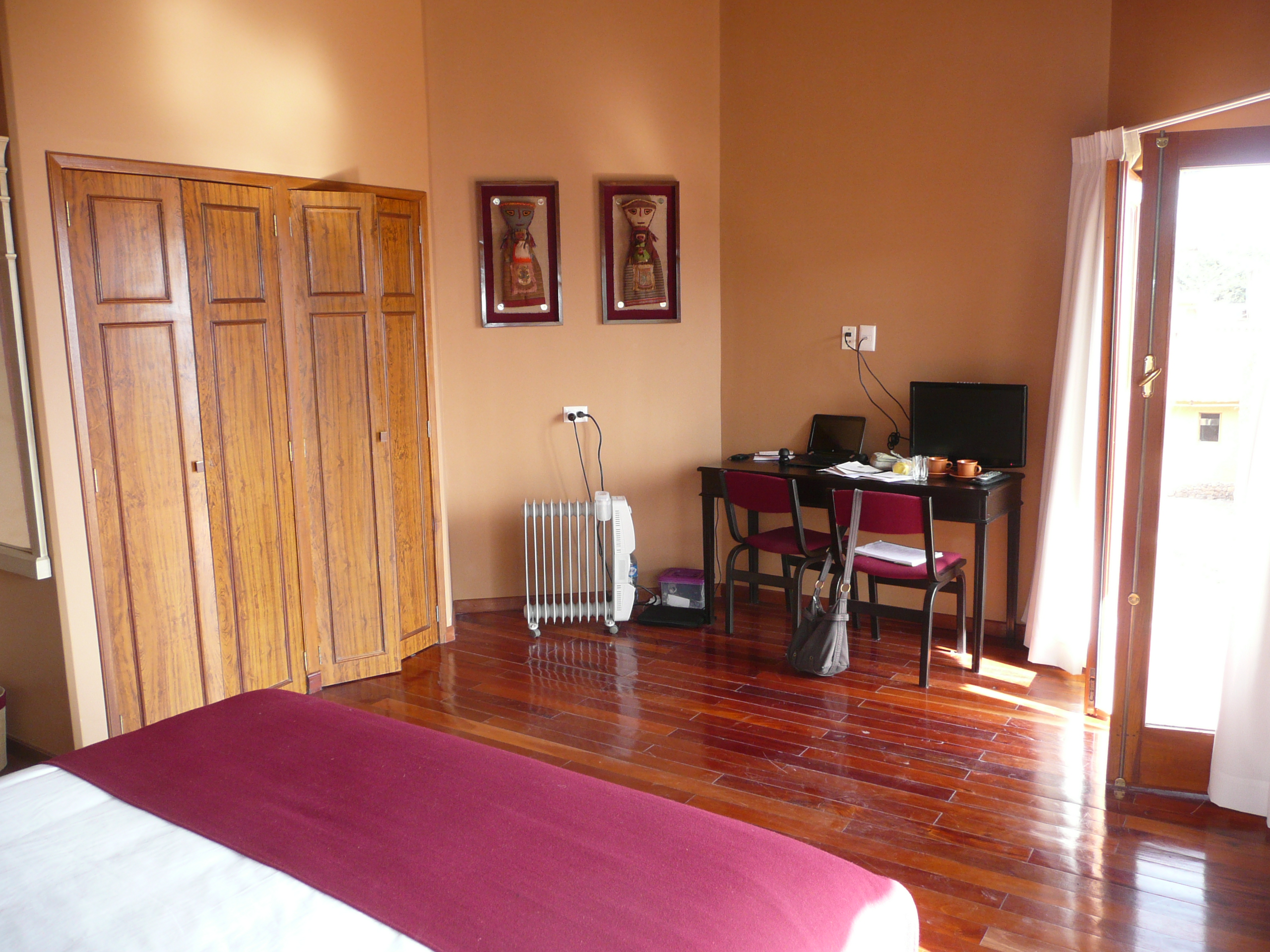
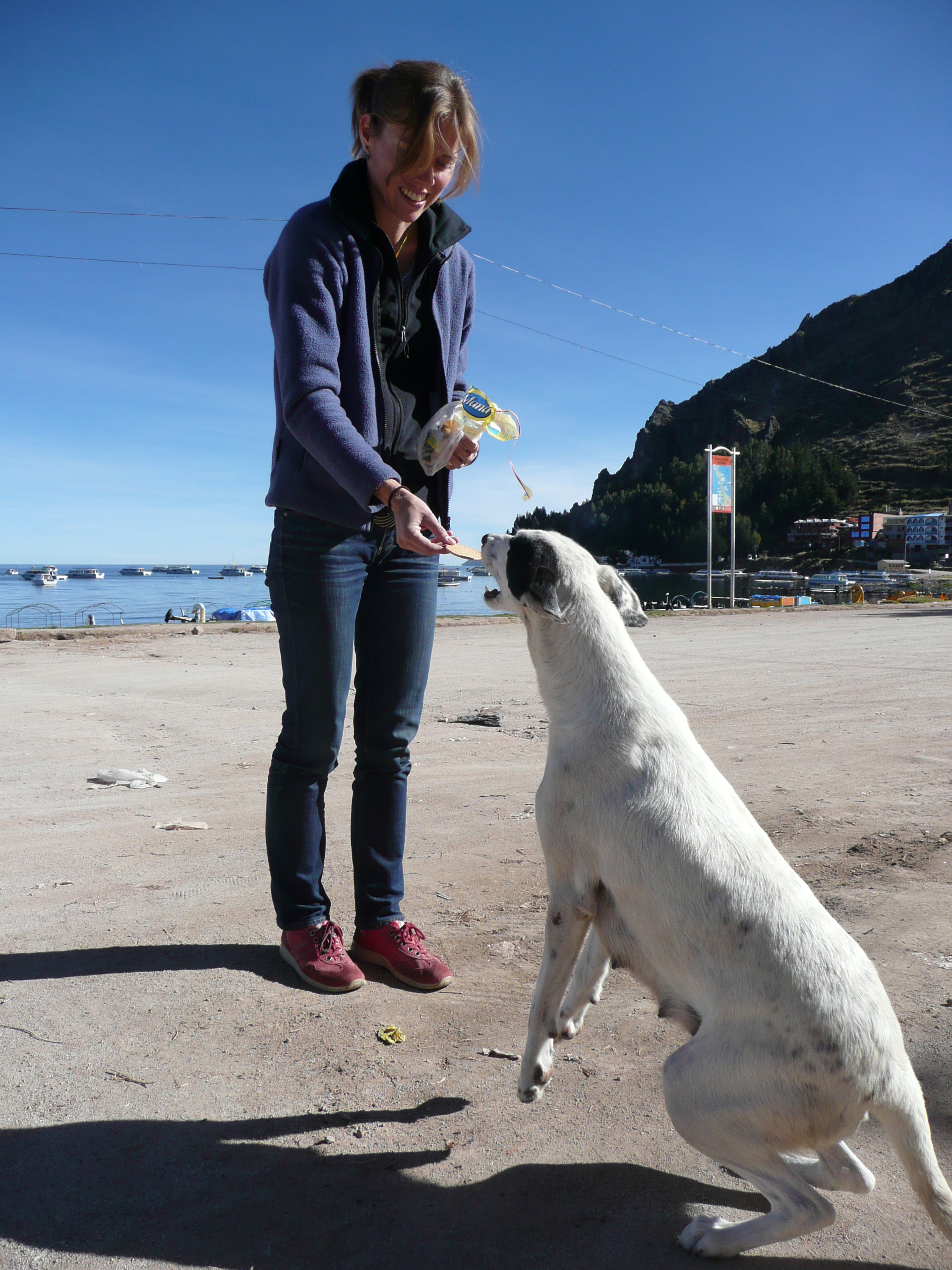
Optical illusion!?
It took me 9 days to get this blog post online! Very slooowwww internet here!
Duncan Stuart liked this on Facebook.
Thanks for posting this. Great pics and cool adventures.
Anthony Chester liked this on Facebook.
Roel Verschueren liked this on Facebook.
Marjanne Kuipers liked this on Facebook.
Het kan dan wel lang geduurd hebben maar het is de moeite waard. Wat een mooi verhaal over de politie. Ik weet niet of dat in ned. Zal lukken. Wij zijn nu in frankrijk, koud en soms wat regen, maar we zijn ook van huis, we hebben alleen nog geen foto.s. te nevelig. Genieten jullie nog maar een tijdje. Groeten, Ries en Ada
Kris Price liked this on Facebook.
Hallo Richard en Julia,
Hier een berichtje uit Woudrichem. Je weet nog wel dat we elkaar in Putre hebben ontmoet. We zijn ondertussen alweer een tijdje thuis, en natuurlijk volgen we jullie belevenissen via de internetsite. Zo te zien is Bolivia ook een prachtig land. Het viel trouwens niet mee om de grens over te komen. We blijven jullie volgen en af en toe zullen we via facebook reageren. De uitnodiging voor als jullie terug blijft van kracht.
Groetjes uit Woudrichem,
Joop en Krijnie van der Linde
Hoi Joop en Krijnie,
Leuk dat jullie reageren! We zijn ondertussen op weg naar Santiago om de auto te verkopen en hopen snel in NL te zijn! We komen graag langs in Woudrichem.
Tot dan, groeten,
Richard en Julia
geweldig die beesten op de berg he, lijken op Alpaca’s. Schijnen erg slim te zijn.
Ja, het zijn denk ik Alpaca’s. Wij hebben de hele range gezien, Llama’s, Vicuna’s, Guanaco’s and Alpacas. Vicunas zijn onze favoriet, die leven alleen heel hoog in de bergen en zijn bedreigd. De wol is erg duur, 1000 euro voor een trui!
Travis Cottreau liked this on Facebook.
The login process is so fast and I never have issues accessing my account. Really impressed with the service at 6jililogin.
Finally found a place that doesn’t lag during peak hours. The customer support was helpful when I had a question about my deposit. Give vnsv6688k a shot.