On our way to Machu Picchu we had stopped for a night in Ollantaytambo and were really taken away by how beautiful this place is. As we were driving back this way we decided to stay another few nights and explore it properly. Ollanta is set at the ‘intersection’ of a couple valleys that were important to the Inca’s. It is also the best surviving example of Inca city planning, with all the streets still exactly how they were laid out by the Inca’s. The town is in the shape of a corn cob and from any spot in town you can see the huge, steep terraces on the hills with the large Incan ruins on it. Looking the other way you can see the storage buildings up on the hill, with a clever system of openings in the building which allows the wind to enter and cool (preserve) the food.
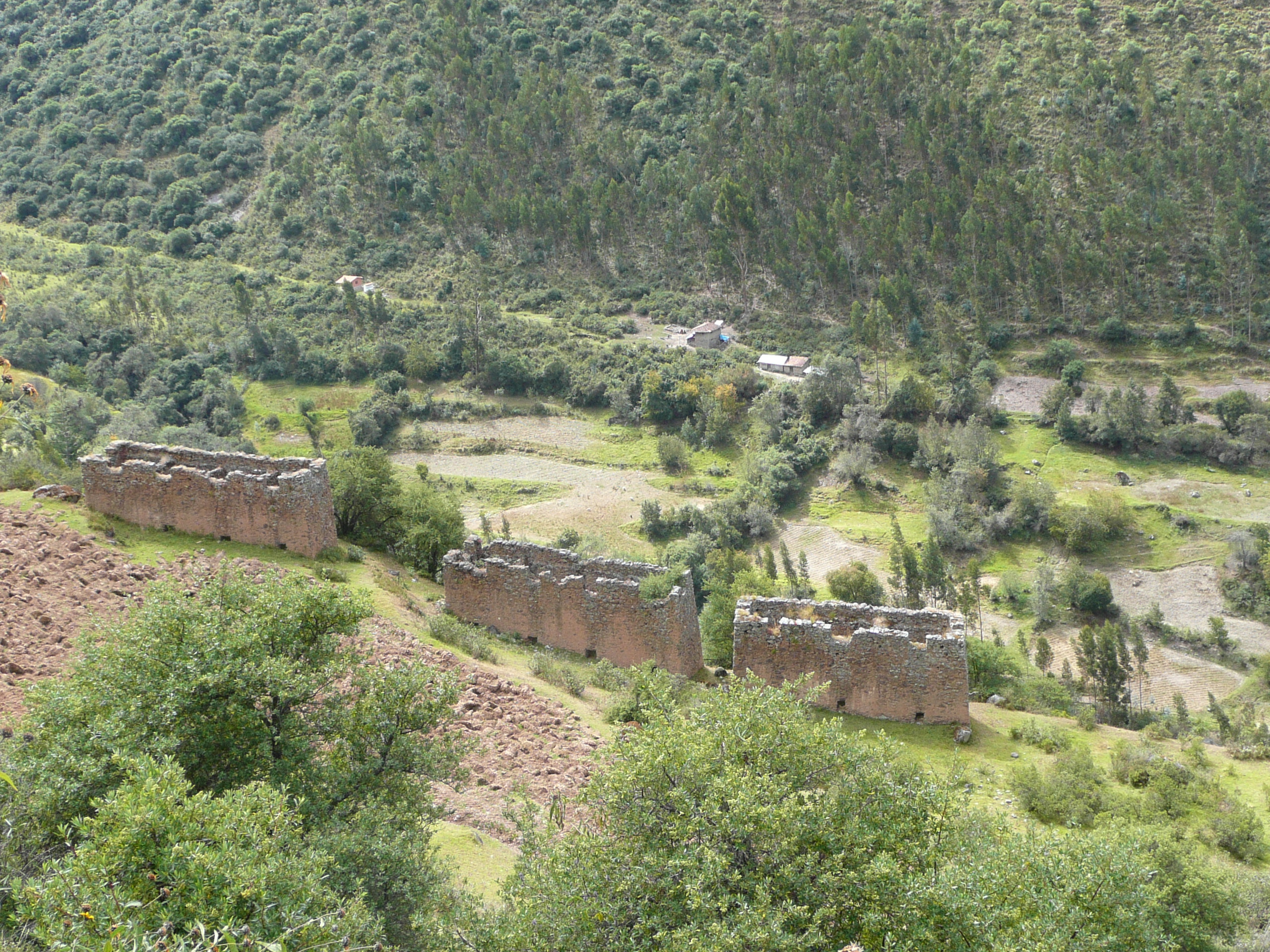
Having already visited the main Inca ruins, we decided to go off the beaten track and drive down the Patacancha valley to the pre-Inca ruins of Pumamarca. After having some trouble finding the turn off, we decided to park the car half way up the hill as the country side was beautiful and walk the rest of the way. We got greeted by a Peruvian family who told us that we had to cross their yard to get to the ruins and climb the hill. We eventually got to the fort and were pleasantly surprised by the condition of this Wari fort, as it is at least twice as old as the average Inca ruin. The fort was built in the 8th century, to guard the intersecting valleys. As usual there were no interpretative signs so we have to guess at the rest, but we had a nice stroll around, followed by lunch while watching two ox teams plough the fields below us. Followed by a nap in the sun, this made for a pretty good afternoon! Later on in the day we visited a few more cafes in Ollantaytambo, which were due to the number of tourists of western quality with fancy coffee machines and tasty food.
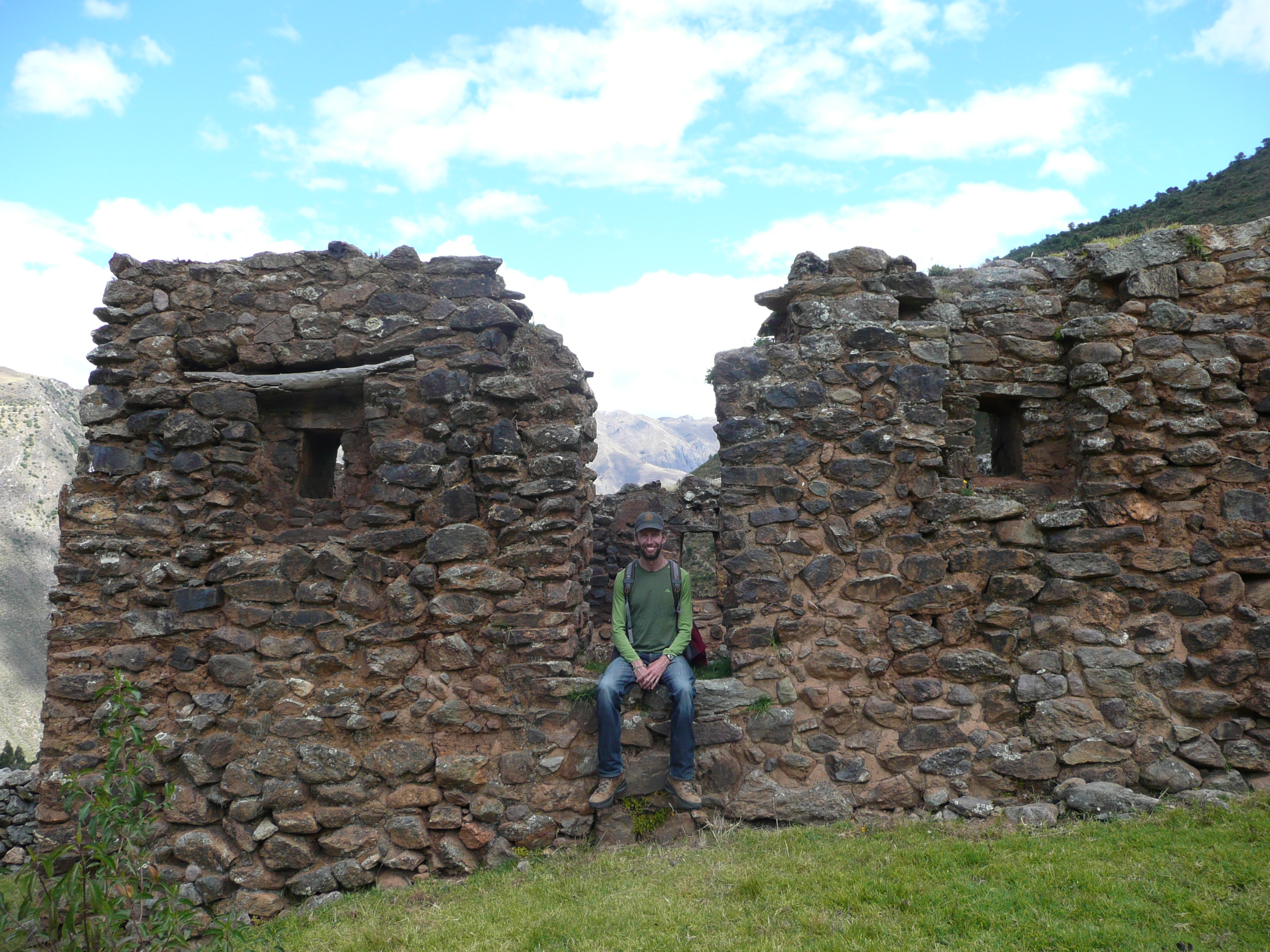
Pumamarca
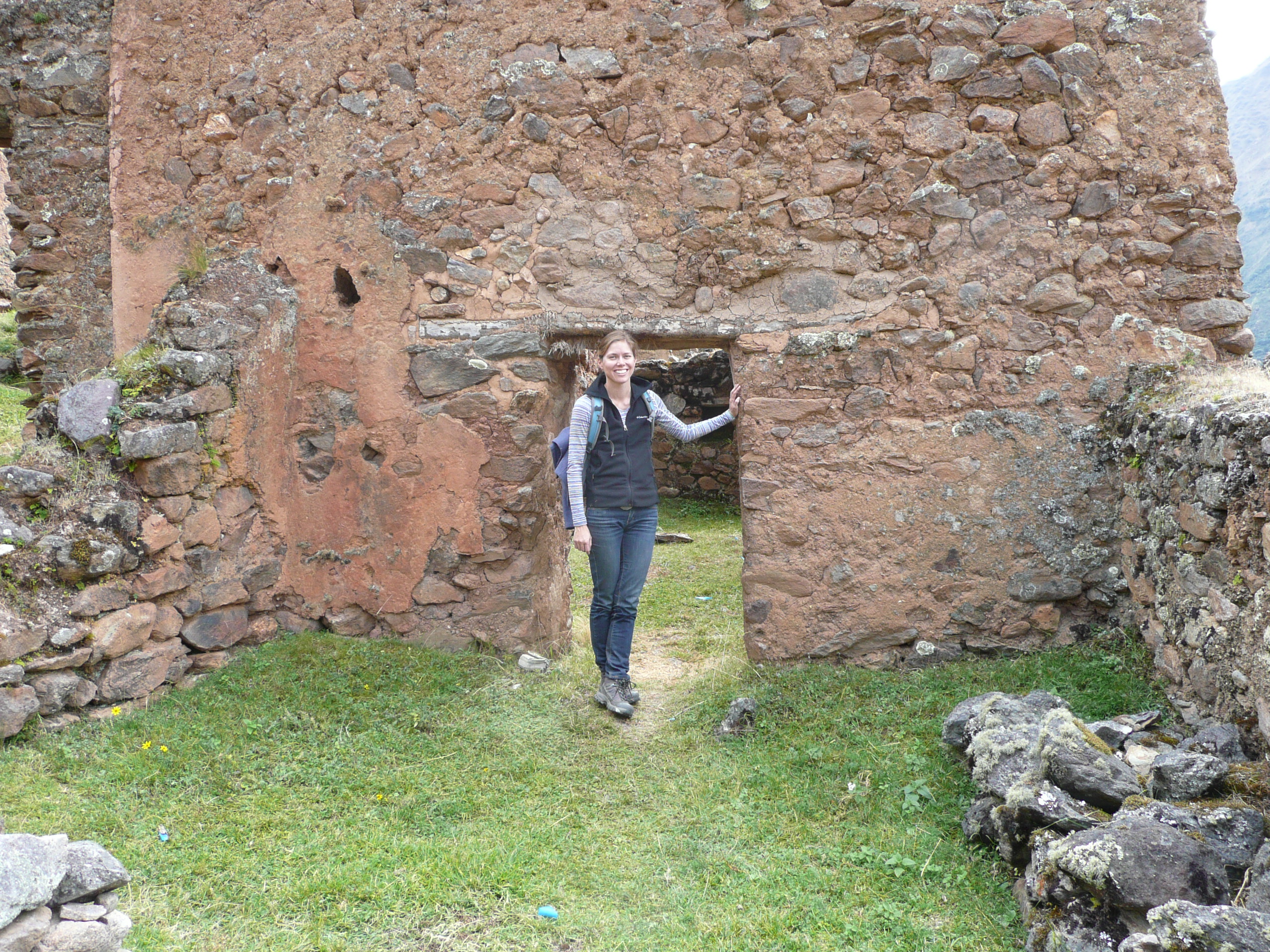
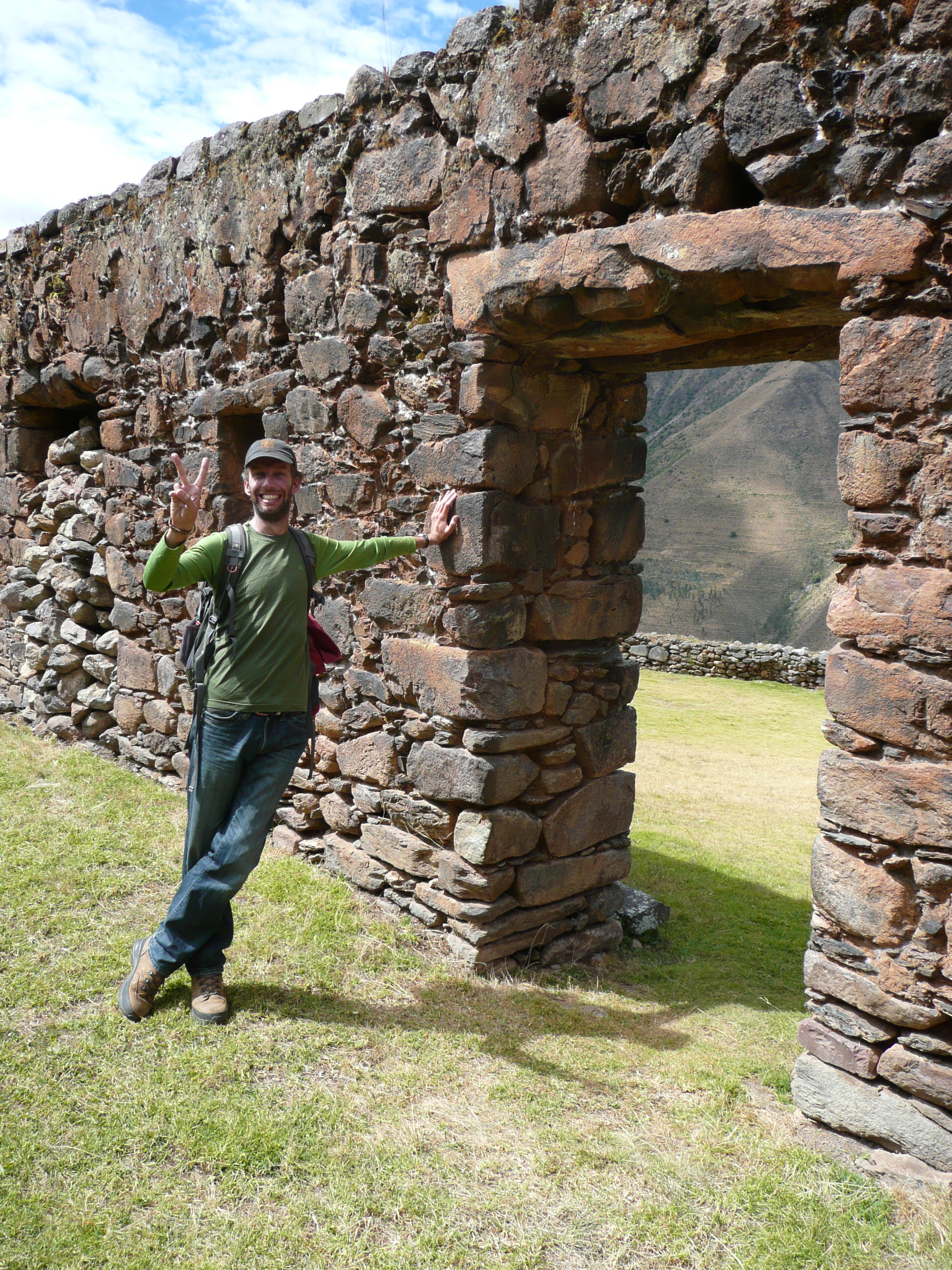
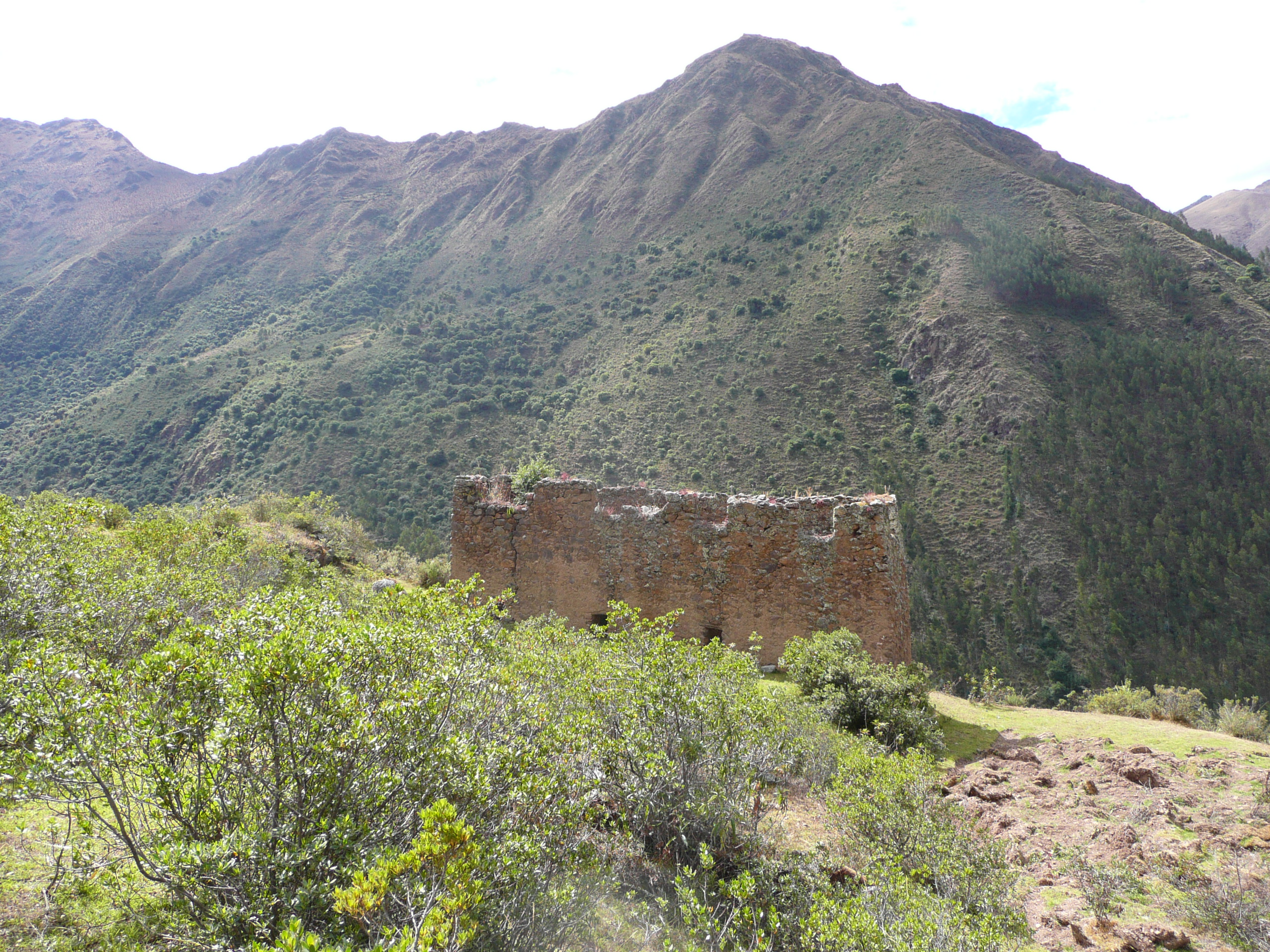
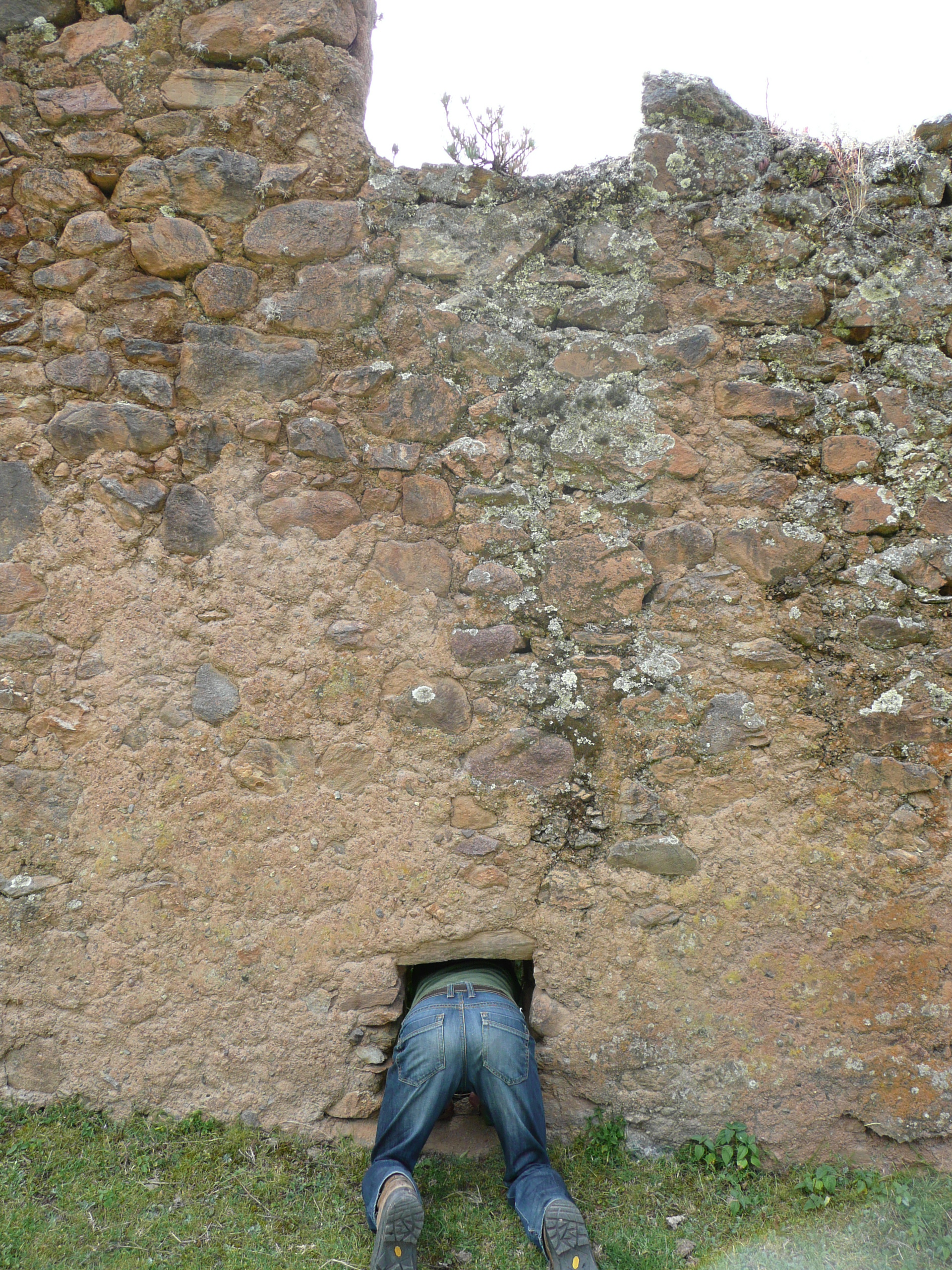
The doorways into the fortifications weren’t that handy, but I guess it would have been easy to chop my head off for any defenders!
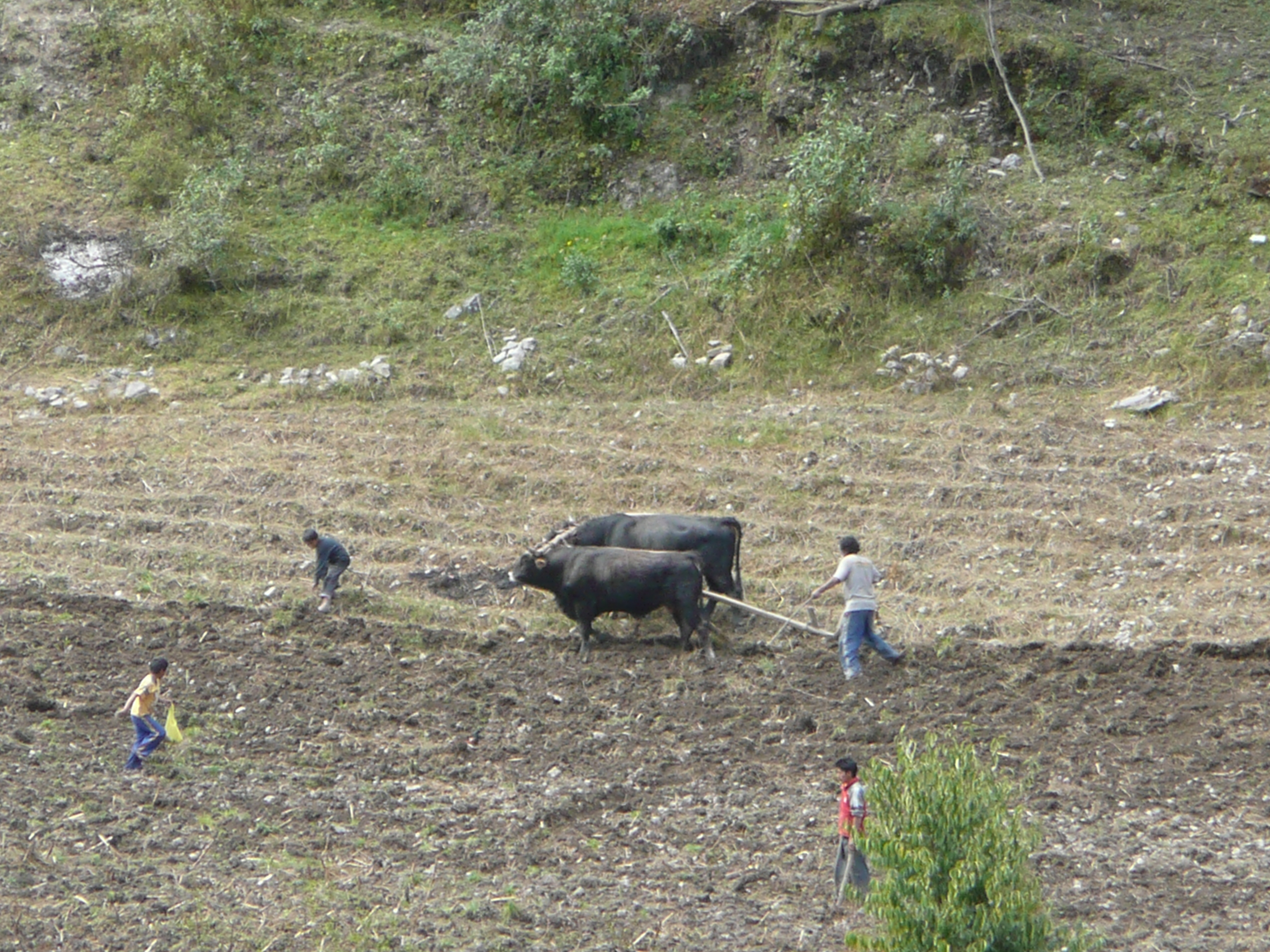
One of the ox teams ploughing a field.
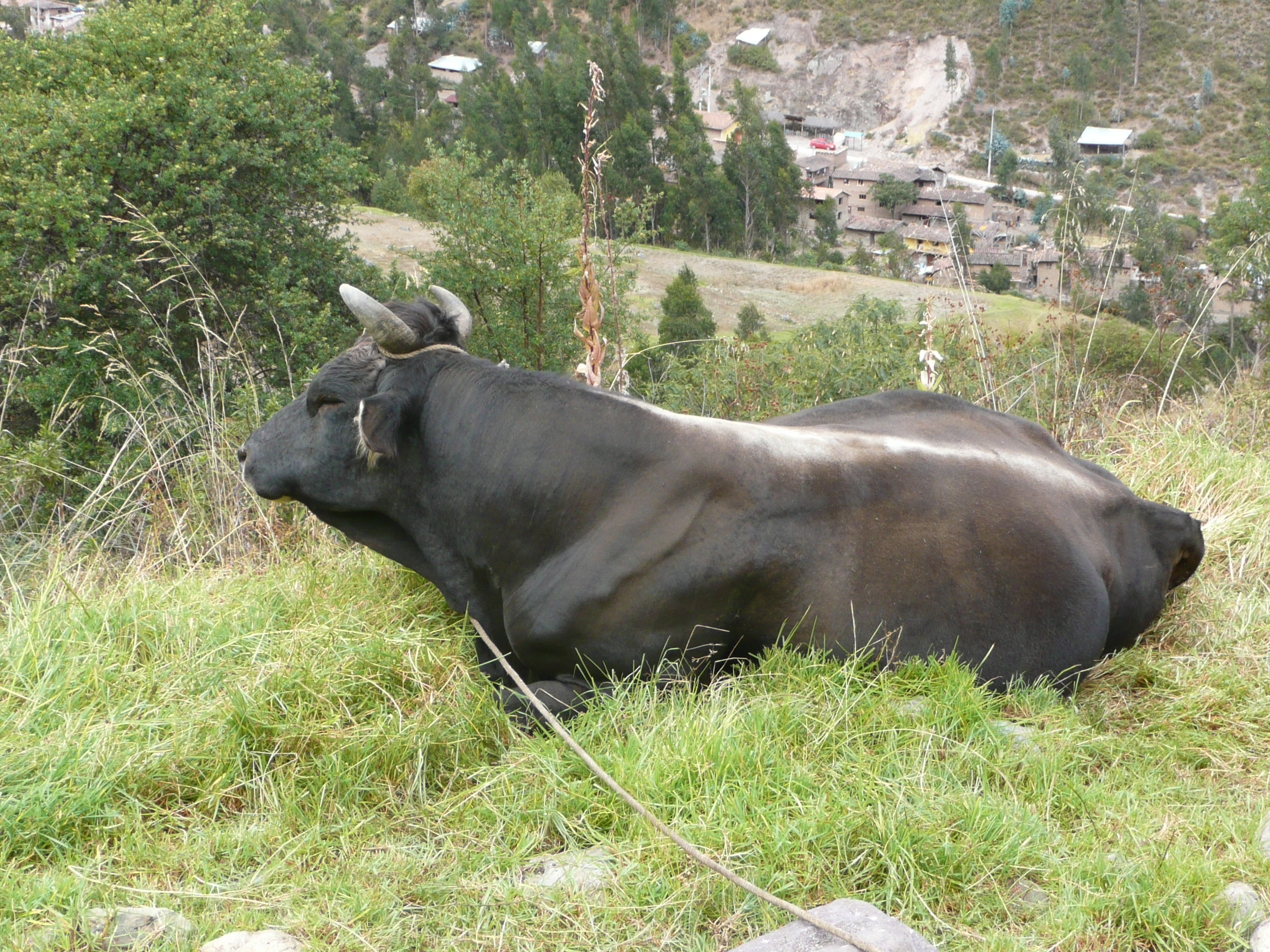
Ox on smoko
Our next destination was going to be Nazca, but to get there we had to drive a dangerous and windy mountain road of 630 kms over 4500 metre mountains and eventually descending to desert closer to Nazca. They were two long days in the car. We saw the most police we have seen on this trip, probably because this road is apparently not only dangerous for its windiness but also for a bit of terrorism here and there. Having done a self defence course and having already successfully dealt with the corrupt Bolivian police, this wasn’t going to deter us from taking the shortest route of course.
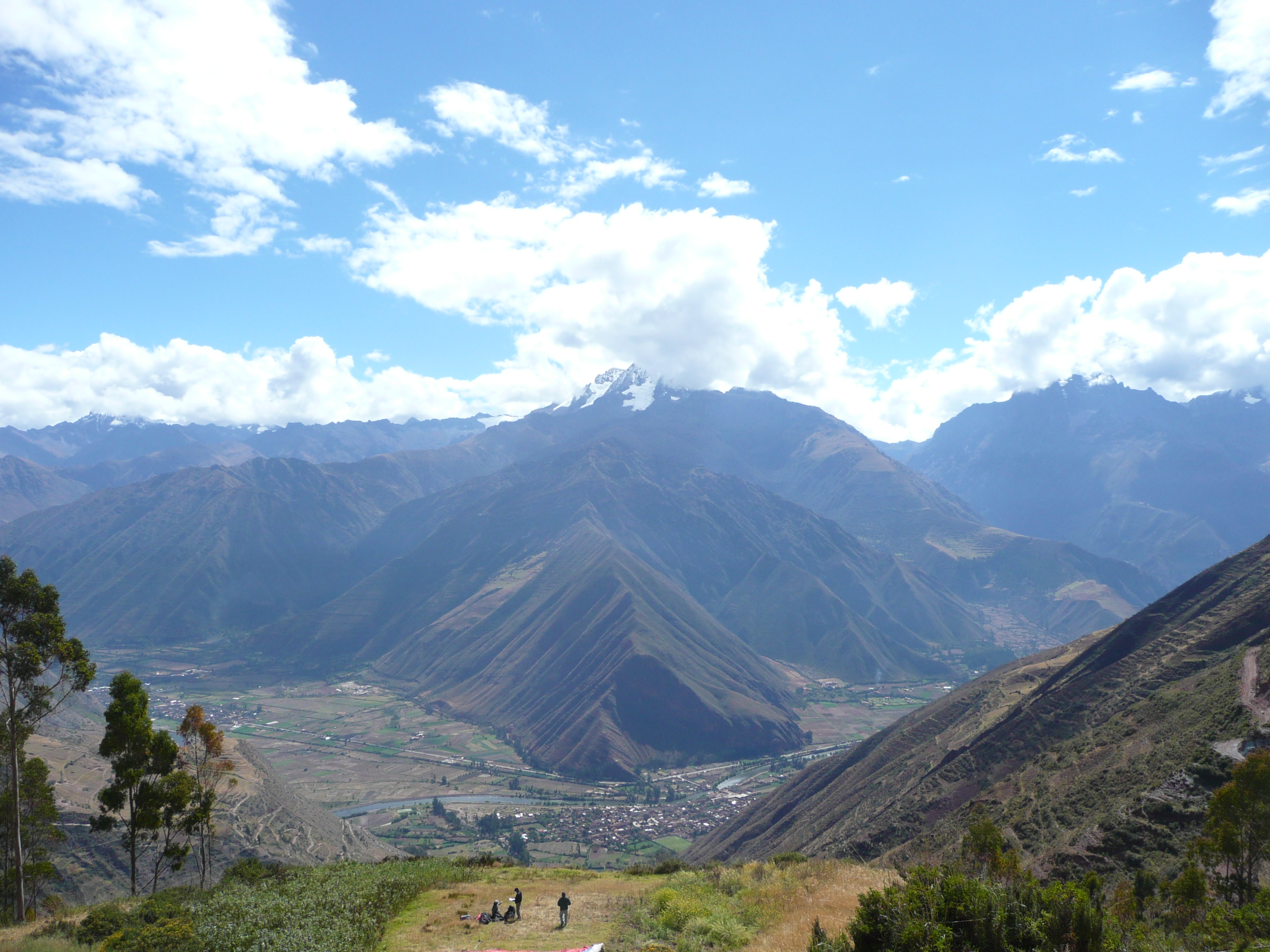
Sacred Valley
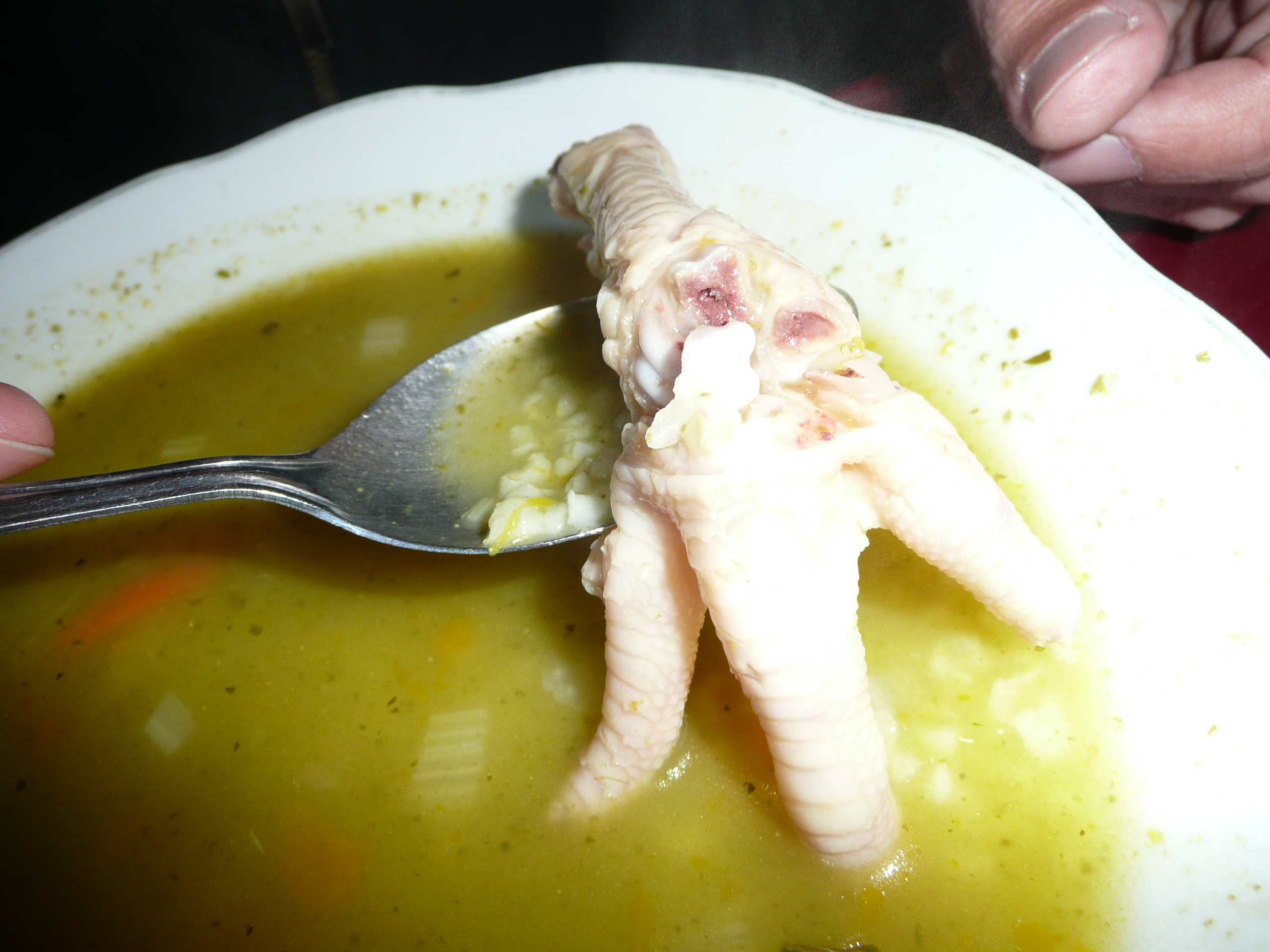
Whole new meaning to chicken soup. At least this one was cooked, unlike a few raw chickens I got served in Peru. It’s not only the ceviche they like raw!
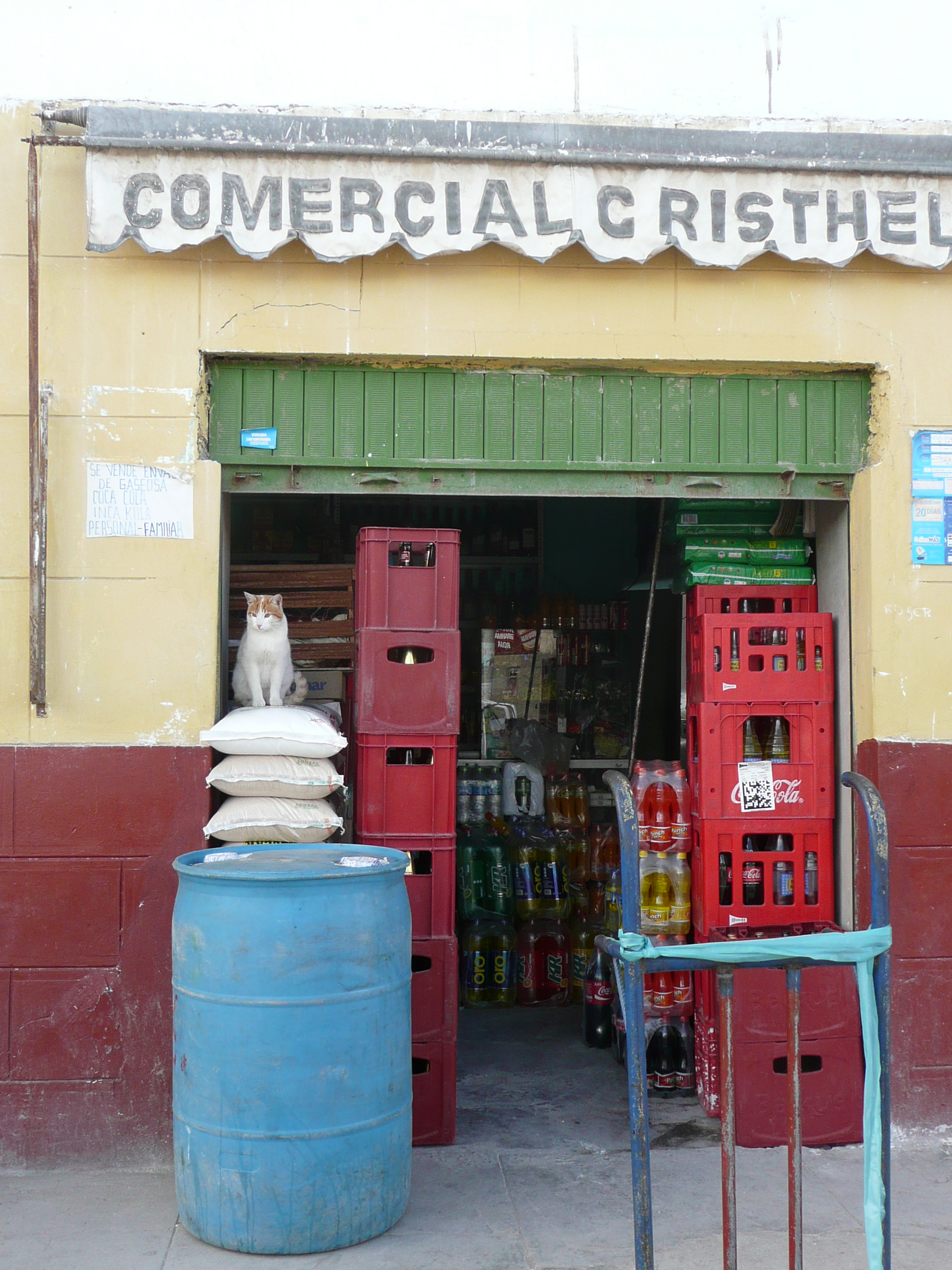
Nice cat in shop front
We arrived in Nazca just when it was getting dark and stumbled upon a tourist office where we got some maps and directions to our accommodation. This little hotel was brand new and we found ourselves in a spotless room with cable tv with The Big Bang Theory and Jamie Oliver on in English. After watching this for a while we left to find a restaurant that would be able to serve me a ceviche, since we were now close to the ocean. We went to the most fancy restaurant in town and had a nice meal, I had my desired ceviche and Julia had a nice vegetarian main.
Back in the hotel things quickly started to go downhill. I thought I was getting a cold as I was breathing with difficulty and felt totally blocked up. We went to bed, but I didn’t feel well and when I got up at 2am and looked in the mirror I saw that my face had swollen up badly. We needed to get access to the car where our medical kits were, but had to wake up the owner for that. He didn’t think self medicating with anti-histamine was going to cut it and insisted on taking us to the hospital. Well, that was a whole different experience. The homeless looking person sleeping in the wheelchair was the doctor. He had a look at me, but didn’t really communicate or ask questions at all. He gave us a piece of paper with the medication I needed and told us to go pay at a little window and get the needles and come back. Making sure the needles weren’t recycled I had to lower my pants and got a nice fat needle shoved in my glute muscle. It hurt a bit, but after that it is quite the funny sensation as your muscle just doesn’t do what you want it to do anymore. So after we were told to come back the following morning for another steroid/anti-histamine injection we walked (or stumbled in my case) back to the hotel.
The next morning the swelling had gone down quite a bit. We went back to the hospital and I was treated by a doctor who absolutely didn’t want to help me. He filled up the needle at the appointment counter and I thought I had to lower my pants right there and then in the waiting room. Julia was getting pretty pissed off. We managed to manoeuvre him into a little room, where he rammed the needle once more in my glute. Still not knowing what had caused my reaction to the ceviche and getting non the wiser from the hospital staff who are not used to getting any questions at all, we paid for a GP to come and visit me. His God complex was just as bad, but since we paid ‘big bucks’ he was a bit more inclined to help us out. He gave me a very restrictive diet for two weeks and told me that the ceviche had given me a reaction because I am not used to all the condiments of Peru…. Ok… We did some more research and found that the raw fish I ate was most likely four days old. Furthermore Sea Bass can get poisonous when not cooled right and if caught at certain spots contain parasites that people react badly too. As I have never been allergic to any seafood, I am not sure what to think of all this. And till today have not eaten any, but will see my doctor in NL first, as angioedema can be deadly. At my third steroid shot appointment we found out from the nurse that the grumpy doctor the day before (maybe deliberately) had used a very thick needle on me. As she was unwilling to help us get a smaller needle, I opted to have my glute muscle abused one last time and limped out once more. My advice is too avoid Peruvian hospitals if you can!
On our last day in Nazca we visited the Nazca Lines in the afternoon. The first look out didn’t really show us anything, but the second one was a lot better, we saw a few of the famous figures and wondered how it is possible that erosion hasn’t wiped them out completely! We also visited the Museo Maria Reiche, a German woman who came to Nazca in the early 20th century and has done lots of research here and protected the lines quite fiercely.
Very keen to leave Nazca behind after a longer than planned stop we started on our three day drive back to Chile. This was the start of a long way back to Santiago, with the expected scenery being desert and mines the whole way through.

Swelling after it had gone done a bit already. Steroids are good!
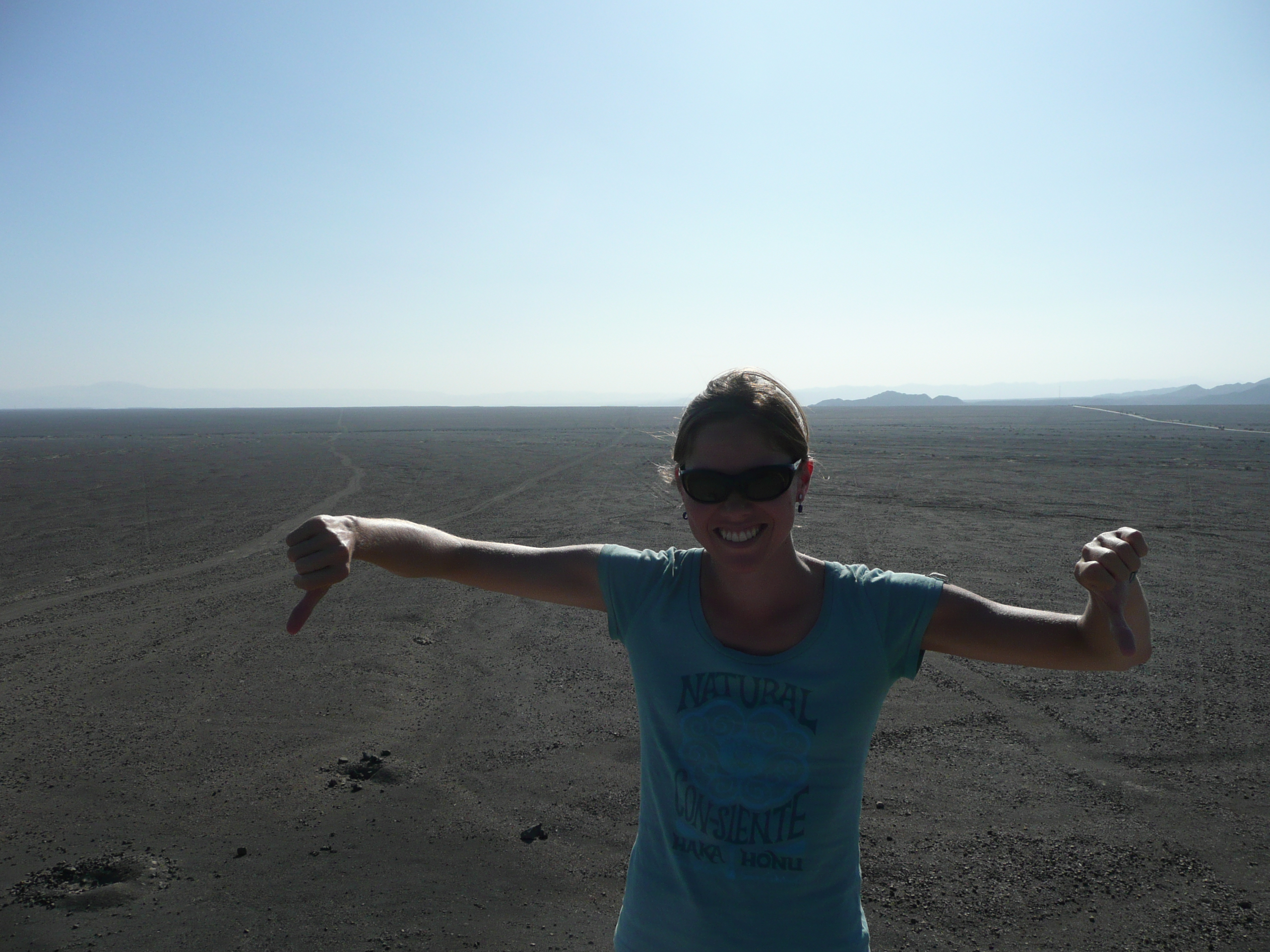
Julia not being so happy with the first lookout. Things were about to improve though…
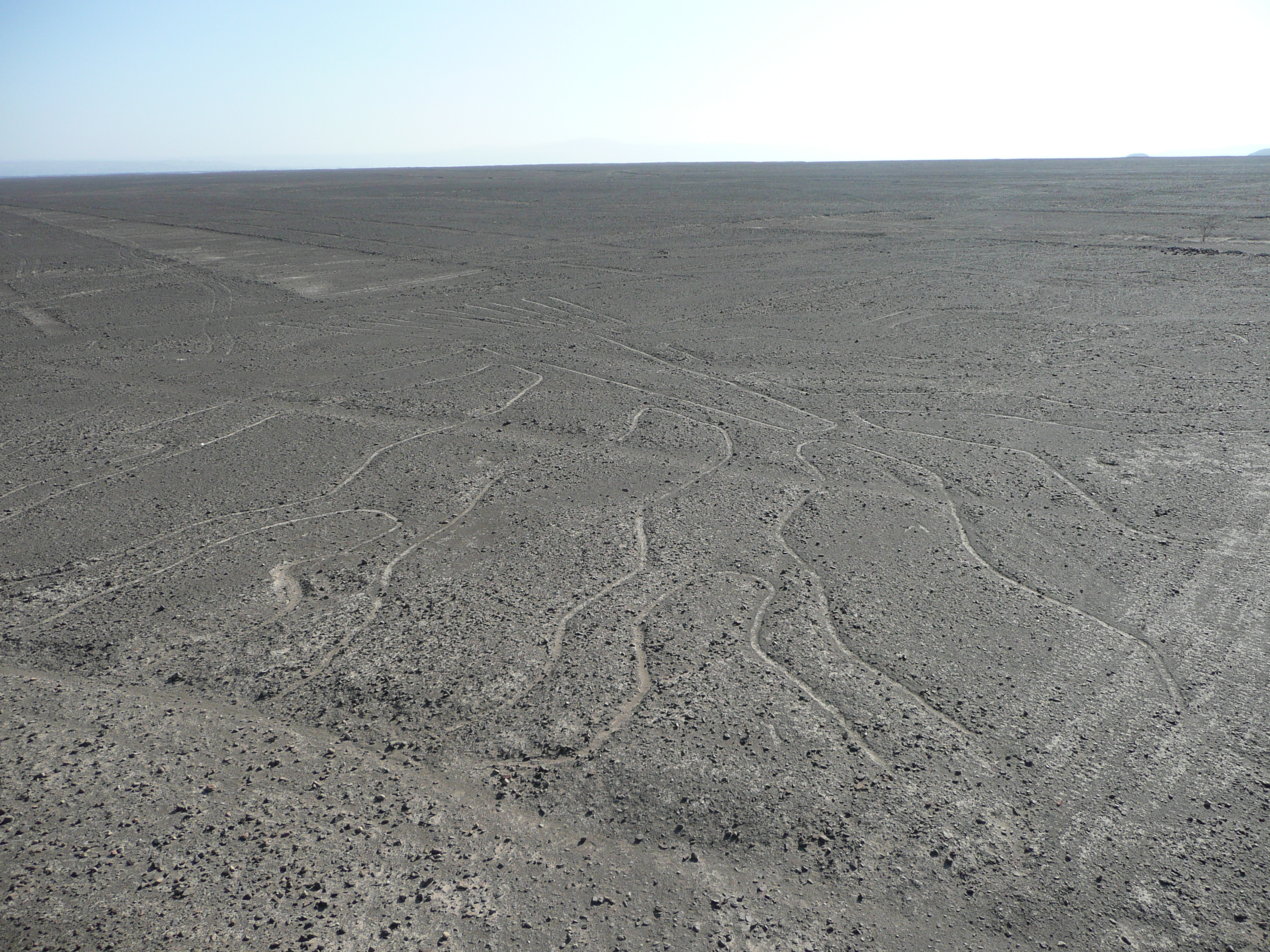
Nazca Lines – Tree
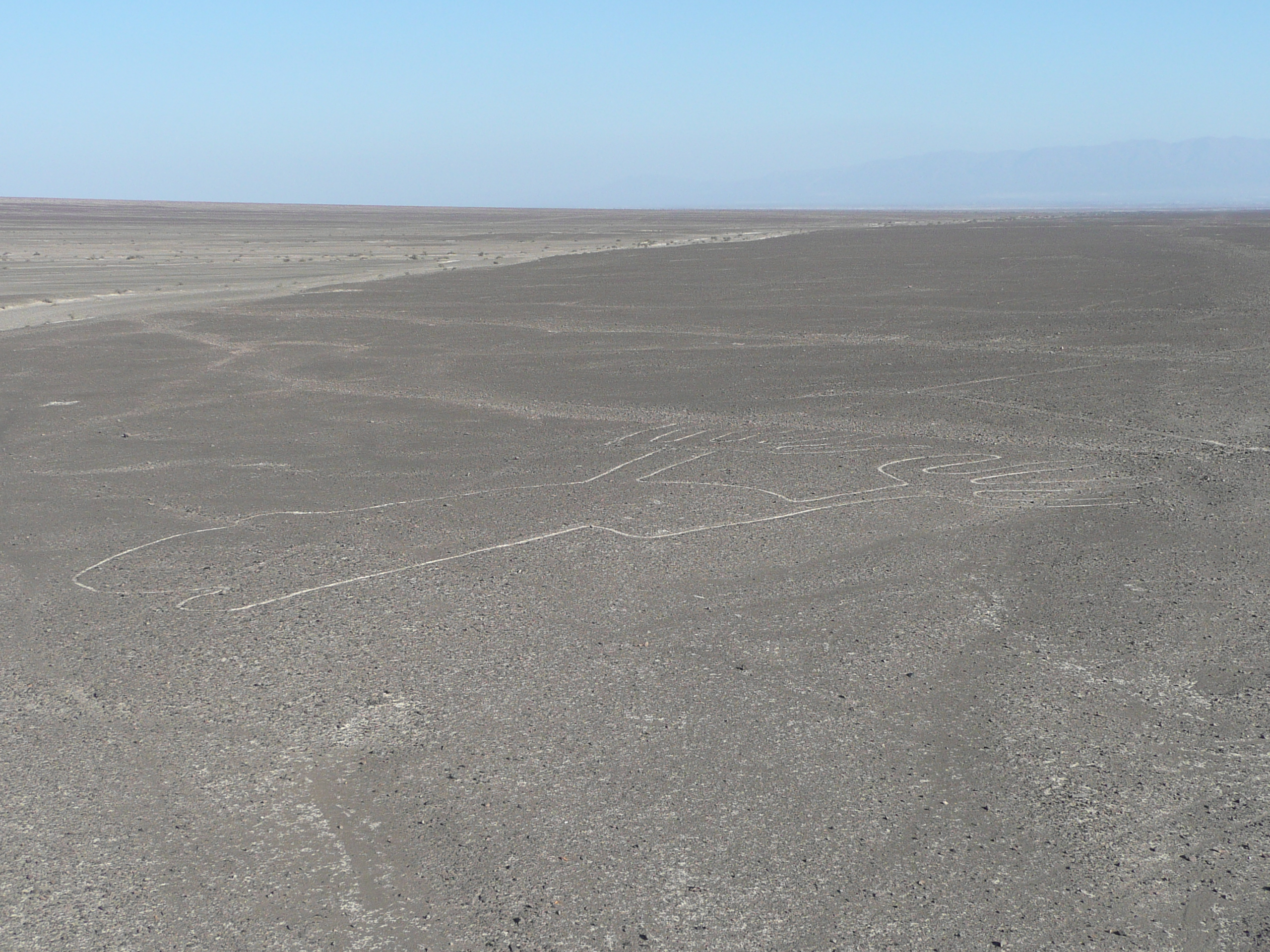
Nazca Lines – Hands
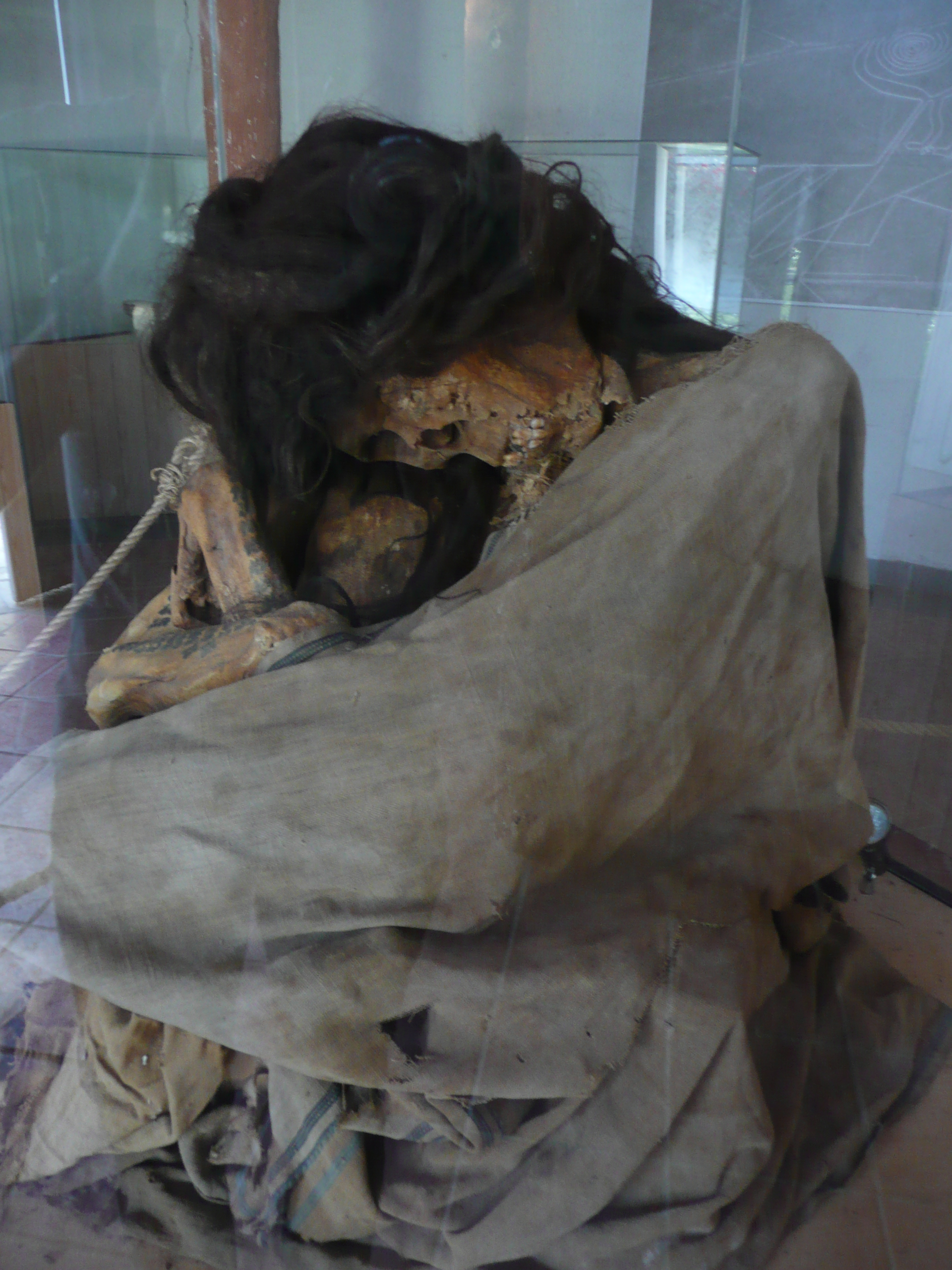
Always use moisturizer in the desert!
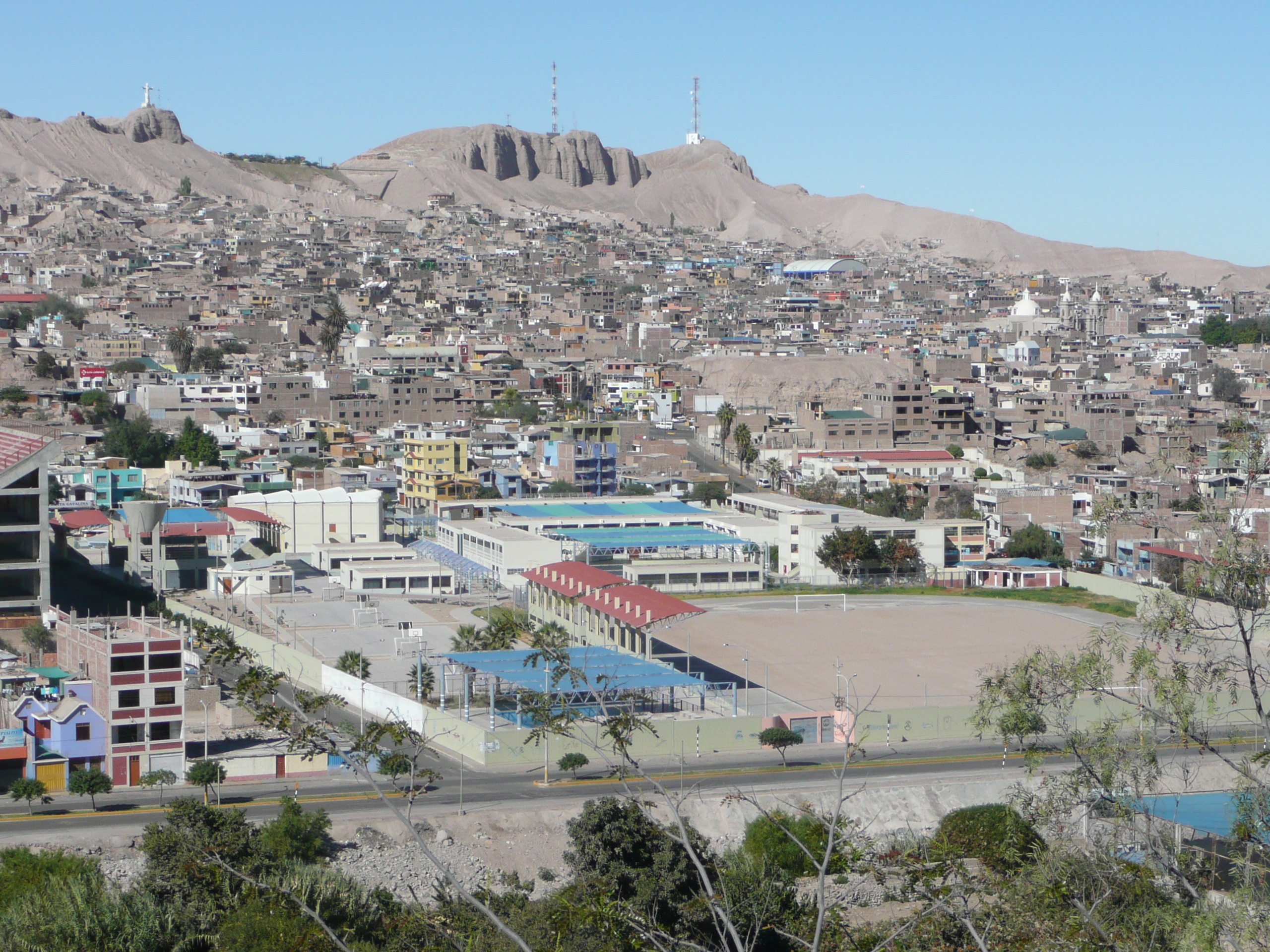
Another gritty town full of unfinished buildings (pay no tax when you don’t finish your house!)
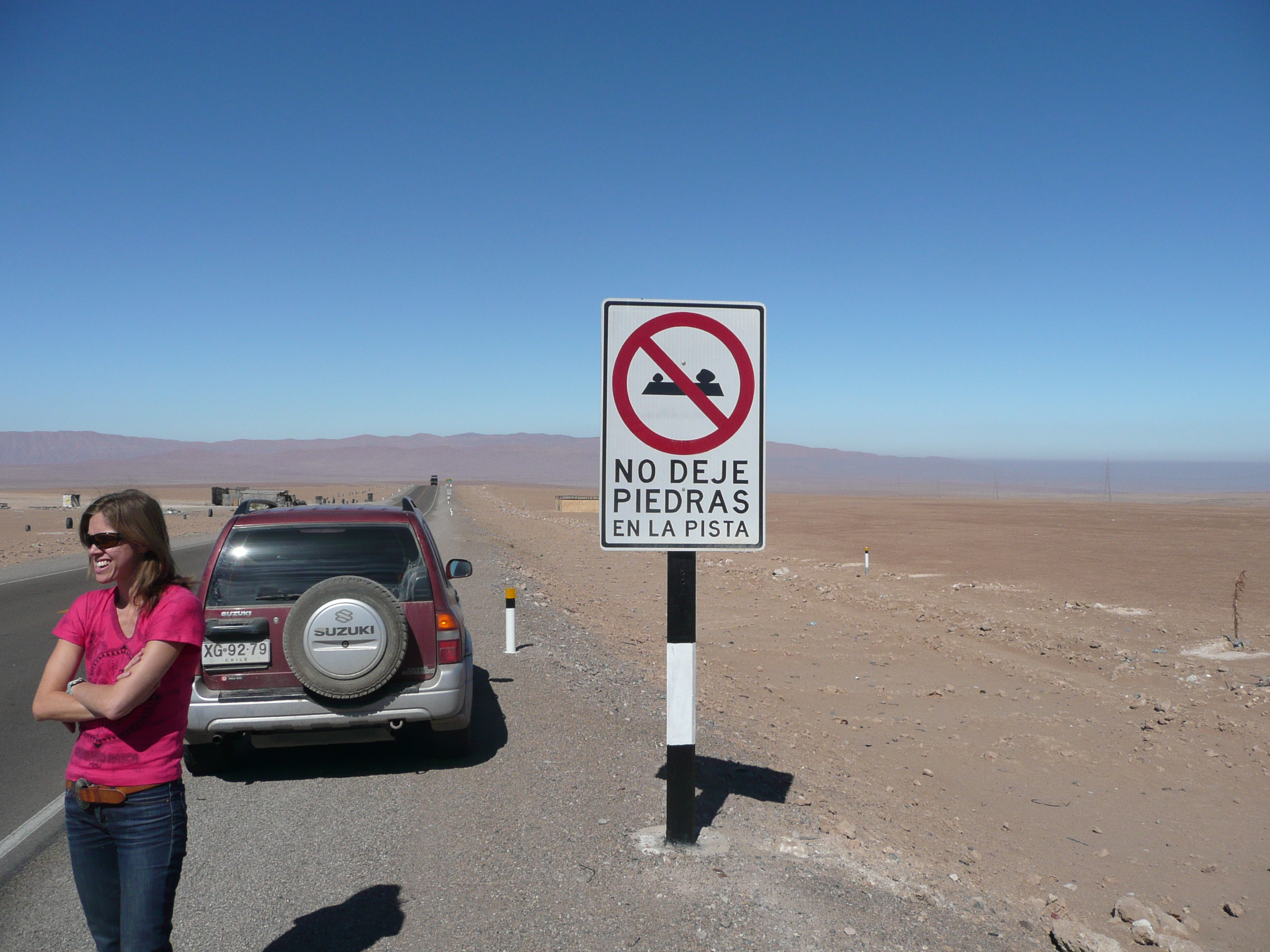
These signs are everywhere: ‘Don’t put stones on the road’ another one was ‘Don’t burn your tires on the road’. Obviously without these signs we would have stopped here and piled some rocks on the road, who wouldn’t!?
Nadine Brown liked this on Facebook.
I received this email from Bolivia: Hola Richard y Julia – “¿Dónde estás? lo que es este lugar Rotorua escribes de? Echo de menos a nuestros abrazos y saltando alrededor de la cama a ser por tiempo de juego. Mis dueños no es tan bueno como usted y espero que usted me va a estar a su nuevo hogar, dondequiera que a lo mejor. Si no, feliz viaje y un montón de ronroneos para usted. Su amigo peludo.”
I think it translates as: “Hi Richard and Julia – where are you? what is this Rotorua place you write of? I miss our cuddles and leaping about from bed to be for play time. My owners is not as good as you and I am hoping you will being me to your new home, where ever that maybe. If not, happy travelling and lots of purrs for you. Your furry friend.”
Logged in to 11qlogin, was pretty straightforward. No dramas. Check it out, follow the link to 11qlogin.
Hey there. Been dipping my toes into fatah777game. Nothing revolutionary, but alright for a bit of a gamble. Check fatah777game when you get the chance
Howdy! Took a spin at gamezoneph. Nothing crazy, but has some fun choices overall. Take a look gamezoneph for some amusement
Heard some good things about 2jgame. Seems like a new platform but the game selections are pretty diverse! Gonna give it a try tonight. You guys should too: 2jgame.
57vcasino? Alright, alright, alright! Not bad, decent selection, and the customer service is pretty responsive. I’d recommend giving it a try! Find them at 57vcasino.
Looking for something new? 711ph’s got a bunch of games. The interface is pretty clean, easy to navigate. Check them out! Link’s right here: 711ph.
Just had my first big win here and the withdrawal was processed almost instantly. Such a breeze. Go try br4444win!
Honestly, this is one of the most reliable platforms I have used in Bangladesh. The payout process is super fast and the games are top notch. Highly recommend bdjaya9bangladesh for anyone looking for a fair game.
Quick deposits and even quicker withdrawals. That is all I really care about and they deliver every time. bd777u is honestly the most trustworthy site I have used recently.
Signing up was a breeze. I was able to start playing in just a couple of minutes. jilibetwinregister makes it so easy for new players.
I have been following coruletarusaonline for quite some time and they consistently deliver a premium gaming environment. The roulette selections are fantastic and I love how often they run fresh promotions for returning members. It is rare to find a site that balances entertainment with genuine fairness so well. coruletarusaonline