Crossing the border into Chile once again was a piece of cake, we know the drill exactly, old hands. The border is on top of a mountain range and when descending into Chile the change in landscape was apparent. Where Argentina was dry, Chile was lush and green, the rain doesn’t make it over the mountains too often. We had read in our guidebook that the area on this border was ‘Mapuche’ area, the indigenous people who are still getting a very bad deal in Chile. We stopped at a small town called Curarrehue where 80% of the people are Mapuche. There is a little museum and a Mapuche restaurant. We had a great lunch here, it started off with sopapillas, assort of deep fried bread with spreads. The bread reminded me much of ‘oliebollen’, a Dutch New Years tradition. For our main Julia had a soup with local ingredients and I had a sort of stew with a large piece of cow meat and a lot of coriander, it was all very tasty.
In Pucon we had some problems finding accommodation but we ended up at Donde German hostel. The woman who gave us the tour was extremely specific and it became a bit of an issue in the days to follow and only when I got angry after she falsely accused Julia of using the wrong toilet, she left us alone. Some of the rules included that you were not allowed to drink or eat anything in the hostel other than the kitchen, resulting in the beautiful lounge being totally unused as everyone gathered in the kitchen all night. If you had a private room outside in the annexes you were also strictly forbidden to use the inside bathrooms and when you were cooking she would hover around to make sure you did it all right and the list went on and on…
The reason for us coming to Pucon was four fold as some things are easier in Chile than in Argentina:
- Buying US dollars, as explained in previous posts, we have problems getting money out in Argentina and we prefer the black market rates (and no queues at banks).
- Groceries, supermarkets in Chile are much better than in Argentina and the cookies and chocolate are of a completely different standard, worth a border crossing and a 300 km detour, right!?
- Internet, doing a blog update or anything that requires serious internet time is hard in Argentina, if only we got consistent dial-up speed, but most often it is a lot slower than that. So in Chile we upload photos, download movies and our favourite tv-shows (lately Friday Night Lights).
- Car maintenance, Suzukis are more common in Chile and it’s easier to get a service done there.
Buying dollars took a while and lots of calculations and walking up and down between ‘Cambios’ to get the best deal. Groceries were easy as Pucon must have the most supermarkets per capita in Chile, at least six large flash new ones for a population of 17.000 people (plus lots of tourists). Internet was great with downloads going at 800Kb/s.
Car maintenance was the difficult one. I had asked for some recommendations for a good mechanic and was referred to Alejandro who was having a shop next to the Bomberos No Dos. After a bit of searching his shop was found and he seemed like a nice guy who was willing to work of my list of tasks. When I came back at night he showed me everything he had done and showed me that the oil filter he replaced was the stock standard factory Suzuki one. Meaning that in 180.000 km, it was never replaced. Particularly bad since we paid the dealer of whom we bought the car from in Santiogo, to replace this. The spark plugs also looked like they had never been replaced… We also asked about the play on the steering, which according to the mechanic in Punta Arenas was not going to be a problem. Alejandro reckoned though that we were getting close to losing our steering, which could be disastrous. Unfortunately this part turned out to be very expensive, but we wanted to get it done. We had to stay two days longer in Pucon for the part to arrive and the job to be done. The car is now driving a lot better and doesn’t make loud banging sounds anymore once we drive through the many holes on the roads here. Alejandro showed us the old part and it was in a bad shape. The roads take such a heavy toll on cars here…
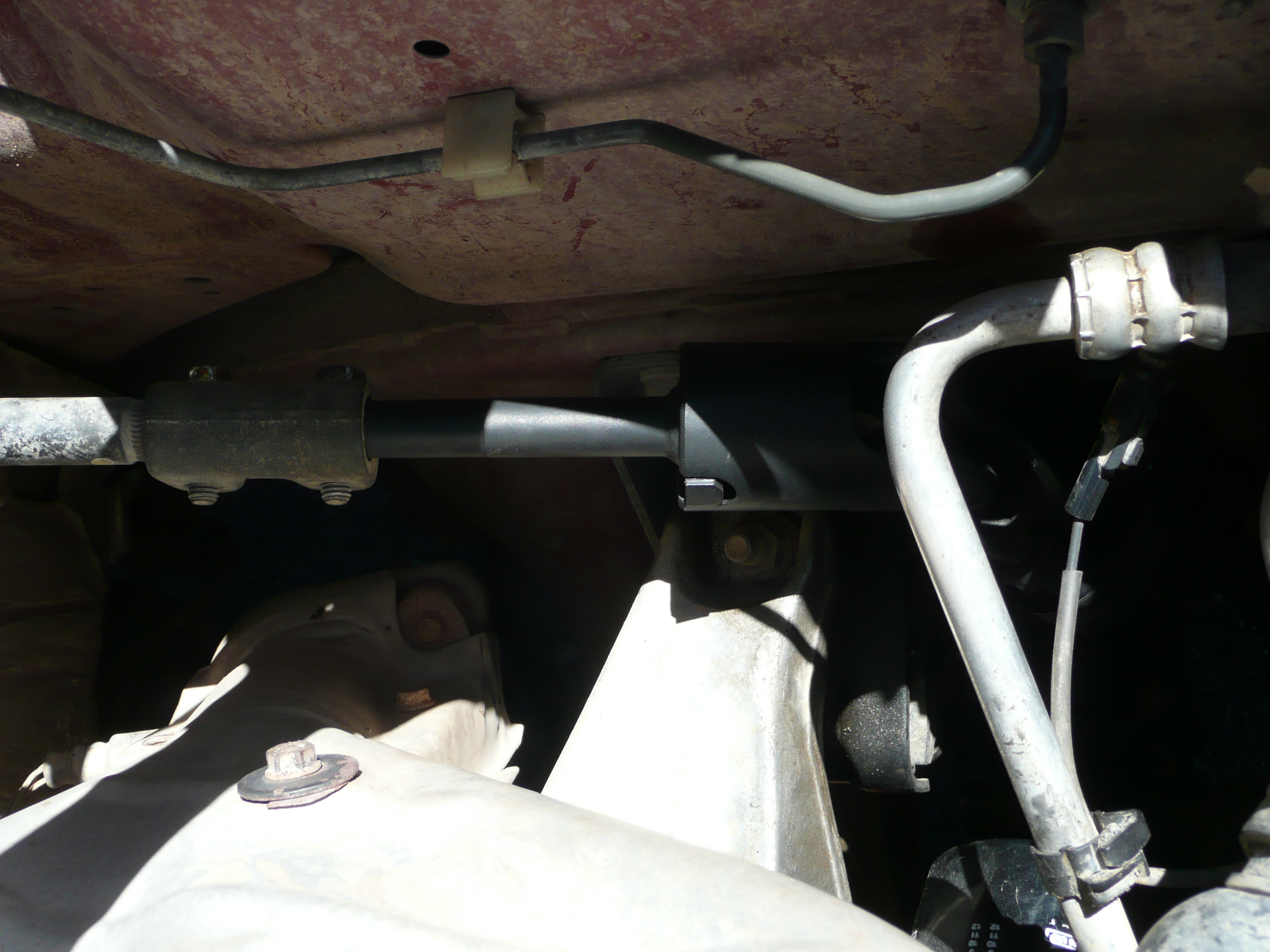
The new steering column in shiny black metallic
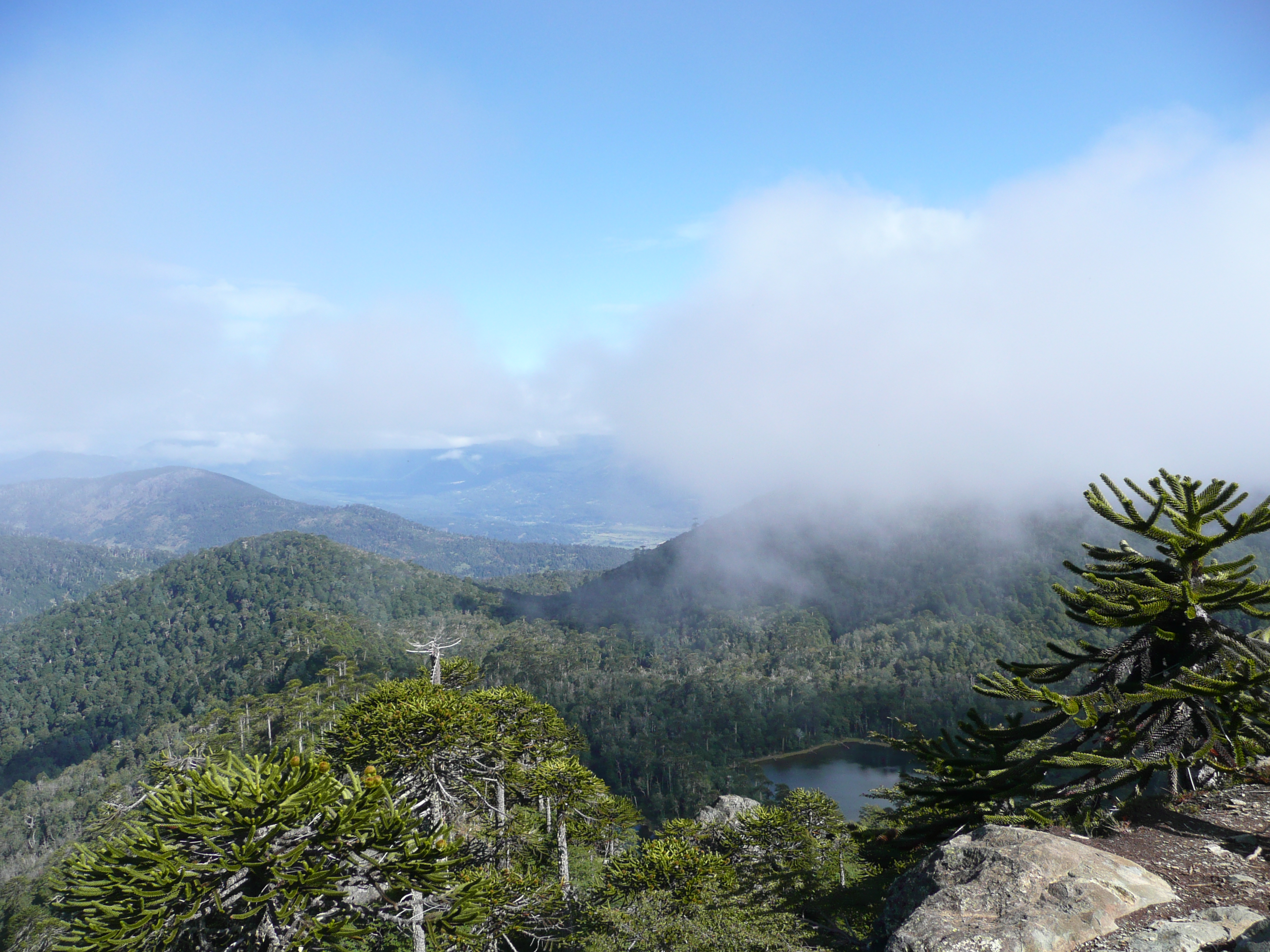
We made the best of our time in Pucon besides sorting our ‘chorus’. We had been to this town shortly on our way down south towards Chiloe and really liked it. One of the highlights was to go back to Latitude 39, a café run by a friendly American couple. They are ex-overlanders and settled in Pucon. They make great burgers, like deer with bbq sauce or veggie with guacamole and jalapeno and things like tacos and proper cakes, including carrot cake and brownies. On top of that we found café Cassis, which made flat white coffees, best ones we have had on this trip. We also went for a walk in El Cani Sanctuary, a piece of land bought by people who believe it is a very special place that must be preserved. They have built trails and you can hike to the top of a mountain from which you can see four large volcanoes. It was a beautiful hike, but when we got to the top it was cloudy and we couldn’t see all volcanoes. Volcan Villarica, the nearest, was clearly visible though. It is also very active and Pucon has alarms for when it starts to blow, bit similar like living on a fault line or below sea level I guess! We met a very interesting couple from Switzerland who were now living in Brazil. They had been there for almost 20 years taking care of young addicts. They started off for two years, being sent by their church but ended up staying and running a farm at which the young people work and recover. We were invited to come and visit, but unfortunately a bit off our route. On the way down we met Adolfo, one of the owners of the sanctuary. He also had amazing stories, he was a political refugee under Pinochet and lived in the United States for a long time. A lot of his friends weren’t that lucky and didn’t survive. We got some very interesting insights on politics in Chile (not as democratic as they might appear) and had some heated discussions on politics in general as our views didn’t always ‘quite’ align. Adolfo has big plans for the sanctuary and I hope they work out for him.
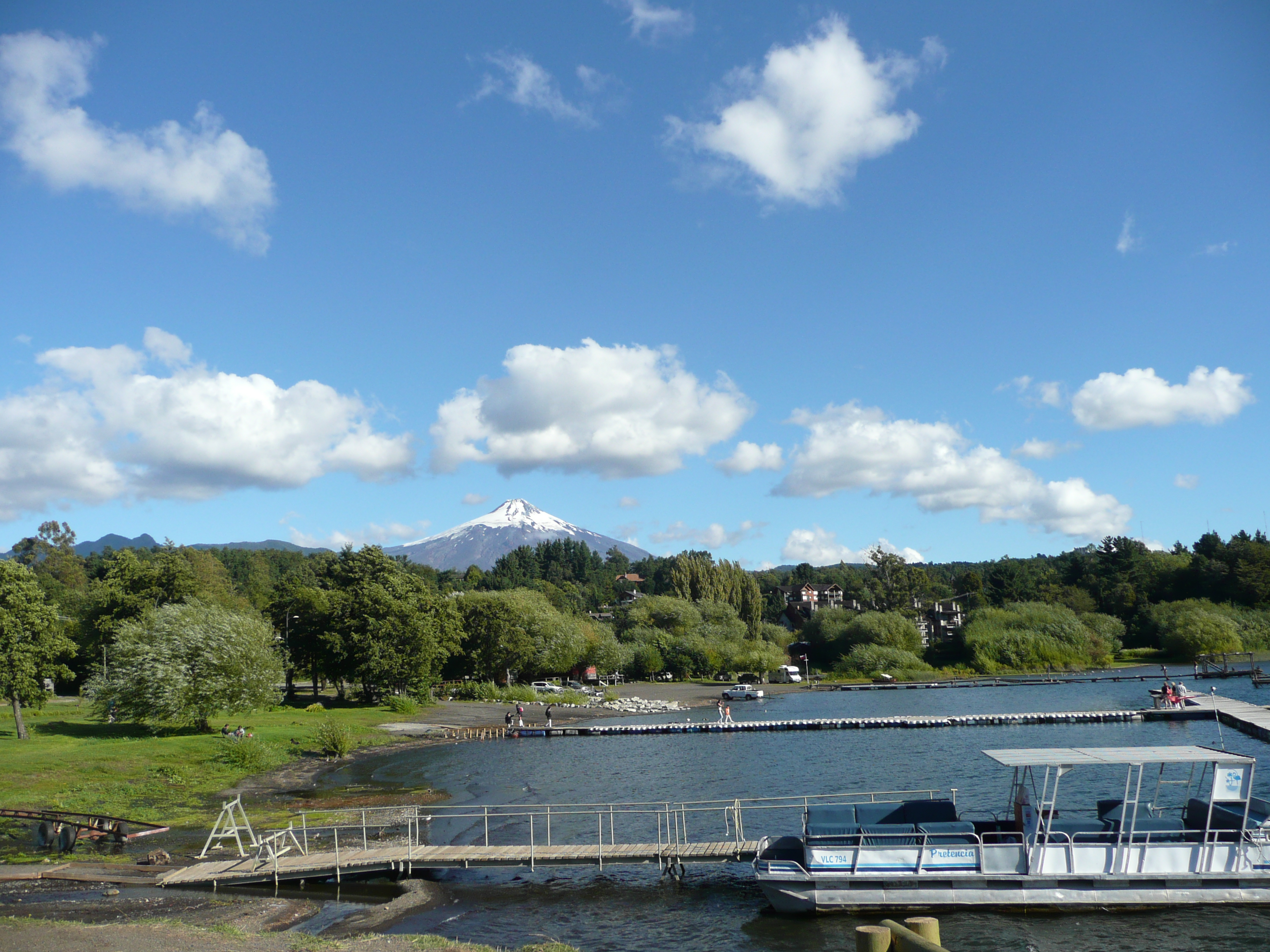
Pucon waterfront
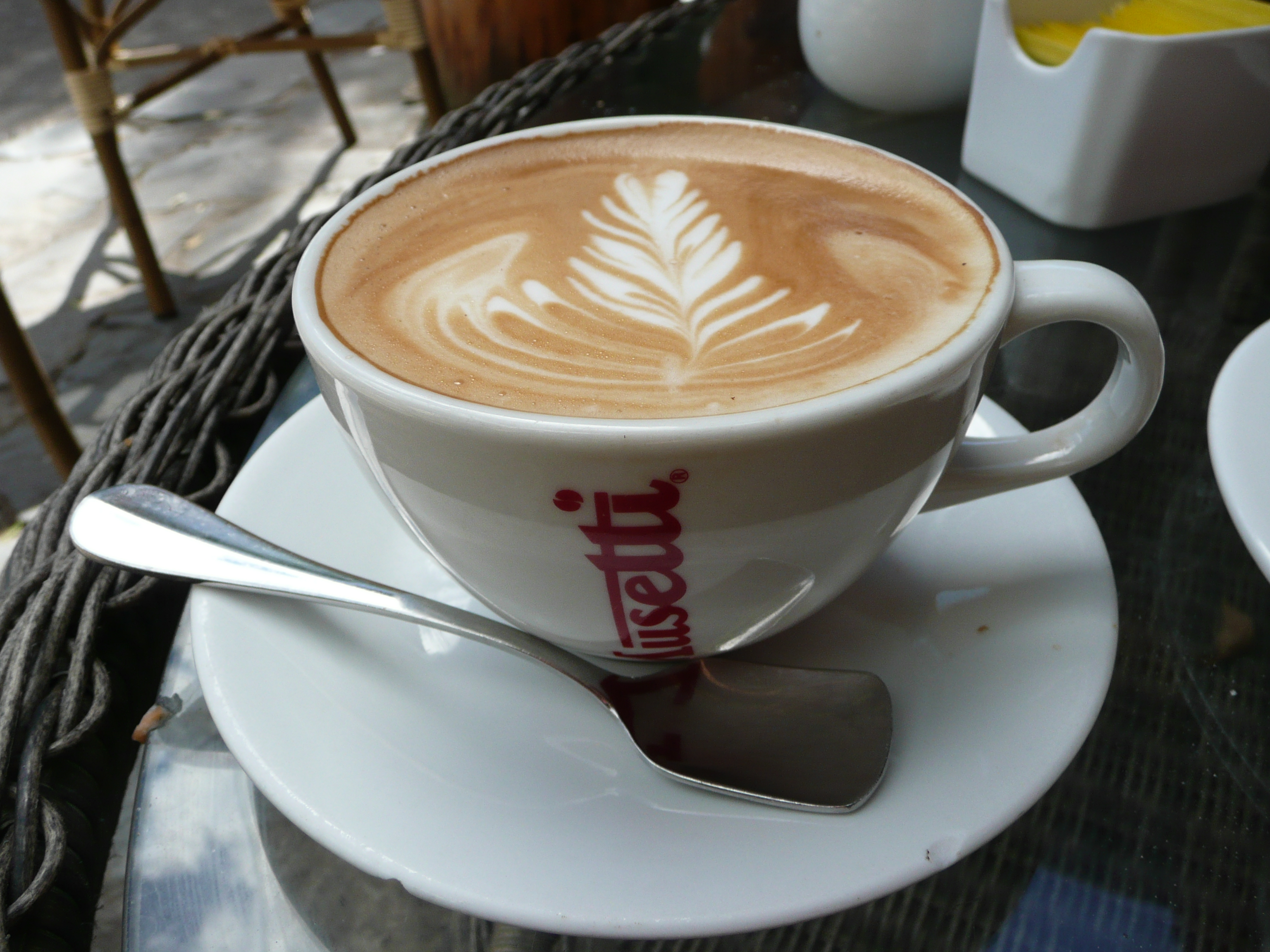
Looks and tastes like a flat white – Cafe con leche at Cassis in Pucon, highly recommended!
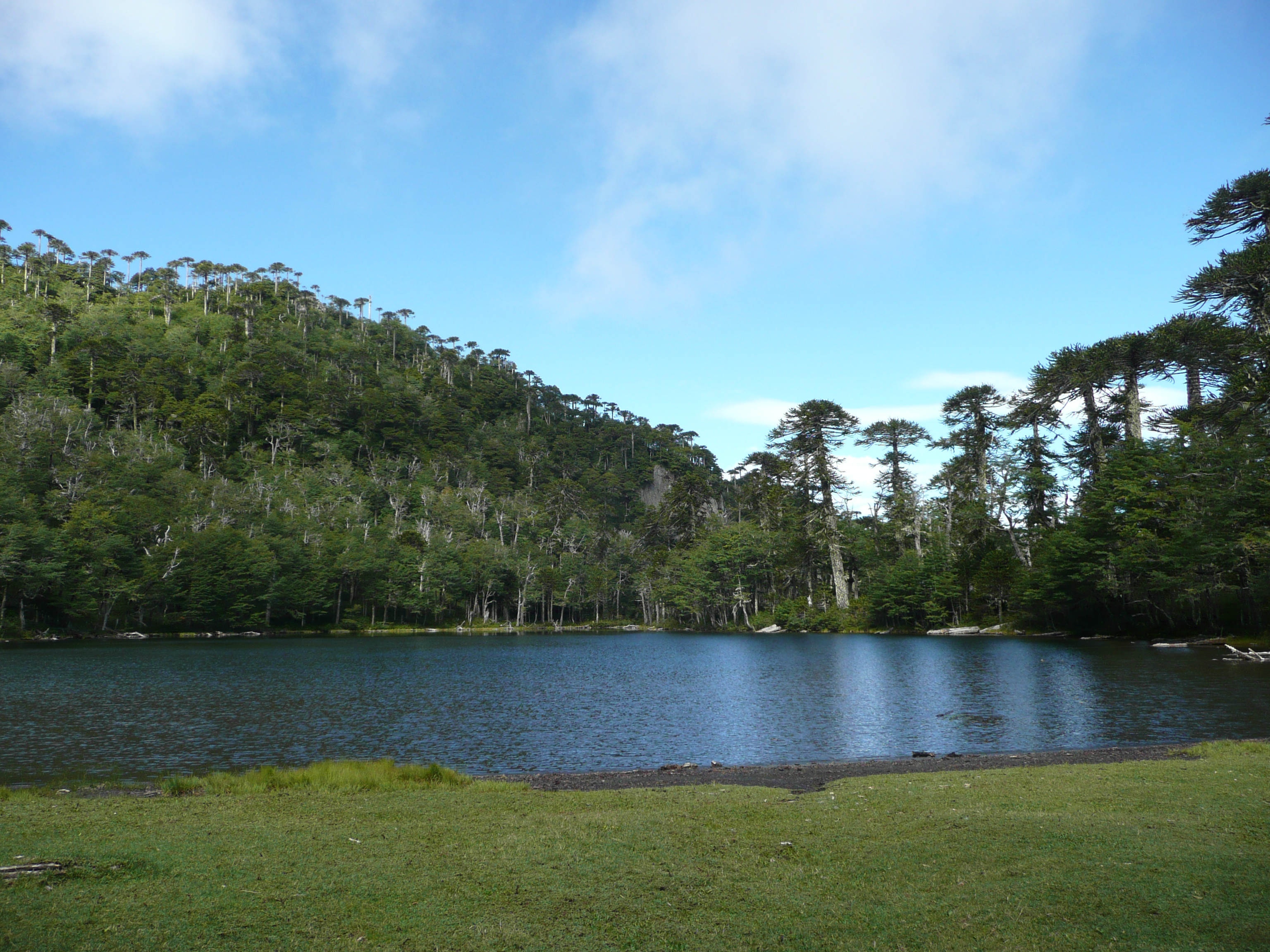
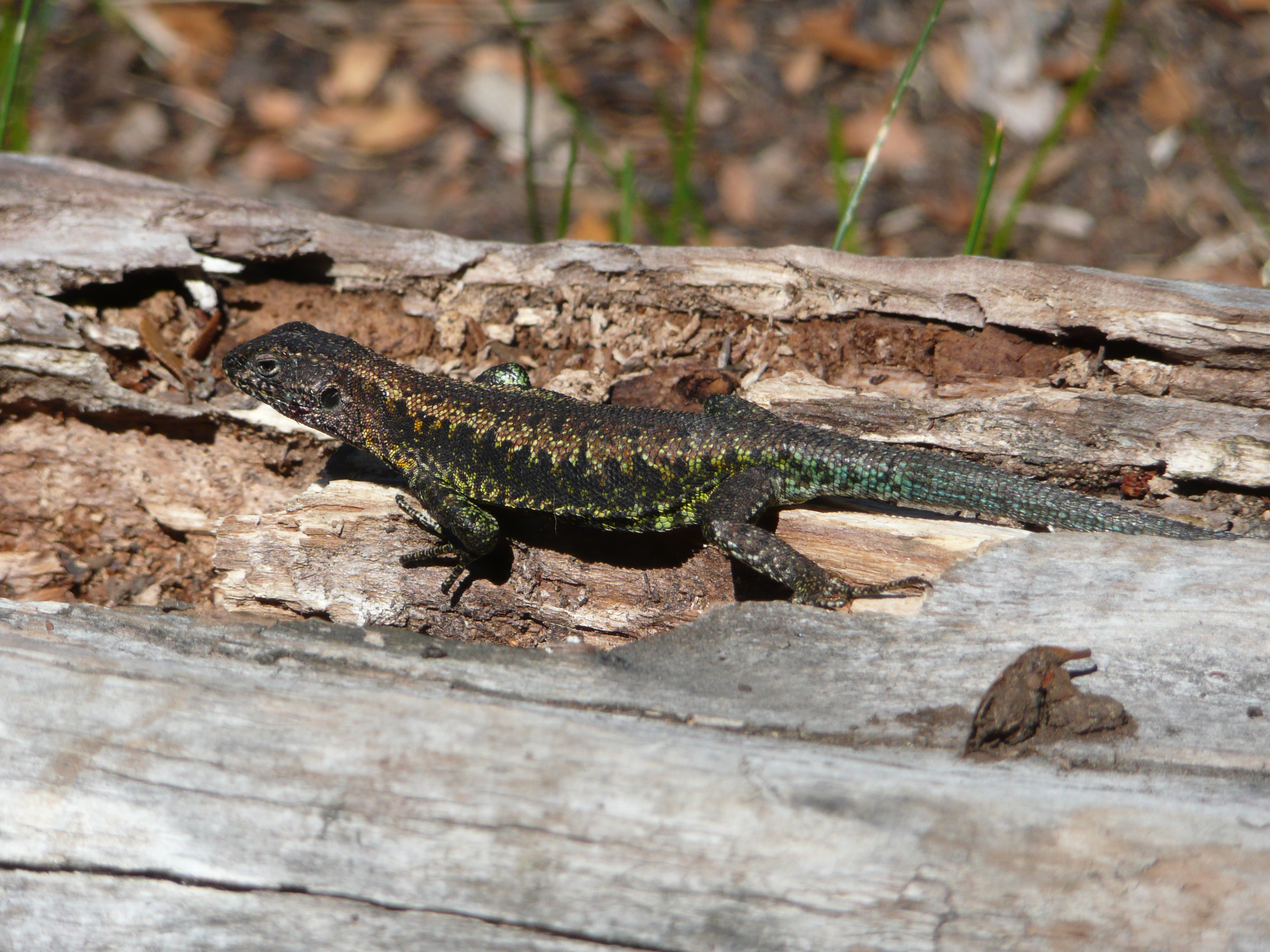
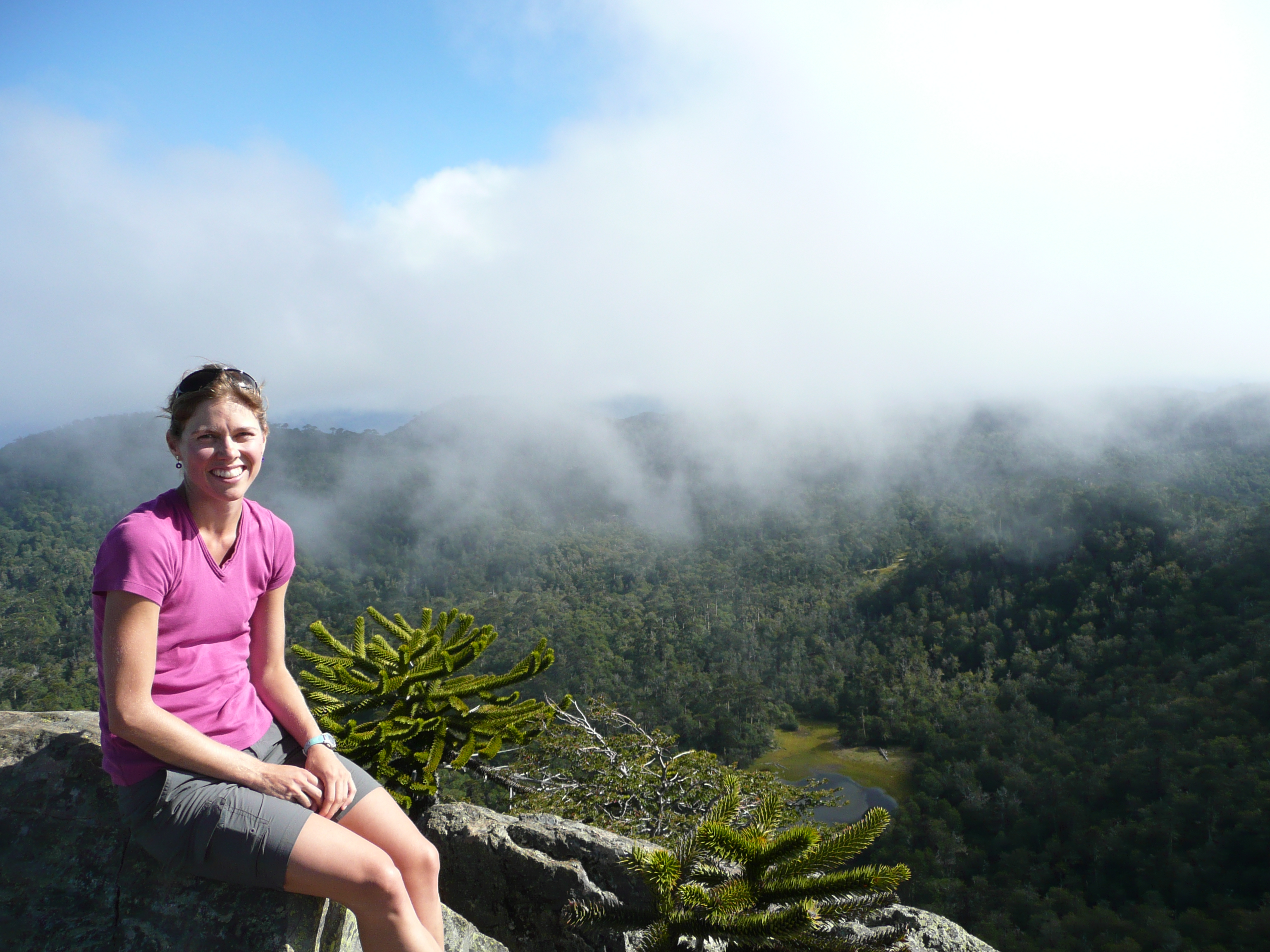
Another mountain conquered
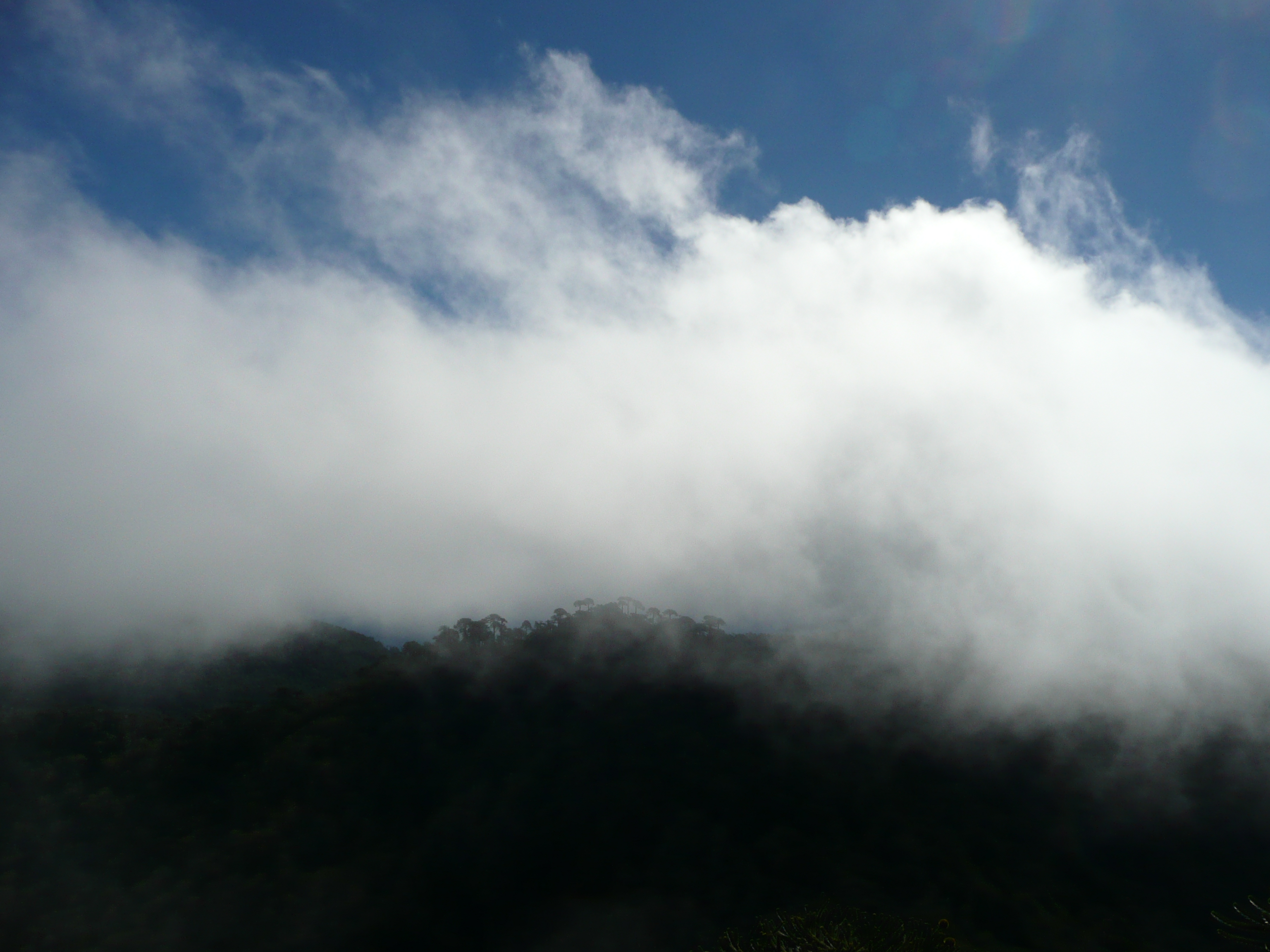
Mystical views, but not of the four volcanos surrounding us
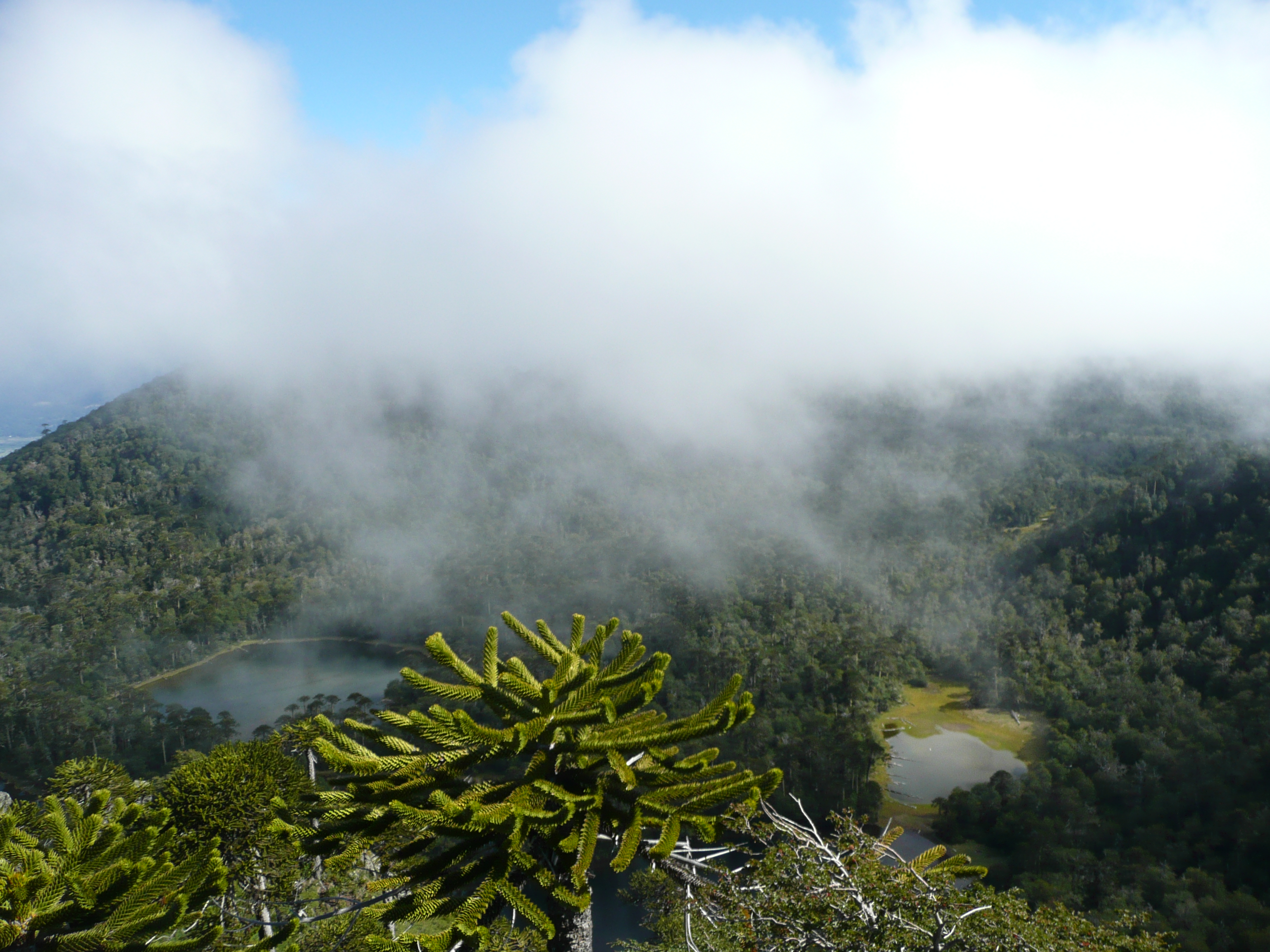
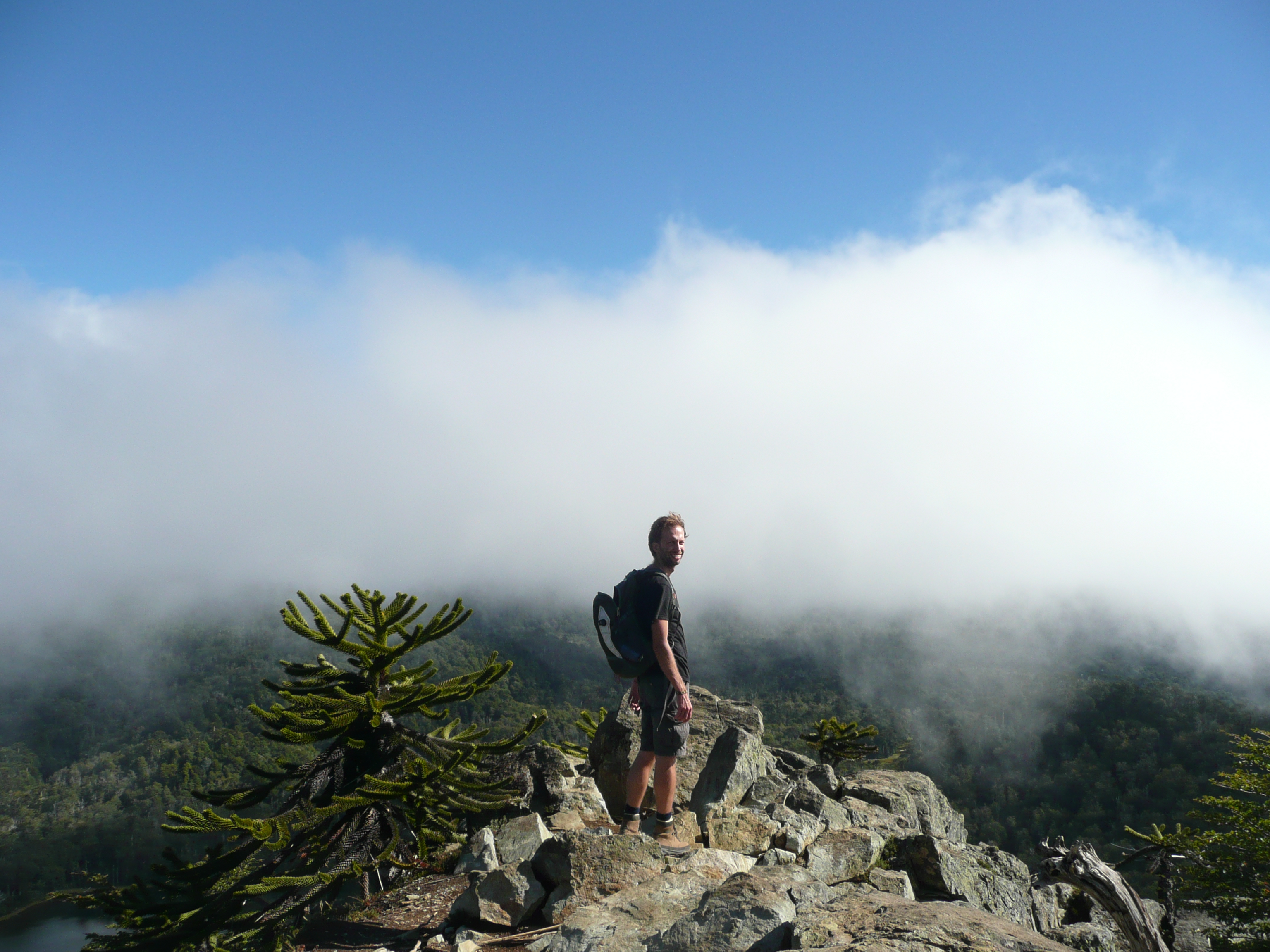
After five days in Pucon we were ready to hit the road again. The plan was to drive back over the mountains and then north and see how far we were going to get. By the time we got to Zapala we felt ready to stop driving, but it was such a horrible town and the accommodations were bad. The town felt like a mix of Levin and Porirua and then a lot worse still. So upwards and onwards, next town was 50 km away and it was getting dark (rule: don’t drive in dark if possible). We got to Las Lajas just before dark and found the municipal campsite, always the cheapest sleeping option. Normally around 40 pesos (8 NZ dollars, or 5 Euro’s) for two, but sometimes as cheap as half that. This one was particularly nice as the two young men were very proud of their facilities. We haven’t seen toilets and showers this grand, nicely tiled, sparkling clean and hot water. We were the only people camping, which wasn’t that surprising as it was only 5 degrees, very chilly. Our normal drill after a long day on the road is that I set up camp and Julia cooks us a meal. This time we ate in the tent, as warm food cools down in no time otherwise. Standard procedure is also that a dog will ‘adopt’ us, but here we only saw dogs in the distance, but then I saw a cat and called it over. It was a bit feral and looked hungry so we started off by feeding it cheese. Then I remember my grandparents feeding their cats bread soaked in milk, so we give him some of that. After that he trusted us enough to sit on our laps and join us in the tent, much to the delight of Julia. He had some issues with keeping his nails in his paws, not a good combination with our self inflatable air mattresses and sleeping bags, so the cat was fed once again and with great difficulty gently removed from the tent.
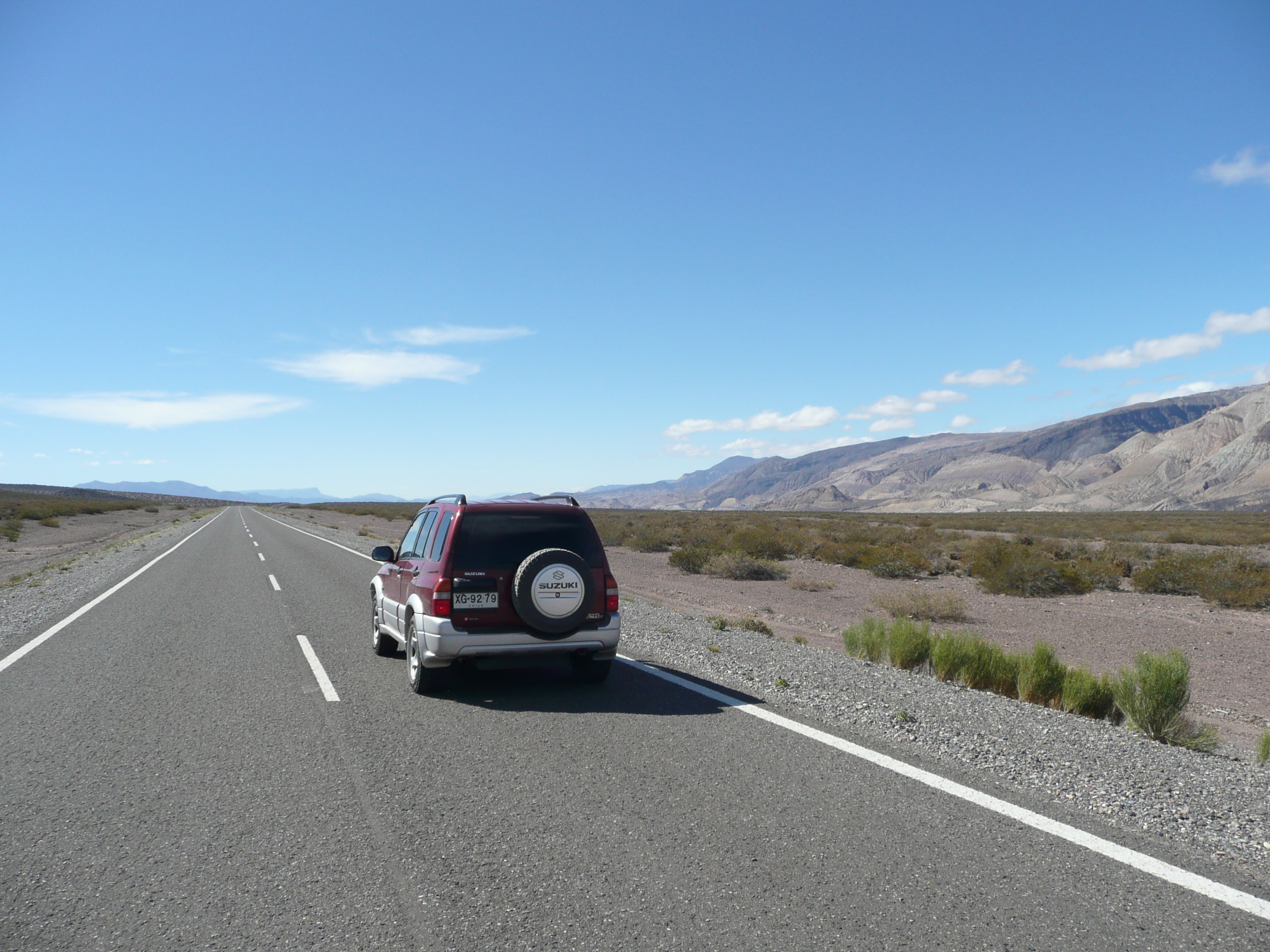
Sometimes it does get a bit boring
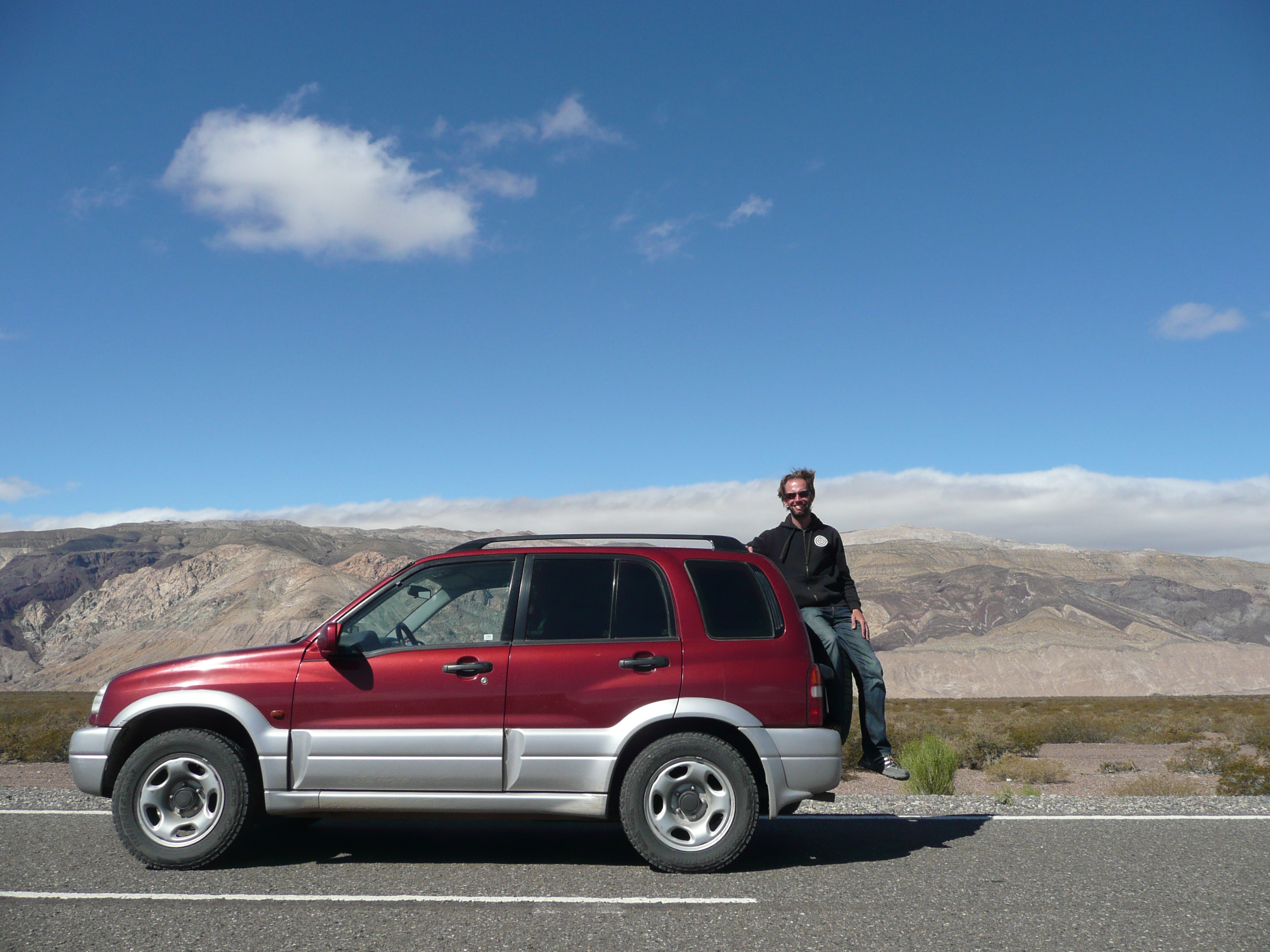
The following morning it was still freezing and we woke up to find two tires were flat. On other big trips I have always carried two full spare tires and never needed them and they were always taking up so much space, so this time we just have the one spare… Luckily one flat was a slow flat, so we pumped that up with the little 12v compressor we have. The other tire we changed, which was a good opportunity to teach Julia how to change a tire as well. Then off to the ‘Gomeria’ (tire repair shop), where the friendly owner found a massive nail in each of the tires. Quickly plugged though and ready to go again.
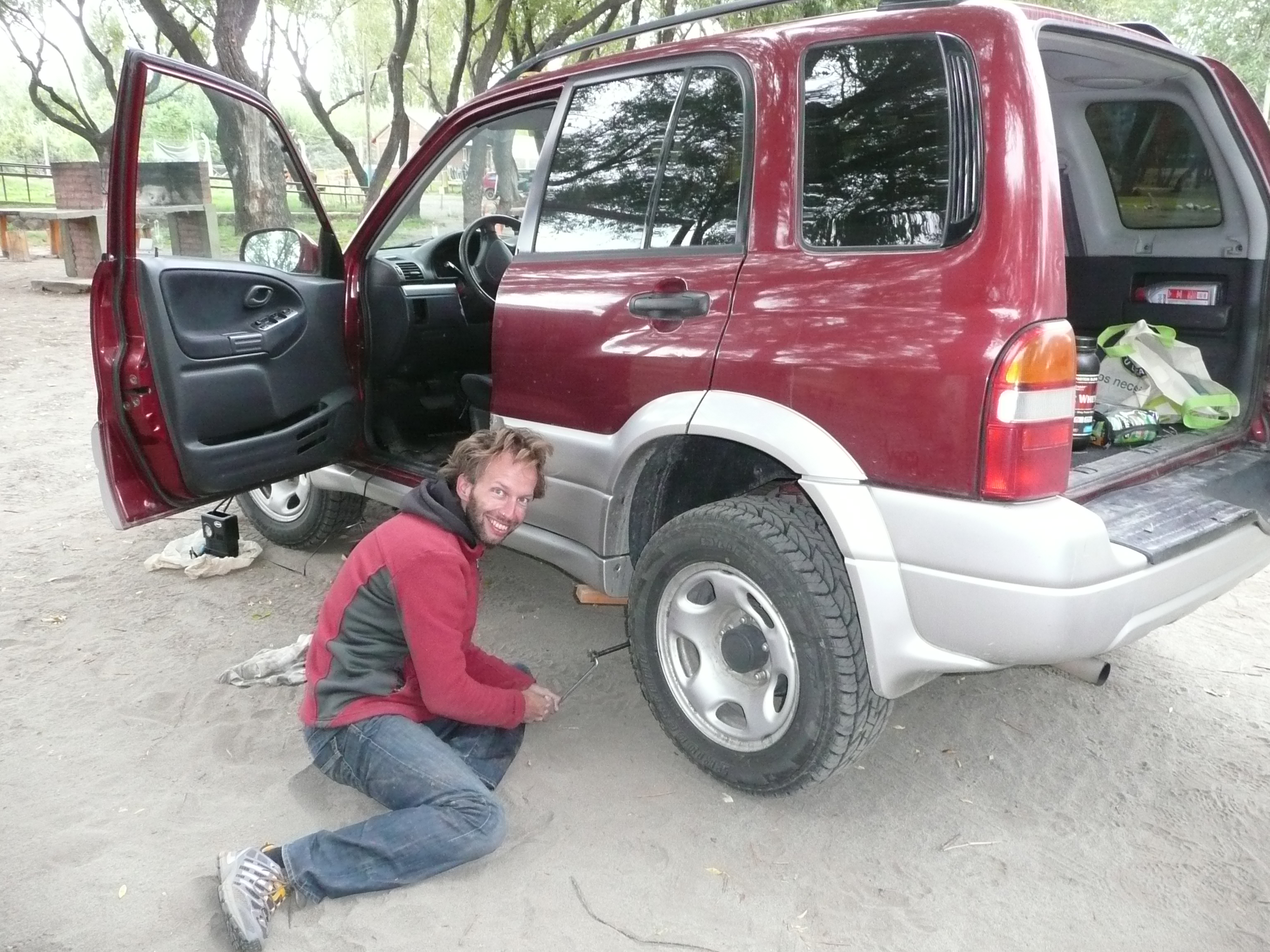
Pre-breakfast tire change
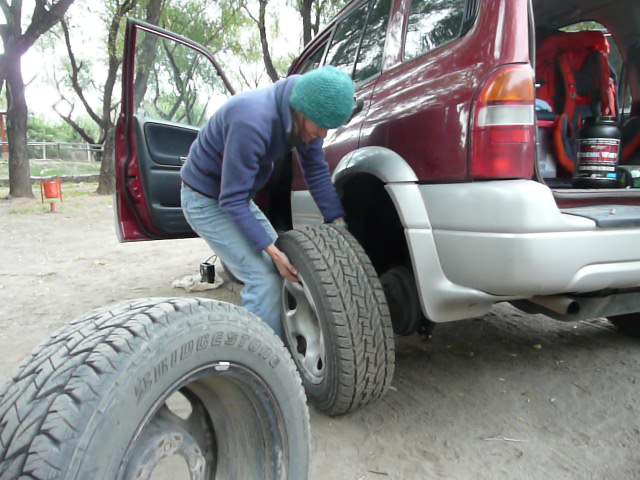
Julia changing a tire like a pro
Without too much of a delay we were back on our way up north, direction Mendoza. It became a long day through deserted desert landscape. This area has the highest amount of volcanic cones in the world. We stopped at pretty much every town as they were hours apart from each other. We did end up driving the last little bit in the dark as there was just nowhere to stay, it was too open to pitch a tent on the side of the road (which we don’t tend to do anyway) and there were no towns later in the afternoon until we got to Malargue. Our idea was to camp there, but the temperature gauge showed a snow flake a temp of only three degrees, so we changed plans and stayed in the HI eco hostel. True to the nature of any HI hostel, the check in process included copious amounts of paperwork (you might be a terrorist…) and rules. The hostel itself and the manager were very nice though and we settled in quickly in front of the fire. Later that night three Argentineans from Buenos Aires checked in as well and we really enjoyed their company. Upon check in they came over and kissed us and asked how we were. Now where else do you get that? It is very Argentinean, everyone needs to be kissed. At about 11.30pm everyone started to cook dinner, the three Argentineans started eating their leftovers from an ‘Asado’ (bbq). We got offered some meat as well but we had just eaten and Julia explained she is vegetarian, at which the girl bewildered said ‘If you don’t meat, then WHAT do you eat!?’. Their meal consisted entirely of meat and meat only and lots of ‘mate’ of course, a very strong herbal drink, which is shared around. Must say that they all didn’t look that healthy, think Diego Maradona in his later years. Asados are fine, but so are veggies.
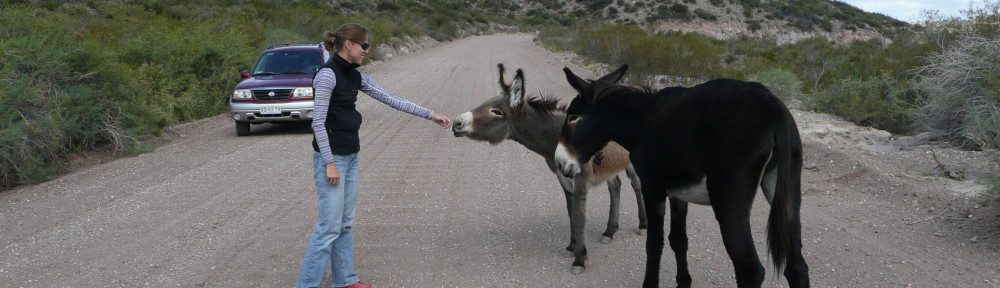
From Malargue instead of driving straight up to Mendoza we followed the suggestions of the Argentineans and drove direction San Rafael. Just before you get there you can drive through an amazing canyon called Valle Grande. That took a couple hours as we stopped often for photos. Coming out of the canyon we saw a donkey family on the side of the road (father, mother and young) who all looked very malnourished. We stopped to have a look at them, they were curious as well and mother and young came towards us. The mother had a huge abscess hanging under her head. We felt sorry for them so fed them some bread and apples. We are real suckers for the animals we come across that look ‘needy’ and could easily feed them all we have. We camped on a wild water river and made ourselves a green curry, nice and spicy is the way we like it. This was the last stop before we were going to hit the first big city since we left Santiago at the end of December.
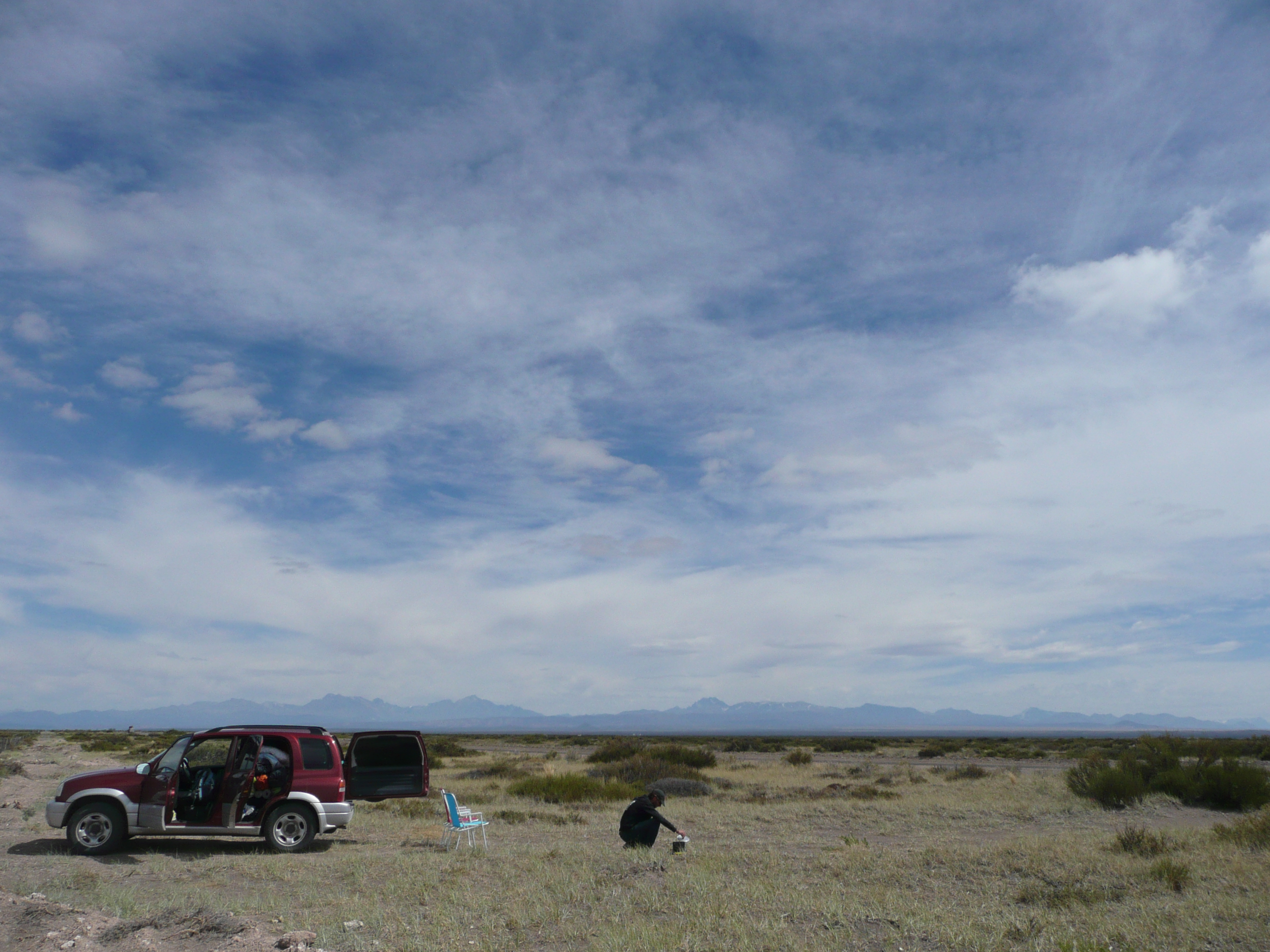
Lunch in the desert, boiling water for a coffee
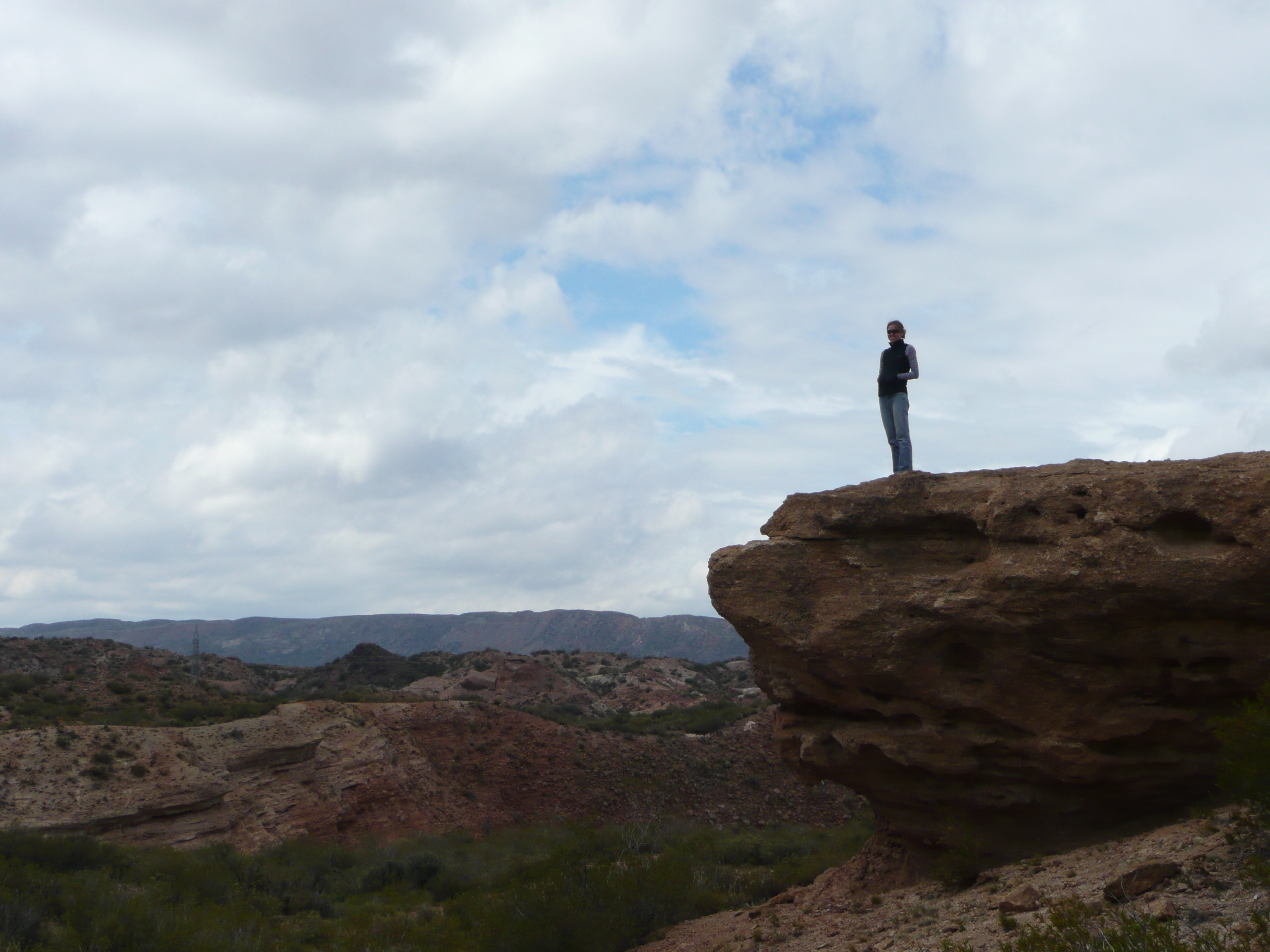
Titanic going solo
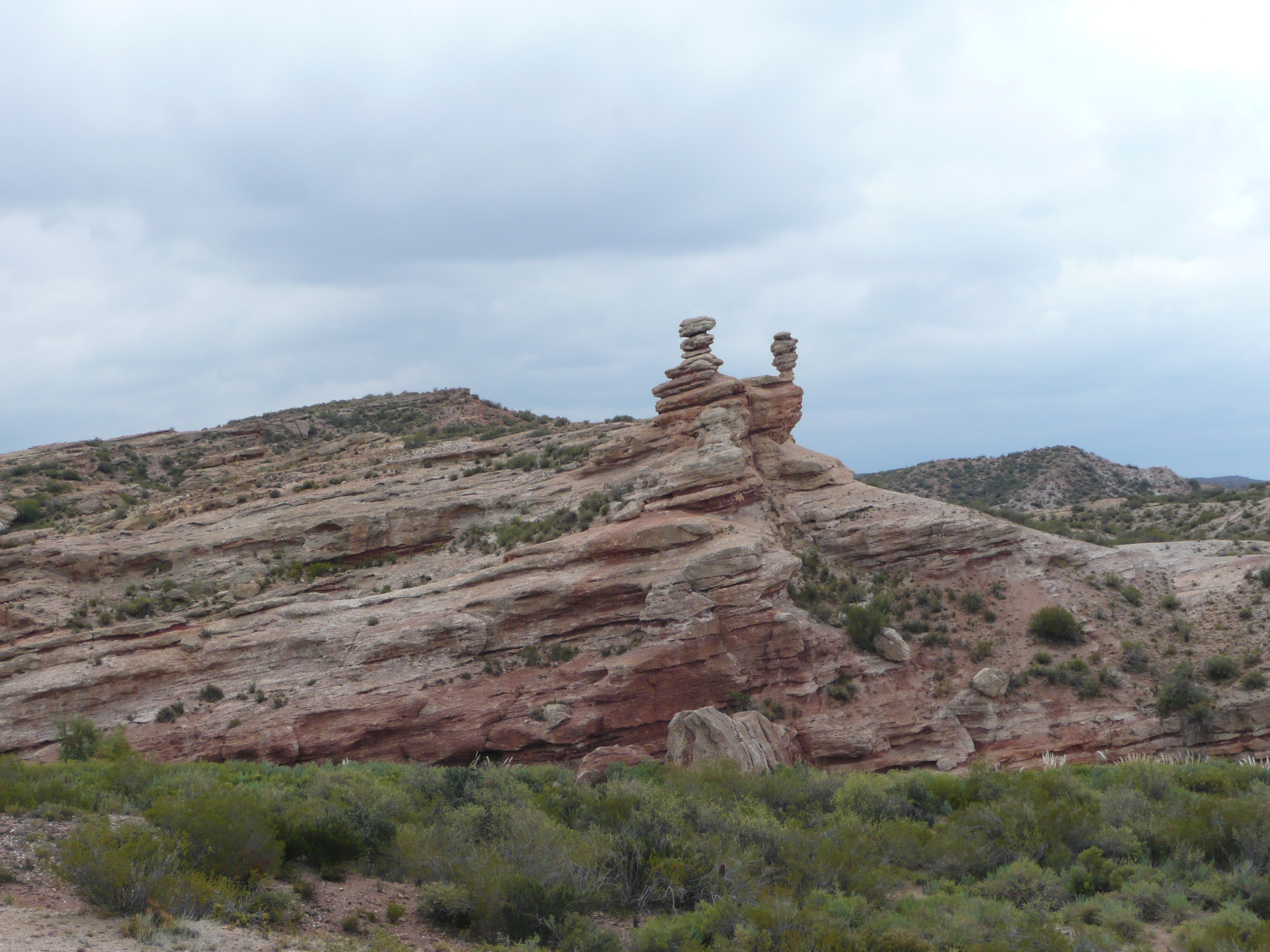
Erosion has created weird but beautiful rock formations
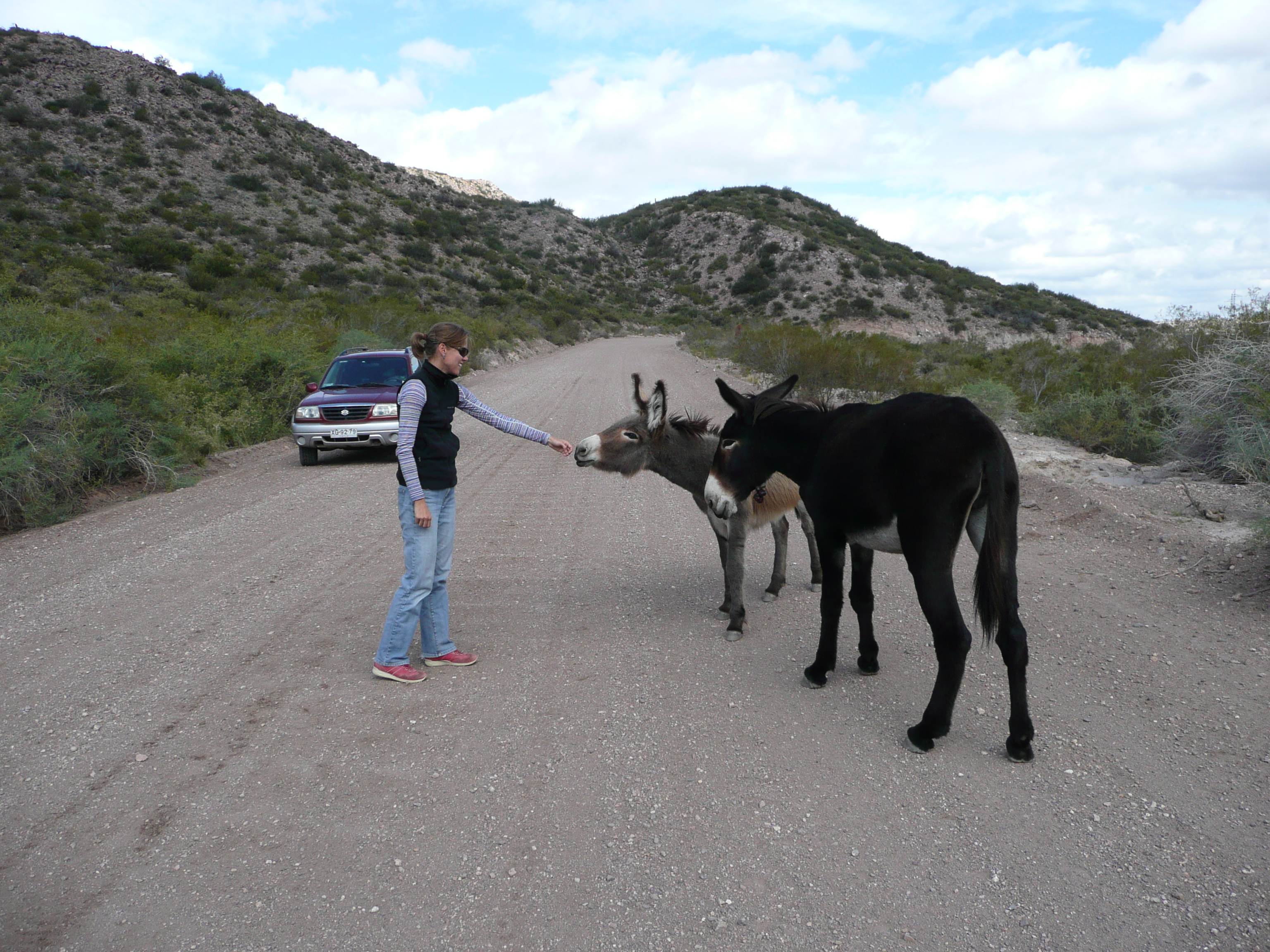
Julia getting acquinted with her latest ‘project’, she is very compassionate about the needy animals we encounter on a daily basis
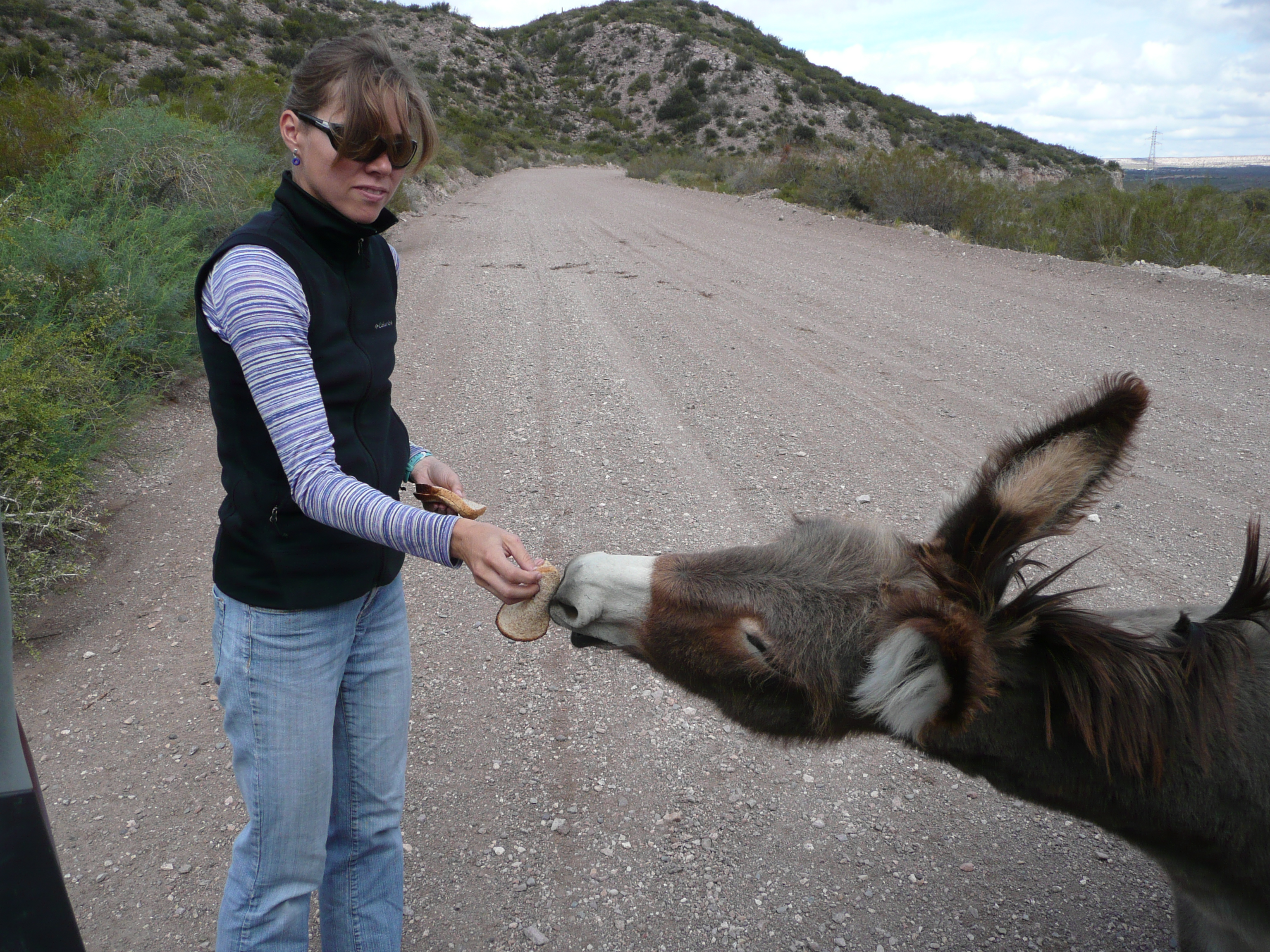
Julia giving our food supplies away to a hungry donkey family
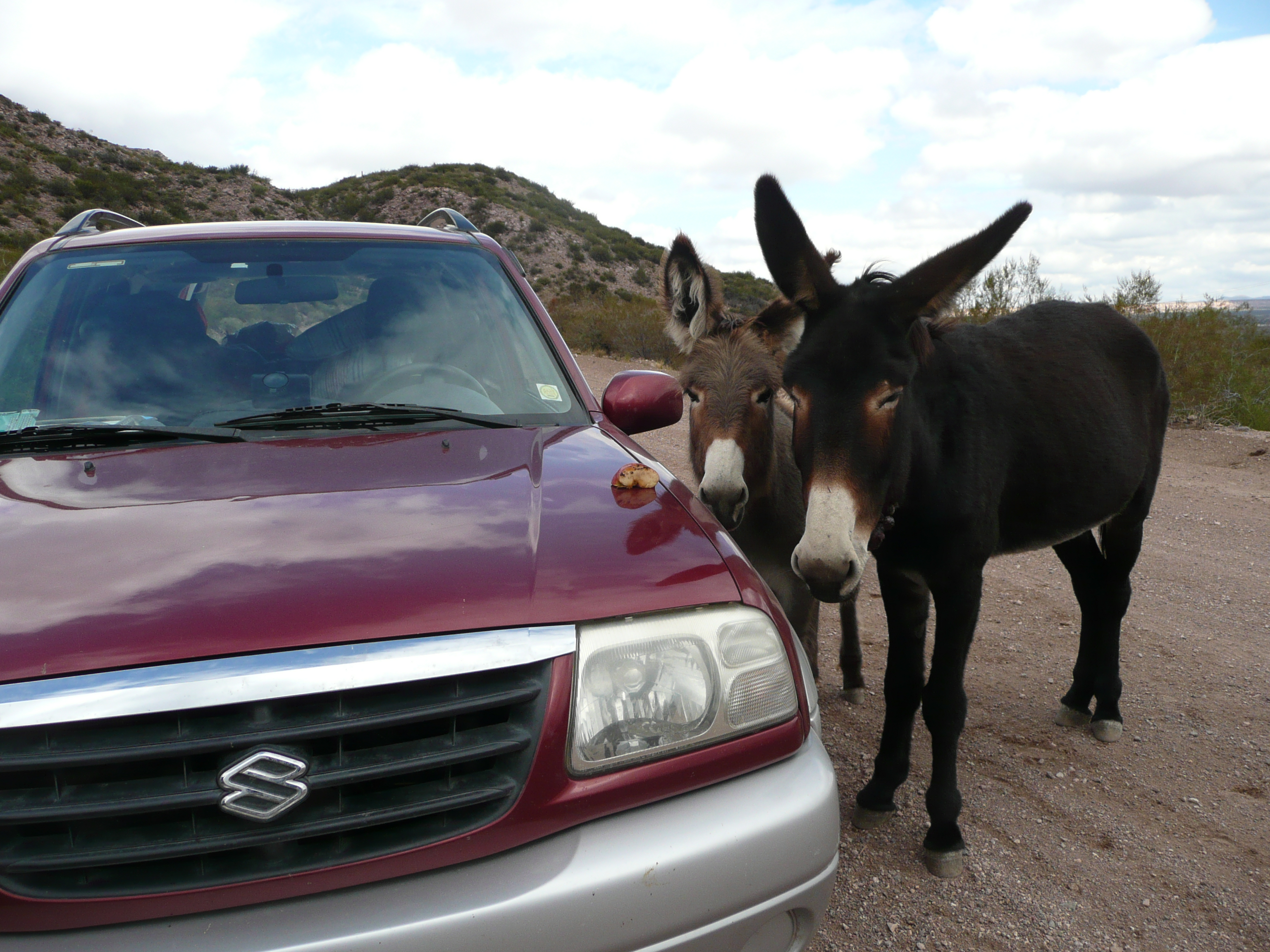
The Suzuki with some added donkey power
Ilse Versteeg liked this on Facebook.
Those donkeys are so cute.
Happy Eater to you both x x
Great read Richard. Particularly like the donkey pics!
Anthony Chester liked this on Facebook.
Yo, calientesports.mx n is where it’s at for a quick and simple bet. The site is easy to navigate, and I’ve had some pretty good luck. Seriously, you can’t ignore calientesports.mx n!
Alright, casino caliente mx is my guilty pleasure. Great selection of games. Give casino caliente mx a spin!
I’m a big fan of caliente sport – it always has the games I’m looking for, and the live betting is super fun! Check out caliente sport!
trang ketqua.net is my go-to for checking my numbers. Always accurate and up-to-date. Can’t ask for more than that! Check ’em out trang ketqua.net.
Just wanted to say ketqua.net 1 is consistently good. No complaints here! Easy to use and fast results. Give it a look ketqua.net 1.
I swing by ketqua.net 4 when I need a quick number check. Never had any problems, results are always spot on. Worth bookmarking for sure! ketqua.net 4.
Just trying out the Jio Lottery. Maybe today is my lucky day! Get your ticket at jio lottery.
Okay, Winzo giving out a 500 bonus? That’s tempting! Gonna download it and see what’s up. Check it out: winzo 500 bonus
Okay, listen up! w88 w88siver.com is my go-to spot for some gaming fun. Easy to navigate and the games are pretty sweet. Definitely recommend checking it out!
Heard some buzz about epiwingame.info. Hopped on to give it a whirl. Noticed a few quirks, but the gameplay is solid. Def worth a look if you’re bored. Peep epiwingame and see what you think.
I’ve been trying a few different sites this month and this one really stands out. Great variety of games and the customer support is actually helpful. Check out vnmh66 if you want a stress-free experience.
Best experience I’ve had in a while. The interface is super friendly and the payouts are fair. phplus777asia is becoming my go-to platform for daily entertainment.
The bonuses at jili90club are actually decent compared to other places. I had a great run last night and the withdrawal process was surprisingly quick. Great experience so far!