We were nervous about entering Mendoza, population 935,000 as our experience of big city driving in Santiago was terrifying and with our GPS doing weird stuff (read: not working) during our time in Argentina we thought it might be difficult to get in and around the city. With a bit of luck we discovered that the GPS worked if you programmed in a specific address, so we did that and entering the city and navigating to our hotel turned out to be a piece of cake! In Mendoza we enjoyed simply walking the wide-footpaths on lovely tree-lined streets, visiting beautiful plazas, eating Subway (two times!) and running in the beautiful Parque General San Martin five minutes away from our hotel. After a few days in Mendoza we moved to a hostel in Maipu, a town 20 minutes outside of Mendoza that has a lot of vineyards around it. The thing to do there is to rent a bike and cycle from vineyard to vineyard tasting the various wines. It turned out that the vineyards are actually 12kms from Maipu, in a different area, so we ended up catching our first public bus of this trip to the area, rented a couple of bikes and cycled to the first vineyard, one of the oldest in the area. Cycling in Argentina was an experience, and more terrifying than cycling in Wellington. I cycled like I was in a spin class, doing a sprint run, as I just wanted to get off the narrow road where crazy Argentinean over-taking was happening at high speeds and at close quarters to the bikes. Poor Richard was wondering what was going on as I cycled frantically away leaving him behind! When we got to the first vineyard we had some lunch, did a tasting of the wines, and then joined a tour of the vineyard. The wines were harsh and dry, and the bodega was more for show as they didn’t do any of the processing at the vineyard, only used it to sell their wine. On to another vineyard, which we’d heard specialised in deep flavourful reds. There we met friendly Australian couple, Amy and Brad, and joined them while we worked on our three different varieties of reds: syrah, malbec, and cabernet sauvignon. Being conscious of how crazy the traffic was on the road I was also working my way through a couple of 1.5L bottles of water!
Being a bit slow of the mark we ended up only visiting a couple of wineries. The cycling and wine tasting wasn’t what we expected and the wines were of the harsh variety, recently bottled. We’ve had some great wines in Argentina and Chile however bought direct from the supermarket, and generally at a great price. The tastings we’ve done in both Mendoza and recently Cafayate, were disappointing and to be honest left us craving a good Pinot Noir from New Zealand! The experience also made us realise how lucky and how spoilt we are to have Martinborough over the hill from Wellington. Much more relaxed, and much better quality wine (in our opinion anyway)!
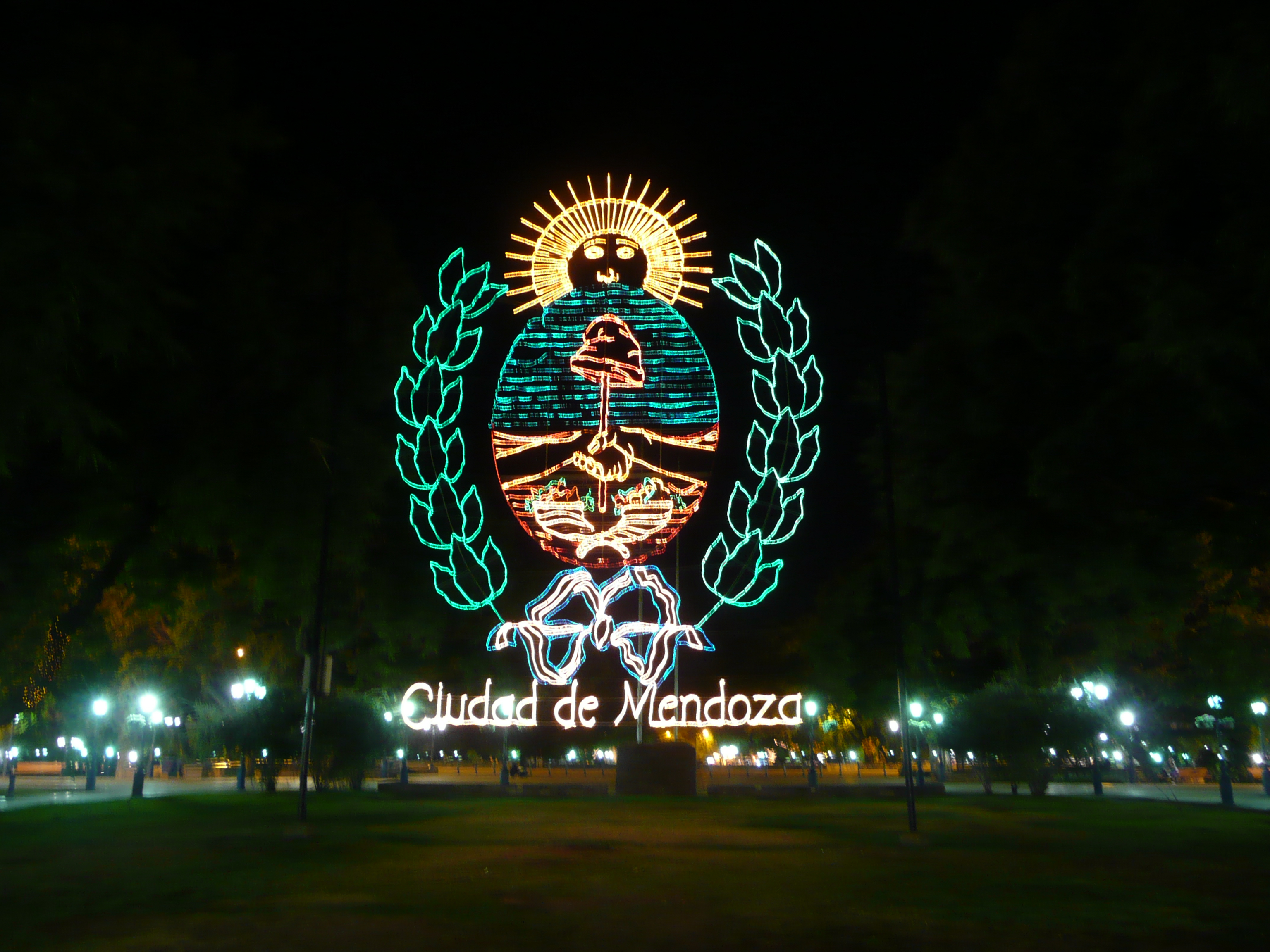
At Plaza Indepencia in Mendoza… the city had lovely plazas.
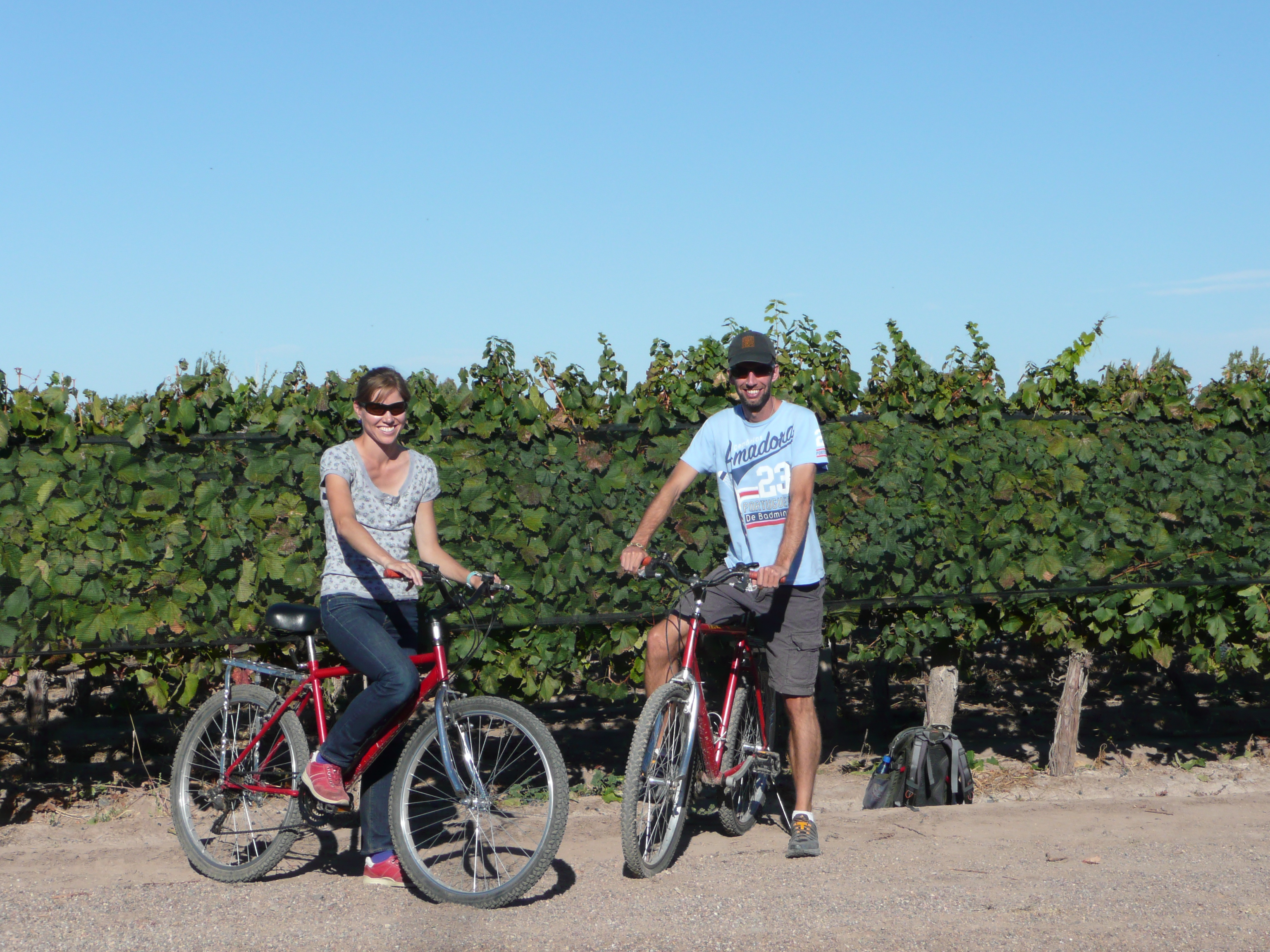
Cycling and wine tasting in Maipu, the good life.
From Maipu we started what turned out to be a couple weeks of hard travel, lots of camping, and lots of driving. The owner at our hostel in Maipu gave us a tip to visit Parque Provincial Ischigualasto (aka Valley of the Moon). Reading our guide book we liked the sound of it – it is comparable to Bryce Canyon or Zion, except that it has a wealth of fossils from the Triassic period, some 180 millions years old. It ended up being a two day trip to get to the Park as along the way we stopped to visit the shrine of Difunta Correa. While in Argentina we’d seen lots of road-side shrines with images of Difunta surrounded by bottles of water, and always wondered what they were for and we were for. The legend is that during the civil wars of the 1840s, Deolinda Correa and her baby followed her husband’s battalion on foot through the desert. When her supplies ran out she was killed by hunger and exhaustion. People passing by found her dead, but by miracle her baby was still alive, nursing at the dead woman’s breast. From this a huge following of Difunta devotees sprang, people believing that she has miraculous powers. Her shrine at Vallecito is believed to be the site of her death, and since the 1940s a whole town has sprung up around the site. It is quite a weird sight – devotees come and leave gifts at the shrine hoping for supernatural favours from Diffunta. We saw a bicycle competition trophy, leg casts, hard hats, photos of cars (that the devotees wanted). We also saw a girl crawling on her hands and knees up the steps of the shrine, which looked painful. It was all very bizarre but interesting to see. We topped off our stop to the town with a visit to a local place doing asado (barbeque). Richard enjoyed some chicken which he pronounced was awesome and I ate a pretty bad ice cream.
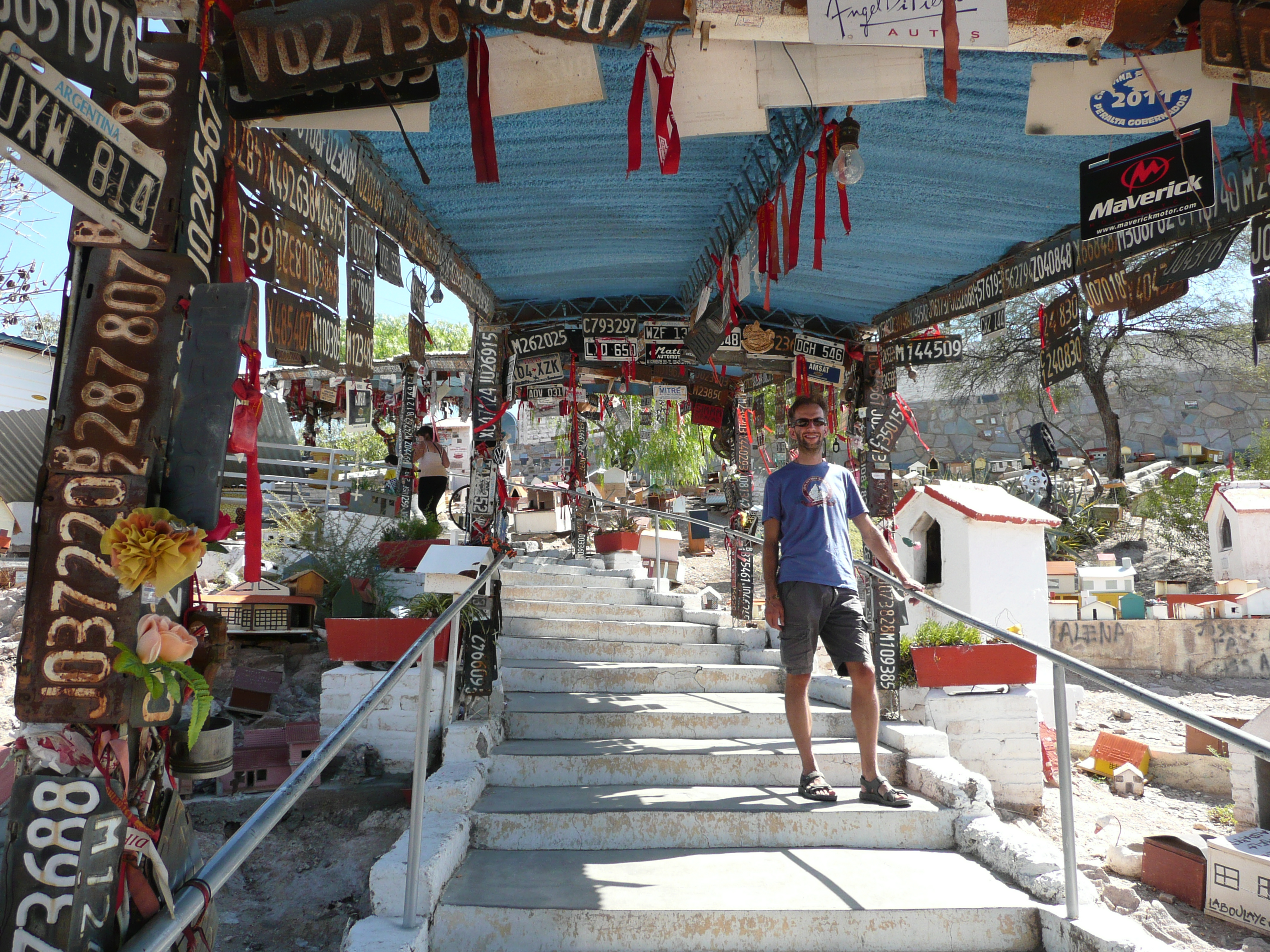
At the shrine of Difunta Corea, quite unreal to see all the different offerings to her.
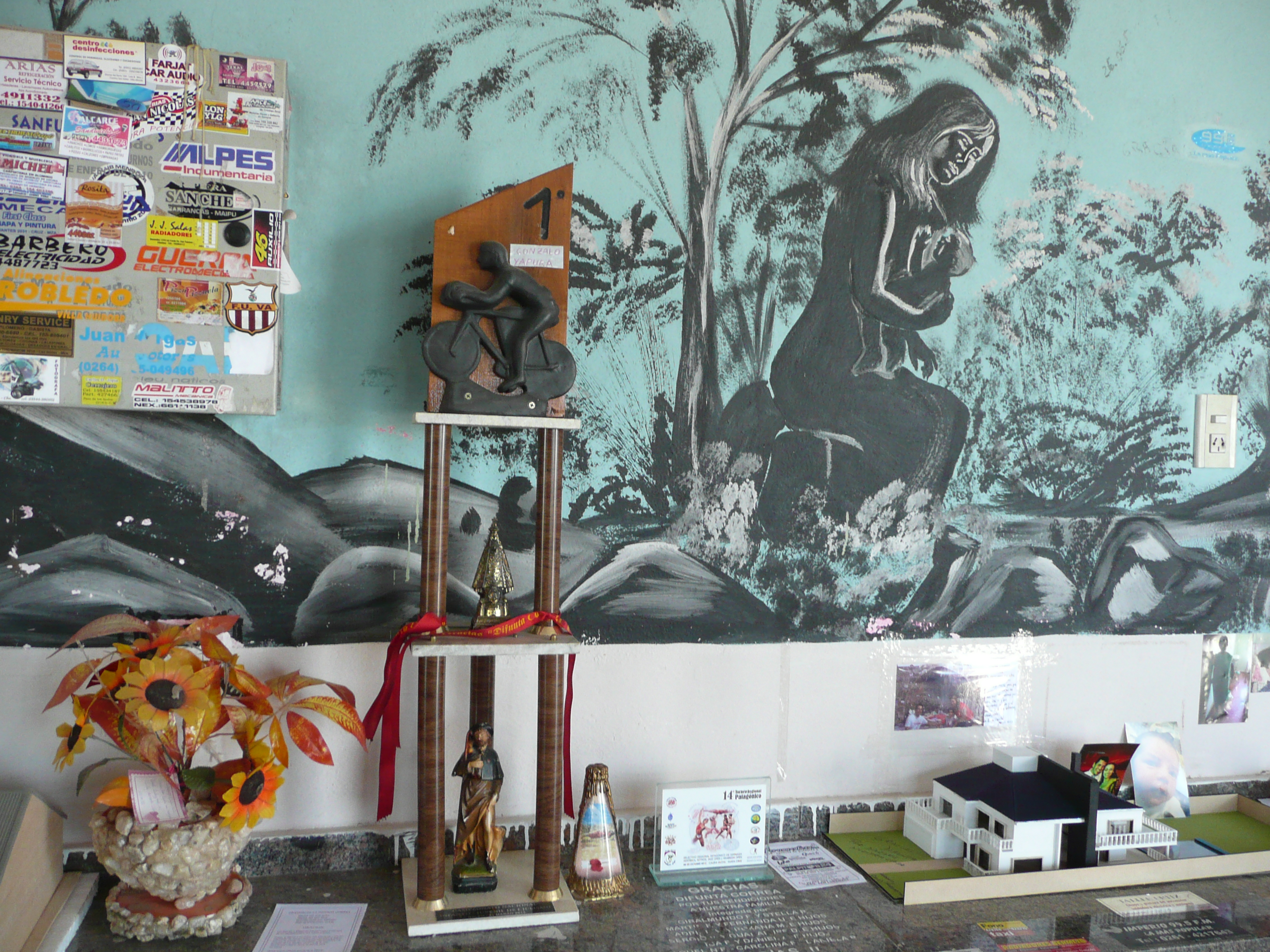
This is a trophy from a boy who won his cycling competition. He’d visited the shrine earlier asking Difunta’s help to win his competition and when he did (with or without her help) he came back and gave her his trophy.
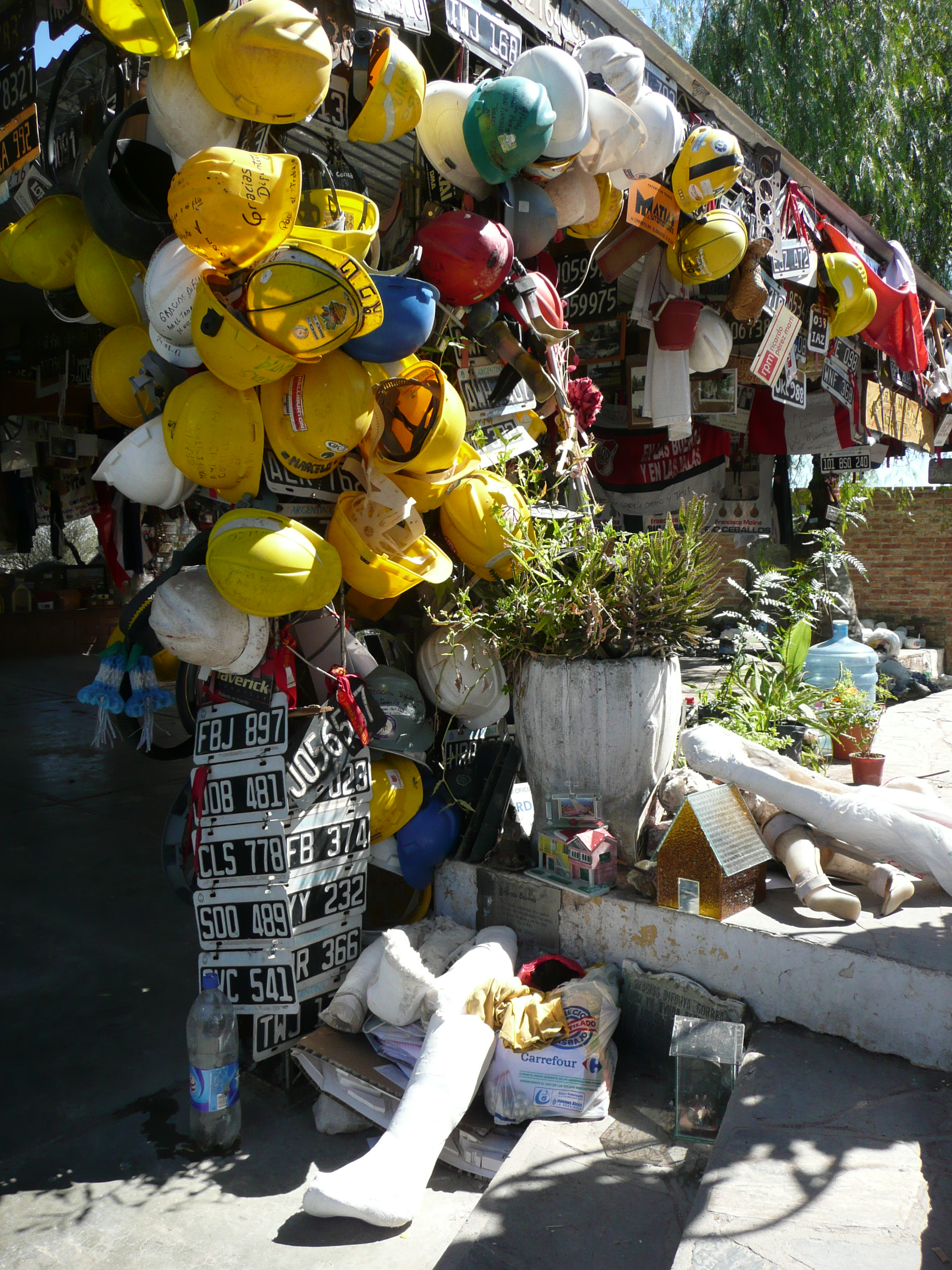
Hard hats, leg casts, these were just some of the random offerings we saw at the shrine.
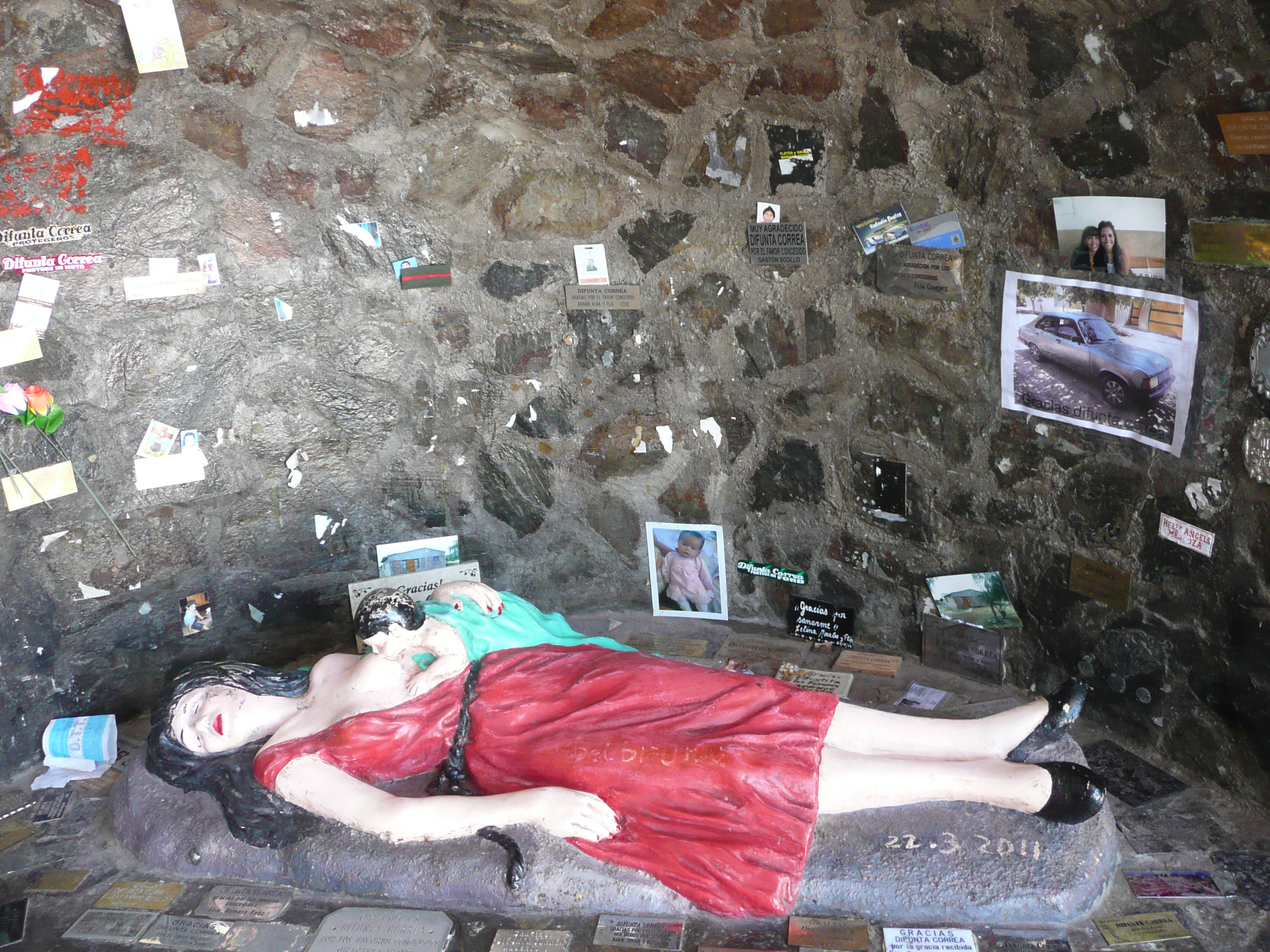
Difunta herself.
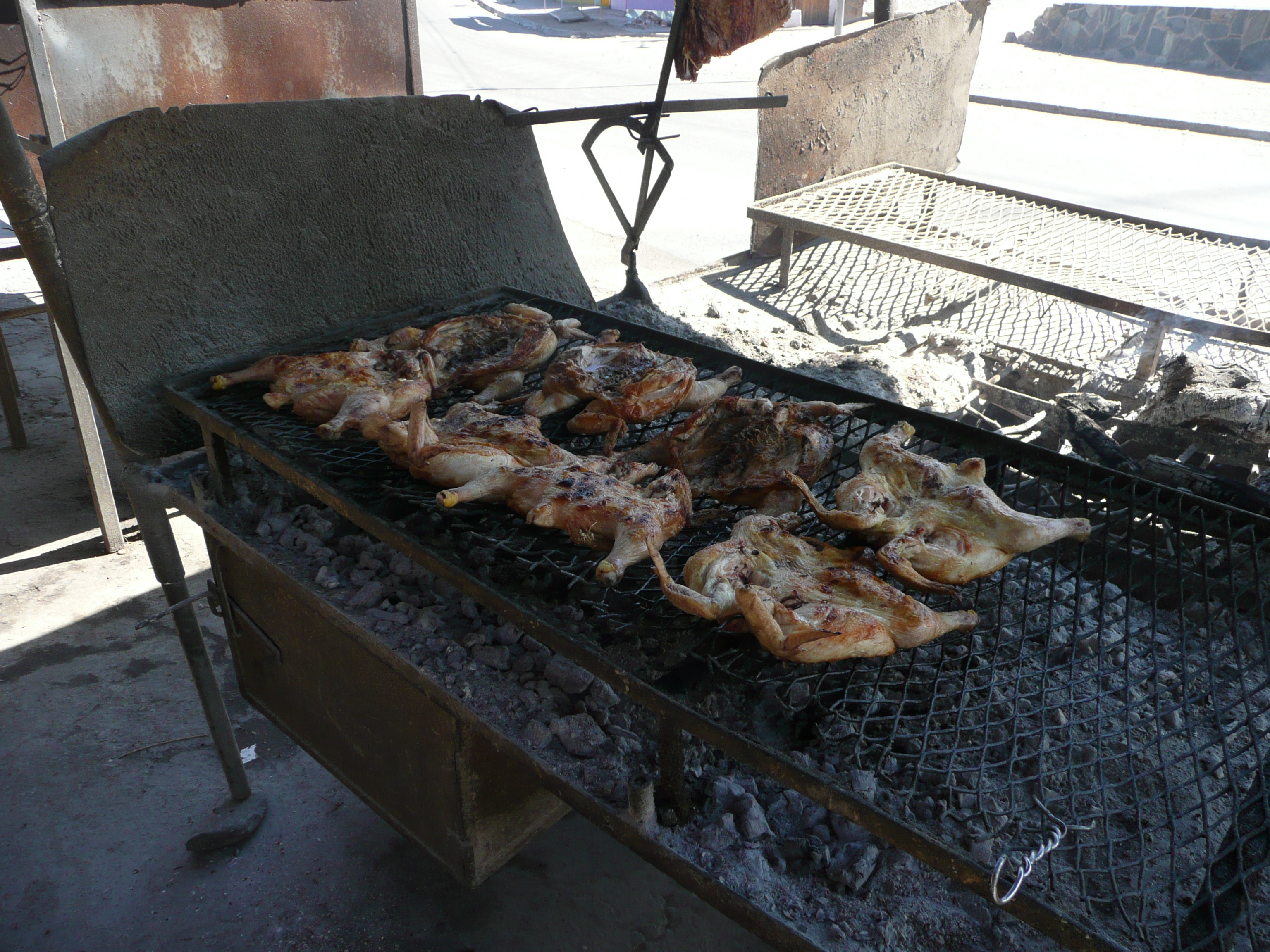
Richard’s asado in progress…
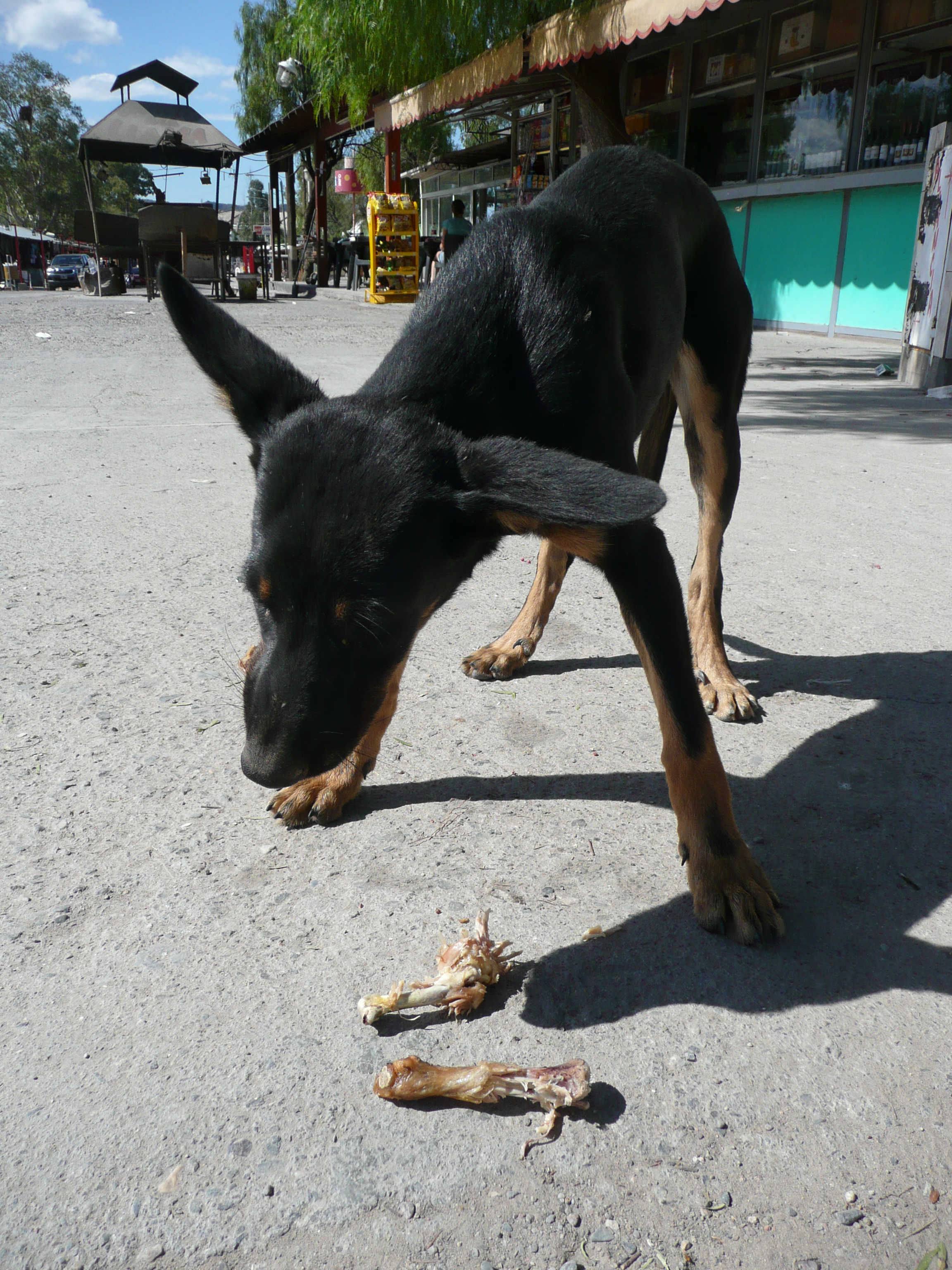
Another day, another dog to feed. He got Richard’s asado leftovers.
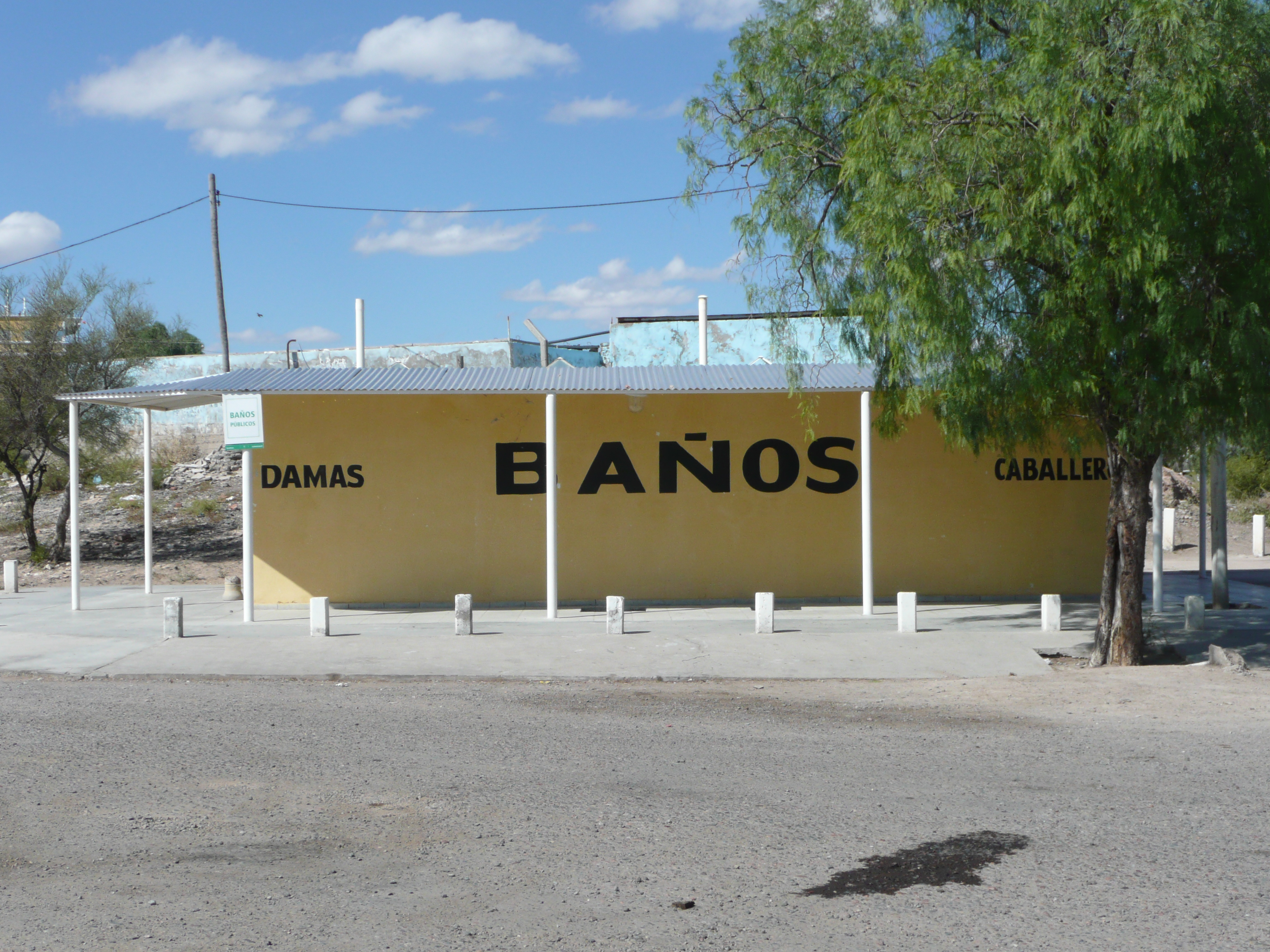
These were the first public bathrooms we’ve seen on our trip. Needless to say we were surprised, and then excited, and then disappointed when we found they were closed.
From there we started our track to the Ischigualasto Park, camping on the way there in a town called Usno in the Valle Fertil. Here we saw some of the worst bathrooms of our trip, totally unusable. It didn’t look like they had ever been cleaned. The owner showed up at 10.30pm in the dark (just before his dinner probably, but otherwise quite late) and offered us the key to the showers and pointed where the bathrooms where. As he seemed a friendly guy and we didn’t want to whine about cleanliness we kindly refused the shower key (rather being dirty) and told him that we were more the ‘bush toilet’ sort of people so not to worry about the bathroom lights. He then took us over to his man cave, in which he crafted artisan art. We bought some bags of herbs, good for all sorts of ailments and some rocks, everything was one dollar. Then we hunkered down for the night. Lots of animals around and I admit that I was a bit nervous, waking Richard up a couple of times during the night who in all fairness took it quite well.
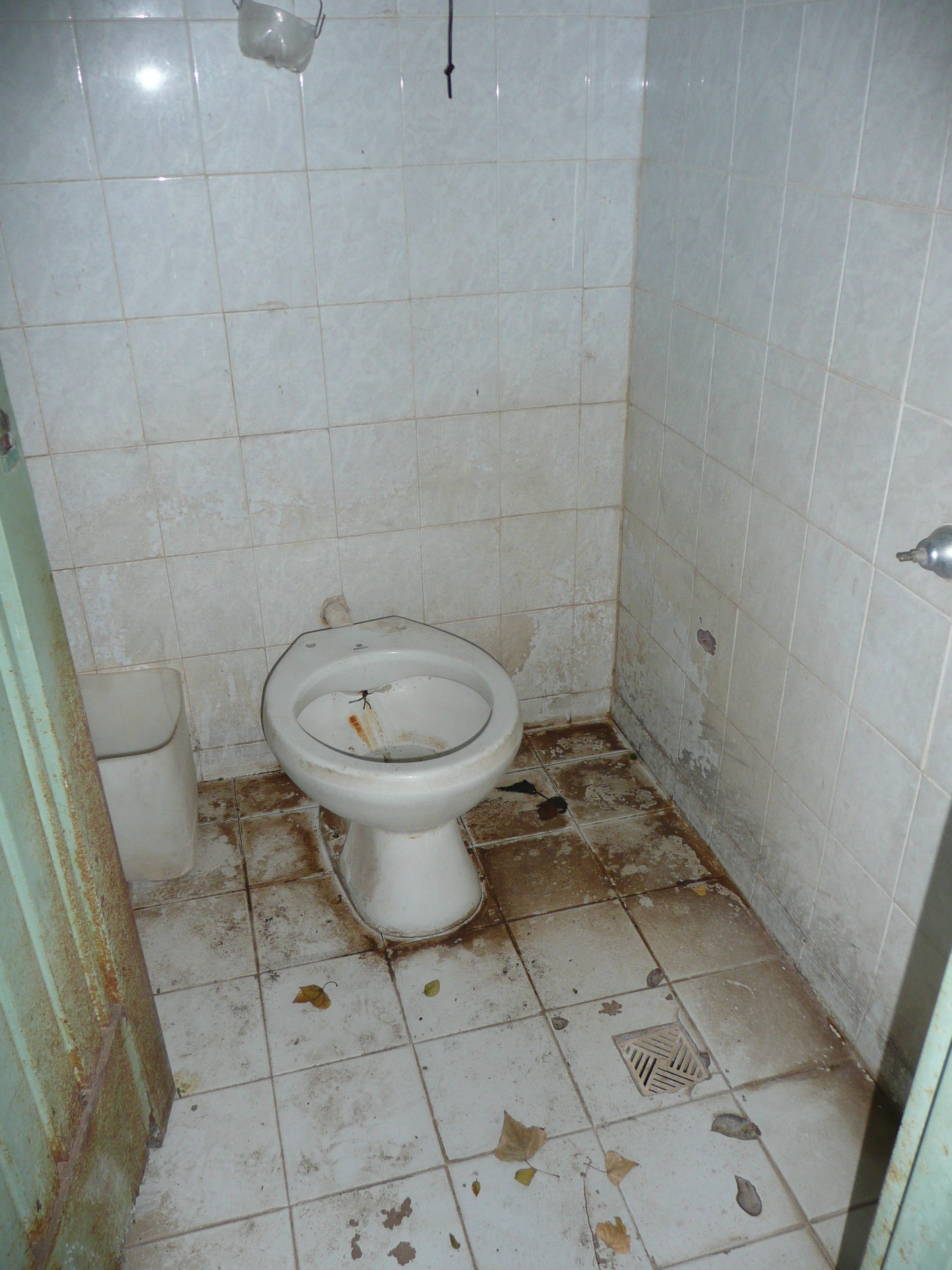
Here is a distant shot of the bathroom. We’ll spare you the “inside” look of it.
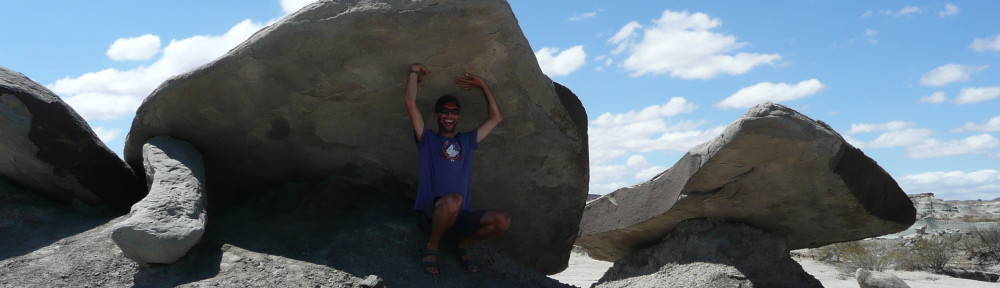
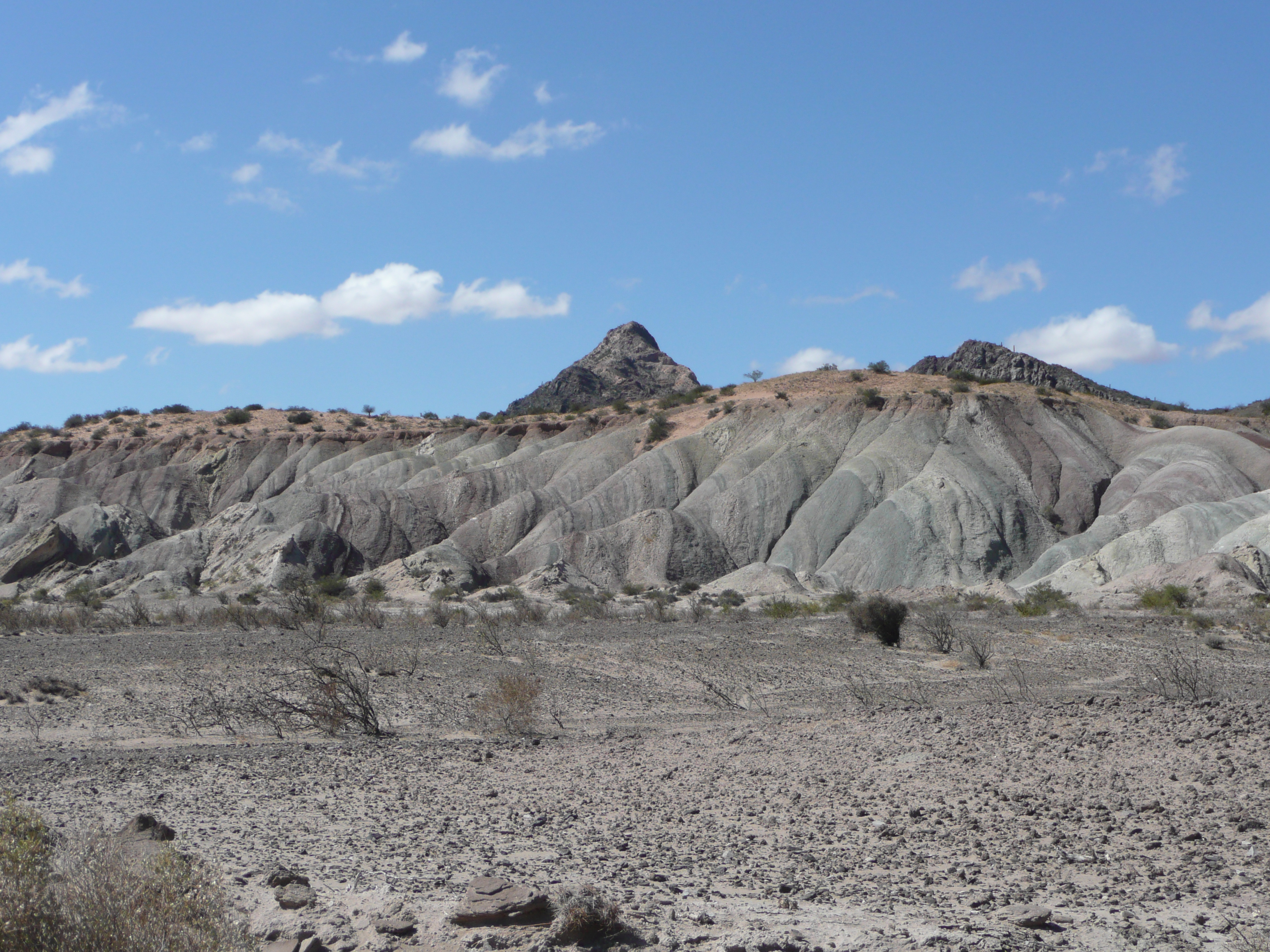
The next day we drove to the park and joined a car tour. Our Spanish is still quite pitiful, so we mostly just wandered off when the guide spoke and took lots of photos of the absolutely magnificent surroundings. I’d never been anywhere quite like it. A desert valley, with mountain ranges to the east and west of it. Over millions of years, water from an almost dry river and strong winds have carved shapes into the sandstone, clay and volcanic ash present in the park. We saw rock formations like a court filled with rock balls, a submarine and a sphinx. After the tour we decided we wanted to camp at the park. It had great facilities – wifi (slow), shade, hot showers, and we liked the idea of enjoying the park once it was empty of people. In the evening we took our thermos and picnic blanket and watched the sunset of the valley. Very pretty, although we both agreed that the sunrise would be even more dramatic with the sun beating down on the rocks, so made a plan to get up early the next morning and do the same thing again. Only half way through the night a vicious thunder and lightening storm started, which in turn raged for five solid hours. We didn’t sleep much that night, as every flash of lightening and rumble of thunder was quite unnerving from our small tent.
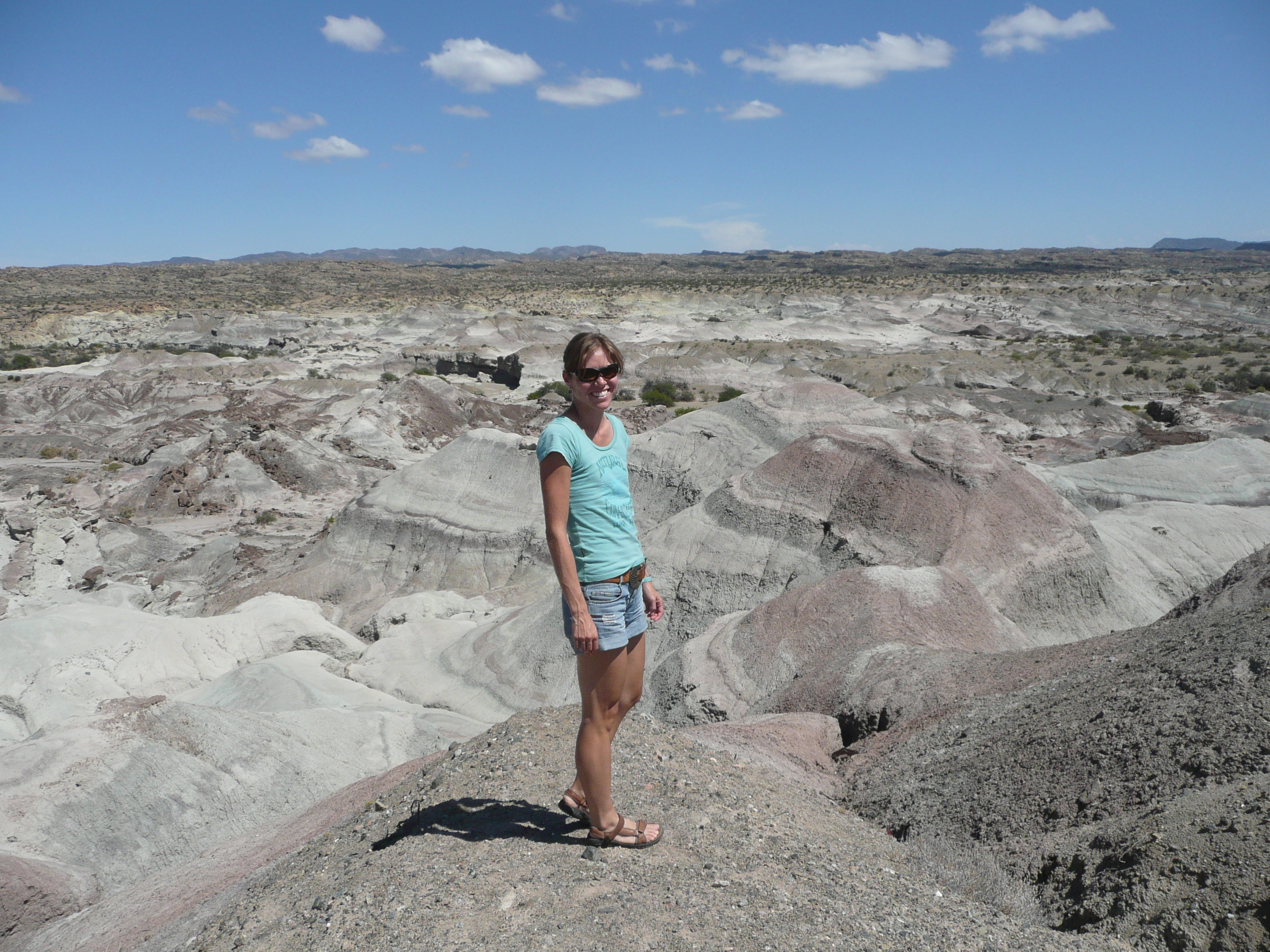
Enjoying Valley of the Moon, enjoying being back in shorts after a couple of months of cold…
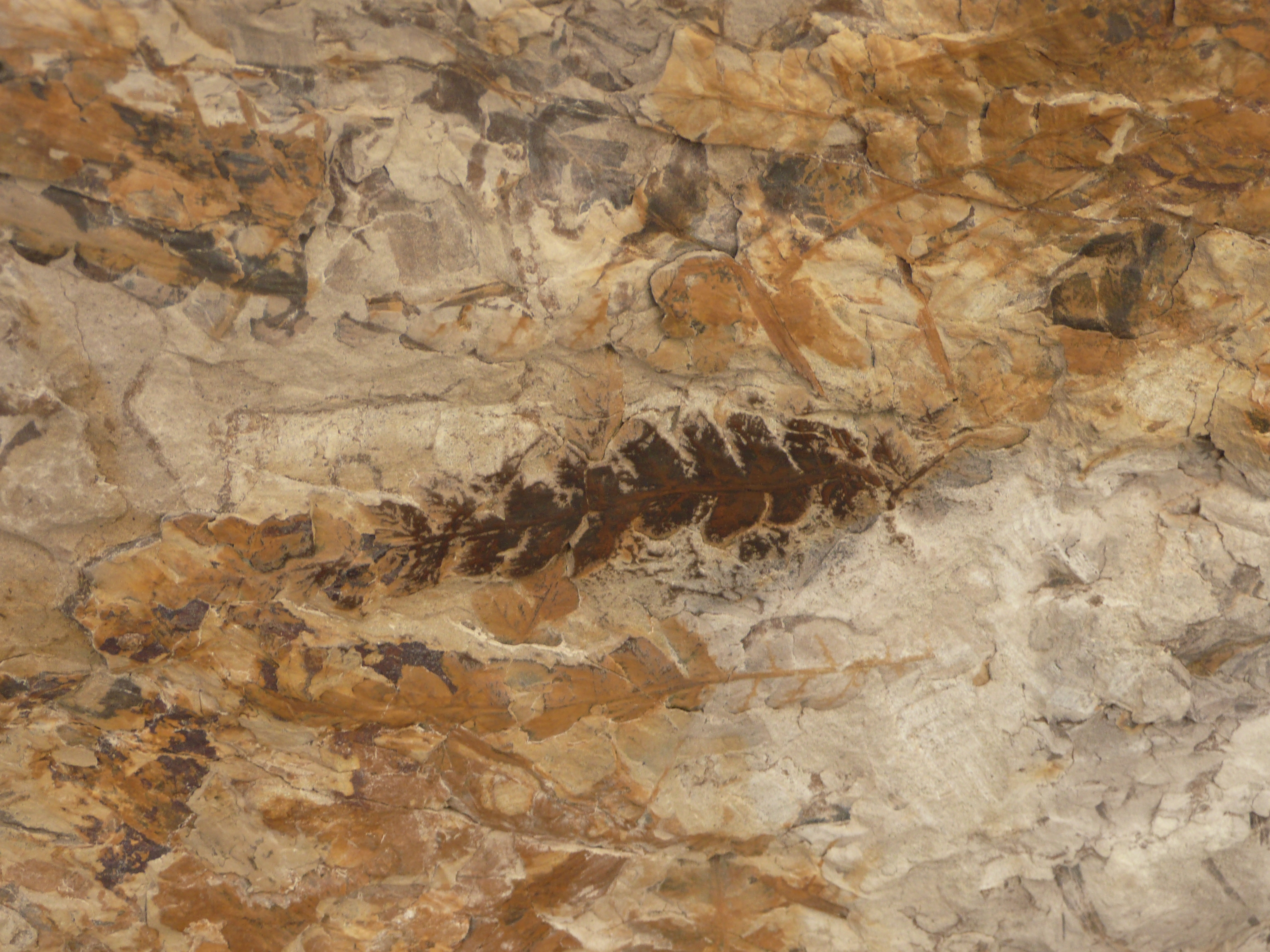
A fossil.
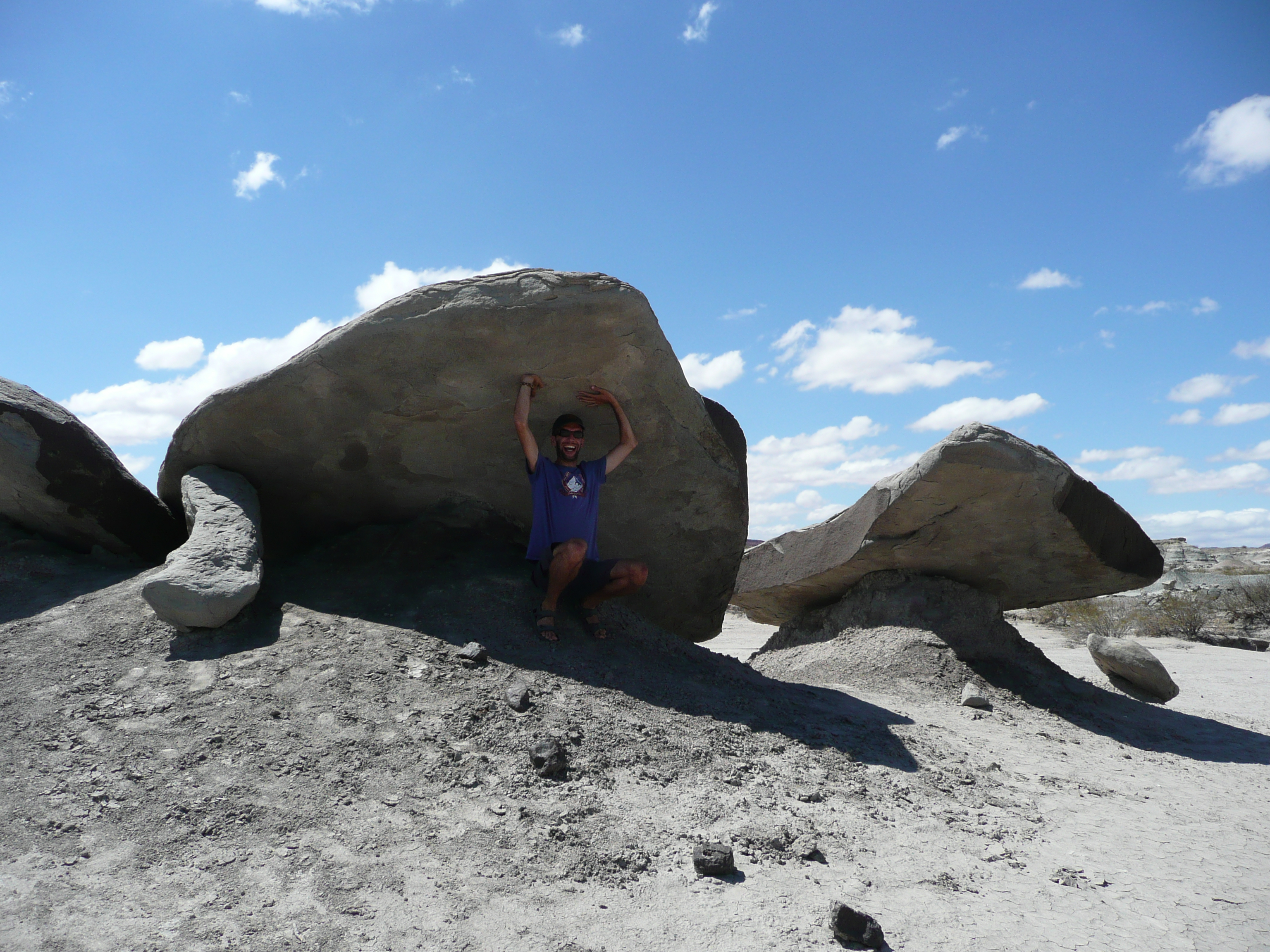
He-man!
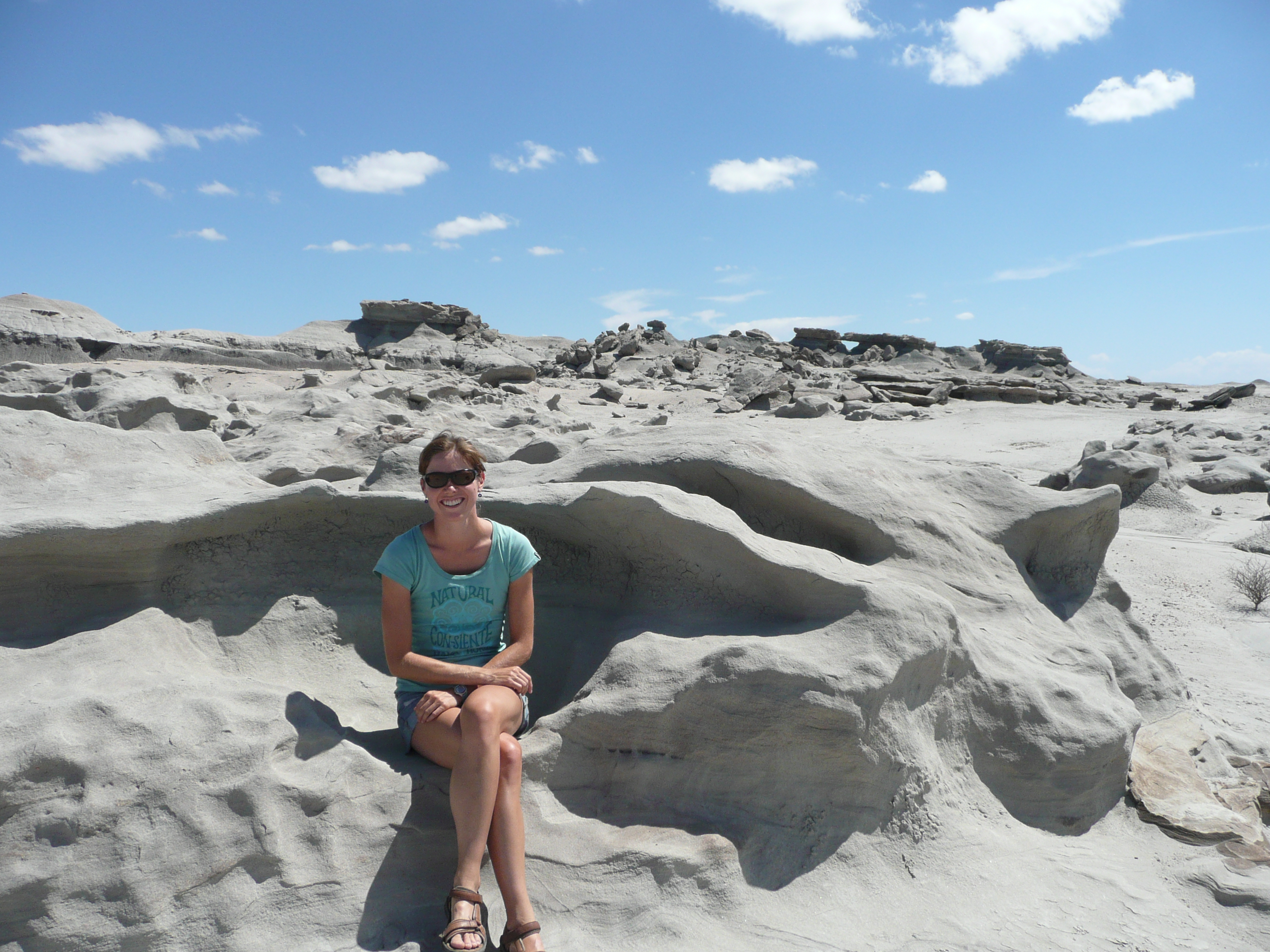
Enjoying the surroundings.
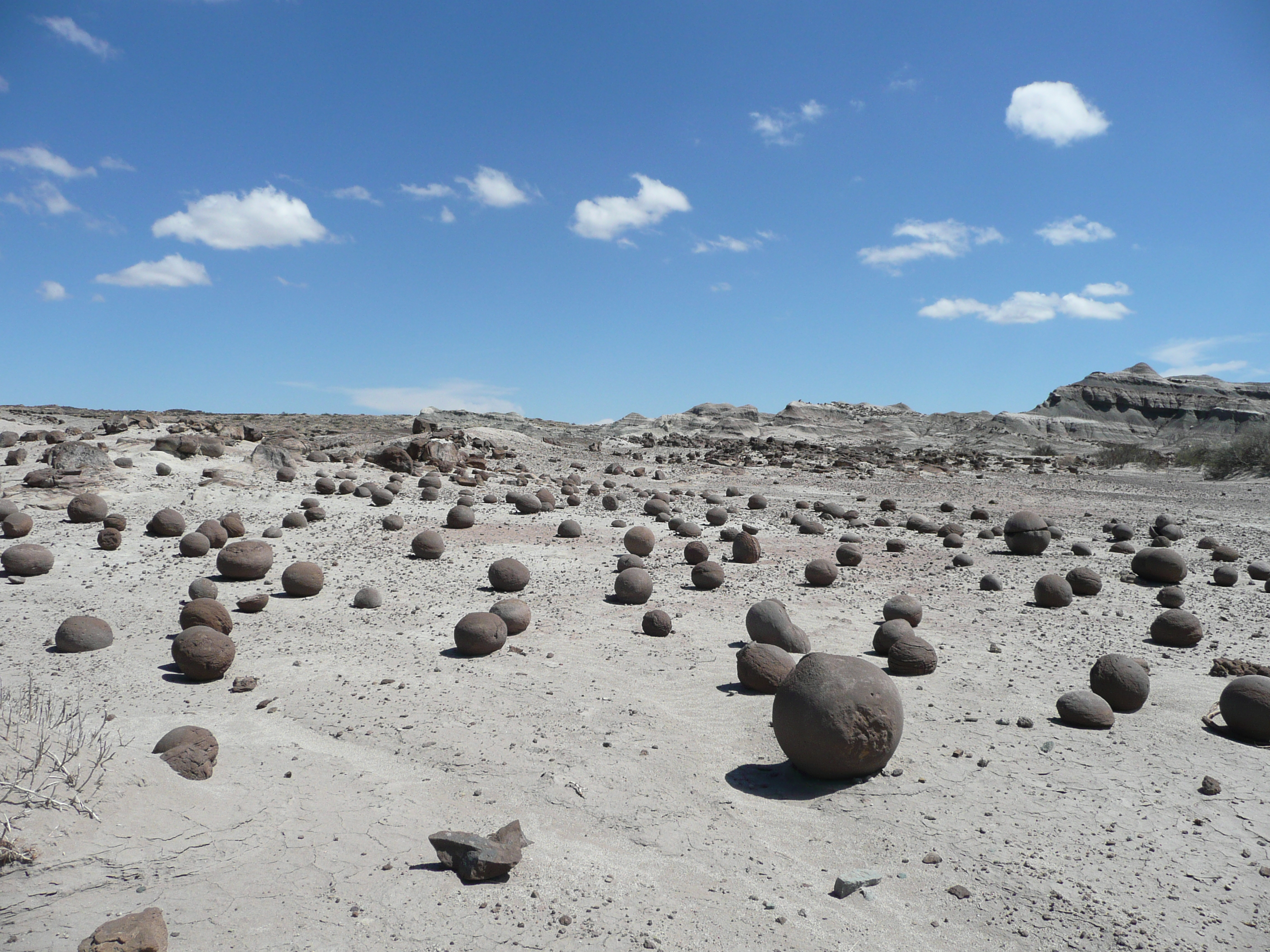
Ball court.
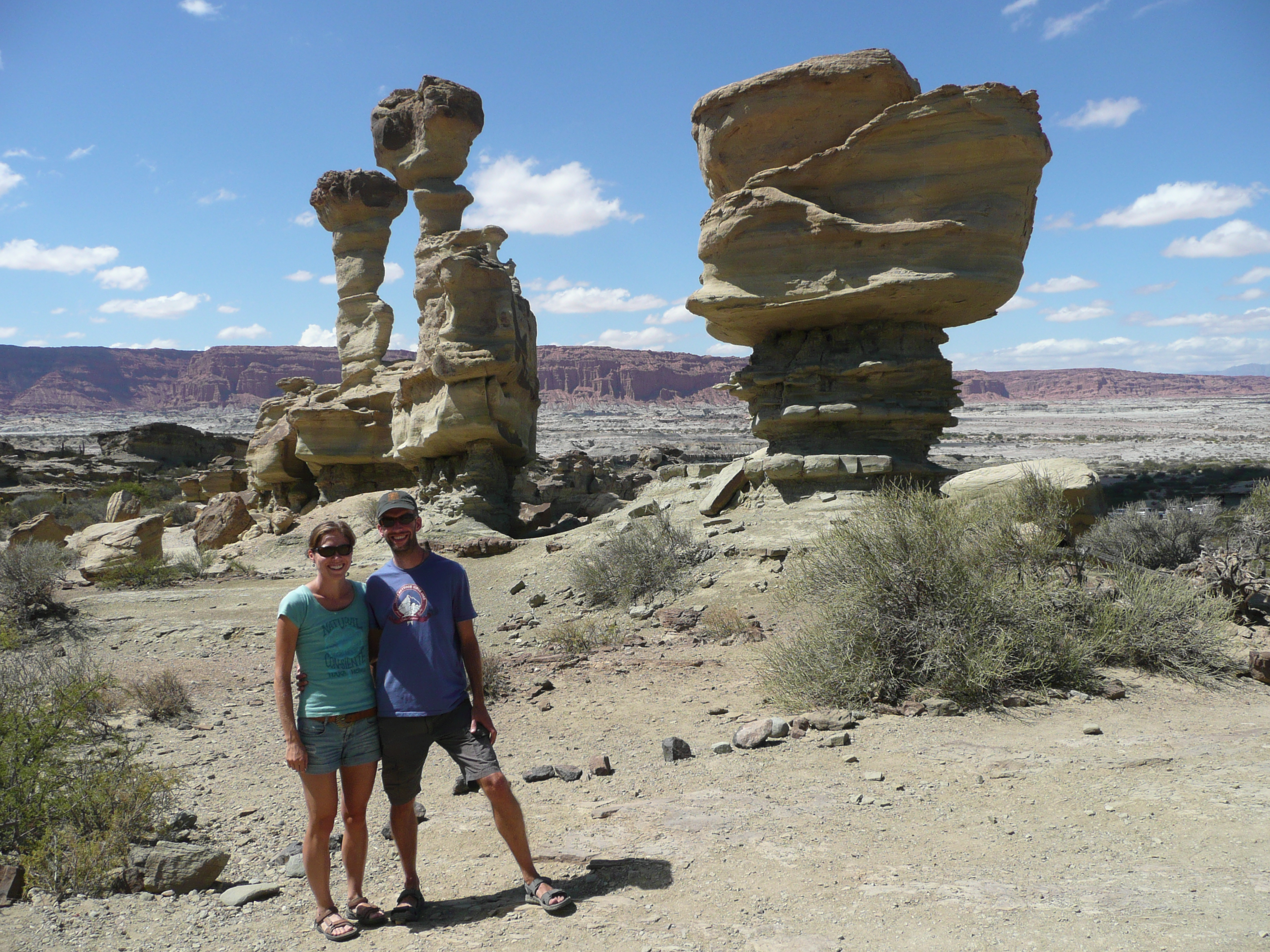
Behind us is the “submarine” rock formation. We thought the scenery was amazing.
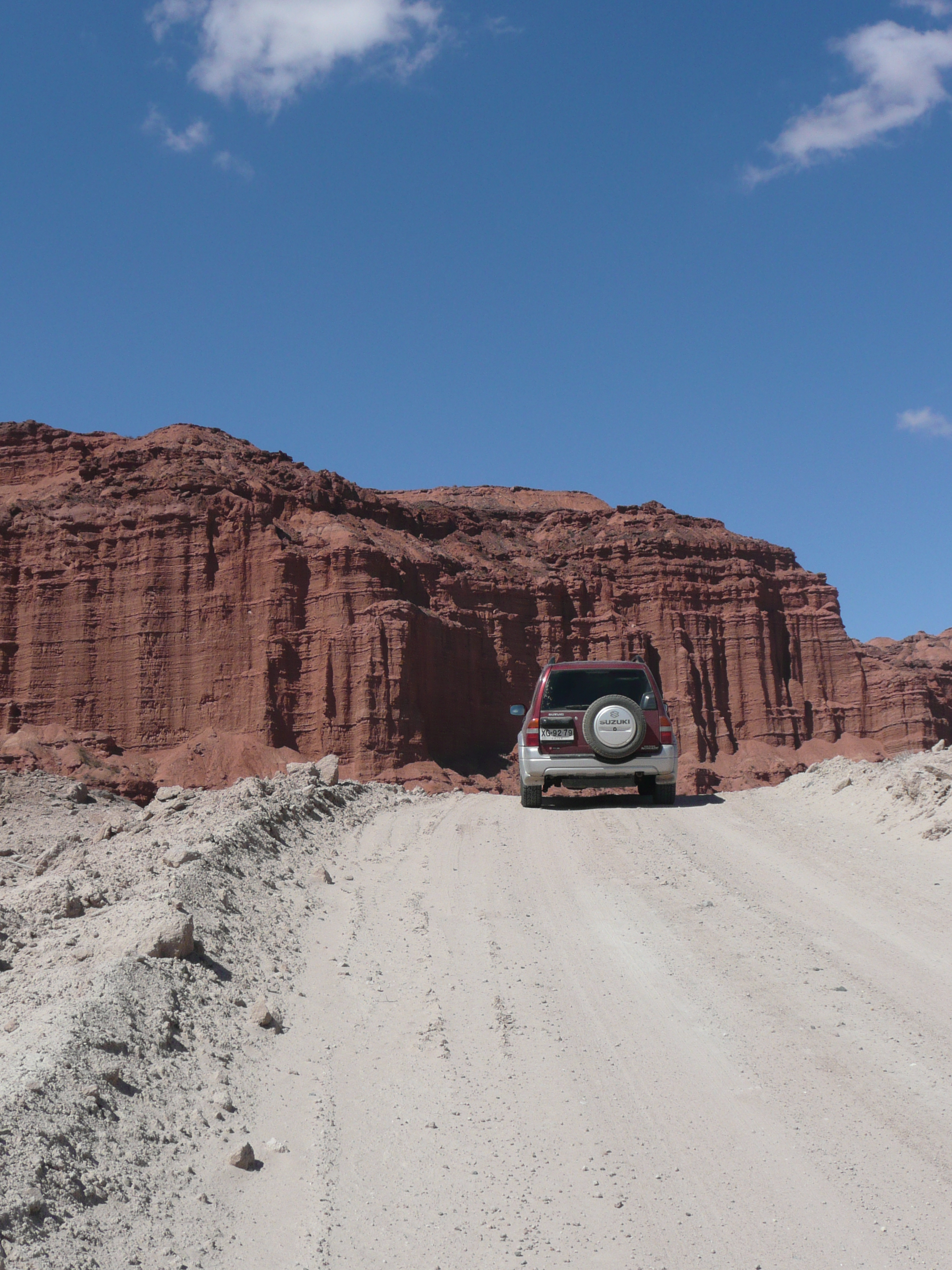
Desert warrior, conquers again.
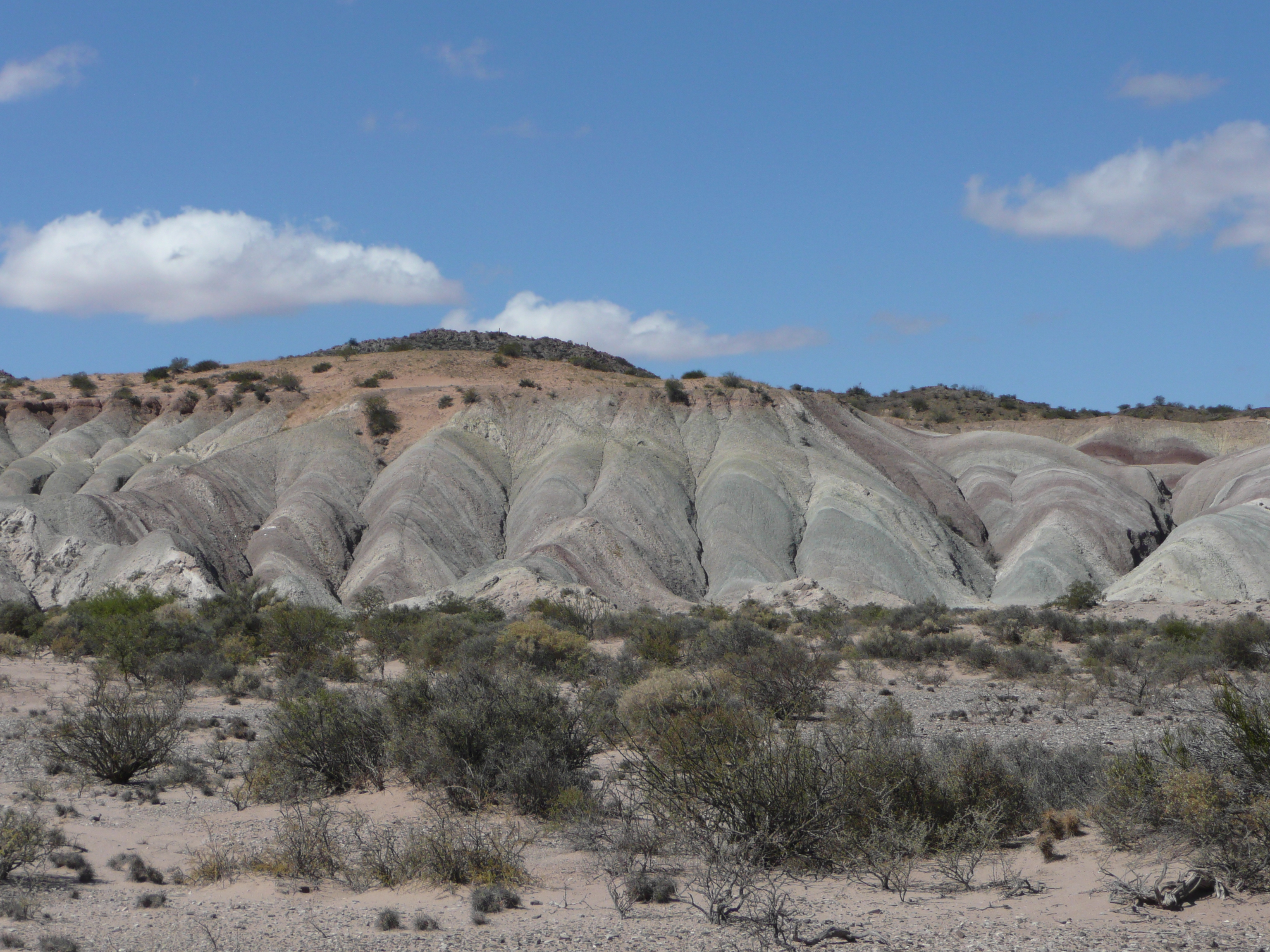
Weird, colourful rock hills.
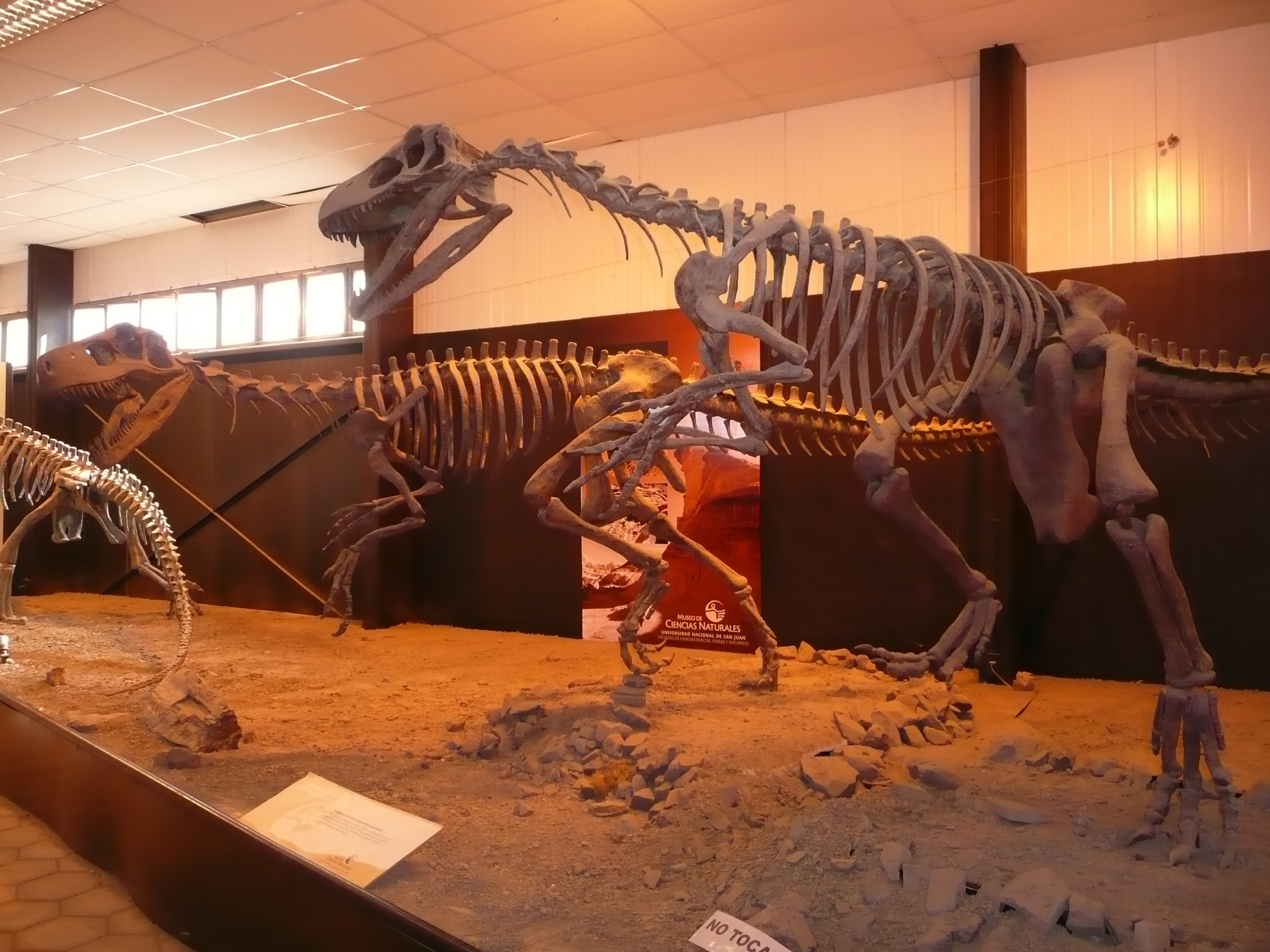
One of the dinosaur fossils discovered at the park, this is actually a replica.
From Ischigualasto we spent the following days driving through varying degrees of spectacular desert. We felt like the further north we drove, the more different things became. It was almost as if we’d entered a different country. Along the way we stopped in the wild west town of Chilecito, exchanged US Dollars to Pesos after a couple of dodgy guys heard us asking around in a restaurant off the plaza. Topped up with money we were able to buy ice creams and energy drinks to get us through the next stint of driving.
We had a free night of camping at an odd campsite in Londres, officially closed but unofficially open. It once again was a campsite with shocking bathroom facilities – in fact there was a turtle-like animal alive in one of the toilets, shocking. However we had a nice evening there spent drinking coffee, eating cookies and sharing stories with a Dutch couple who were on a five week self-drive tour of northern Chile and Argentina. In the morning we were rudely awakened at 7.30am by a man clapping his hands and shouting ‘senora’. Richard got up to see what he wanted, and he said he wanted fuel from us because his scooter had no more fuel. Richard said, ok, but than the guy expected us to come up with a funnel and hose. Um, no. So the guy was on his way, and he moved on to hassling the Dutch people. Meanwhile, lots of activity had started on the campsite with people arriving and preparing for their Sunday afternoon asados. People were working away at the campsite, cleaning up the rubbish, sweeping the ground. It was a crazy amount of activity for an early Sunday morning.
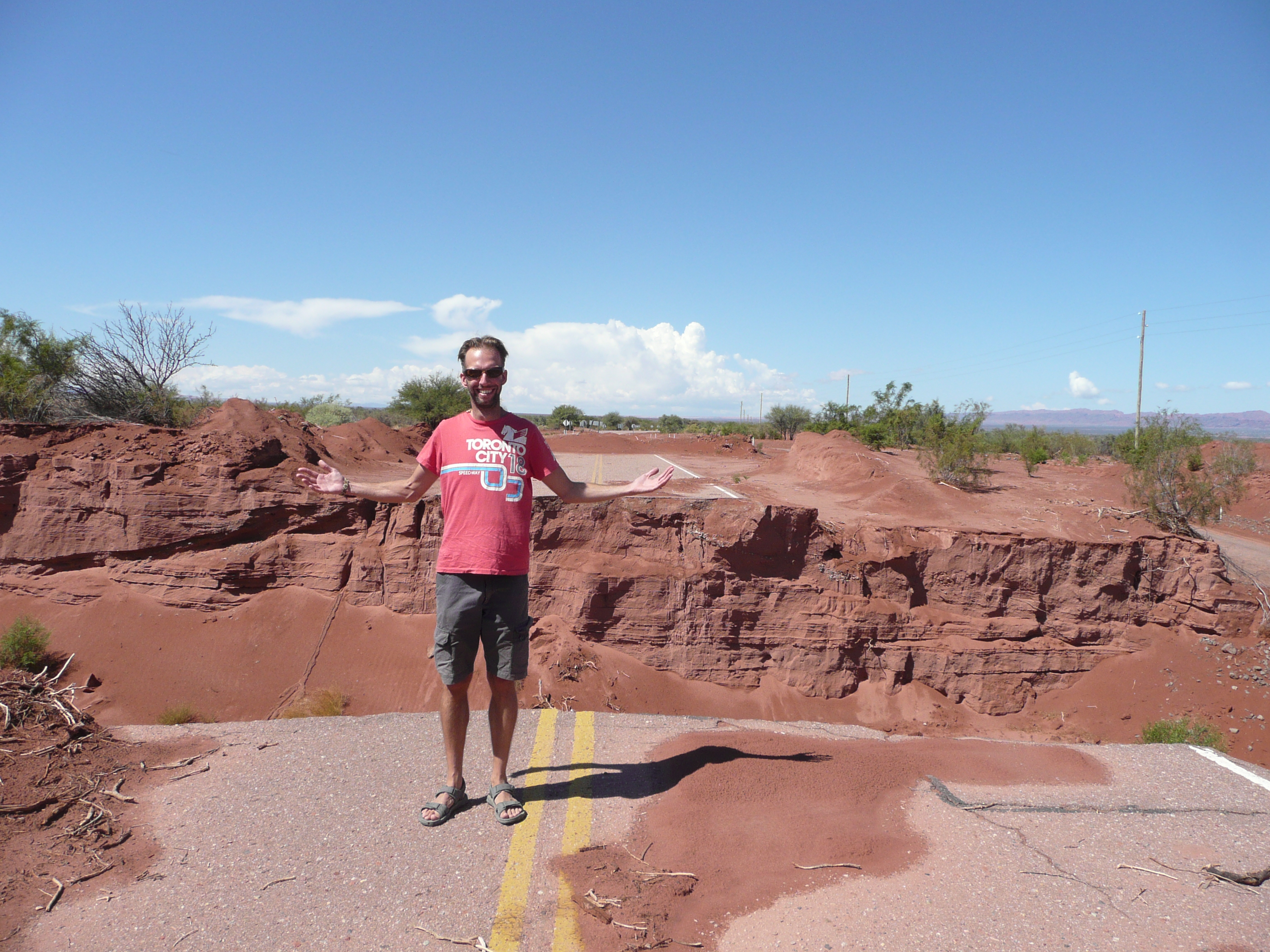
Where is the road?? !
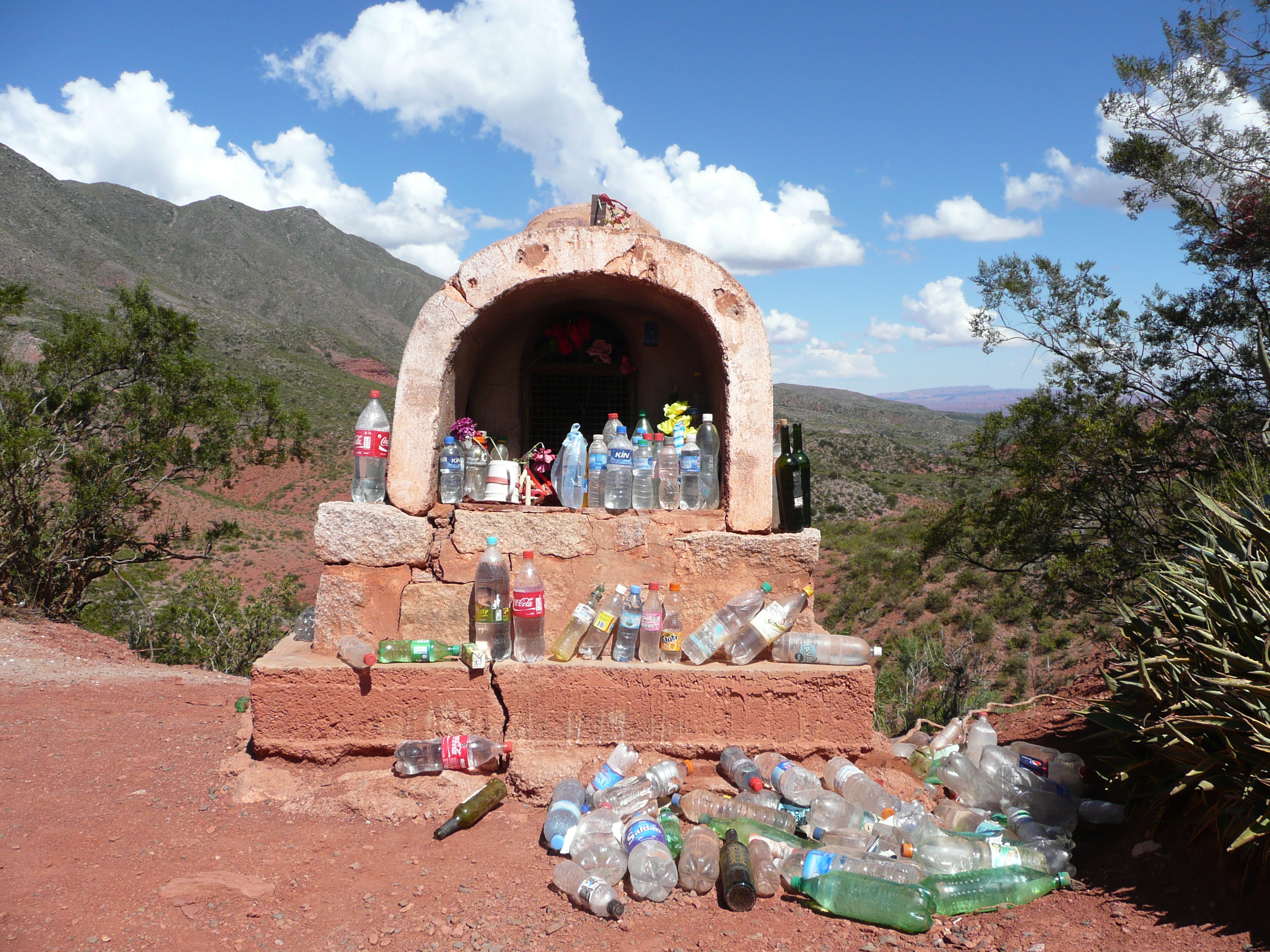
Typical Difunta Correa shrine.
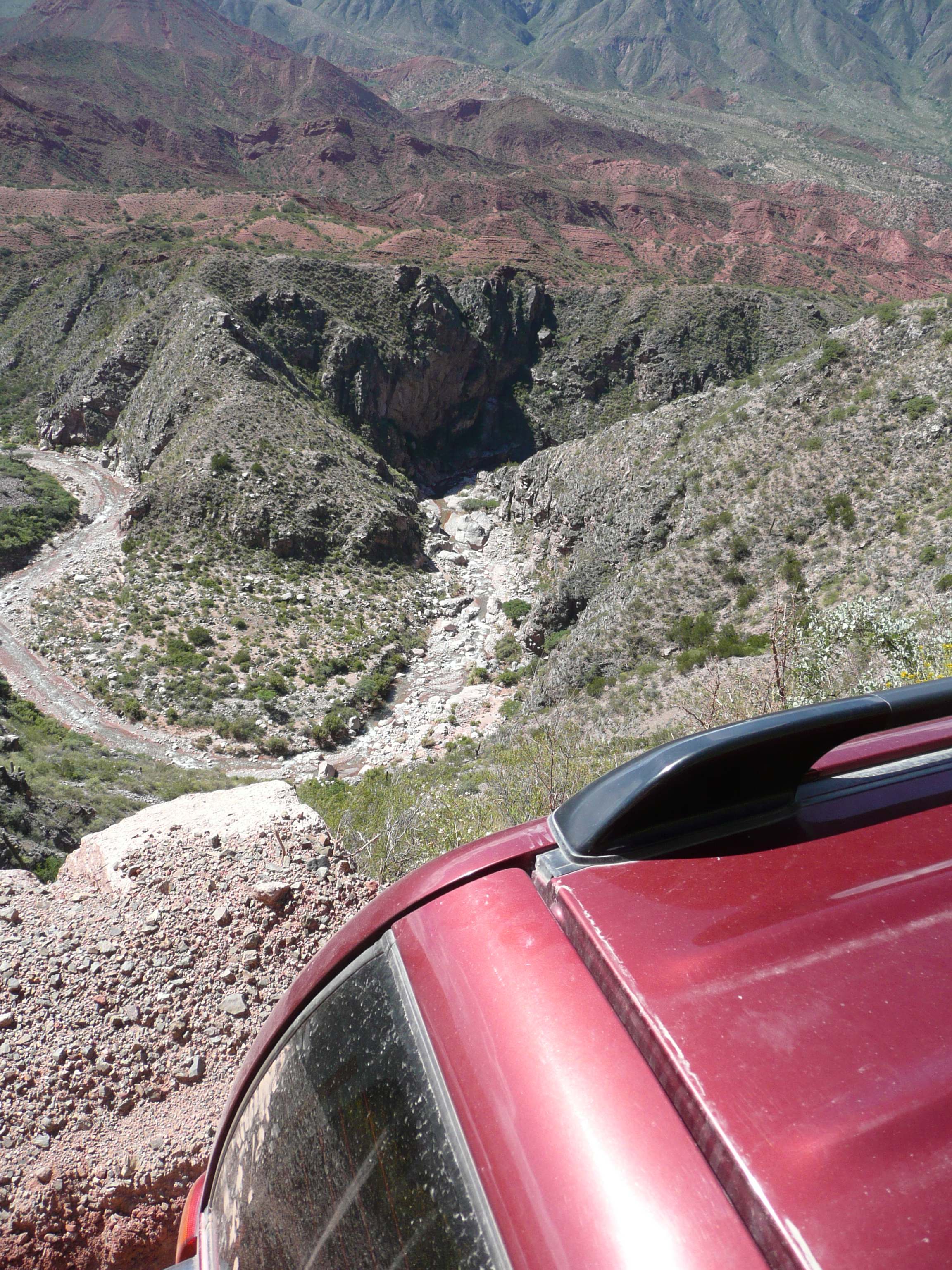
Long way down!
A couple of kilometres from Londres, are the Incan ruins of El Shinca. We visited these but found them disappointing as the ruins had been significantly damaged during excavations. Still it was an interesting first encounter with the Incan way of life. On that same day we also visited the ruins at Quilmes, from 1000AD, an indigenous group of people who survived contact with the Incans but not the Spanish. It is a massive site, about 30 hectares. We felt information in English was lacking however, and while we puzzled over the history of the place we would have liked to have had more information. Visiting ruins in Europe, you get significant more information about the sites. So far, our level of Spanish doesn’t allow us to get a full understanding of what life was like in the past here.
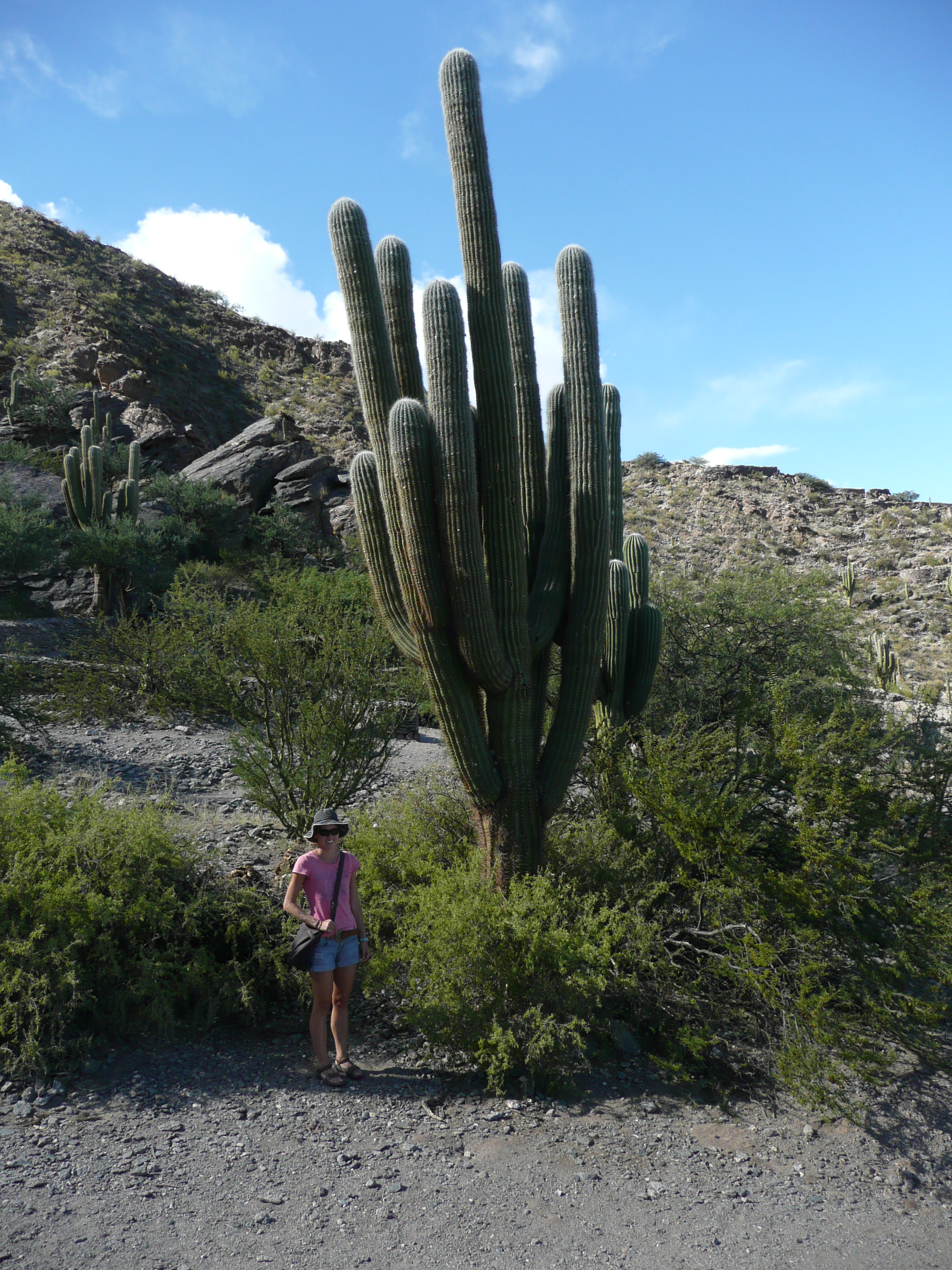
Massive cactus plant at Quilmes ruins.
Arriving in pretty Cafayate we set up camp at another sandy and dusty campsite, and treated ourselves with dinner at a restaurant facing the plaza. The service from our host Guillermo was splendid, the food quite average, but the bottle of local Shiraz, lovely. We felt like king and queen of the world eating our dinner al fresco style, something we never have the chance to do in Wellington. As is typical in Argentina when you order a steak, you get three of them, so Richard having leftovers very kindly asked Guillermo if we could take it home (to the campsite) as we have a dog who needs feeding (a street dog guarding our tent). When we got back to the campsite, sure enough our street dog was there, and he was absolutely over the moon with the steak we fed him!
While in Cafayate, we did our usual US Dollar to Argentinean Peso exchange on the black market. This usually involves walking around and asking the owners of various shops and restaurants if they know anywhere that will exchange US Dollars to Pesos. There is a bit of leg work involved, as a surprising number of people don’t know the rates, but eventually we always managed to exchange our money in the end. Doing this made our time in Argentina affordable, and combining this with camping, meant we actually never had to take money out from a bank machine, which is good as the queues and the fees make it a total headache.
In Cafayate we also had the car’s air conditioning sort of repaired. I say sort of as the mechanic didn’t really know what he was doing and said we needed to get a relay replaced, but he fiddled with things and by some sort of fluke got it going again. Having air conditioning in the car while you are driving through days and days of desert is absolutely essential. In the afternoon the weather packed in so we decided to do a couple of wine tastings, as Cafayate is the second biggest centre for wine production in Argentina, after Mendoza of course. Once again we were disappointed by the tastings – harsh and dry wines, bad service, meagre servings (even when you paid for it). Once again we longed for a good old Pinot Noir from New Zealand or a Shiraz from Australia.
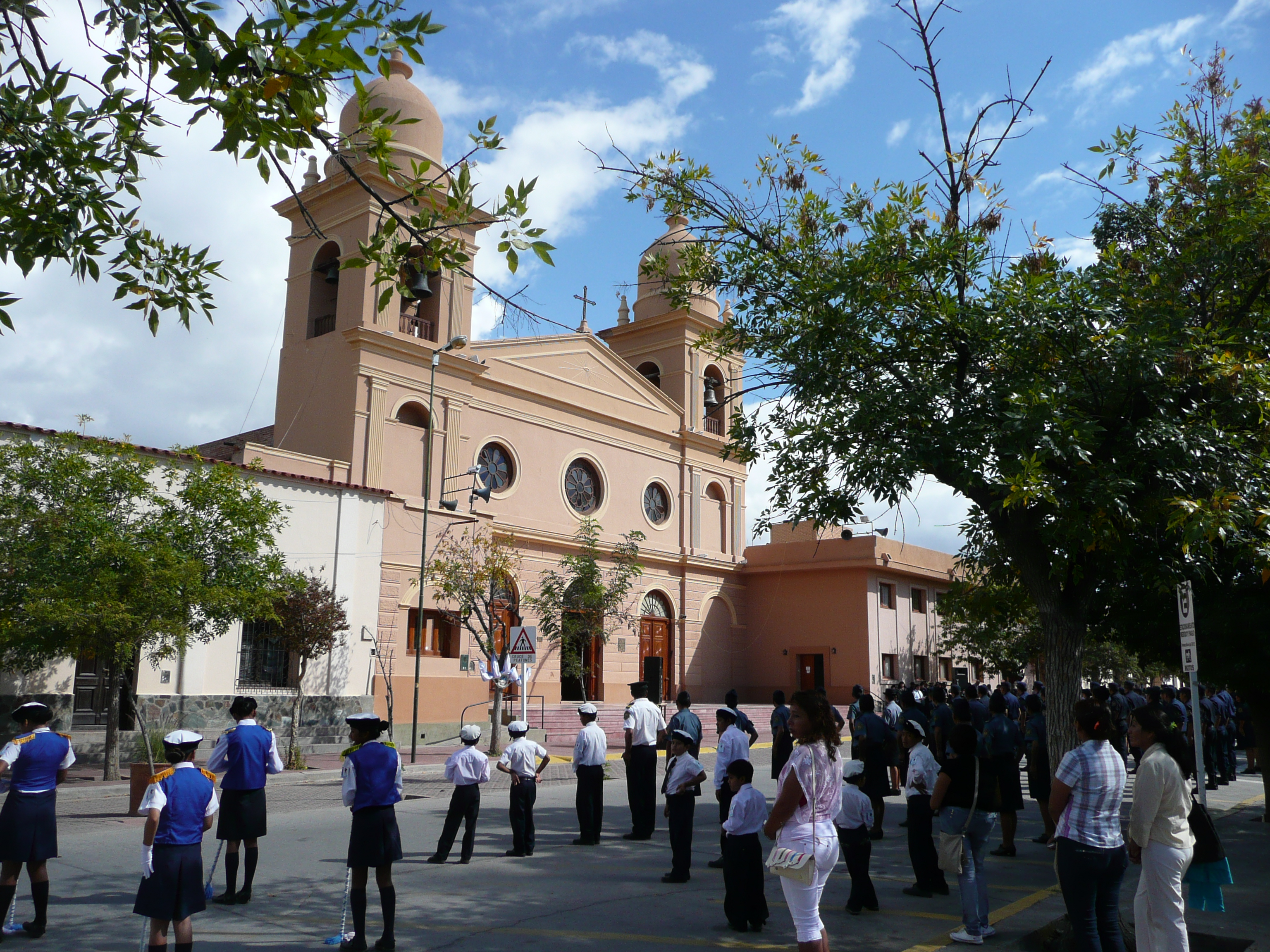
Pretty Cafayate church. There were lots of goings-on for Semana Santa, this time a parade from police and associated clubs.
With the air conditioning of the car repaired we decided to drive the lesser-known and more off the beaten track route to Salta via the Valles Calchaquies. The route goes through rugged desert landscape, coming across very cute adobe villages that sit at high altitude. We visited pretty villages in absolutely stunning surroundings, with the highlight being the old Angastaco village. We visited the new one which was very pretty, but a couple of kilometres down the road was the old one, which had a museum, a working farm, an old mill and grainery, and much to our delight a whole range of animals: llamas, rabbits, pigs, horses, geese, ducks, chickens, goats, sheep, the whole farm! A coke in the afternoon shade and playing with a one month old puppy topped the visit off. From there we drove through more splendid desert scenery, stopped at more pretty villages like Molinos and San Carlos, and finally stopped in Cachi for the night. Driving into Cachi was exciting, another thunder and lightening storm had started and we constantly saw lightening striking above the distant hills surrounding it. When we arrived at the campsite the rain was pouring hard, lightening flashing and thunder rumbling like crazy. Tallying up how many nights we’d already camped I shook my head and we decided to look for accommodation inside. To our luck and because of Richard’s AA membership we were able to get a great deal on a double room at the ACA (AA equivalent). We had dinner at the restaurant on site, and met a German woman who had just been to the wedding of her son. She lives in Buenos Aires, and we talked with her about her son’s wedding, politics and the state of Argentina’s economy. The ACA Hosteria was a beautiful building to stay in, white washed walls, big pool to relax beside, although we didn’t get a chance to use it as we were off to Salta the next day. It was here in Cachi that we had our quietest night of sleep in almost four months in South America. So peaceful, we could have stayed longer, but had to head to Salta to pick up some mail we’d arranged to have delivered there and wanted to arrive before Easter celebrations (Semana Santa) closed everything down.
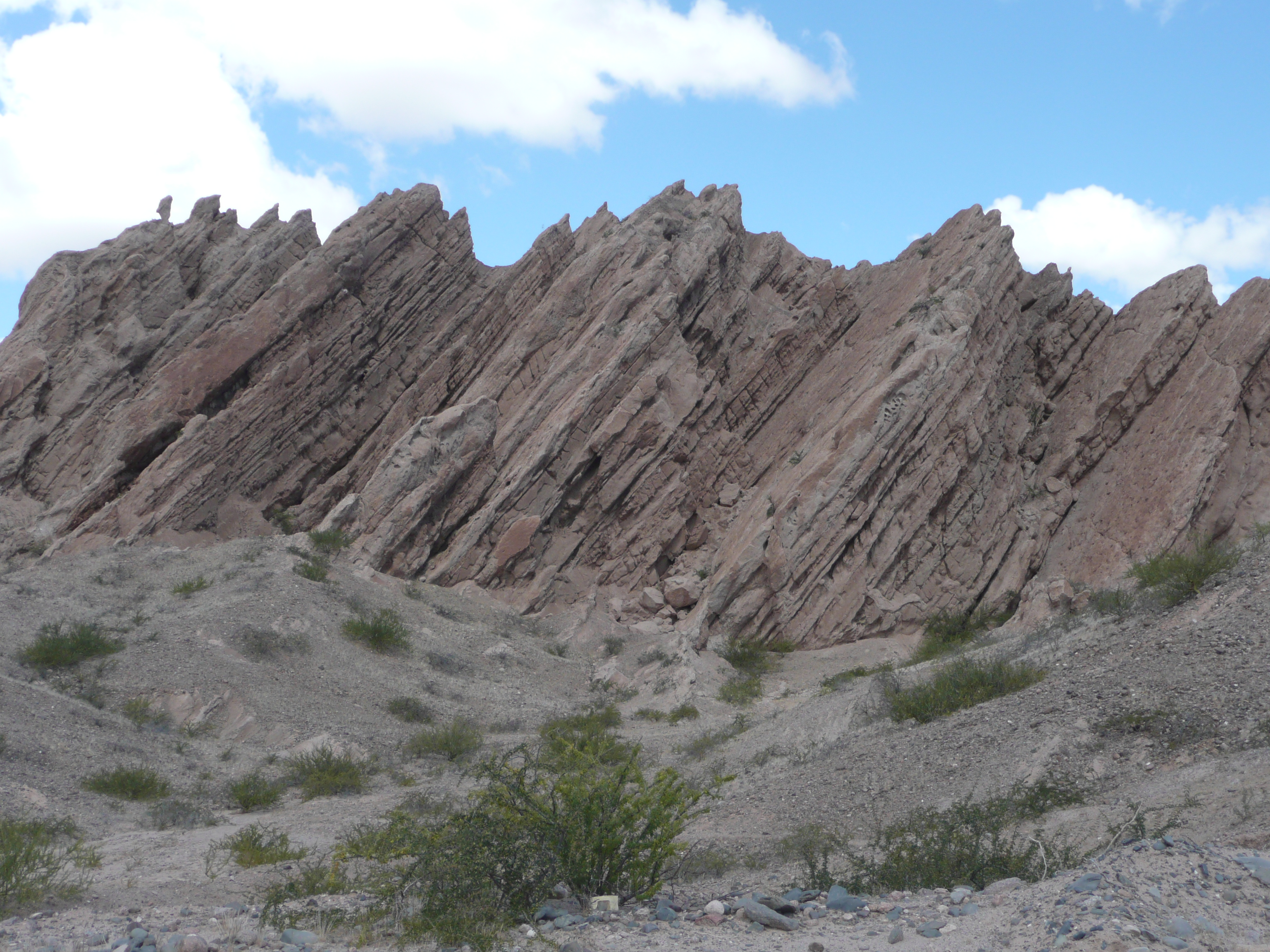
Quebrada…the wind and the rain has formed the landscapes into a series of arrow-shaped rocks. Was quite grand.
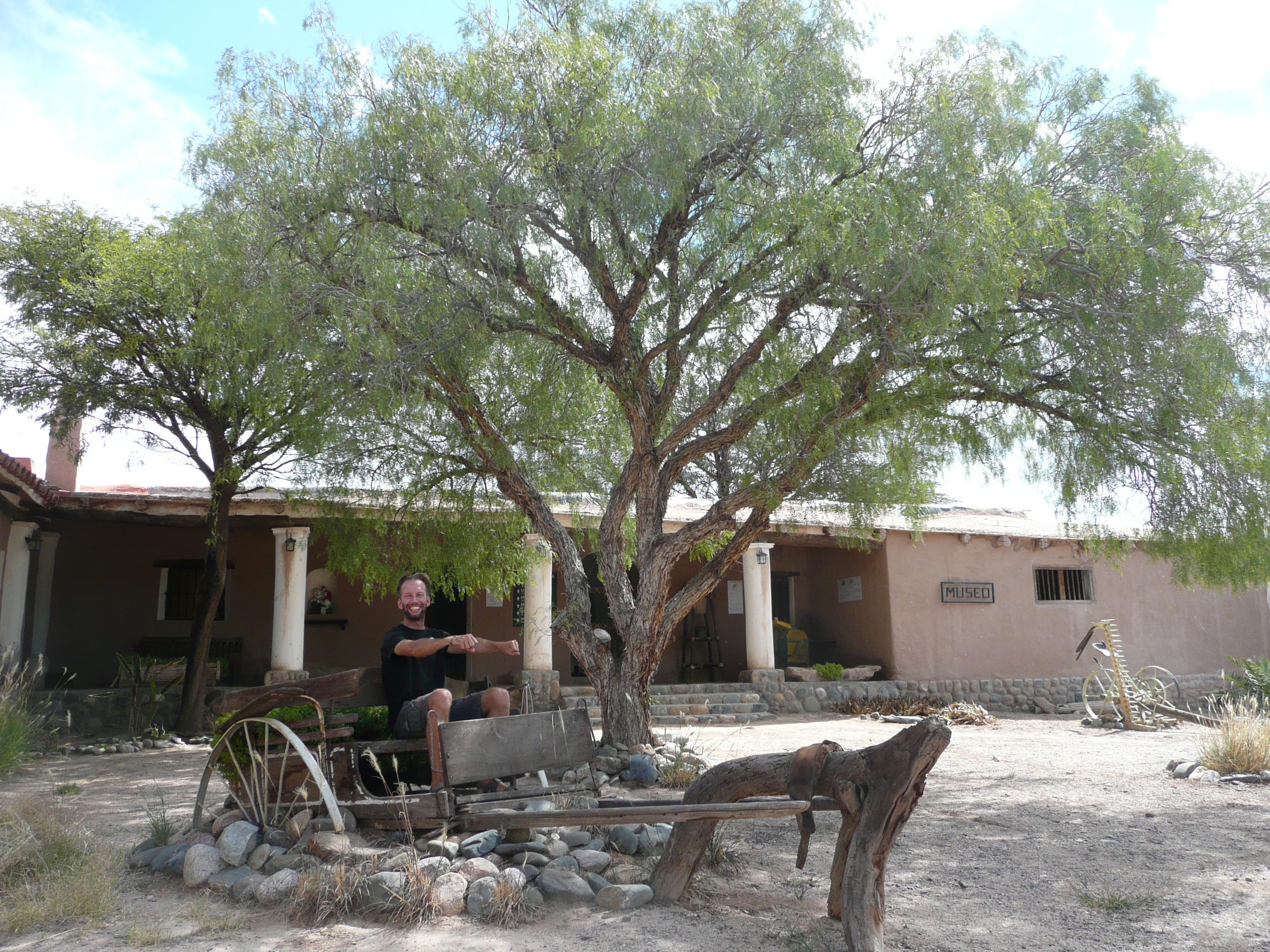
Richard loved the old Angastaco village. Here he is living life like a rancher…
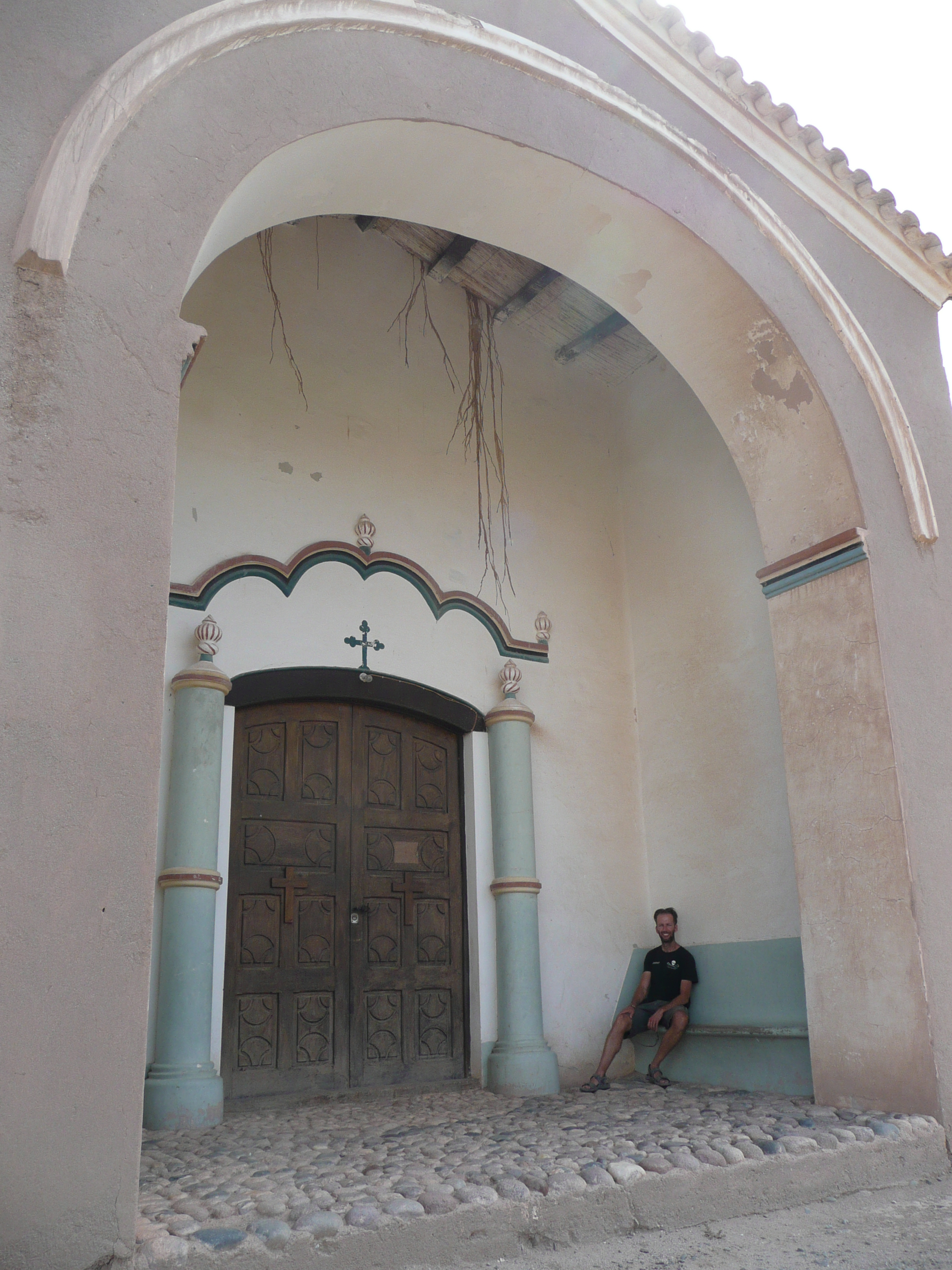
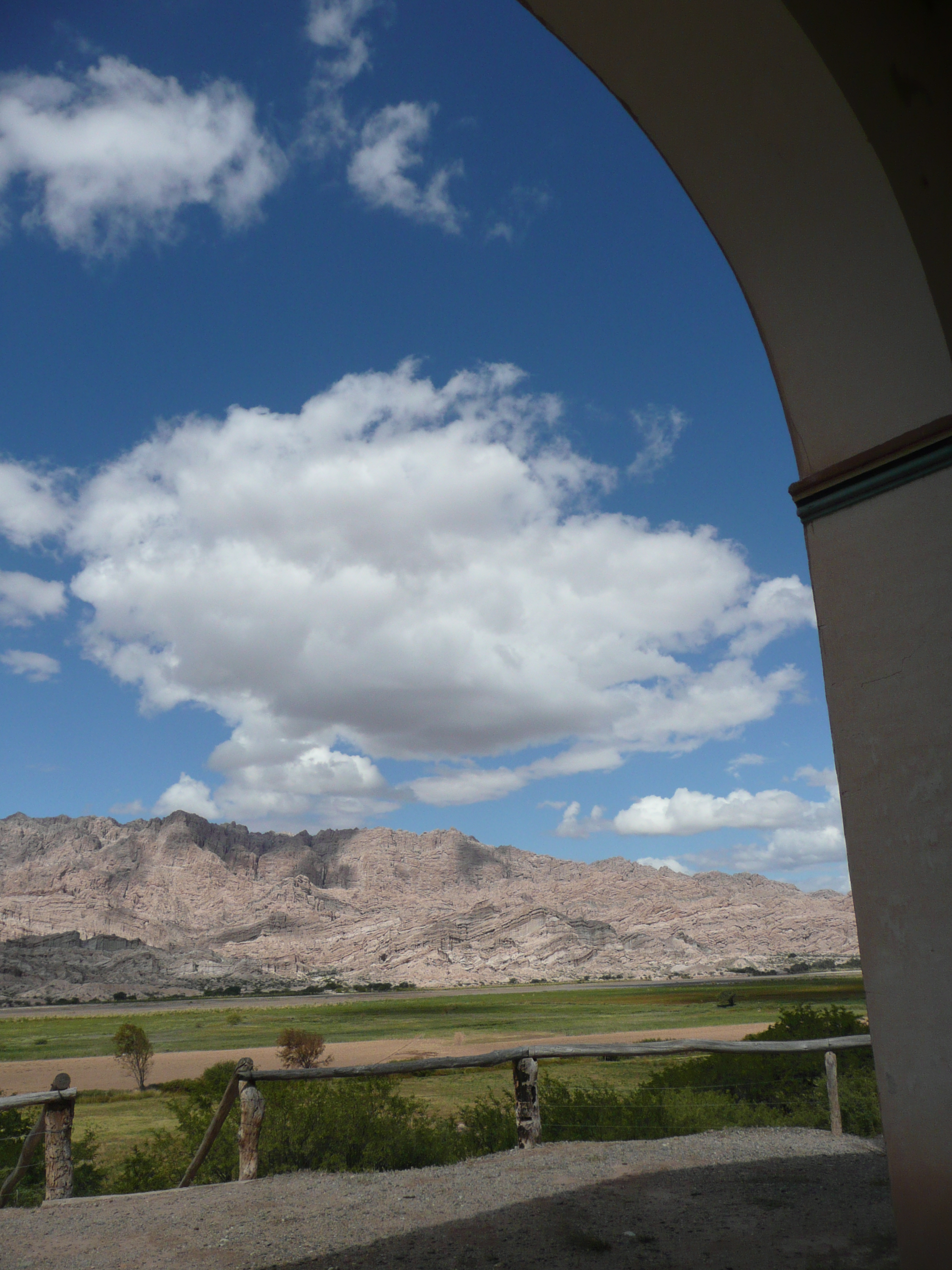
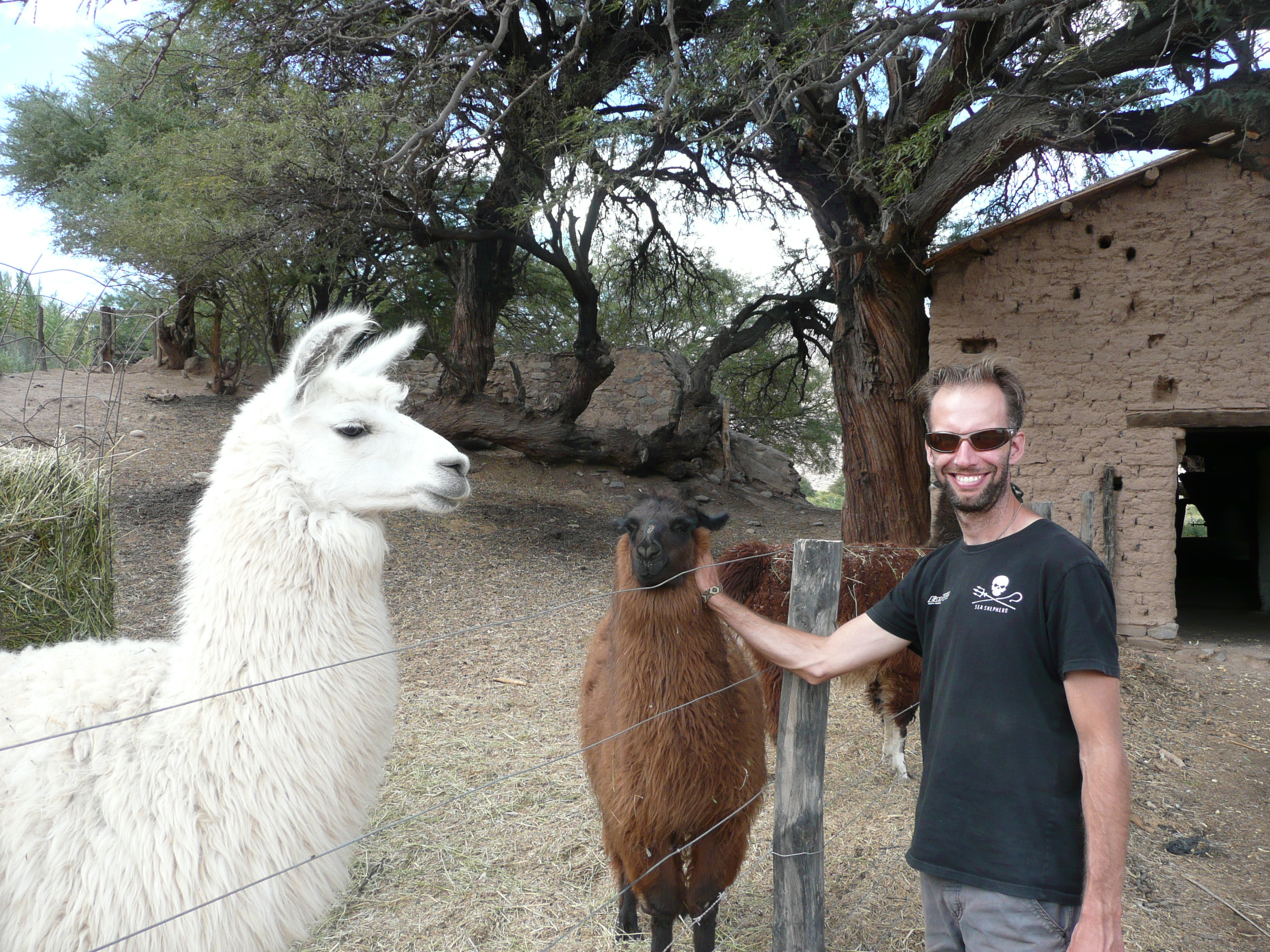
Llamas!
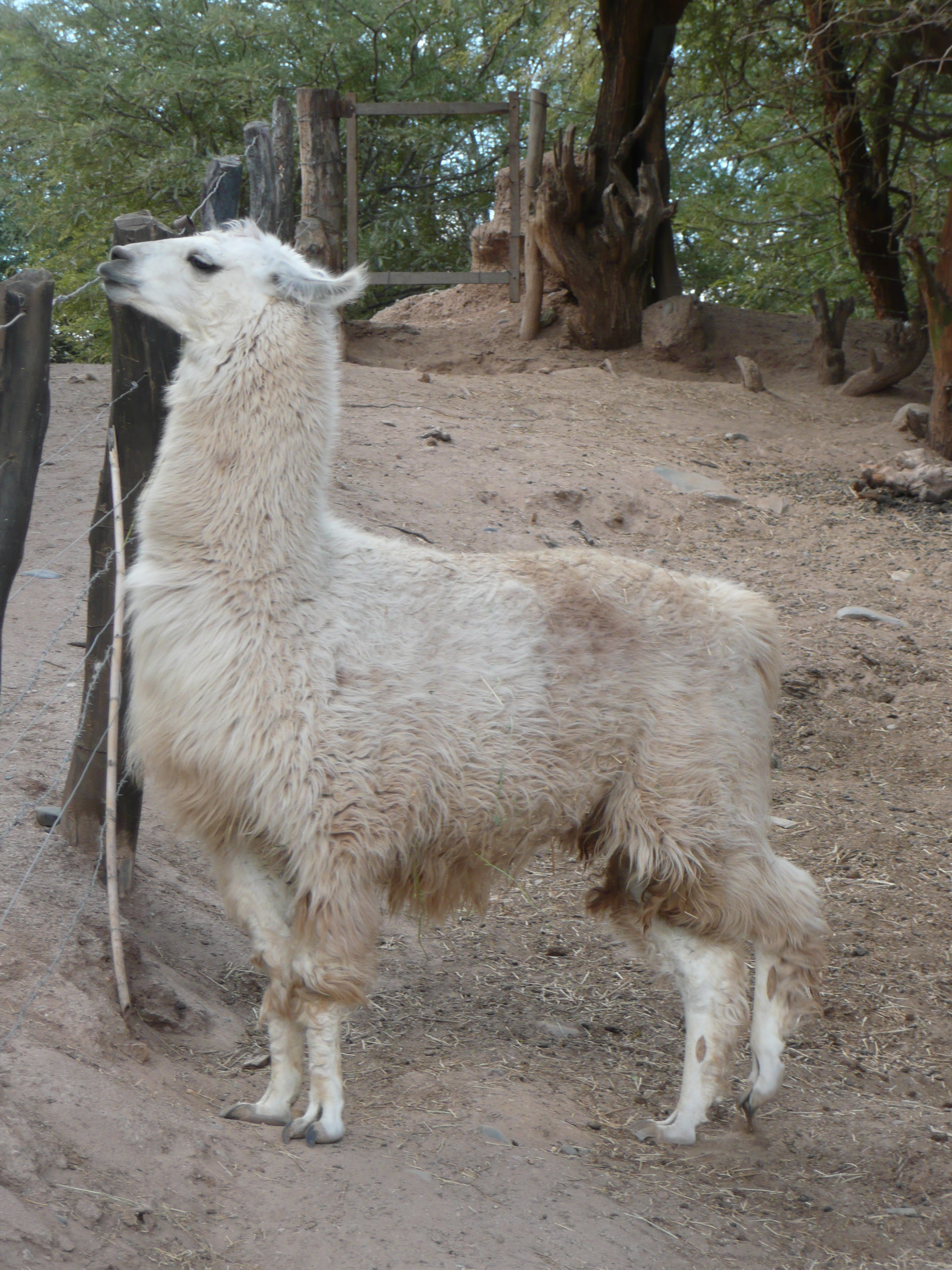
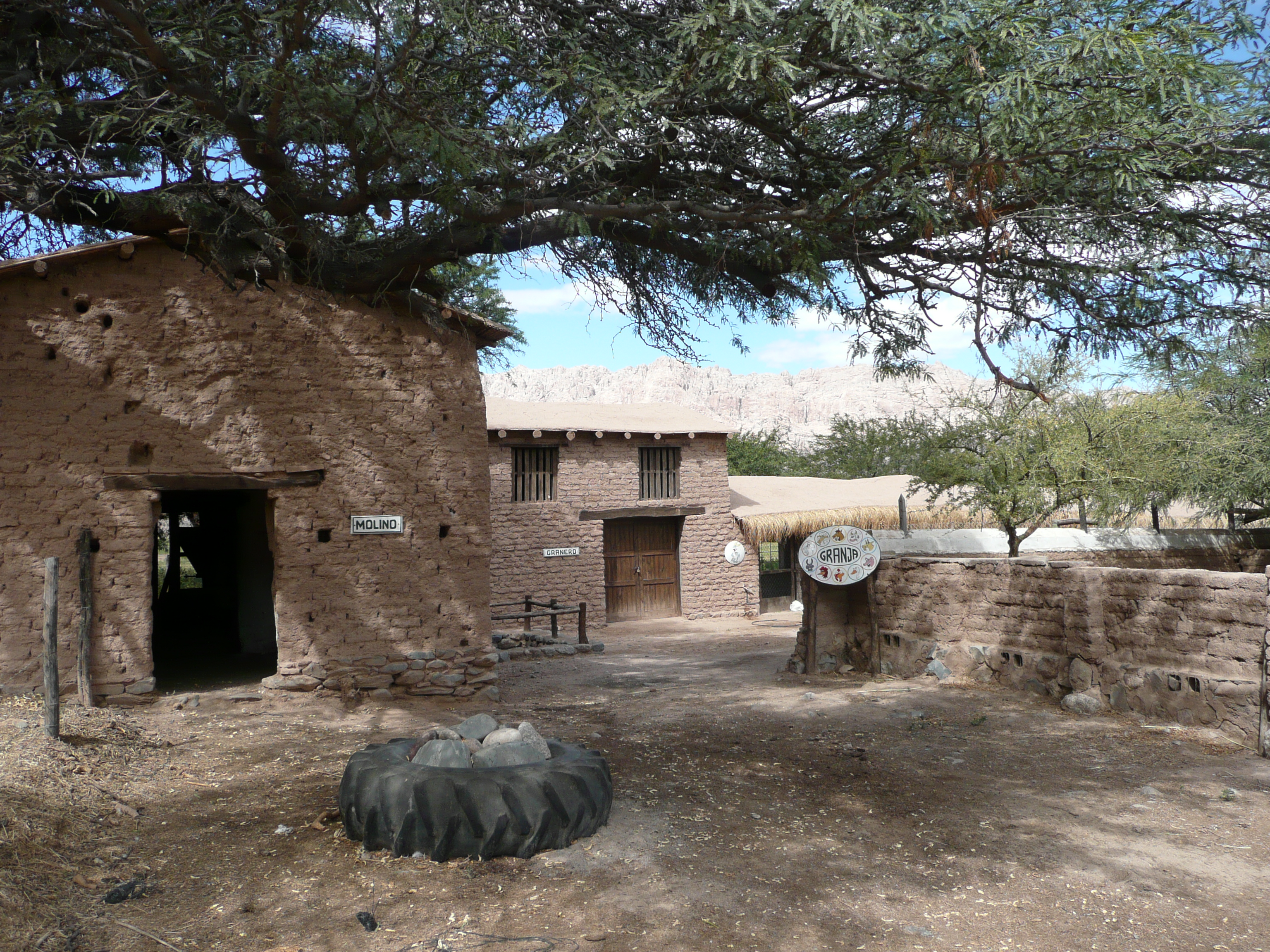
The old farm at Angastaco.
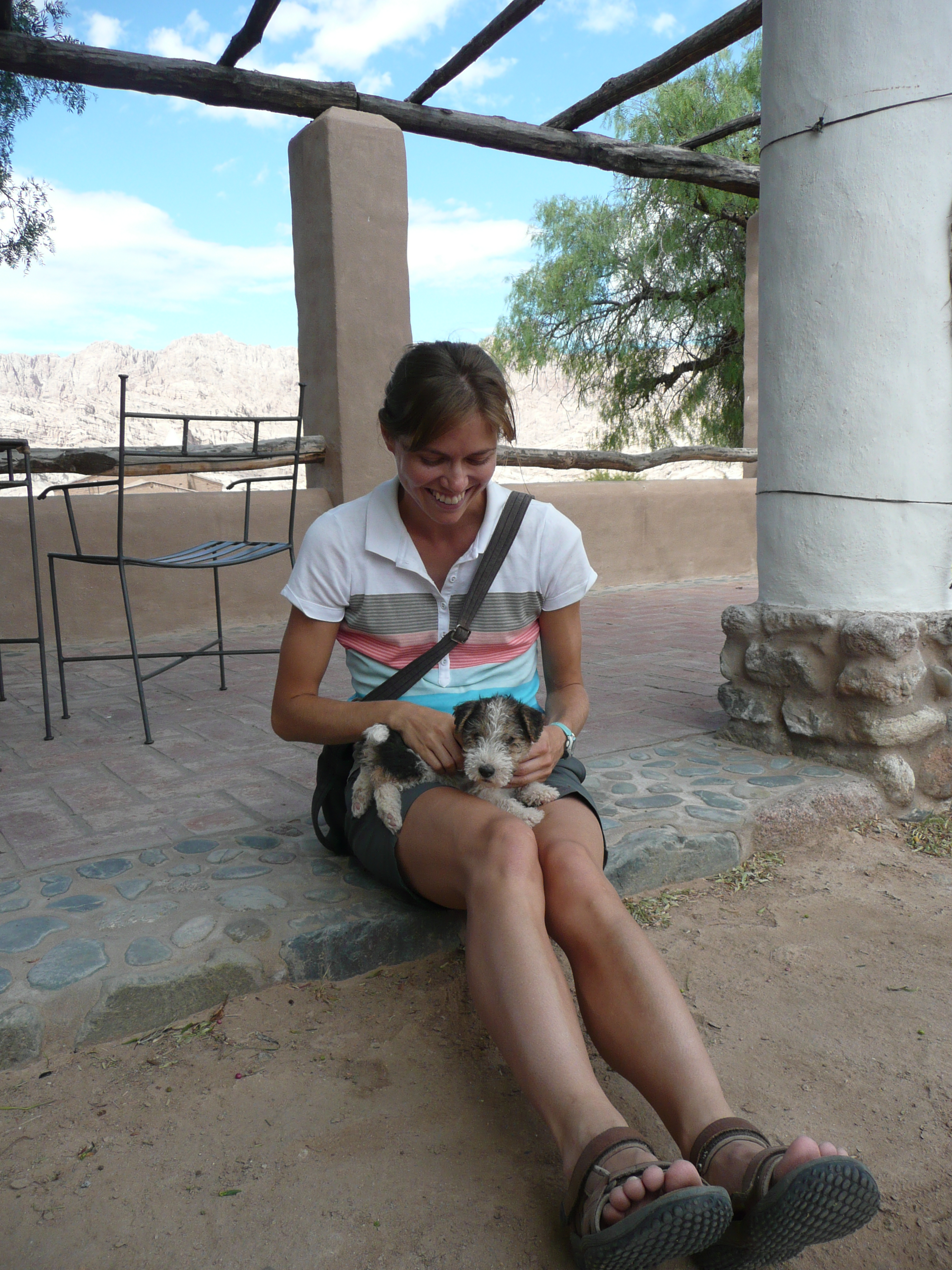
I loved playing with the cute one month old puppy.
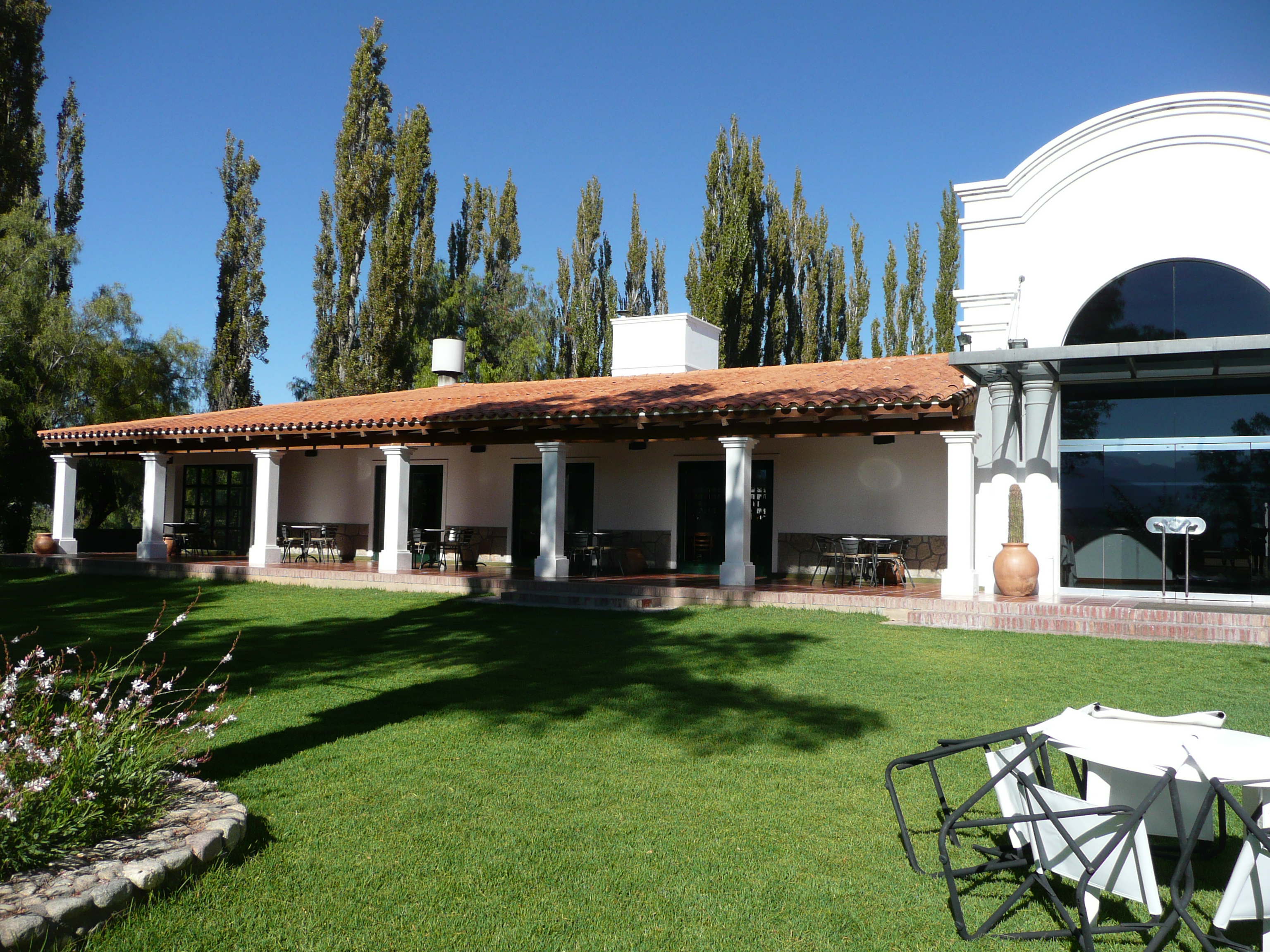
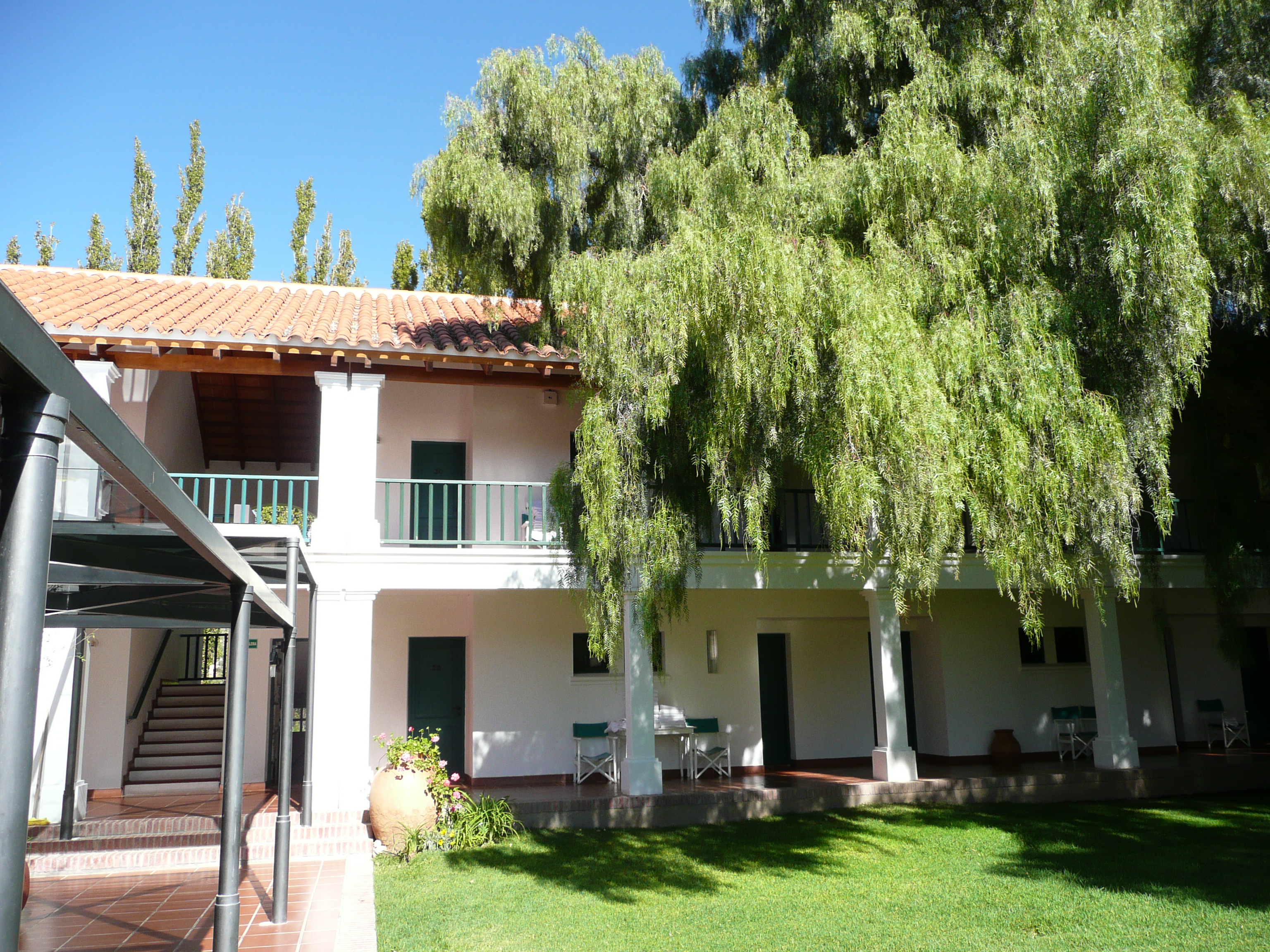
Our accomodation in Cachi, the ACA Hosteria. I thought it was worth a photo as we loved our night there. So quiet!
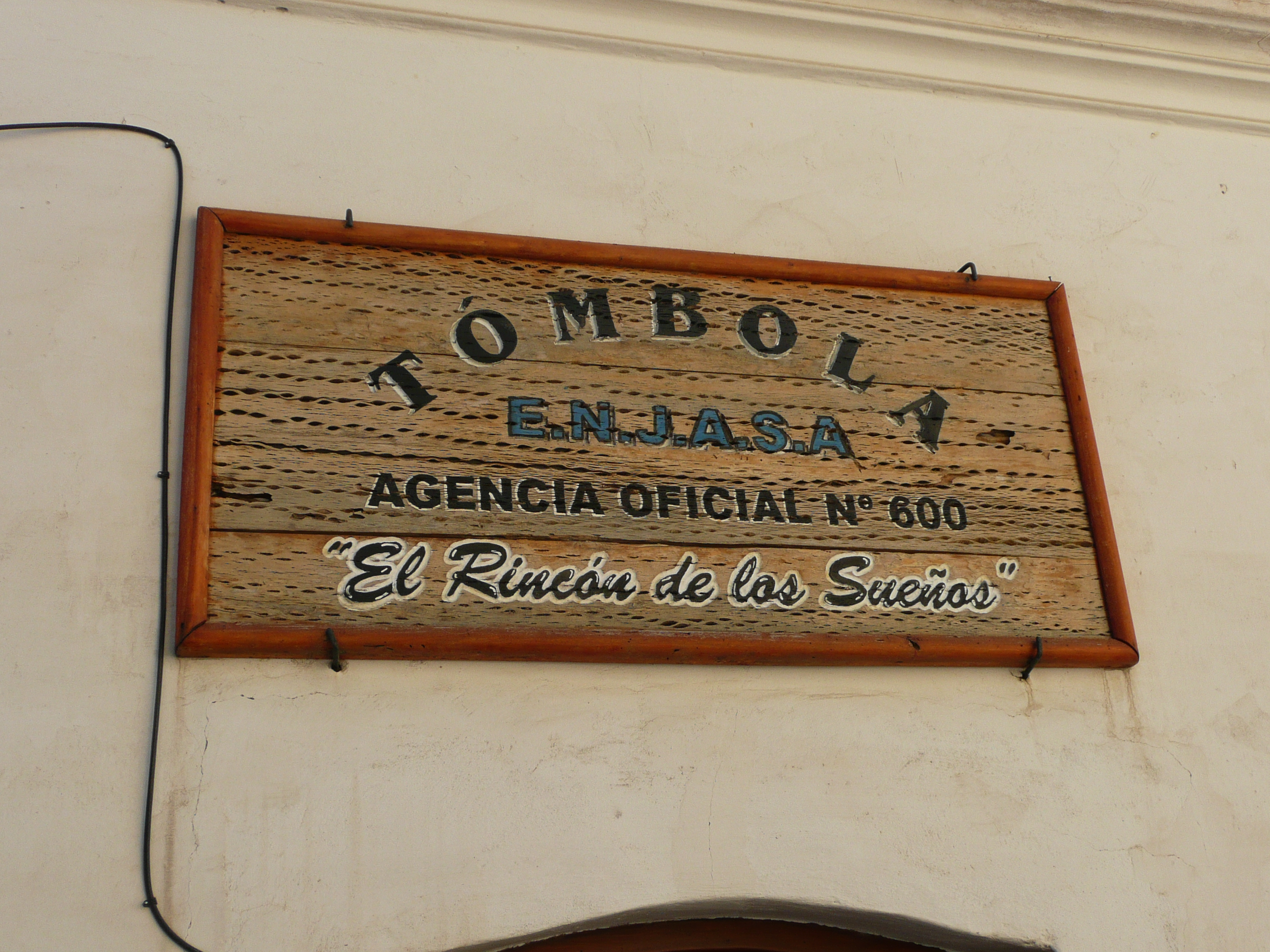
Sign made out of cactus wood.
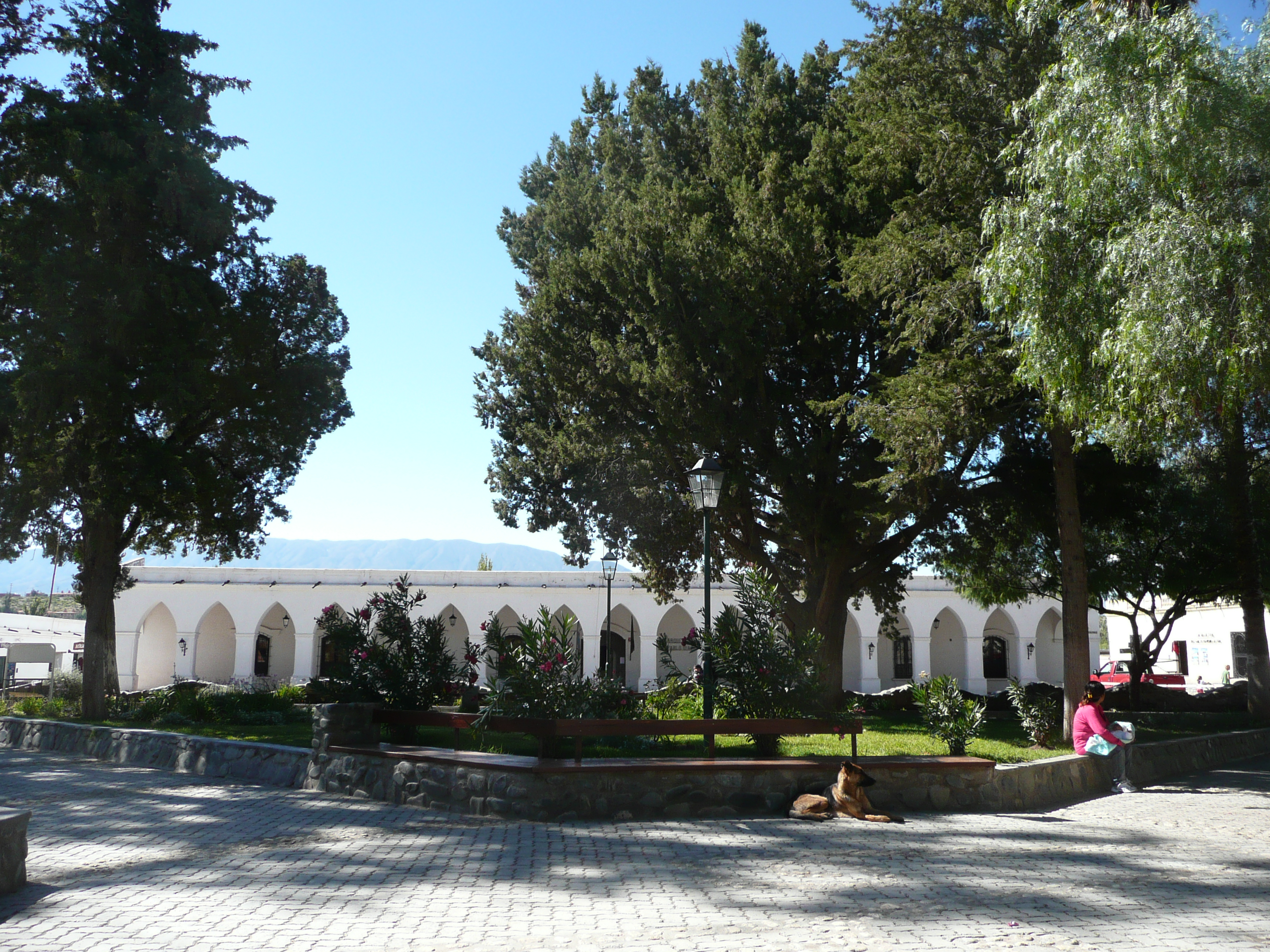
Sitting in the plaza in Cachi, a beautiful village.
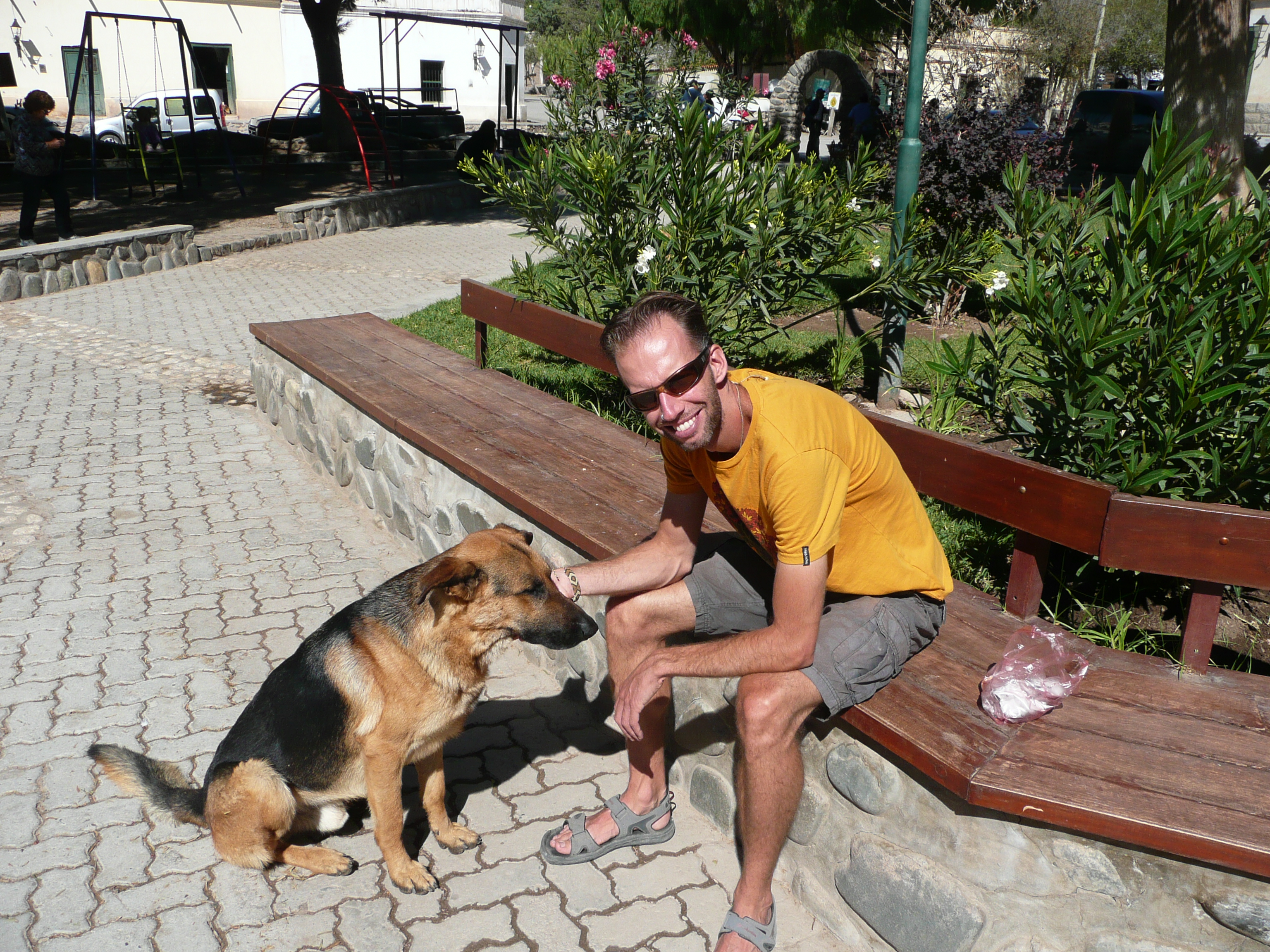
Another day, another street dog to feed. This time some not so tasty empanadas.
Where you guys at?
San Pedro de Atacama at the moment, later this week Iquique. Beach holiday!!
Wow wat een mooie foto’s!! Geniet nog maar van jullie mooie trip!
Thanks Julia,
Long story, but I think I understand it. Beautifull photos, specially the photo with the bikes and I like the photo off Julia with the liitle dog.
Greetings, Ada
Thanks Ada, there was quite a lot to say… we’ve been travelling a lot and seeing lots of different things. Still a bit behind on the blog, but almost caught up now! The puppy was so sweet. 🙂 This afternoon we made more friends with street dogs, it’s so easy to do!
Mike Smith liked this on Facebook.
Symone Krimowa liked this on Facebook.
Ivo Van De Waarsenburg liked this on Facebook.
Macarena Claro liked this on Facebook.
Roel Verschueren liked this on Facebook.
7359betcom tiene una interfaz muy amigable y fácil de usar. Me gusta la variedad de juegos que ofrecen. Una buena opción para pasar el rato: 7359betcom
Opa! Dei uma olhada no hp88top e achei a variedade de métodos de pagamento bem interessante. Facilita bastante na hora de depositar e sacar. Da uma olhada la no site hp88top
Yo, X111gamedownload is legit! Found some hidden gems there I never knew existed. Definitely worth checking out if you’re tired of the same old games. x111gamedownload
Guys, I’ve been playing on ph8888 lately and I’m loving it! Ang daming games and the payouts are legit. G na kayo! Try it here: ph8888
Needed the 92rlogindownload link badly Glad I found it here Smooth download and no issues so far Thanks a bunch 92rlogindownload
9377game is where the action is at Great selection of games and daily bonuses Definitely worth checking out for some quick fun 9377game
The VIP treatment here is real. I feel valued as a player and the rewards are generous. If you want a premium experience check out idrpvip4.
I finally found a platform that actually works without any lag. The registration process was super smooth and I started playing in minutes. Definitely check out 555tayaregister if you want a hassle-free experience.
Finally found a login page that actually works without any glitches. The app is fast and the games load instantly. Highly recommend pwin777applogin for anyone tired of laggy sites.
I love the JDB games available on this platform. The graphics are top notch and the winning streaks are real. Try jdbjililogin if you want a win.