After having said goodbye to Ross, the kiwi owner of the Sunny Days hostel in Arica, we were on our way to ‘base camp’. Our base camp (or place for acclimatisation) for three days was going to be Putre, a small indigenous village close to the border of Bolivia. The 125 km was relentlessly uphill, going from sea level to an altitude of 3500 meters. The scenery was changing all the time, we drove up mountains that looked like sand dunes and roads carved into the sides. There hardly seemed to be any other cars around, just large amounts of Bolivian trucks going up and down.
The reason for all the trucks going up and down is that Bolivia doesn’t have a coast line anymore. Bolivia used to be a large country but lost large pieces of land, including its whole coastline, in the Pacific War (with Chile 1879 to 1884). Bolivia also lost large pieces of land to Brazil and Argentina. Not having a port is a massive handicap for Bolivia and up till this day creates international tensions.
In Putre we mainly took it easy as the altitude takes its toll, back to being out of breath and having heart palpitations. We did clean up the car a bit and installed a safe for our valuables and a curtain behind the seats. The curtain combined with the tinted windows means that no one can see what is in the car. We also went on a hike to the rock paintings, but as no one has bothered to mark the trail we just couldn’t find it and returned back out of breath and dehydrated.
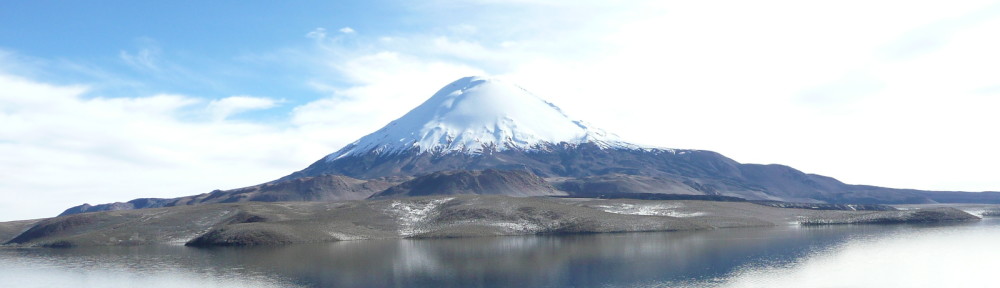
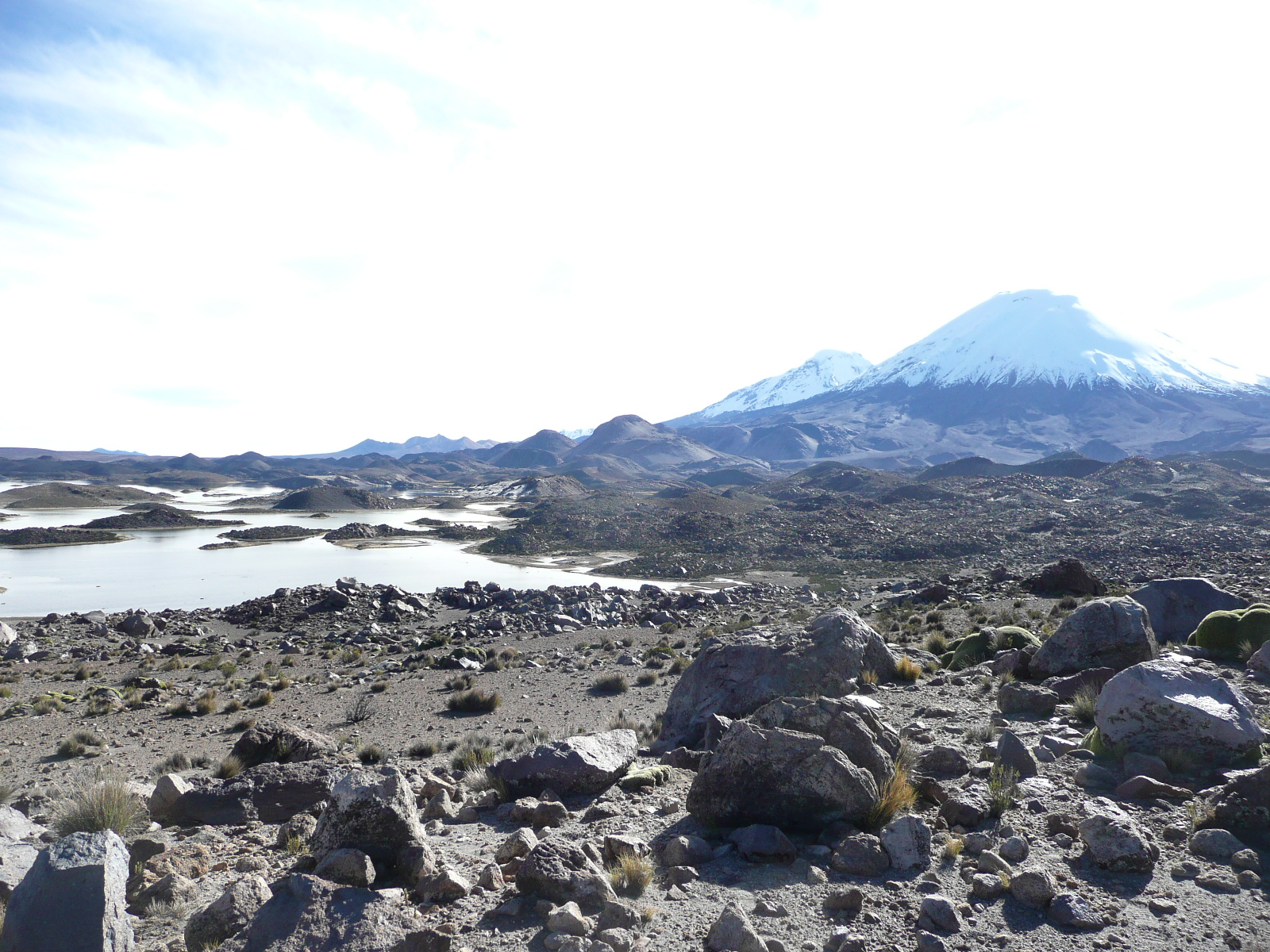
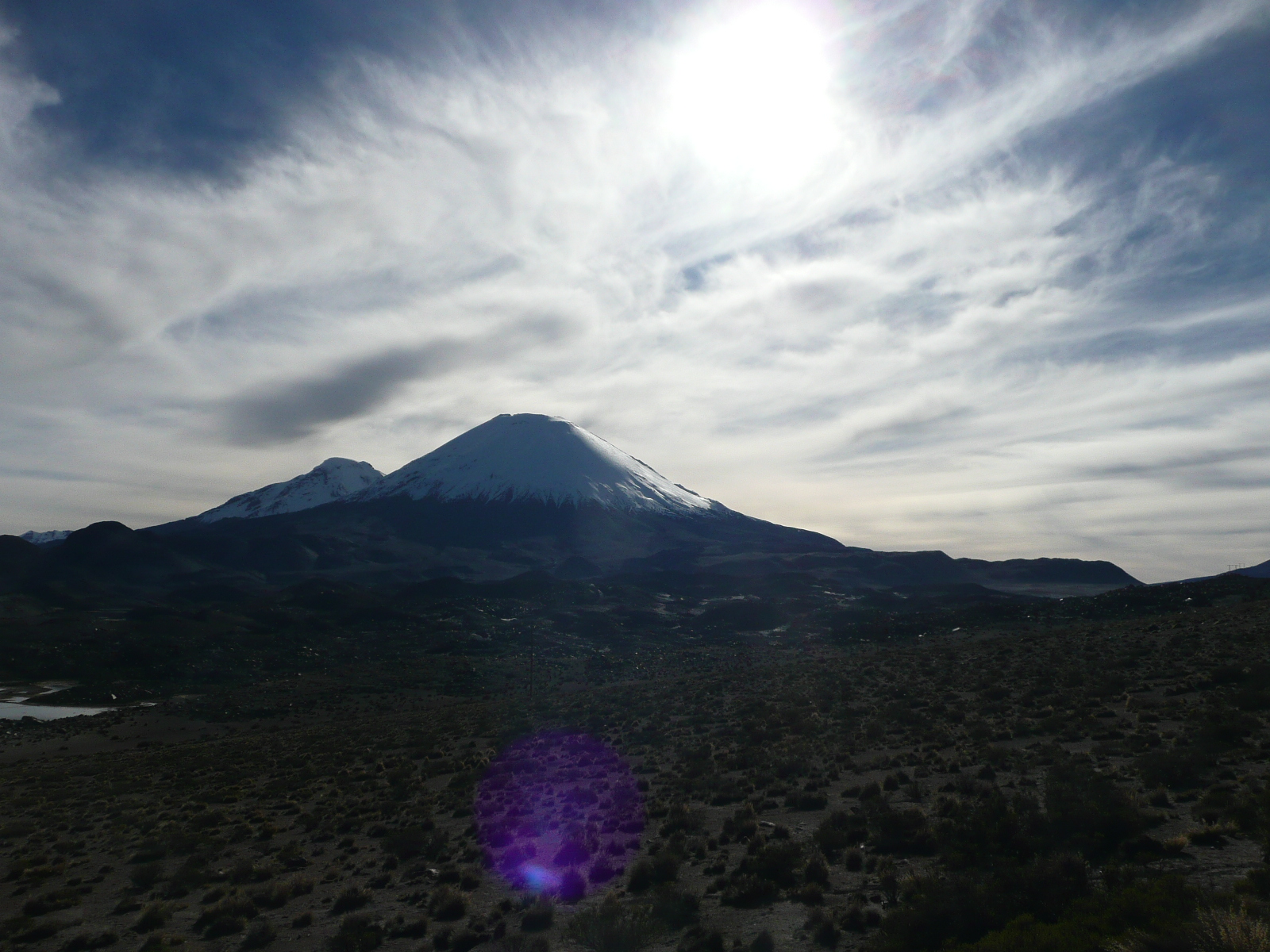
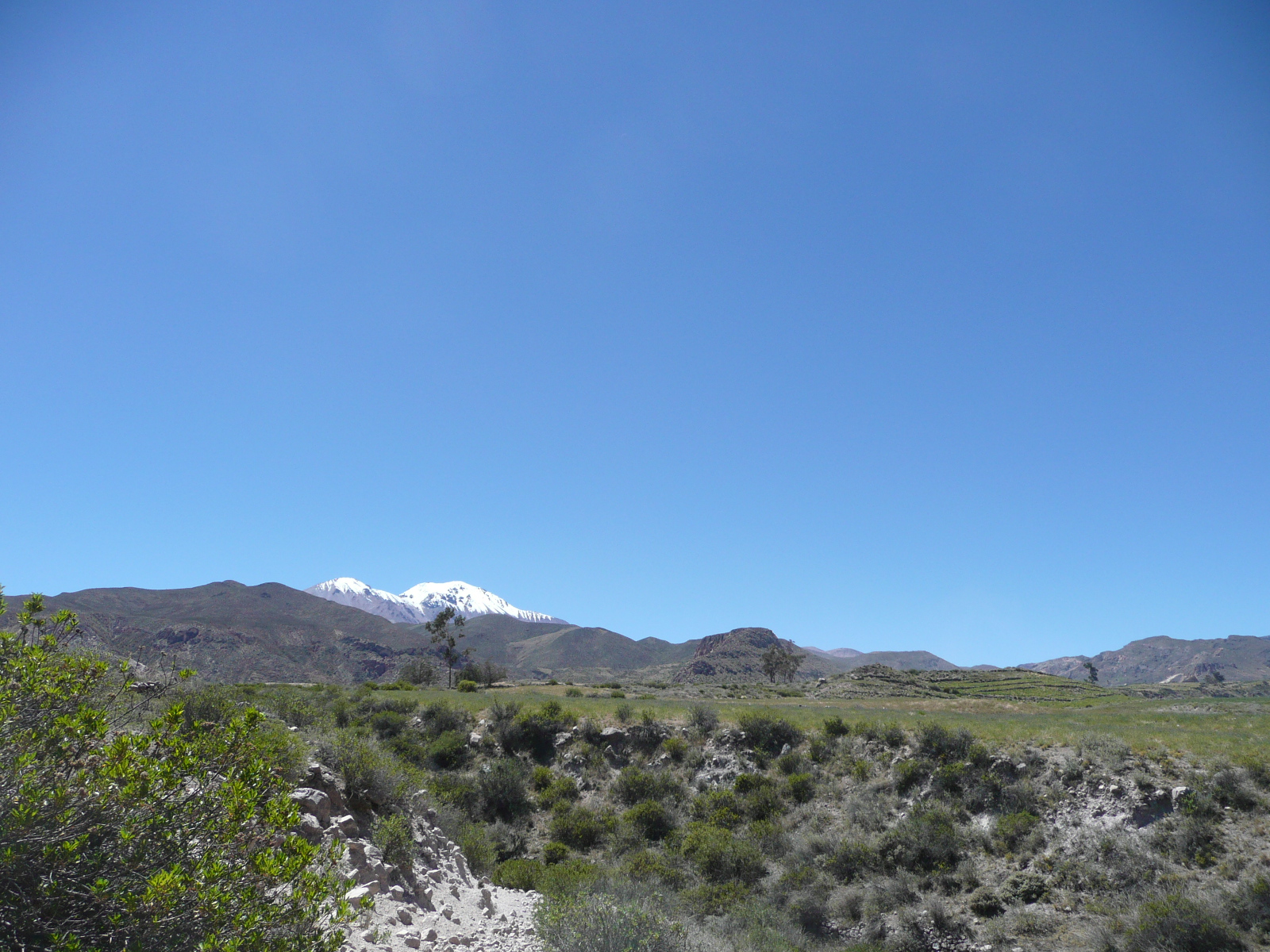
After three days at 3500 meters we thought we were ready for the highlands of Bolivia and drove the last 75 km to the border. This was an amazing drive, through Lauca NP, one of the most important national parks of Chile. Lauca is an altiplano park (between 3000m and 6300 above sea level) with snowy volcanoes, high altitude lakes and hot springs.
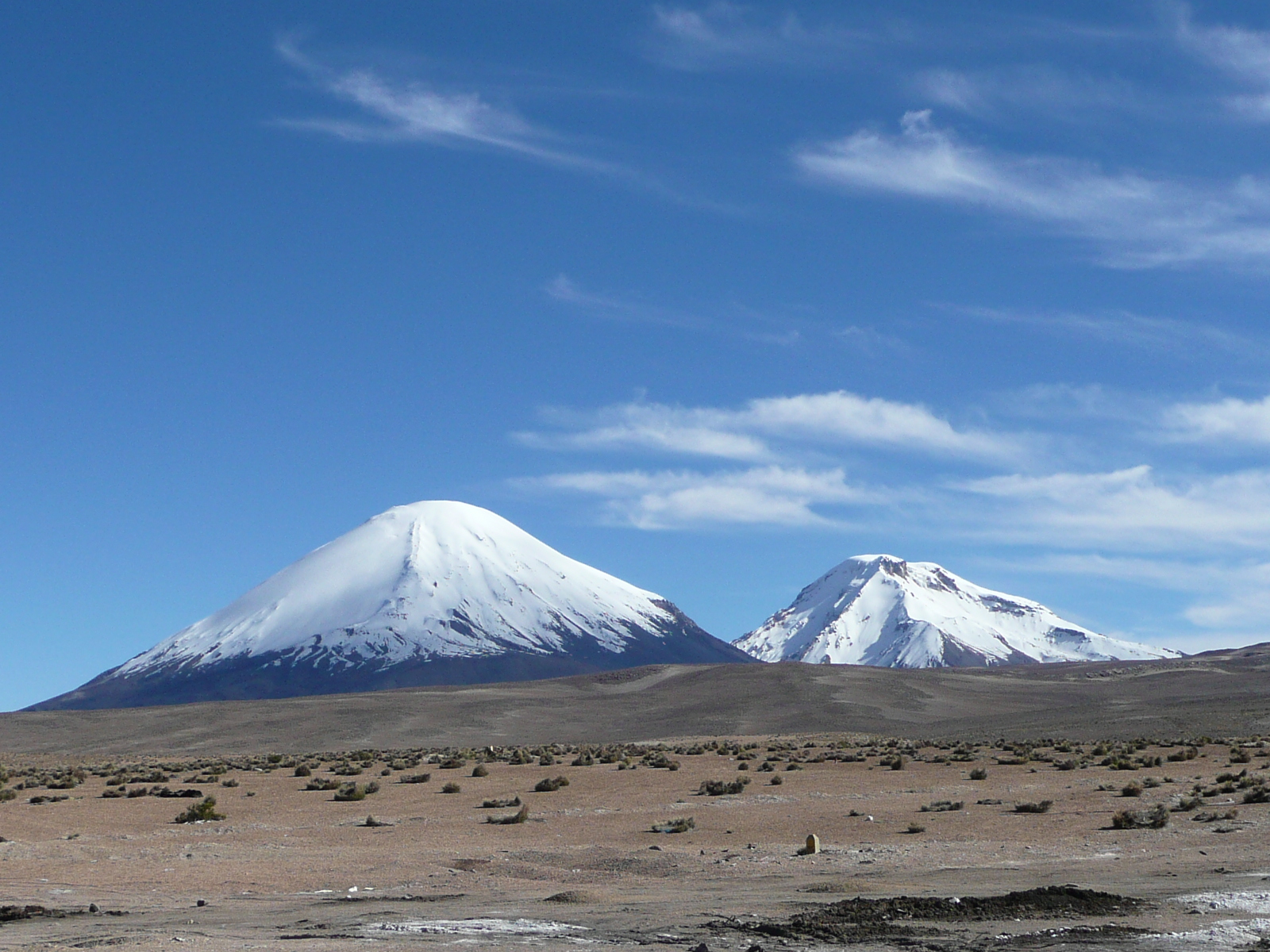
Lauca NP, Volcan Parinacota on the left an Volcan Pomerape (which is in Bolivia)
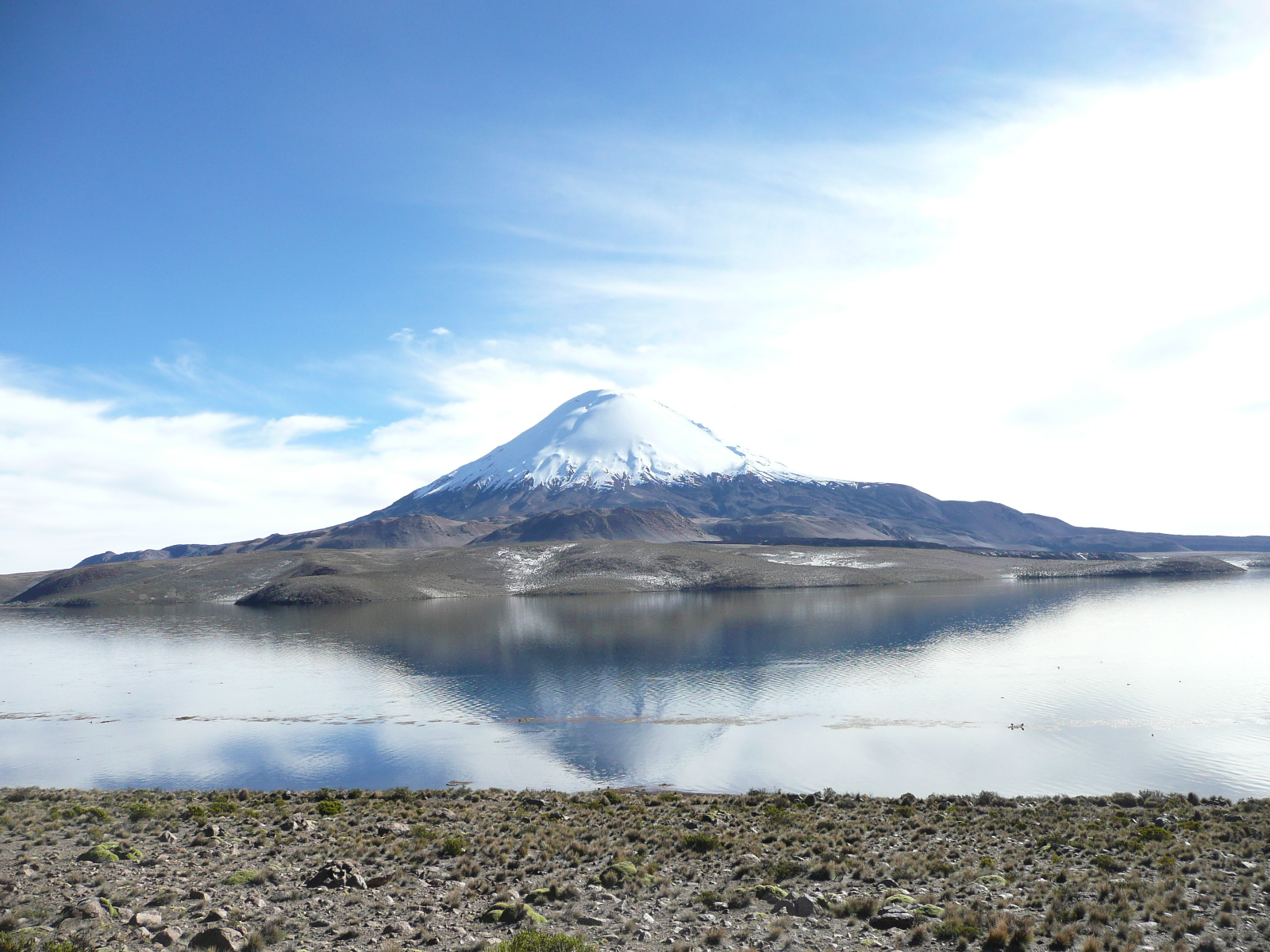
Lago Chungara with Volcan Parinacota
After having first stopped at the wrong border crossing buildings (always a hassle finding out where to go at the border), we got ourselves stamped out of Chile successfully. Unfortunately it wasn’t this easy for the car. The customs made a fuss about our document that shows our tax number having been expired. This was a temporary document until the permanent pass would arrive. We argued that a tax number is not required to cross a border and that all our personal and car paper work was in perfect order. Also, obviously we have a tax number (it even shows on the car owner ship papers), which we asked them to look up in their systems, but to no avail… I never thought we would be sent back, but after having been taken in an office and having argued our case for half an hour we realised that they were not going to let us leave the country. Massively disappointed, but also not completely surprised that Chile was throwing us one last silly bureaucratic curveball, we had to drive back all the way to Arica, to see if we could arrange a document there from the local tax office. A 400 km round trip, that would cost two extra days.
By the time we had descended back to almost sea level it was lunch time and we decided to go for lunch at the Hare Krishna settlement Eco-Truly before going back to Arica. That really cheered us up a bit again. We were welcomed by a friendly group of people and served one of the best lunches we have had in Chile. We had an Indian Saag (spinach and potatoes), five different salads, hot salsa and vegan mayonnaise and a pineapple juice. Afterwards we were shown around the settlement by Adam. He explained the Truly’s are typical Indian buildings that are well insulated and told how they were being built. We also were shown the veggie gardens, guest rooms, living room and meditation and yoga room. We asked Adam questions about how he got there and he told us his amazing story. He was born in Ecuador, had lived in the USA for 10 years and until recently had a successful financial career in Peru and was a devoted Christian missionary. He needed to leave Peru every now and then to renew his visa and instead of going to Bolivia he came to Chile for a change. He had some extra time on hand and volunteered six days in an elderly home, where he unbeknown to him came to talk to an elder Hare Krishna. After six days of talking he became a Hare Krishna himself and continued to Arica where by chance he ran into a group of Hare Krishna’s on the street who told him about Eco-Truly. So he went to Eco-Truly in November last year and hadn’t left anymore. He did send an email to his boss that because of unforeseen circumstances he couldn’t return to work anymore. Adam looked truly happy with where he was as did everyone else there. After a lunch that was a lot longer than foreseen we wished Adam all the best and continued to Arica.
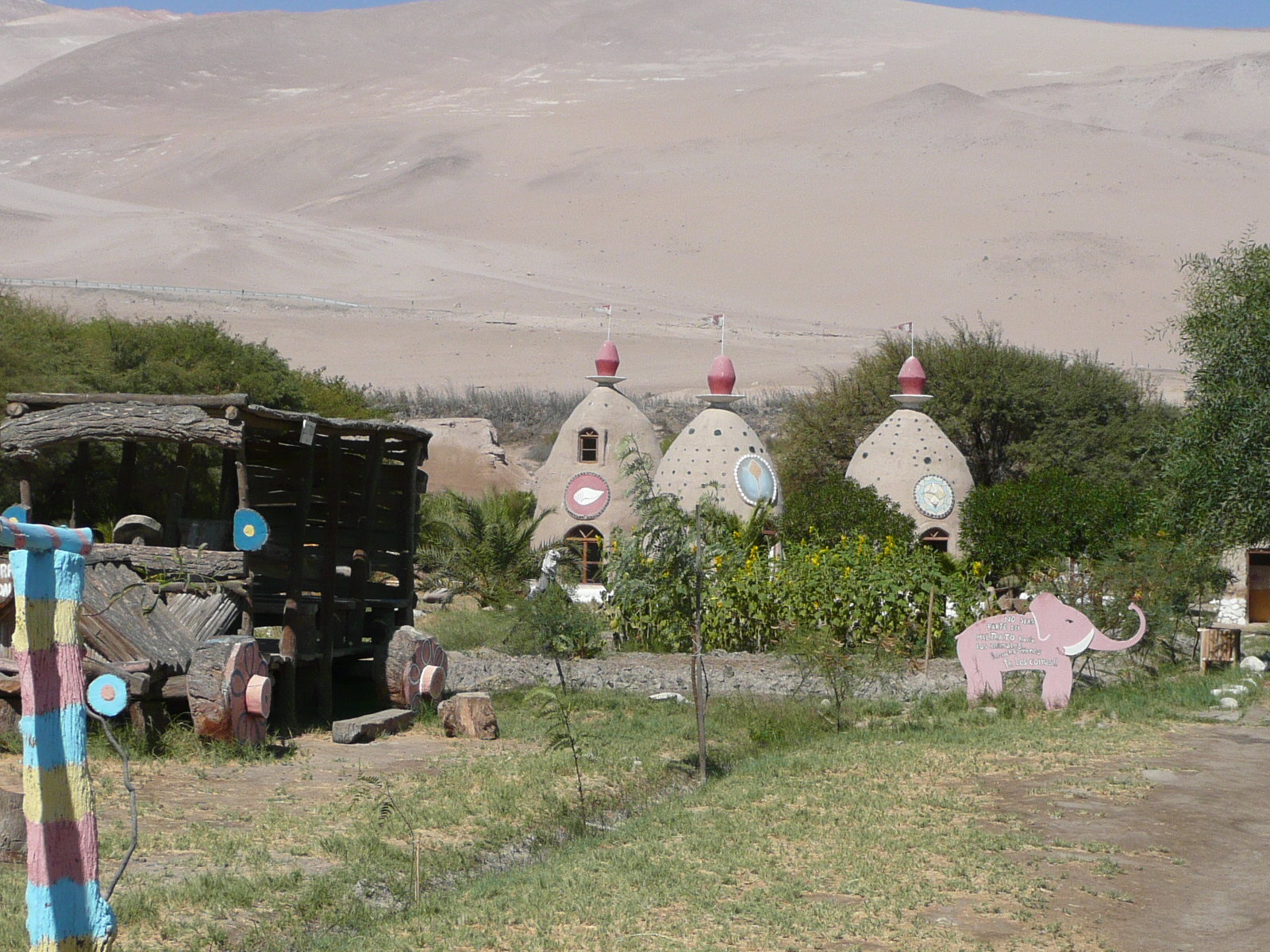
Hare Krishna – Eco-Truly, pay attention to the amazing back drop, including the road going up
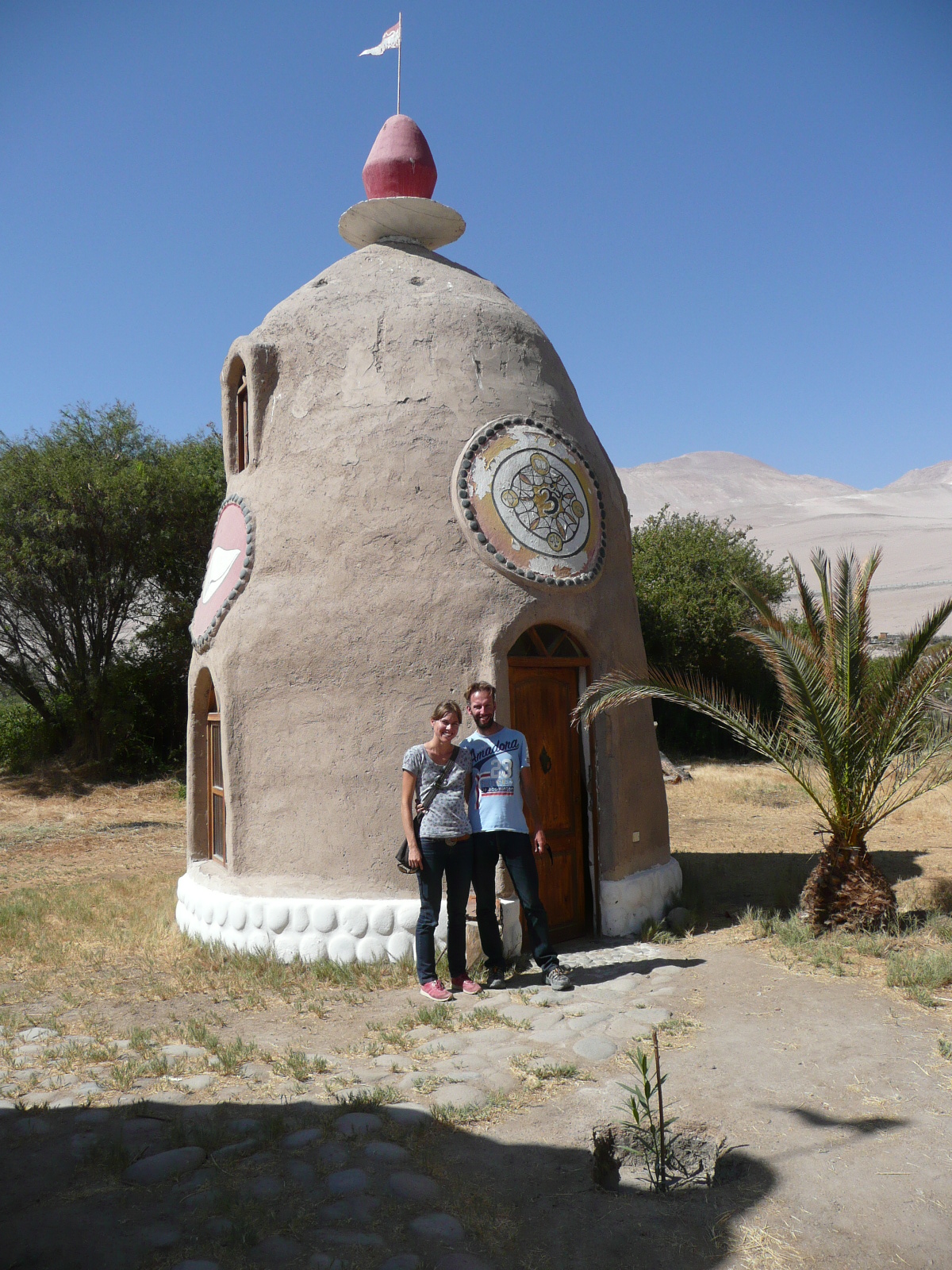
One of the guest accomodations, a truly
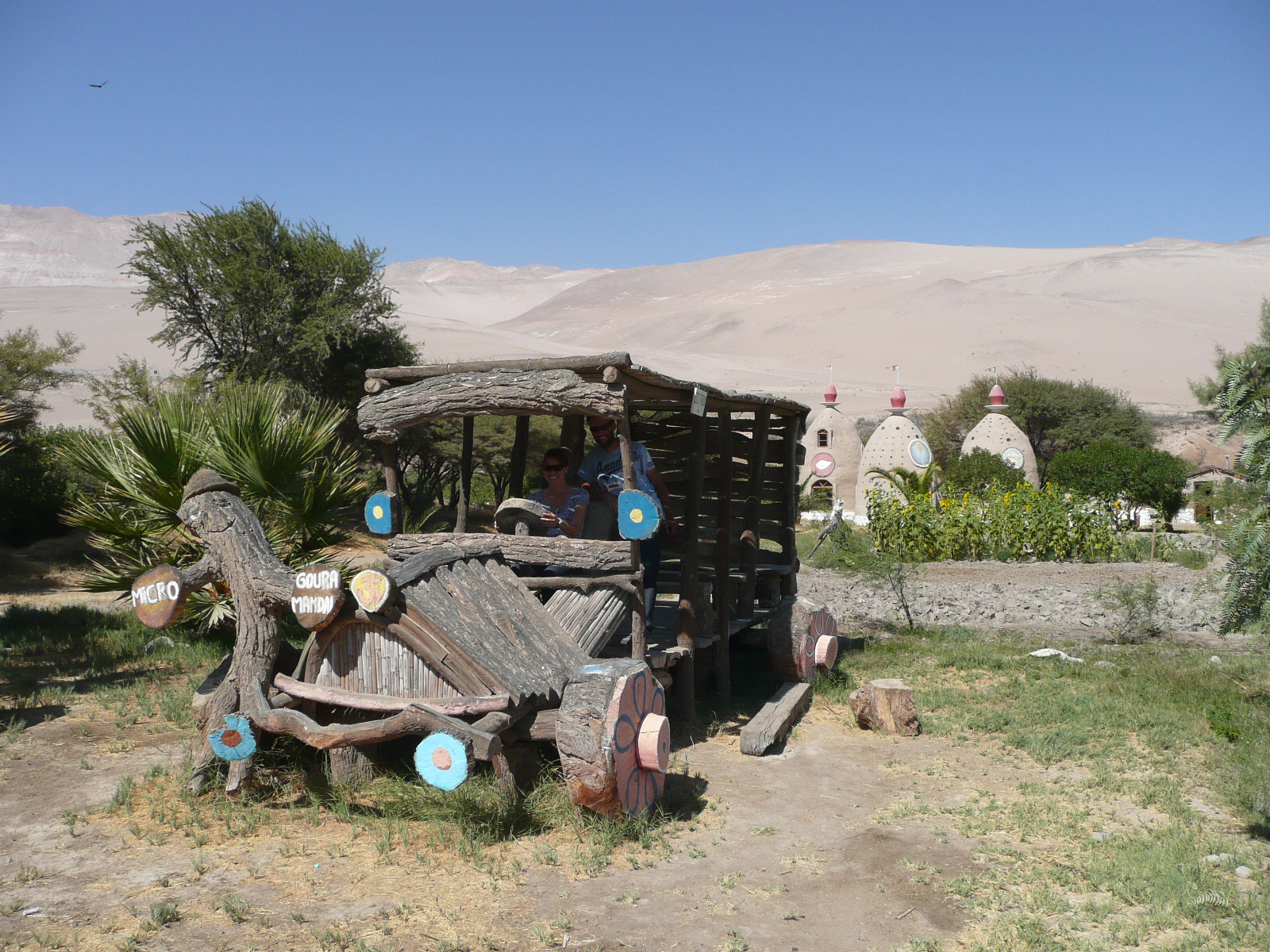
Everything was made eco-friendly, including the kids playground
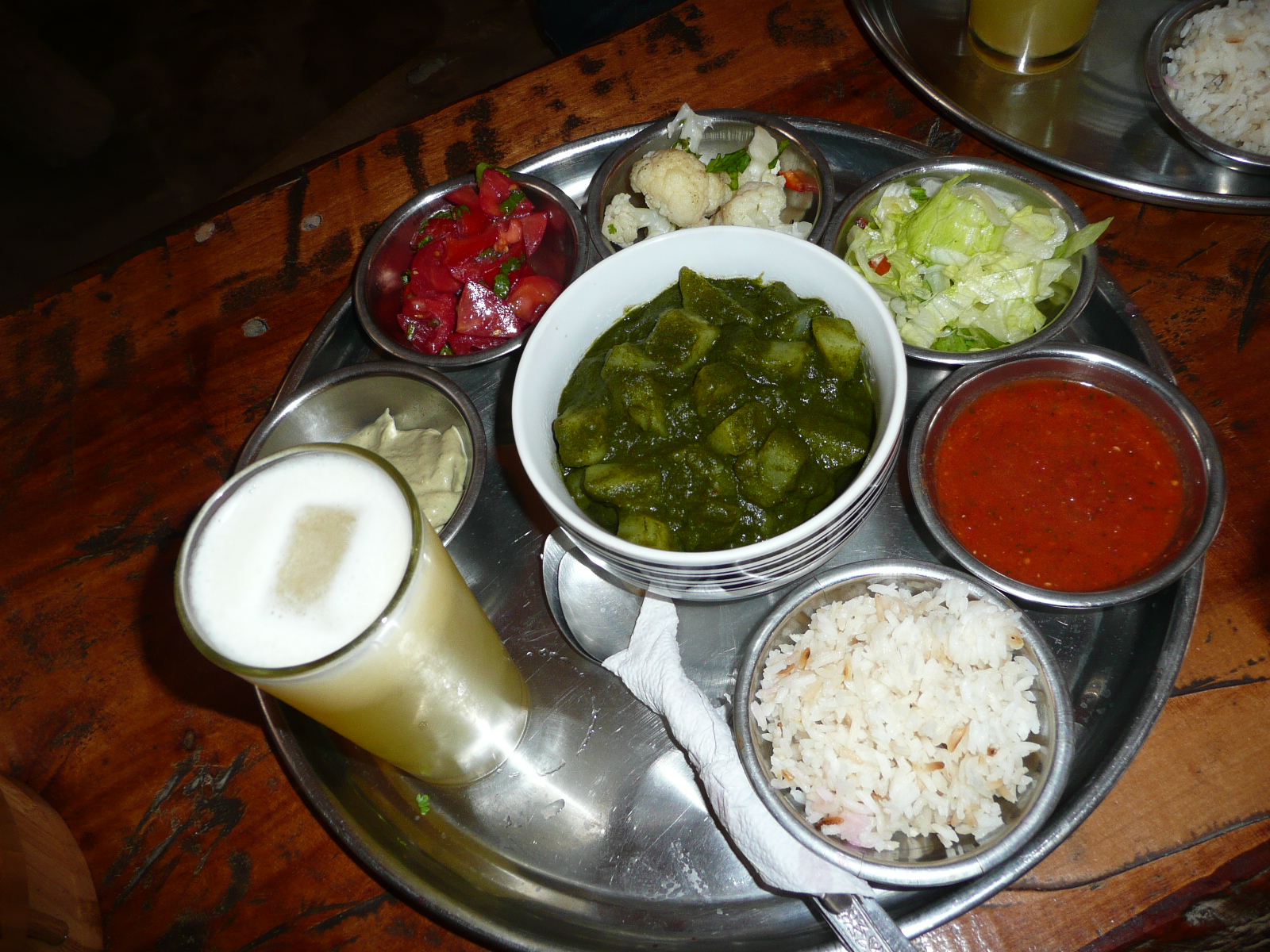
Lunch served by Hare Krishna, vegetarian of course, but opposed to Hare Krishna food in Wellington, here they did serve spicy food
In Arica, we went back to Kiwi Ross, who felt sorry for us and told us that he had expected we would run into trouble as this was a typical Chilean thing to do. Paper for the sake of a piece of paper. He told us that the tax office only serves 100 people a day so it would be important to be there early. So the next morning before breakfast we headed into town and were fearing we were too late already as every bank and government office had long lines waiting for their closed doors already. Luckily when we got to the tax office we were the first ones there and took post in front of the door. We knew that when the doors opened it would be another challenge to ‘maintain position’. When the doors opened we behaved like All Blacks and made it to the counter in first place. Looking back we did see that there were many ‘modifications’ to the queue… Some poor women who were right behind us had lost big time in the scrum. The man who helped us was very friendly and helpful, a stroke of bureaucratic luck that was due and much appreciated! We asked him to print us a new temporary proof of tax number and he did so on the spot. Not believing it was this easy (I had already scoped out return flights to Santiago to go pick up the real tax pass there) we drove back to the hostel and arrived in time for breakfast. The Kiwis and Poms who we had a nice night with the night before gave us a loud cheer and we enjoyed a last social breakfast from Ross.
On the road to Putre and the Bolivian border we were once again! First though we bought a 20 litre jerry can and filled up. We had heard of many foreigners having difficulty buying fuel in Bolivia so with the jerrycan at least we carry 84 litres, increasing our radius a bit. We stayed one more night in Putre as we didn’t want to cross the border in the afternoon as this wouldn’t give us enough time to get to Oruro, our first planned stop in Bolivia.
We were hoping that Chilean customs were not going to make another problem, but they were good this time. Of course they didn’t even ask for the tax number document that we drove 400kms for… They just asked ‘Have you taken this car out of Chile before?’. When we said ‘yes, about ten times’, they just gave us the required paperwork and we were free to go. Upwards and onwards, we drove 100 metres further and came to the Bolivian side of the border buildings. It was immediately apparent that we were now entering a third world country. Little buildings everywhere, not very clear where to go and lots of people milling about, street vendors etc. This was looking more like a Central American border crossing. We found the Immigration office and were served by two friendly officers. In our best Spanish we asked for a 3 month visa, which at first seemed to be a problem, but being Kiwi and Dutch we are entitled to this and we managed to convince them. Five minutes later we were outside with a 3 month permit, sweet!
Now the car needed its own permit as well, so we went to the customs ‘office’ and were again met by a friendly official who asked if we had had problems at the Chilean side a couple days before. Apparently he had seen us getting sent back. After some mutual complaining about Chilean bureaucracy we had created a friendly relationship with him. He sent us off to another little shop where we had to do a ‘memorization’, whatever that is. He told us the exact words to say and said if we only said that, everything would be fine. So off we went and recited the words. After some vague paper moving and paying 10 Bolivianos we were all good. I knocked my head hard on the doorway on the way out, doorways in Bolivia are not always Dutch proof, must take notice of this from now on.
Back to our Custom officer, we chatted a bit more and I asked him if he could give us a 3 month permit for the car (standard is 1 month) as we planned on studying Spanish in his beautiful country. He looked at us pensively and said that this was a big exception, but he was willing to do this for us (we were allies against Chilean bureaucracy after all). I half expected I was going to need the US dollars I had on the ready to bribe any official who wouldn’t want to give what we required, but there was no such mention. He gave us the paperwork and said we were finished, todos bien.
Relieved at such a smooth process we got in the car, but we couldn’t really get away as the whole border area was gridlocked with hundreds of trucks and busses. After paying our first road toll we just sat and waited to see what happened. Before we knew it the police knocked on our window and asked for my drivers licence and car import papers. The military on the side of the road was already laughing, knowing where this was going. The police officer disappeared with the papers, not to come back anymore, so after five minutes I went to look for him and found him in a little office with the big chief. At these moments it is best to not speak a word of Spanish so I started chatting English to them, very loudly. They started asking all sorts of questions and started writing down the car details in some sort of book. Then they said I had to pay 30 Bolivianos for the stamp, all of which I of course I pretended not t understand. When they stamped the paper, I grabbed everything from the table and walked out. They knocked on the table a few times to indicate I had to come back, but didn’t seem to be inclined to follow or shoot me. So we got back to the car and decided to get out of there, zigzagging through the lines of the trucks until we reached open roads between some more 6000m high volcanoes. And there started our Bolivian adventure!!
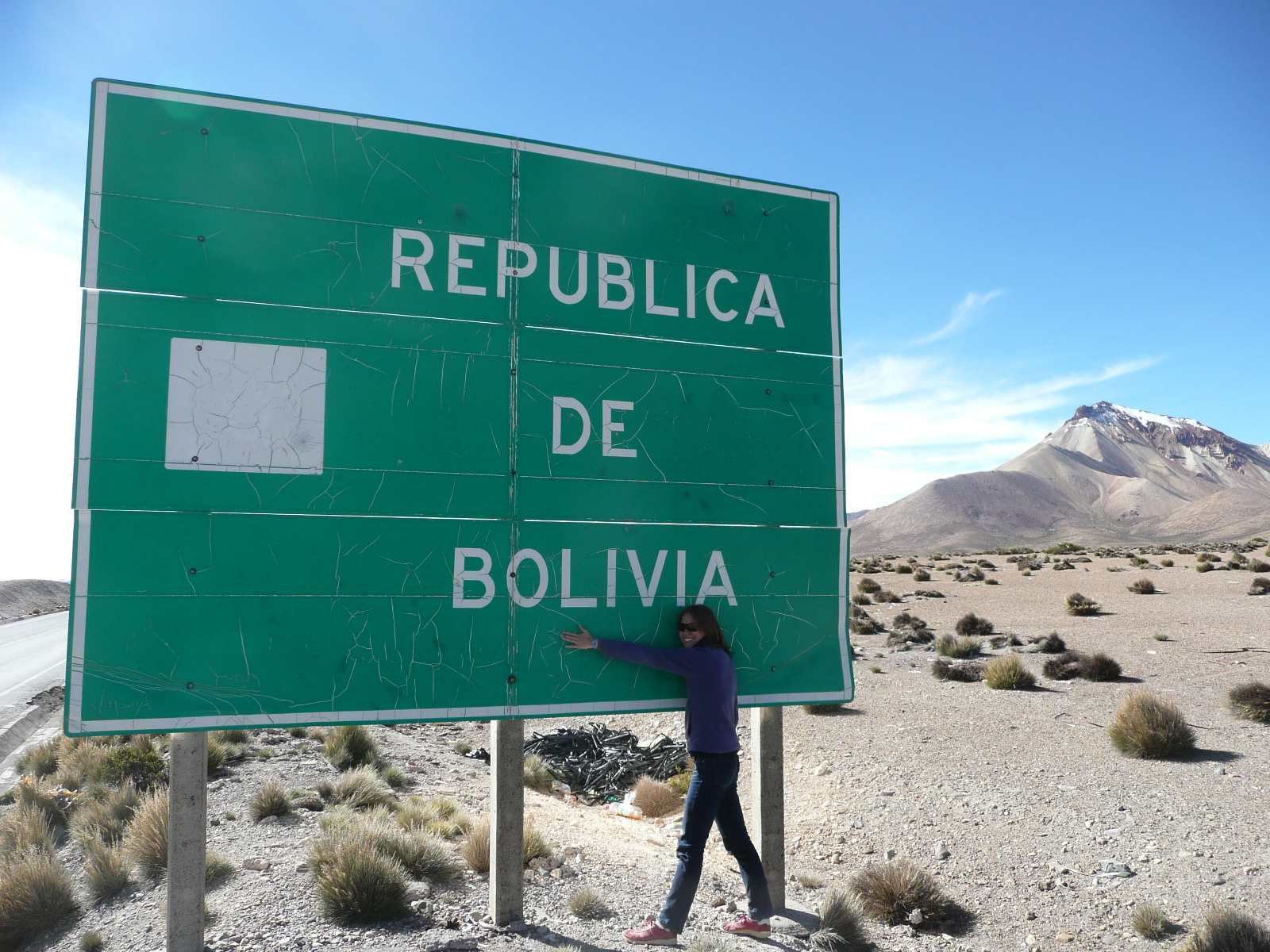
Julia trying to hug the Bolivia sign
Anna Tillotson liked this on Facebook.
Cathy Allen liked this on Facebook.
Kayoko Toba liked this on Facebook.
Stuart Melville liked this on Facebook.
Roel Verschueren liked this on Facebook.
Anthony Chester liked this on Facebook.
nkzvgfttwgtuoprjlzwjevnptjjpeq
The bonuses here are legit and not just bait. I had a great experience with the registration process. Give brafunvip a shot if you are looking for some real action.
gwynpttivtexrruoprrqvikqjivtjs