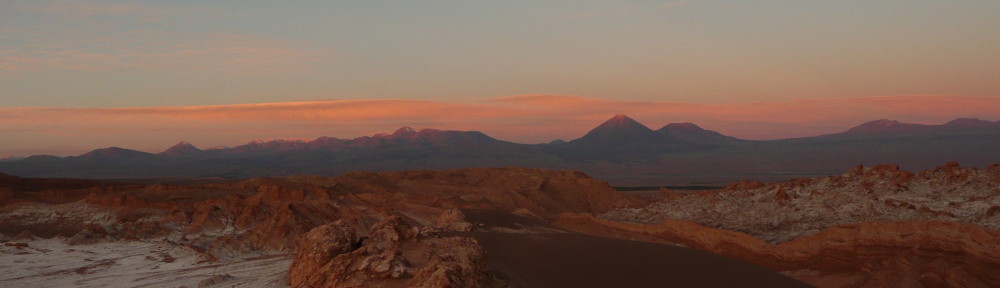
When thinking about places to visit in Chile or Argentina, people often mention places in the south or the north. I think it’s fair to say that if you’re strapped for time and want to visit Chile and Argentina it’s best to focus your time in either the south or the north. Our time in the south of both countries was scenically quite rewarding. For extremely beautiful nature, stunning vistas, and great hiking you can’t go wrong with a visit to the south of Argentina and Chile. However, the north is quite different. The north has colonial cities, deserts, interesting rock formations, fossils, indigenous culture, vineyards, geysers, volcanoes. The list is exhaustive and the differences between the two are huge!
Here are our highlights from northern Chile and Argentina, including our favourite accommodation and dining experiences.
Best Hostel: ACA Hosteria, Cachi, Argentina
Staying a night at the ACA Hosteria was a welcome respite after a string of nights camping in dusty desert campsites. As we drove into Cachi a storm of heavy rain, thunder and lightening was there to welcome us to the village. After checking out the campsite we decided to have a well-deserved night inside. Perched at the top of the hill, overlooking the picture perfect village of Cachi, the ACA Hosteria is set on grassy grounds, complete with large pool, restaurant, secure parking, and even a small zoo. It’s a big white villa with comfortable rooms set around a large outdoor patio. It’s the perfect place to spend a few days in the countryside. AA Members get a discount.
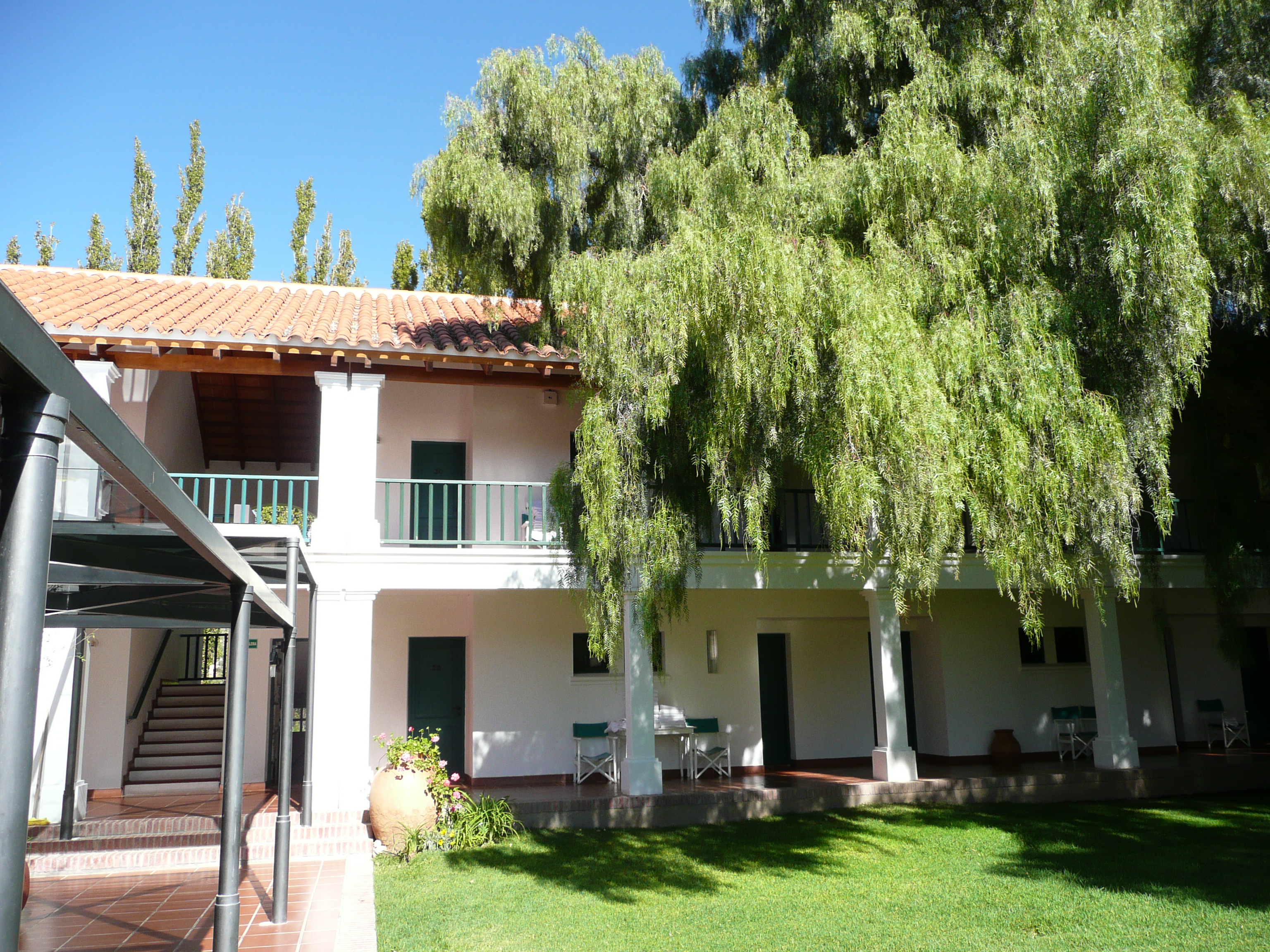
Our accomodation in Cachi, the ACA Hosteria. I thought it was worth a photo as we loved our night there. So quiet!
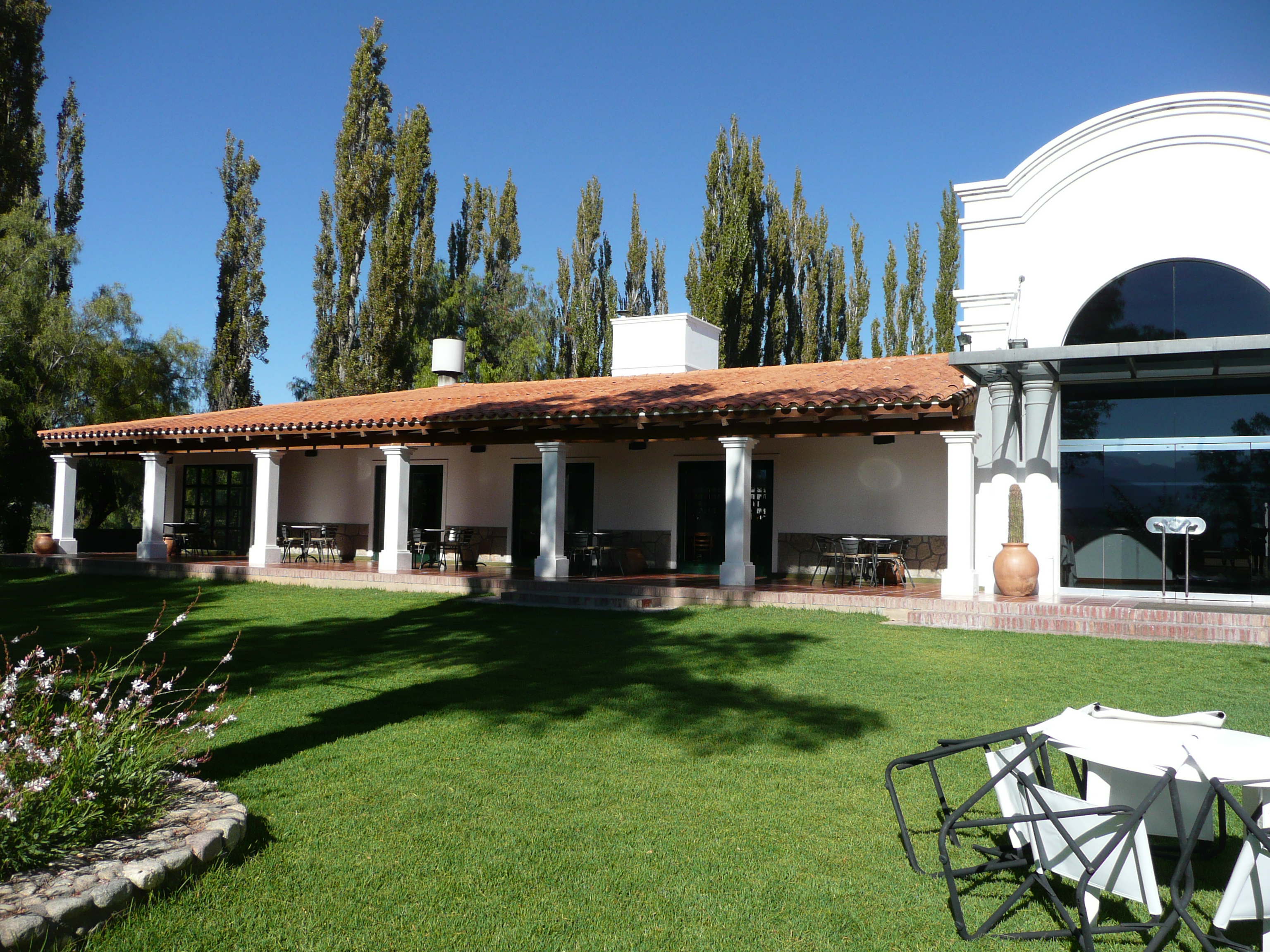
Best Campsite: None
The north had a dearth of good quality campsites. Mostly dusty, dirty and often lacking basic facilities we found it difficult to decide on the best campsite that we stayed on in the north. Camping in the north was hard-going and not a lot of fun. With basic facilities lacking, we often didn’t have access to a bathroom. We could always find a campsite to stay in as every small town has one, and aside from being reasonably priced I can’t honestly say any of them stood out as being great places to hang out for a few days. This is compared to the south of Chile and Argentina where we stayed on many great campsites set in beautiful surroundings with great facilities.
Best Dining Out
Just like the average campsites we stayed in, our dining-out experiences were also so-so. On a positive note, the cost of dining out in northern Argentina was significantly cheaper compared to dining out in the south. In Chile, we found dining out costs to be more expensive compared to anywhere else in the country.
Best Dining in Chile: Cantaverde, Putre
Cantaverde is the best local restaurant to eat in the small village of Putre. The food had an Andean theme, was good quality, simple, and tasted great. We spent three days acclimatising to the altitude in Putre and our accommodation had no kitchen so we ate dinner here three times! Highlights included an alpaca steak which Richard had on one visit. He reported it tasted a bit like beef, very tender, but since then I have also read that alpaca contains fifty per cent less fat than beef. Another highlight was the northern salad, made with quinoa, olives, cheese cubes, tomatoes and herbs. I had a salmon which was very simply grilled but done to perfection (no raw parts) and had a tasty sauce on top. Aside from excellent quality food, the waiter working at Cantaverde is lovely, friendly and happy to chat. Always with a smile on his face, you can tell how much he enjoys his job. On our final night he gave us a DVD about Putre, very sweet.
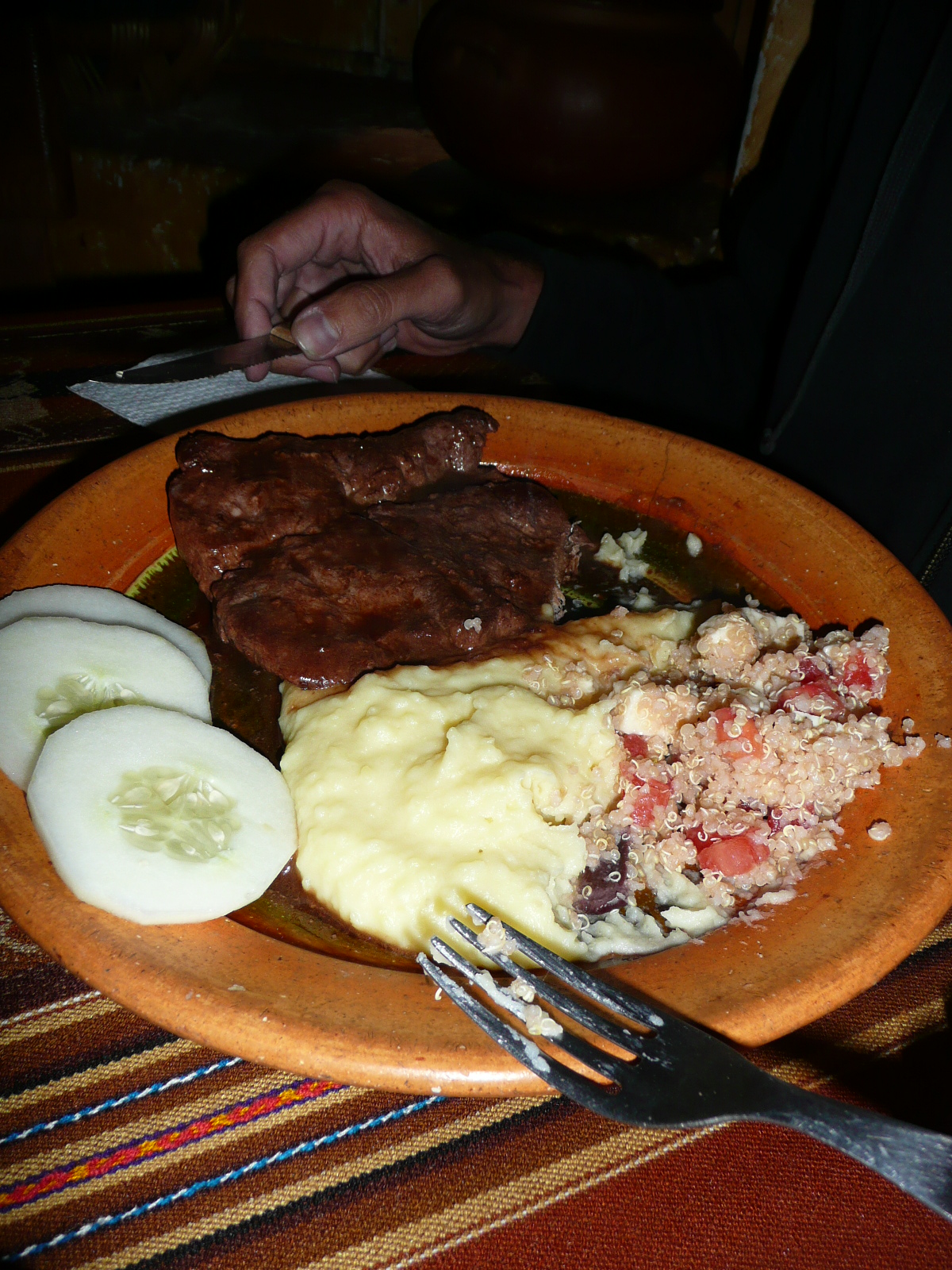
Alpaca steak with northern salad (quinoa, tomatoes, olives, cheese) and mashed potatoes
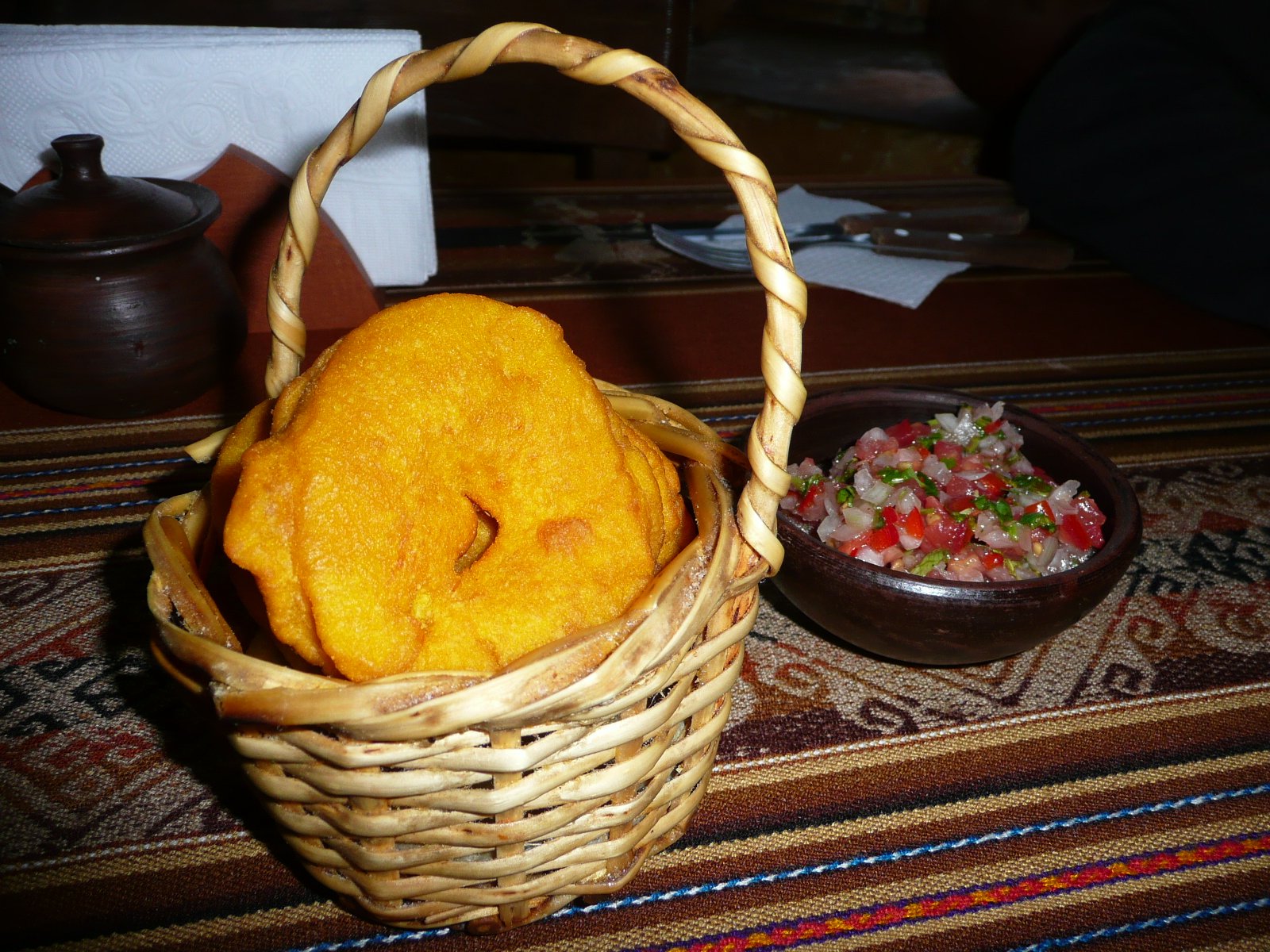
Typical starter in Chile of sopapillas (fried bread) with salsa. Tastes a bit like a doughnut, but unsweet. Very yummy!
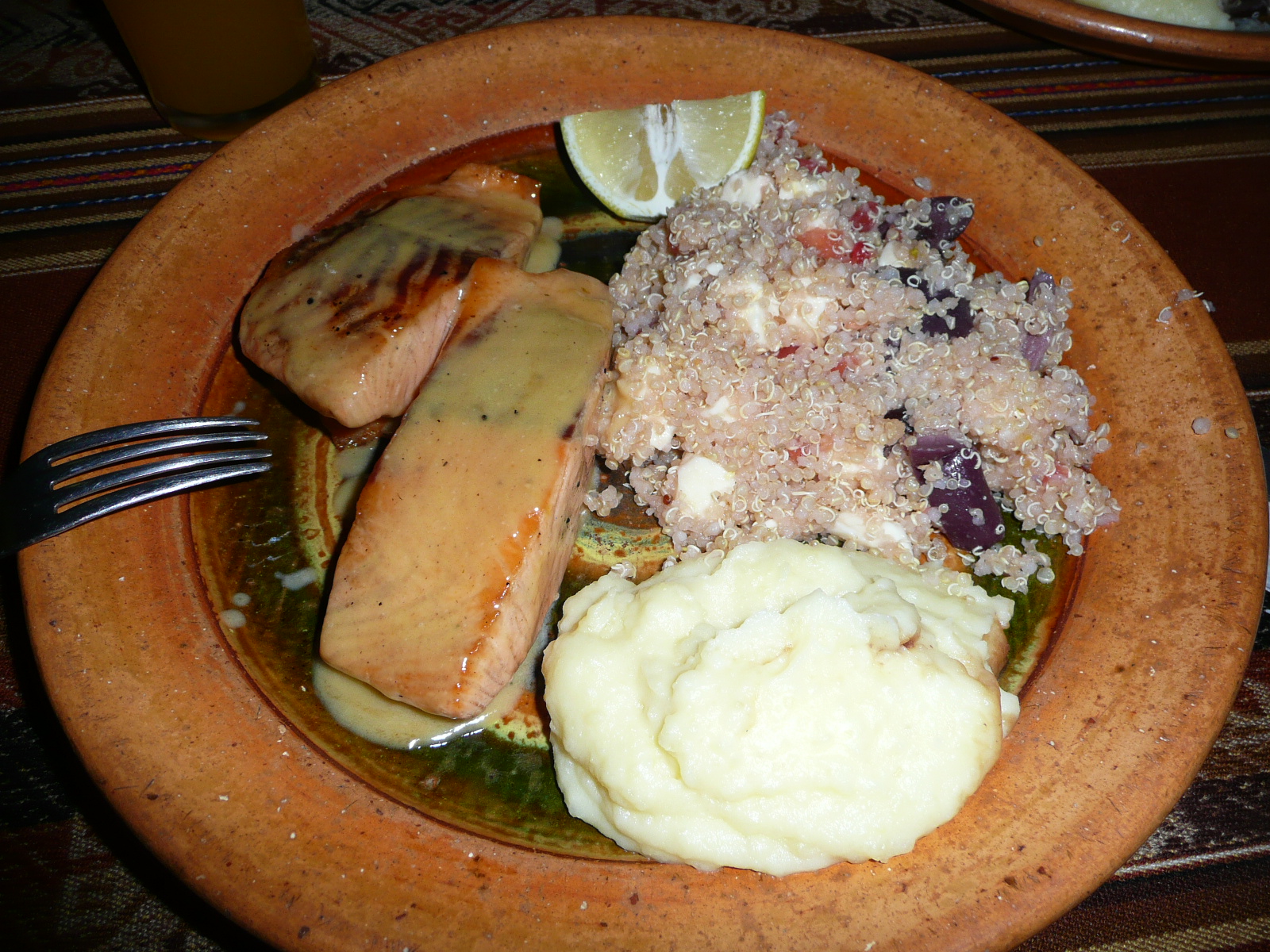
Salmon with northern salad and mashed potatoes.
Best Dining in Argentina: Terruno Gormet, Cafayate
In this case, the food wasn’t the highlight but the atmosphere, the wine, and the fact that we were able to dine al fresco made this a great dining out experience. This restaurant is across the road from the pretty plaza which made for great people and car watching. The food was quite average, but the bottle of local red wine we shared (and finished!) was excellent.
Best Things to Do in Northern Argentina and Chile
We can only speak from experience but the favourite things that we did while in the north of Argentina and Chile were:
- San Pedro de Atacama and surrounding areas (Atacama Desert), Chile
San Pedro de Atacama is an oasis town set amongst spectacular scenery in northern Chile. It sits against a backdrop of volcanoes and mountains that are +5000m tall including the most spectacular Licancabur volcano which is 5916m tall. The town is small, relaxed and pretty with adobe buildings lining its streets. While there aren’t so many things to see and do in the town, it’s San Pedro’s proximity to spectacular destinations in the area that make it a good base for exploring the area.
Top sights to see in the area include the El Tatio geyser field, the world’s highest geyser field, and also the third largest. Supposedly spectacular to visit at 6am when the temperature drops to -12 degrees, the geysers steam quite high. After visiting the geysers it is possible to warm up in a natural hot pool. Set at 4300m, surrounded by volcanoes and steaming geysers, swimming in the hot pool is a unique experience. It is also possible to camp overnight outside the visitor centre. Otherwise most people visit via a tour bus which picks you up at 4am and drives you to the geysers, two hours away.
Watching the sun set at the Valley of the Moon, 15 minutes outside of San Pedro de Atacama is also a must-do. Maybe the top thing to do in the area. Perfect looking sand dunes, strange looking rock formations that look like they are covered in snow (only it is a dusting of salt), caves, and the magnificent view of volcanoes along the horizons changing from red to pink to orange as the sunset progresses.
Also in the area, although a long day trip away from San Pedro town are the altiplano lakes of Lagunas Miscanti and Miniques. They sit at high altitude (+4000m) between two very beautiful mountains. On the same daytrip it also possible to visit Laguna Chaxa which sits amongst the Atacama Desert’s salt flats. Here we observed three different types of flamingo species, the James, Chilean and Andean flamingos. This is another ideal place to watch the sunset.
The archaeological museum in town offers very informative explanations about the area’s history. The fact that they are in English is also a bonus as many museums only offer information in Spanish. A meteor museum is also fun to visit. The owner has a huge collection of meteor rocks that were found in the area, and he has gone to a lot of effort to give a full explanation of meteors.
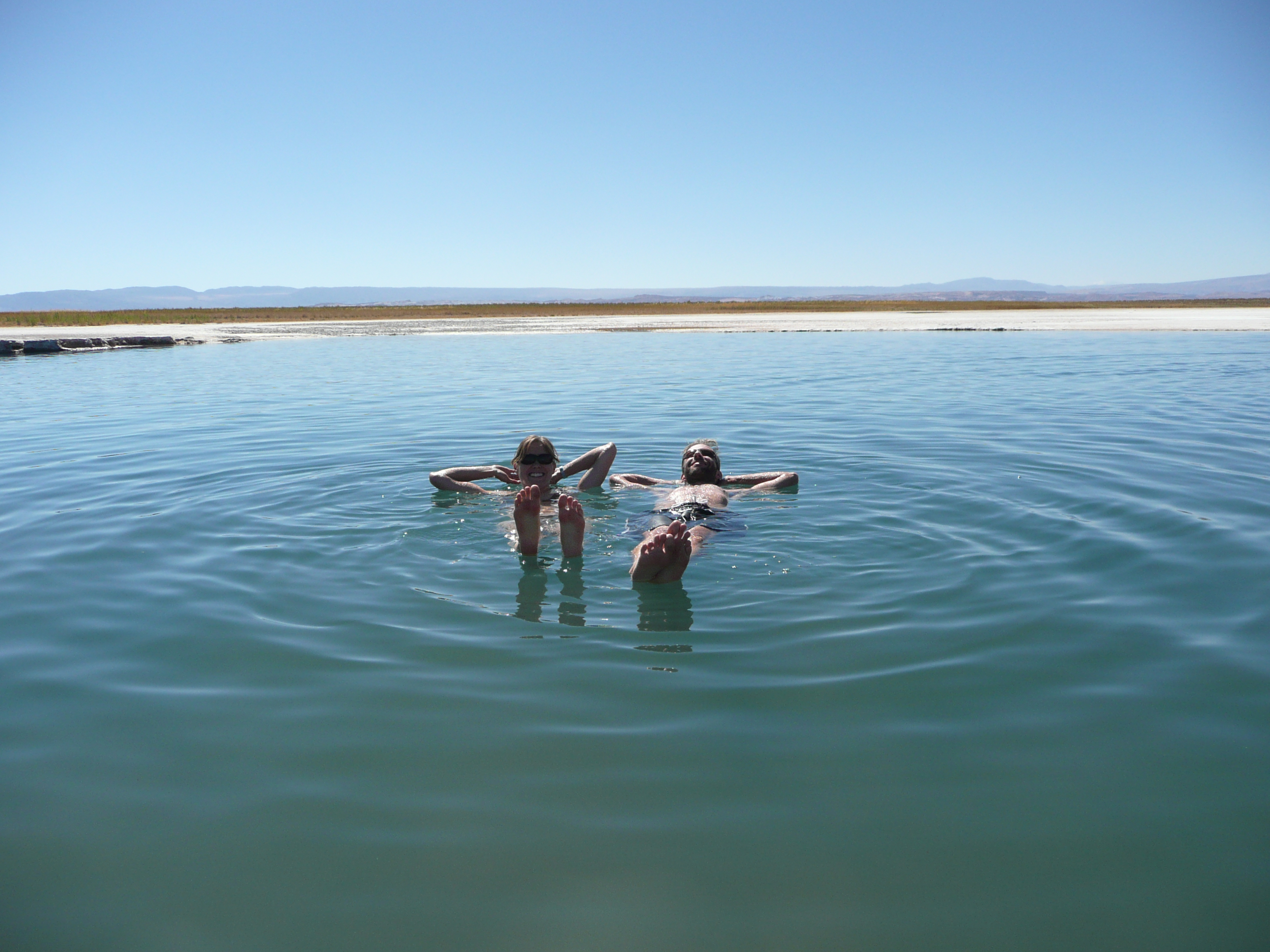
Perhaps the most fun thing to do while in San Pedro is to visit the salt lagunas, about 15 minutes outside the town. Laguna Cejar is too dangerous for swimming now, but you’re allowed do swim in Piedra. The lagoons have a higher concentration of salt than the Dead Sea, which means floating in the lagoons is a unique and fun experience. Sunscreen is necessary and also a big bottle of water to wash off the salt once you get out of the water. There are many other interesting sights to see and things to do in the area, but these were our highlights. You can read a detailed account of what we got up to in San Pedro de Atacama here.
- Parque Provincial Ischigualasto (Valley of the Moon), Argentina
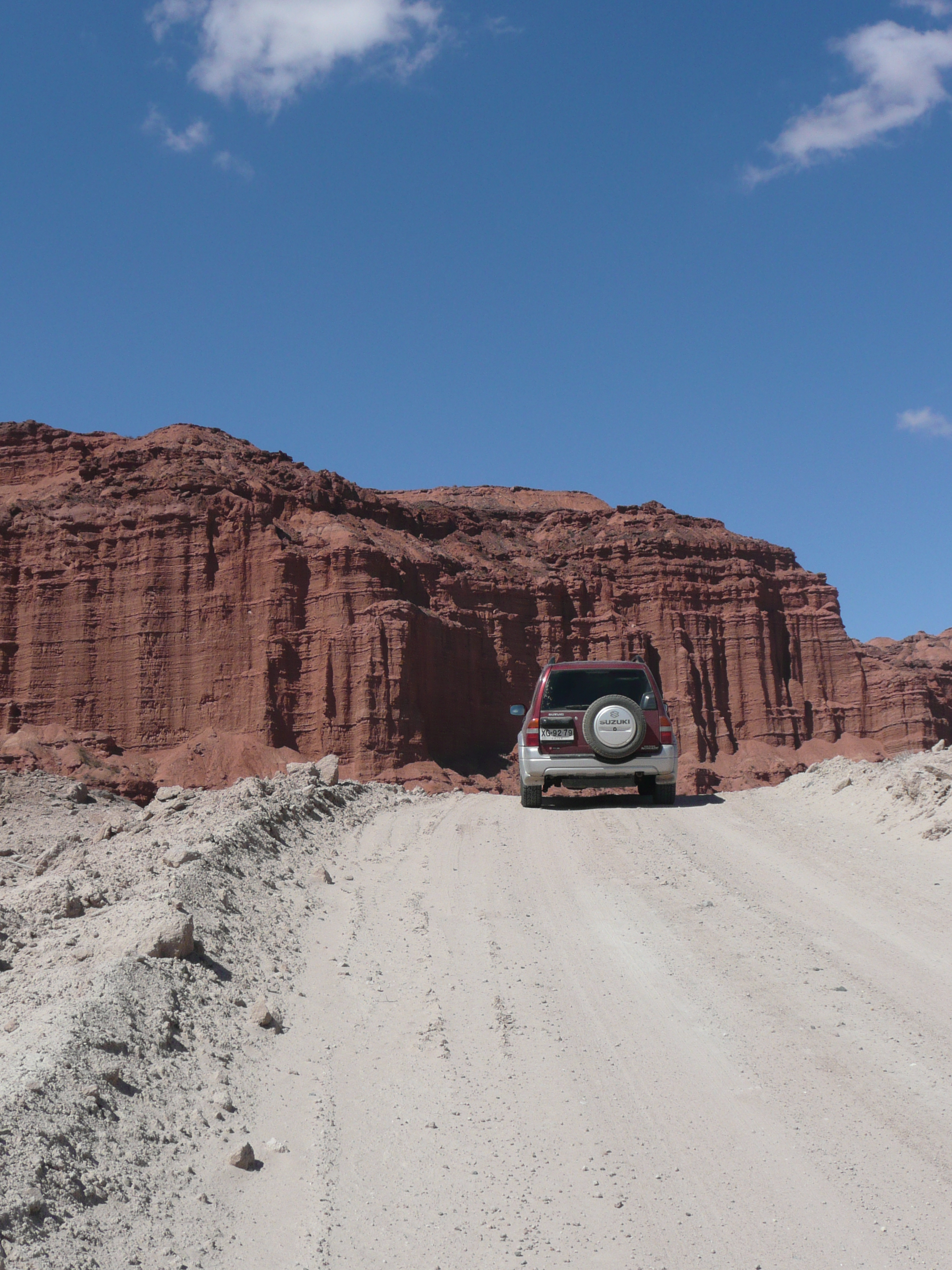
Comparable to Bryce Canyon or Zion, Parque Provincial Ischigualasto (aka Valley of the Moon) has a wealth of fossils from the Triassic period, some 180 millions years old. It is only possible to visit the park by joining a car tour. A convoy of cars follows a guide on a gravel road through the park on a circuit that takes three hours, and has five stops of interest. Our Spanish isn’t great so we didn’t get much information about the sights from our guide, but we were able to understand that the landscape is unique and the surroundings beautiful! The park is set in a desert valley with mountain ranges to the east and west of it. Over millions of years, water from an almost dry river and strong winds have carved shapes into the sandstone, clay and volcanic ash present in the park. We saw rock formations like a court filled with rock balls, a submarine and a sphinx. For a nature park, Ischigualasto has great facilities: wifi (slow), shade, hot showers, toilets, restaurants, a museum and souvenir shop. It also has a campsite, which we stayed at overnight. In the evening the park empties out and it’s a great place to watch the sunset over the desert landscape. We would have watched the sunrise as well if a five hour thunder and lightening storm hadn’t disrupted our plans to get up early! You can read more about our time in the park here.
Desert warrior, conquers again.
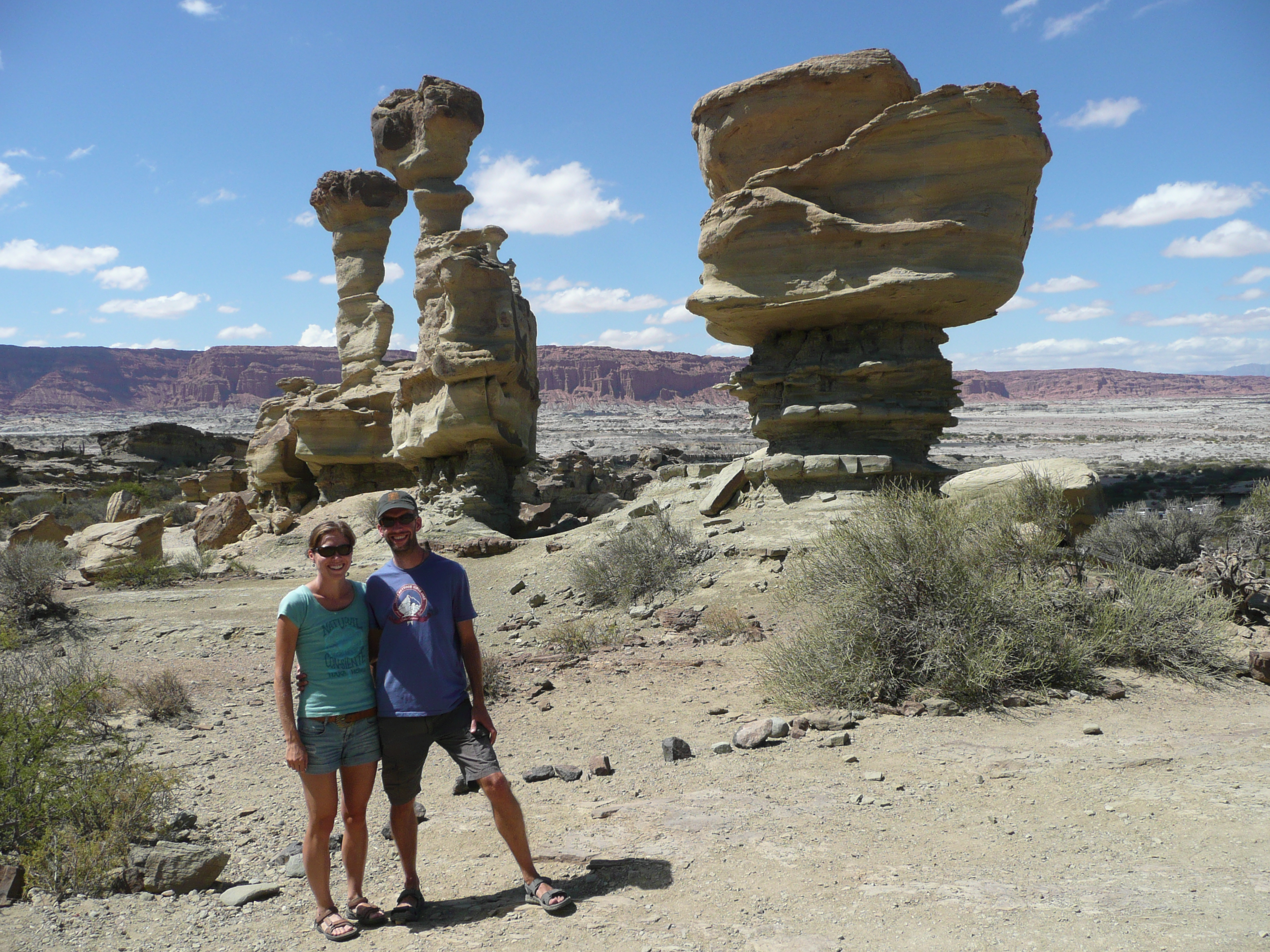
Behind us is the “submarine” rock formation. We thought the scenery was amazing.
- Driving the Valley Calchaquies from Cafayate to Cachi, Argentina
This drive is along a mostly gravel road from Cafayate to Cachi, that goes through rugged desert landscape, coming across cute adobe villages along the way. The villages are set at high altitude (over 2000m high), amongst stunning surroundings. The old Angastaco village is a highlight. The new Angastaco village kept the old village open as a sort of open air museum. It has a museum, a working farm with a whole range of farm animals, an old mill and grainery, and a very pretty but eroding church that is now used to store farm machinery. Other pretty villages that we came across included Molinos (for its old church with an amazing cactus-wood roof), San Carlos, and finally Cachi which we both agreed was the prettiest and most interesting village. Locals call it the ‘city’ as it is the biggest village in the area (although it feels very quiet). Along the way we saw many interesting rock formations (quebradas), some shaped like arrows, a weird mix of desert landscape and lush green fertile farm land. It was an interesting drive, and while on paper it said the drive would take a couple of hours, with so many interesting things to see along the way we took all day to get to Cachi. You can read more about our driving route to Cachi here.
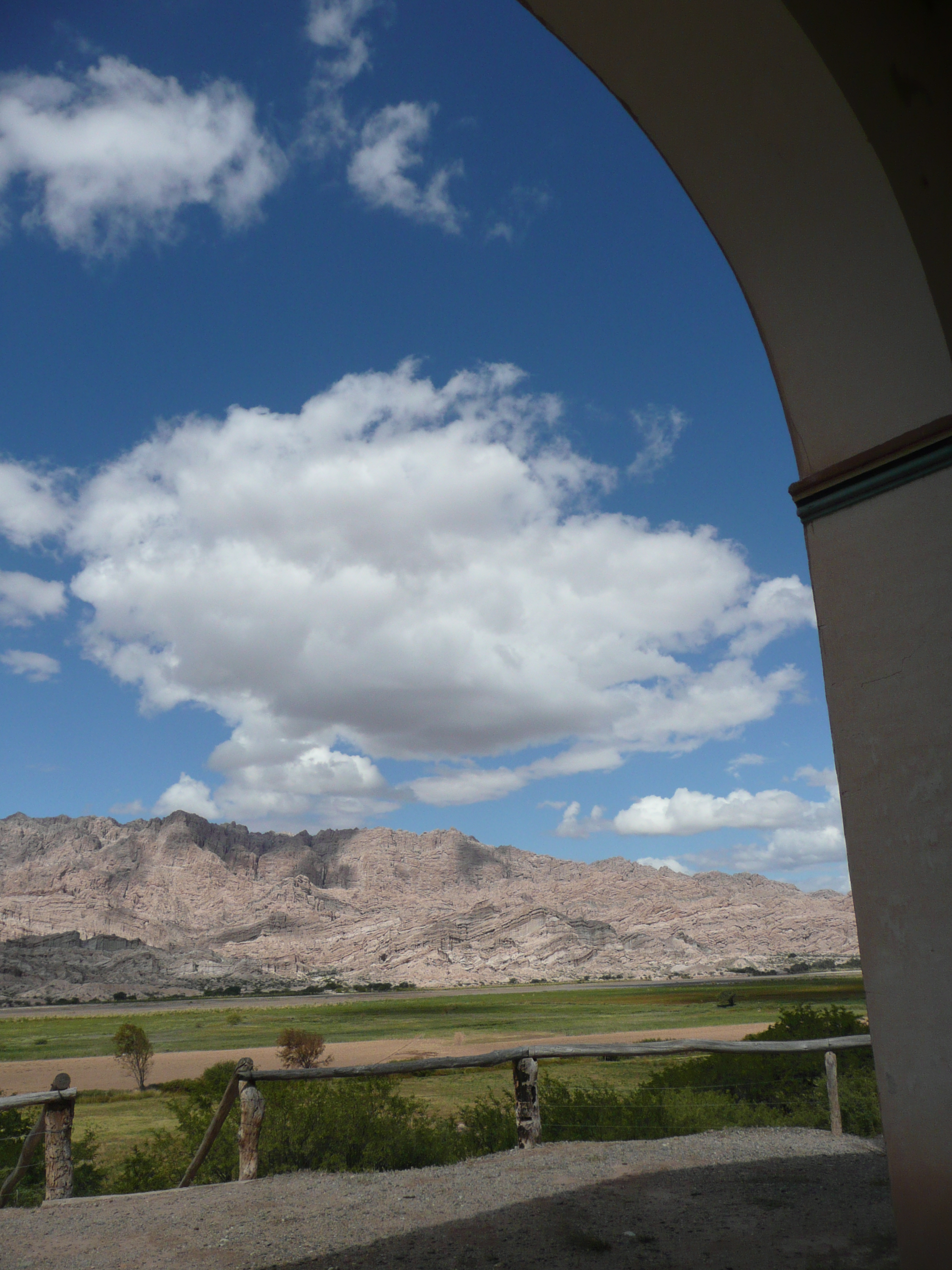
In the old Angostaco village.
This sums up our time in northern Argentina and Chile, an interesting area with diverse and unique landscapes.
If you have to choose between visiting the north or the south of Chile and Argentina, we would recommend you visit the south. Simply because the scenery is so stunningly beautiful and there you can do some of the best hiking you are ever likely to do. You can read more about our time in the south here.
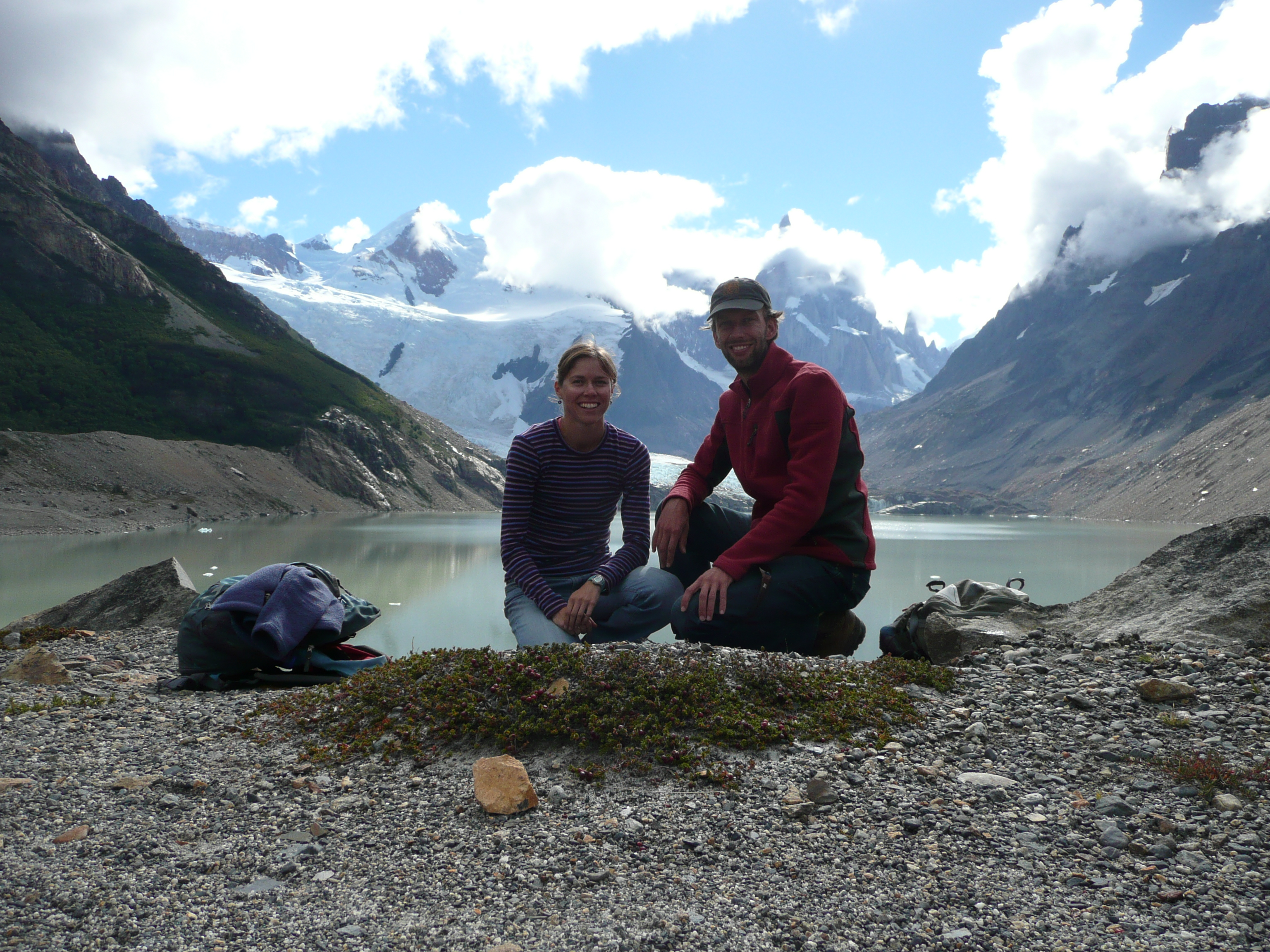
Go to the south!
Hey so what is the travel timeline looking like. When do you hit Europe?
Great reading! Hope the conversational Spanish classes are going well!
Yes, going great thanks! It’s not just conversational but theory as well. Hard work but very good classes. Two hours a day of that and then homework and a social activity from the school means the days are feeling very busy. Learning a lot!
No se Mike, no se. 🙁
Jayne Hendrikse liked this on Facebook.
Mike Smith liked this on Facebook.
Darcy Mellsop liked this on Facebook.
Our favourite picture is of you floating in the salt lake. A real quality blog. Spend lots of time in Sucre the journeygets harder further north. We are very relieved to find a lovely beach and mountain placeat Taganga in Colombia. Cartagena is pretty but so hot and no nice beach.Estudia dura
Thanks Dave-Youngmi, we’re in total agreement with you about staying in Sucre for a while. Nice to park the car and hang out in such a beautiful relaxed place. Very good to hear that you’re relaxing in Taganga! You made it to Colombia, hats off to you both!!
Aled Wyn Evans liked this on Facebook.
PHDream33login is my go to now. Reliable and keeps me entertained. Login and start playing here phdream33login.
Phfierycasino? More like Ph-awesome casino! Lots of potential for big wins here! Try your luck here phfierycasino.
Rushwin isn’t bad at all. I like the interface, it’s super user friendly. Check it out if you are looking for fun. Play now at phrushwin.
I’ve tried a few platforms lately but this one really stands out. The loading speed is impressive and the interface is super friendly. Definitely my new go-to spot! phjilibey
Alright, so I stumbled upon 66233vn and thought, ‘why not?’ Honestly, pretty impressed with the mobile experience. Runs smooth on my phone, and I haven’t had any issues. Good for a quick spin when you’re on the go. Give 66233vn a download!
This is my go to escape when work gets too heavy. Games load instantly even on 4G and withdrawal approvals just fly by. I really appreciate how transparent they are with the rules and promotions. dangal365login
The graphics are amazing and the gameplay is very fluid. I actually managed to hit a decent win last night. Big thanks to phjljl33slot for the thrill.